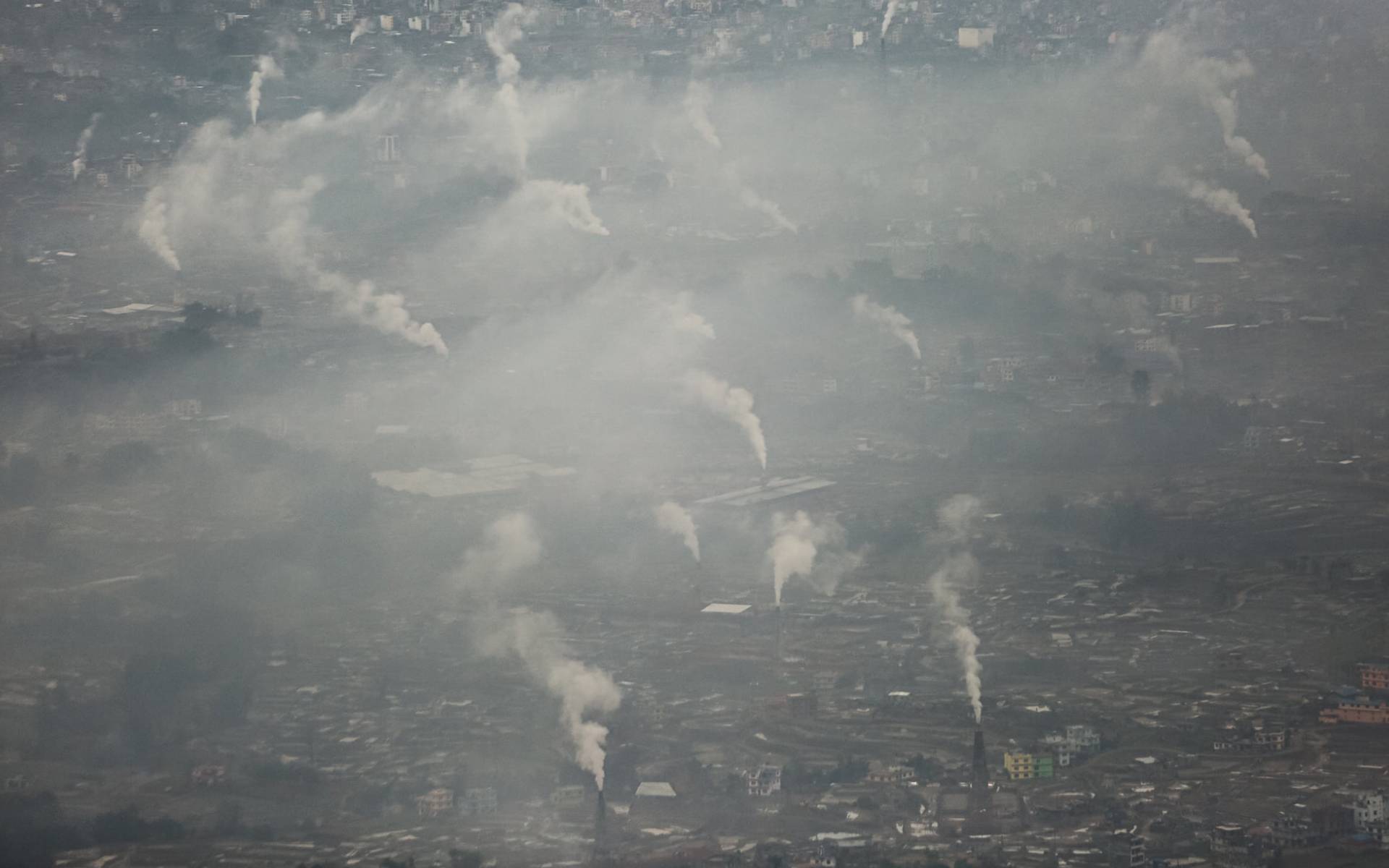
Kathmandu: With winter setting in, air quality in the Kathmandu Valley has once again begun to deteriorate, despite a brief improvement in December 2025.
According to data from the International Centre for Integrated Mountain Development (ICIMOD)’s air quality monitoring station in Khumaltar, the average level of fine particulate matter (PM2.5) in December 2025 stood at 45 micrograms per cubic metre (µg/m³). Between December 2025 and February 2026, the mean PM2.5 level was around 50 µg/m³.
A comparison with the previous winter suggests a relative improvement. The mean PM2.5 level in December 2024 was nearly 1.5 times higher than in December 2025, while the December 2024–February 2025 average was about 1.3 times higher than the same period this winter.
However, experts warn that the apparent improvement offers little comfort.
Despite the drop, pollution levels remain within the “unhealthy” threshold set by the World Health Organization, posing serious risks to public health. Moreover, the relief appears temporary. Data from the Khumaltar station show that between January 9 and 31, 2026, PM2.5 levels rose to a maximum of 85 µg/m³, compared to 80 µg/m³ during the same period in 2025.
Suresh Pokhrel, Air Pollution Analyst at ICIMOD, said December 2025 was noticeably cleaner than December 2024, but pollution began rising again in January. “This pattern shows that we are not dealing with any lasting change, but only a brief relief,” he said.
Abhishek Upadhyay, Energy and Emissions Specialist at ICIMOD, noted that the cleaner air in December was likely linked to reduced emissions rather than meteorological factors. However, he warned that pollution rebounds quickly when emissions remain high and weather conditions favor accumulation.
Winter conditions such as colder air and slower wind movement, typically intensify pollution exposure in the valley. Experts caution that without sustained emission reductions, Kathmandu will continue to face recurring hazardous air episodes.
Ashish Tiwari, Lead of the Action Area on Air at ICIMOD, stressed that temporary dips should not be mistaken for progress. “Without targeted and sustained emission cuts, severe pollution events will keep coming back every year,” he warned.
The Government of Nepal’s National Air Quality Management Plan (NAQMAP) aims to identify major pollution sources, prioritize investments, and strengthen monitoring systems nationwide. Experts say effective implementation of the plan, along with cleaner transport, cleaner energy, and stronger enforcement, will be key to achieving long-term improvements.
As Nepal approaches the pre-monsoon season, typically marked by another spike in pollution levels, specialists are urging accelerated nationwide efforts to prevent further deterioration of air quality.