
Although there have been a few ups and downs in this region, economic cooperation among South Asian countries has been steadily growing over the years. The power trade agreement between Nepal and India is a notable milestone. India has promised to purchase 10,000 megawatts of electricity from Nepal over the next ten years, marking a significant achievement in the power sector. Likewise, Nepal and Bangladesh also signed a Power Trade Agreement (PTA), and Nepal has been exporting 40 MW of electricity to Bangladesh via India for the past two years.
Moreover, physical, air, and waterway connectivity in the region is expected to expand further, creating new avenues for cooperation. A recent development in this regard is India’s proposal to provide Nepal access to waterways. India and Nepal are also working on several cross-border railway lines. The Jaynagar–Bardibas line is already operational, connecting India’s Jaynagar to Nepal’s Bardibas. Additionally, the Raxaul–Kathmandu line is under planning, which would be a significant new link connecting Birgunj in Nepal to Raxaul in India.
Rajeshwor Acharya, a former Nepali Ambassador to China, stated that regional cooperation should be geared towards greater initiatives. “In the past security referred to military power. But now security includes food, cyber security and other different aspects of human security as well. It would be better for regional powers to connect and work together. There is a transformation of security, non-traditional security has become a major part of international relations,” he said.
Furthermore, collaboration among Bangladesh, Bhutan, India, and Nepal (BBIN) in a sub-regional format continues to grow, especially in areas such as transport, electricity, and trade. Although the South Asian Association for Regional Cooperation (SAARC) remains dormant at high levels, engagements at the BBIN and BIMSTEC (Bay of Bengal Initiative for Multi-Sectoral Technical and Economic Cooperation) levels have been encouraging and productive. Under the current circumstances, new mechanisms of regional cooperation are emerging, suggesting that the traditional regional order is shifting.
Geopolitical expert Chandra Dev Bhatta said despite a common civilizational history, South Asian states have, over time, been divided in more than one way.
“To be very precise, that division began with the modern state-formation process, and today they have reached the point where, in the words of Ashish Nandy, they claim ‘what they are not rather than what they are’. Yet fact remains that most of the South Asian people have much in common, and by and large they share the same destiny,” he commented. “Over time South Asia has seen many ups and downs. When it comes to security, some face critical traditional security issues. Interestingly, while traditional security issues divide them, non-traditional security issues have huge potential to bring them together, which could ultimately reduce conflicts based on traditional security issues.”
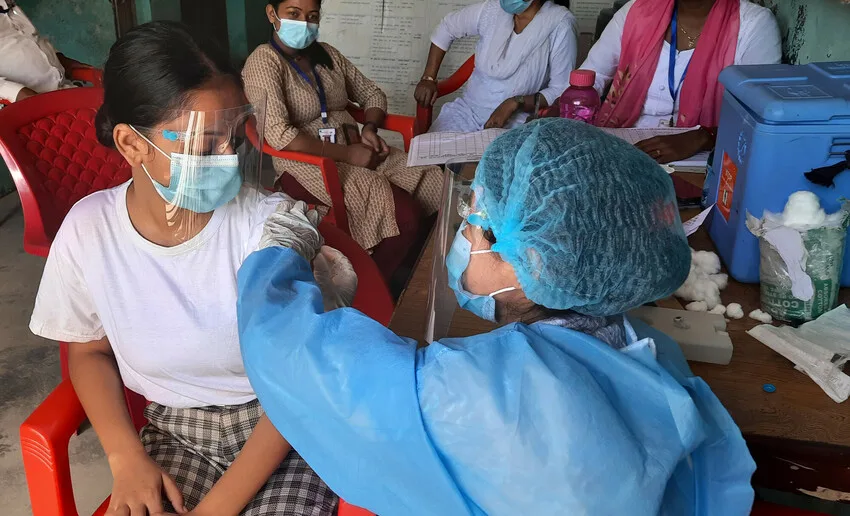
Yet South Asia faces multiple non-traditional security threats—transboundary crime, terrorism, climate change, pandemics, natural disasters, energy insecurity, digital threats, food insecurity, human trafficking, and economic instability. Historically, until the 19th century, issues such as military power, territorial integrity, state sovereignty, conflicts, and defence were considered traditional security concerns. Today, however, security challenges have evolved significantly. Non-traditional issues have become major concerns for the region. The new geopolitical landscape, driven by geo-economics, is reshaping the dynamics of regional cooperation. Although these challenges demand collective action, countries remain divided along geopolitical fault lines.
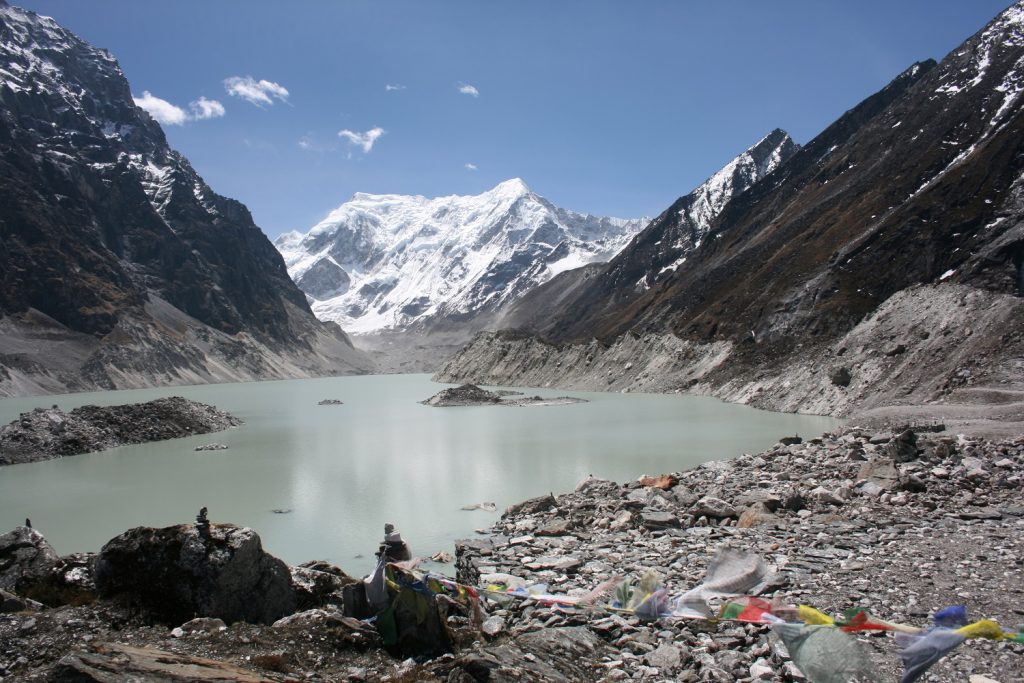
Climate change, for example, has emerged as one of the most pressing regional challenges. Despite political differences, South Asian countries have much to gain by working together. The impacts of climate change will be felt across the region, affecting both littoral and Himalayan states. Additionally, global geopolitical tensions often manifest in the region and within individual states, making it harder for governments to focus on urgent internal needs. There is a real possibility that non-traditional security issues could eventually escalate into traditional security concerns.
Dr. Monalisa Adhikari, Senior Lecturer in International Politics at the University of Stirling in the UK, stated that while South Asia makes global headlines for its traditional security concerns centred on conflicts and geopolitical issues, as we saw in the recent Pakistan–Afghanistan tensions and the enduring India–Pakistan hostilities, it is non-traditional security concerns that have the potential to bind South Asia together.
“South Asia’s ecological and climate vulnerability, proneness to natural calamities, persistent inequality and poverty, and rising threats of terrorism are shared concerns felt in different ways by every South Asian citizen that require cross-border and regional collaborations,” she said. “Rather than the current regional reality where geopolitical tensions have held regional cooperation on non-traditional security hostage, South Asia would benefit from an incremental approach in which collaboration on non-traditional security initiatives paves the way for broader engagement on traditional geopolitical concerns.”
Digital security poses another major challenge. Social media and digital platforms—being borderless—have created new complications across South Asia. Governments often struggle to regulate such platforms without risking public backlash. Therefore, to strengthen relations among South Asian countries, it is crucial to enhance cooperation not only at the government level but also among people, institutions, and regional mechanisms.
The traditional order in South Asia is undergoing a profound transformation, yet a new order has not fully emerged. This uncertainty is influenced by evolving geopolitical dynamics and the rise of non-traditional security concerns. Together, these factors hold the potential to disrupt existing mechanisms of cooperation.
The current regional institutions, particularly SAARC, offer some hope, but SAARC has largely become a talking shop. The 19th SAARC Summit has been pending for more than eleven years, even though SAARC’s administrative functions continue. This raises important questions: Why has SAARC become stagnant? Why are newer mechanisms proving effective? And what consequences will shifting geopolitics have on non-traditional security issues, which are rapidly growing? Within SAARC, Afghanistan is ruled by the Taliban government, and tense India-Pakistan relations have affected regional security. To build a stable regional organisation, countries in this region should work closely with one another. India has built cordial relations with Afghanistan, but it is yet to be recognised. Not only the South Asian countries, but major powers in the world are also focusing on cooperation on non-traditional security.
Narayan Adhikari, a researcher in National Security and Terrorism, stated that South Asia’s security landscape is increasingly being shaped by irregular warfare and grey zone activities, driven by intensifying great-power competition in the Himalayan region. In other words, non-traditional security issues have clearly emerged, he says. “We are witnessing the growing use of non-state actors, disinformation campaigns, cyber operations, and proxy groups—tools designed to weaken states without crossing the threshold of open conflict. These asymmetric tactics exploit weak governance and porous borders, creating instability that traditional military strategies cannot effectively address,” he said. “At the same time, grey zone tactics such as cyberattacks, political manipulation, economic pressure, and incremental territorial moves are altering facts on the ground while maintaining plausible deniability.” He commented that no South Asian country can confront these threats alone. Regional dialogue, intelligence sharing, and stronger security cooperation are essential to counter these evolving challenges and safeguard the region’s long-term stability.
He added, “Proxy wars in South Asia—especially those conducted through terrorism—must come to an end. Genuine diplomacy cannot flourish alongside covert conflict. South Asian nations must adopt a unified approach to combating terrorism and advancing lasting regional stability.”