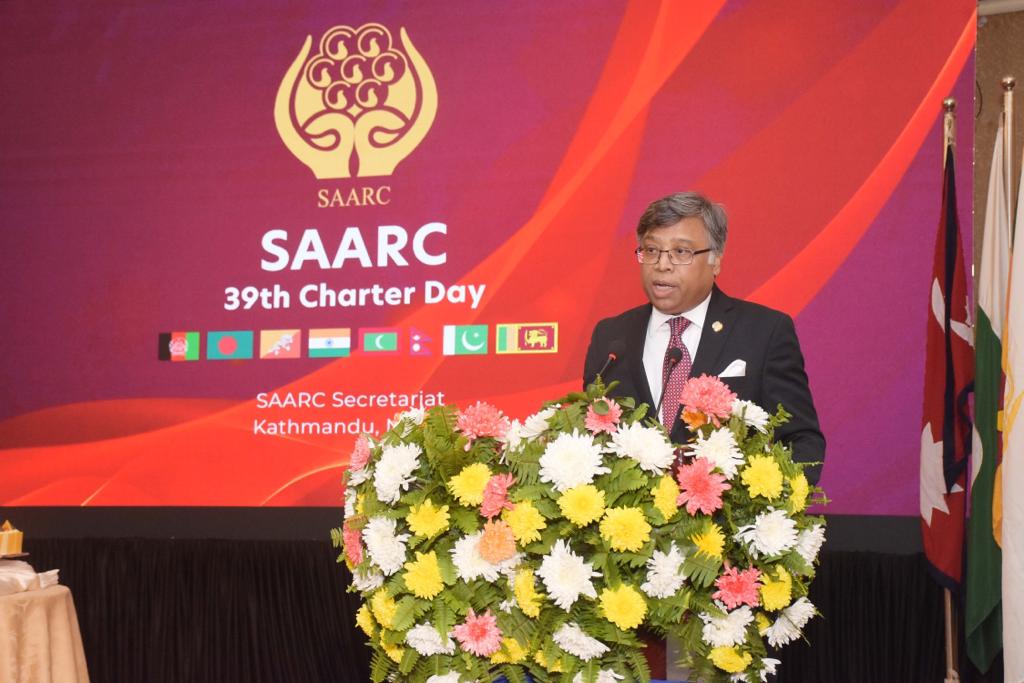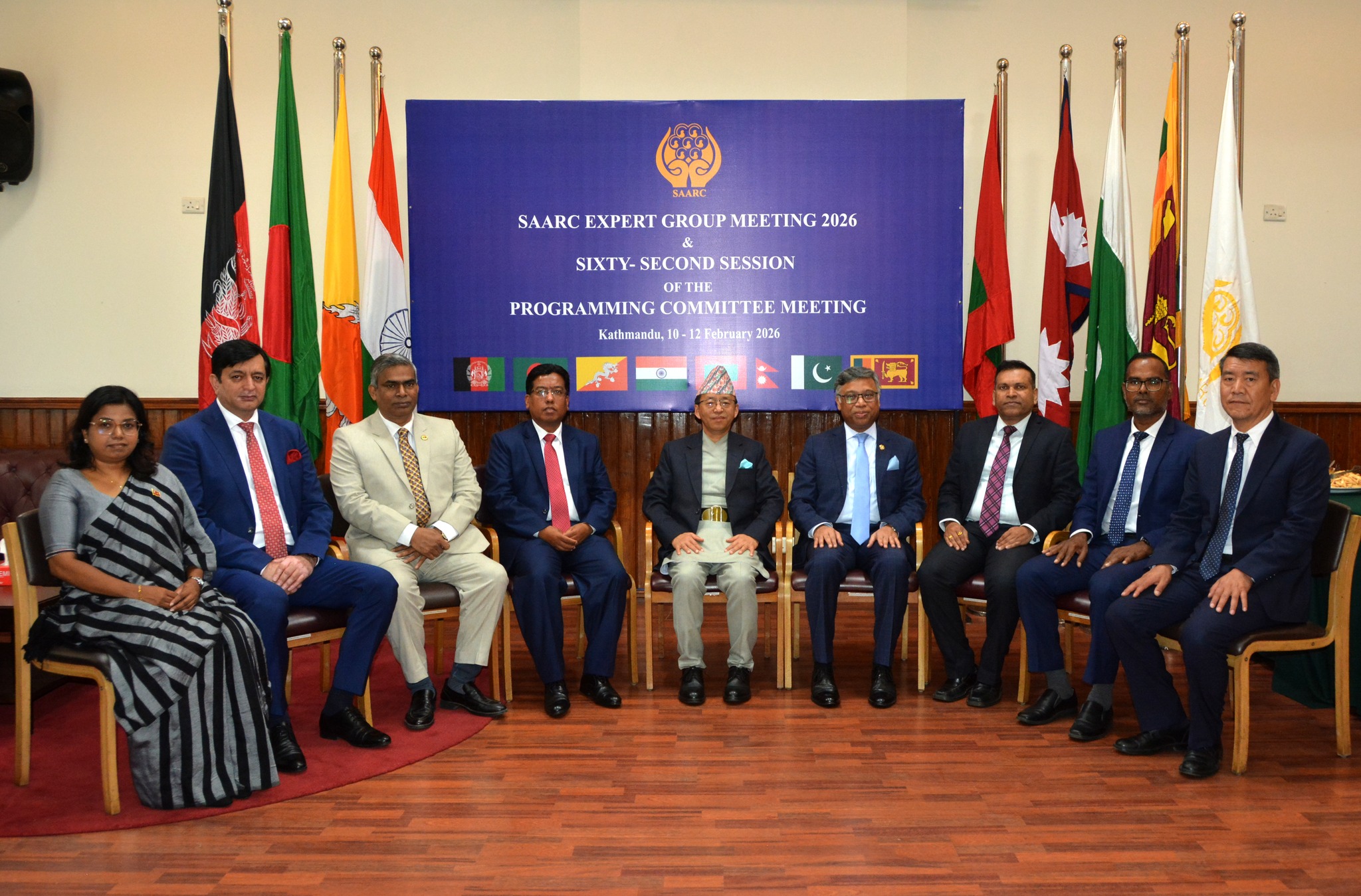
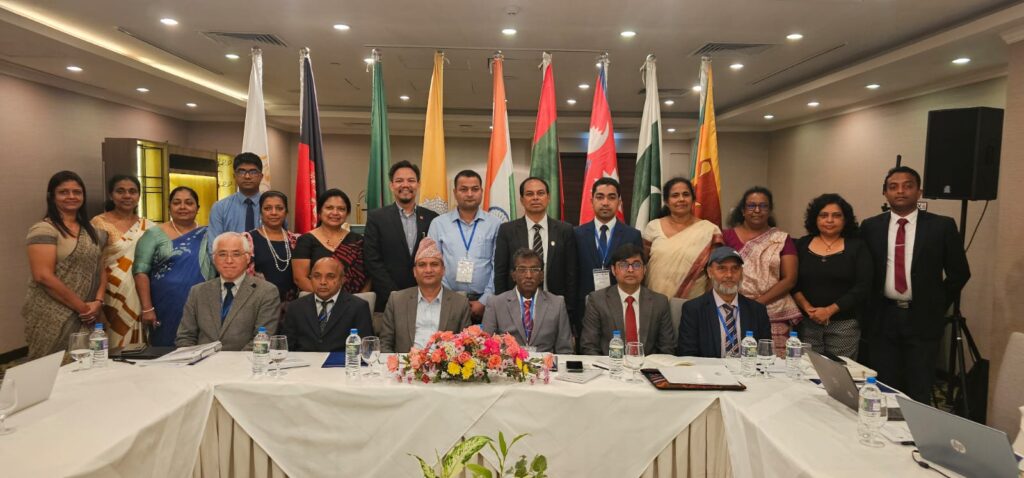
Some geopolitical analysts in the region say SAARC is dead. Some state that SAARC is on a ventilator, or that it will never bounce back. But looking at the activities of SAARC at both the technical and political levels, we can clearly say that SAARC is very much alive.
A review of the SAARC Secretariat, its Specialized Bodies and Regional Centres, the various areas of cooperation, and the work of directors shows that SAARC functions well at the bureaucratic or technical level. However, political frictions among a few member states persist and must be resolved as soon as possible.
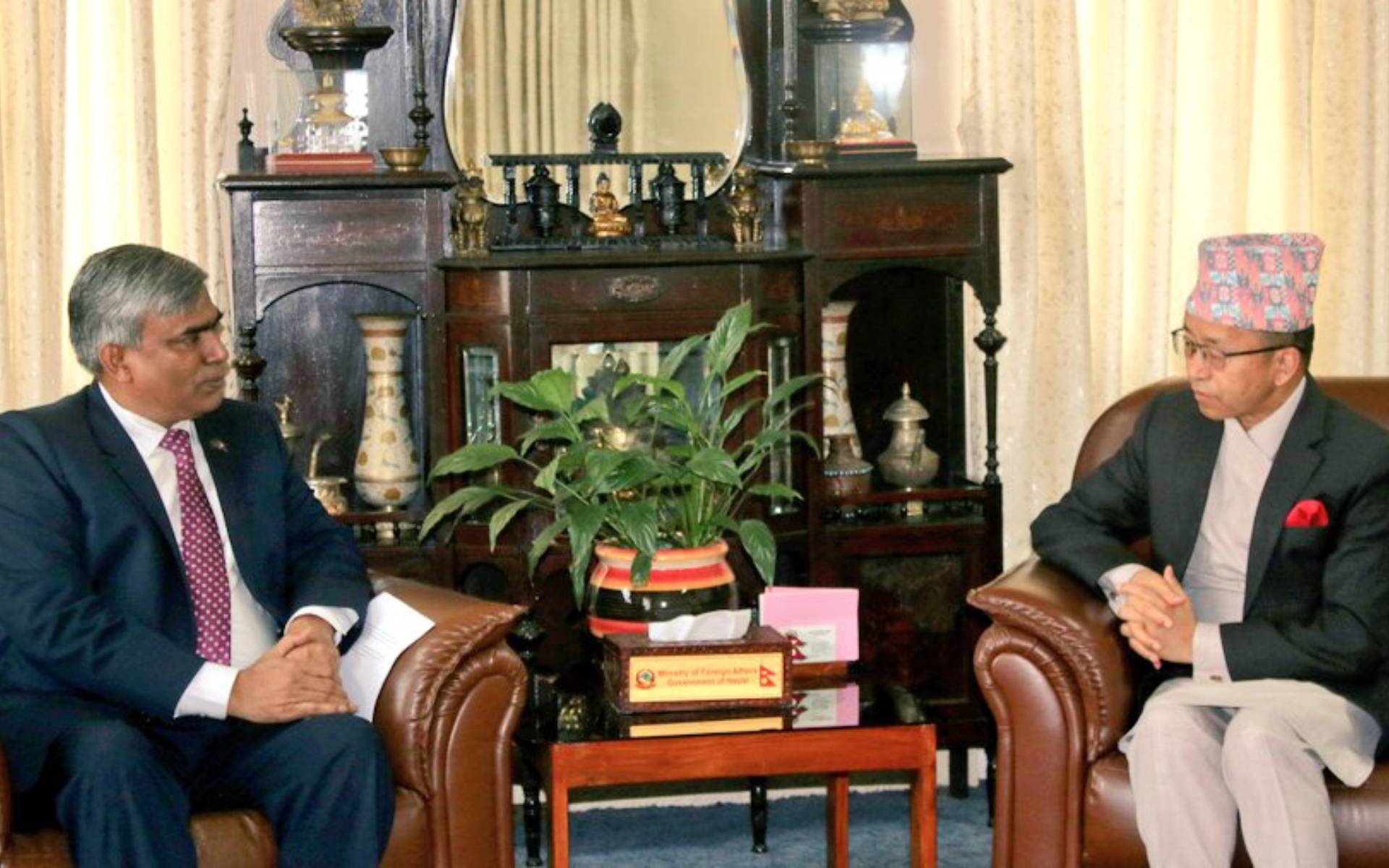
“Yes, SAARC is still working. At the technical level, it has been functioning well. But we need to work more on the political level to make this organization vibrant,” said Kedar Bhakta Shrestha, former Foreign Secretary of Nepal. Shrestha, who also later served as Ambassador to the U.S.A., was once a staff member of the SAARC Secretariat representing the Ministry of Foreign Affairs of Nepal. He added, “I was the first officer to be deputed to the SAARC Secretariat from the Ministry of Foreign Affairs, Nepal, when the SAARC Secretariat was established in Kathmandu in 1987. From that moment to now, SAARC has come a long way. In my view, we should work together to overcome our differences to strengthen SAARC for the South Asian people.”
SAARC was established with the signing of the SAARC Charter in Dhaka on December 8, 1985. SAARC comprises eight Member States: Afghanistan, Bangladesh, Bhutan, India, Maldives, Nepal, Pakistan, and Sri Lanka. The Secretariat of the Association was set up in Kathmandu on January 17, 1987.
The objectives of SAARC are to promote the welfare of the peoples of South Asia and improve their quality of life; to accelerate economic growth, social progress, and cultural development in the region; to provide all individuals the opportunity to live in dignity and realize their full potential; and to promote and strengthen collective self-reliance among the countries of South Asia.
Moreover, the Charter commits members to build mutual trust and understanding; promote active collaboration and mutual assistance in economic, social, cultural, technical, and scientific fields; strengthen cooperation with other developing countries; and among themselves in international in international forums on matters of common interest; and cooperate with international and regional organizations with similar aims and purposes.
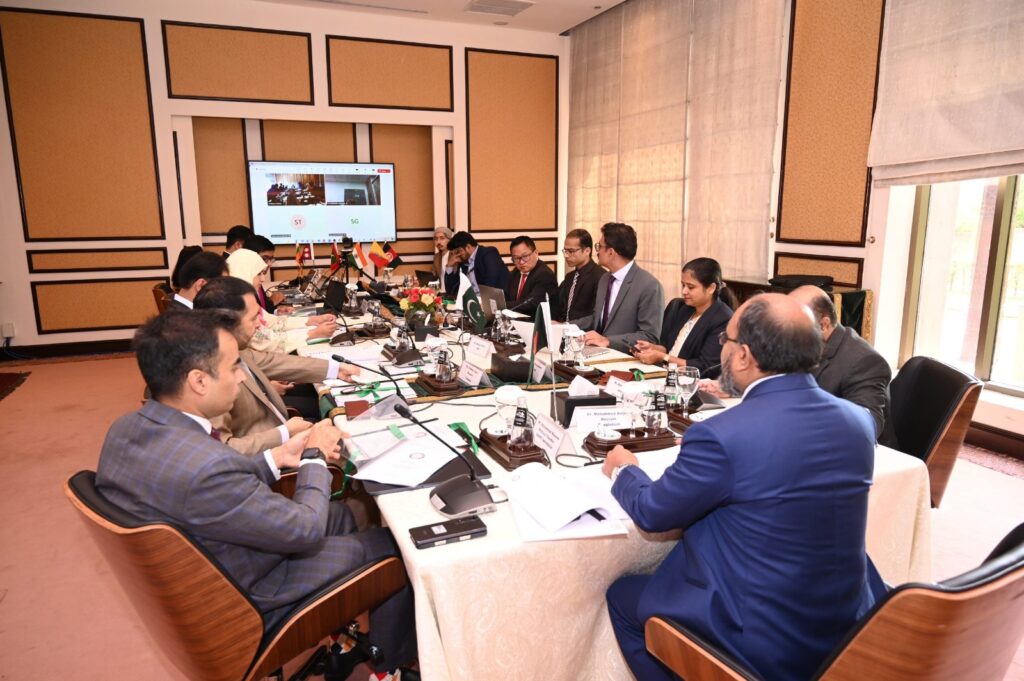
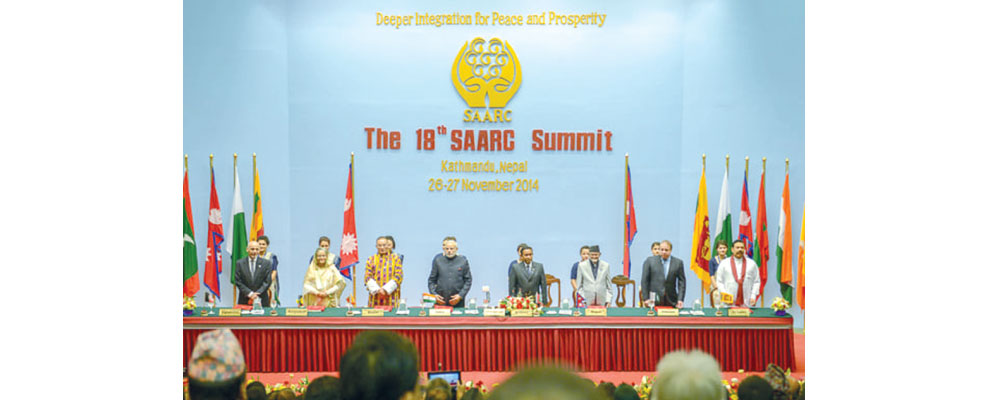
SAARC is now 40 years old. But from the beginning, the regional organization has always been under the shadow of India–Pakistan political rivalry. That rivalry has also affected the political environment of SAARC. A clear example is the uncertainty surrounding the 19th SAARC Summit, which was supposed to be held in Islamabad in 2016. Nepal hosted the 18th SAARC Summit in 2014. The SAARC Summit is supposed to be held by each member country every two years based on alphabetical order. Political rivalry has affected not only the Summit but also the bloc’s foreign minister-level and foreign secretary-level meetings.
Dinesh Bhattarai, a former ambassador and a former foreign affairs adviser to two Prime Ministers of Nepal, said South Asia looms large in global geopolitics. “It is indispensable for this region to be stable and prosperous to play a constructive role at the global level. SAARC is a geographical reality and a South Asian identity,” he said. “A region without SAARC will only pave the way for external powers to manipulate it for their vested interests and make it difficult to play any significant role.”
While India–Pakistan political rivalry has been affecting SAARC, the newest member of SAARC, Afghanistan, which joined in 2007, has been in crisis since the Taliban took power in Kabul in 2021. Although there are hurdles in the organization and some member countries have political reservations about others, SAARC continues to function.
As a mature organization, SAARC can come up with ideas that have been applied before as well. For example, during the COVID-19 pandemic, SAARC countries came together to cope with the crisis. The video conference led by Indian Prime Minister Narendra Modi gave hope for reviving SAARC at the political level. It also showed that in times of crisis, South Asian nations can come together. However, cross-border tensions between India and Pakistan again fueled rivalry, directly affecting SAARC.
Technically, SAARC is working; politically, it can be revived if members choose. A clear example is the continuity in appointing the Secretary General. If member states wished to stall SAARC, they could have left the post vacant or blocked senior appointments.
After completing his three-year term from 2020 to 2023, Secretary General of SAARC Esala Weerakoon of Sri Lanka stepped down. According to the SAARC Charter and alphabetical order, the next Secretary General should have been from Afghanistan. However, no candidate from Afghanistan could be appointed because no country had recognized the Taliban government.
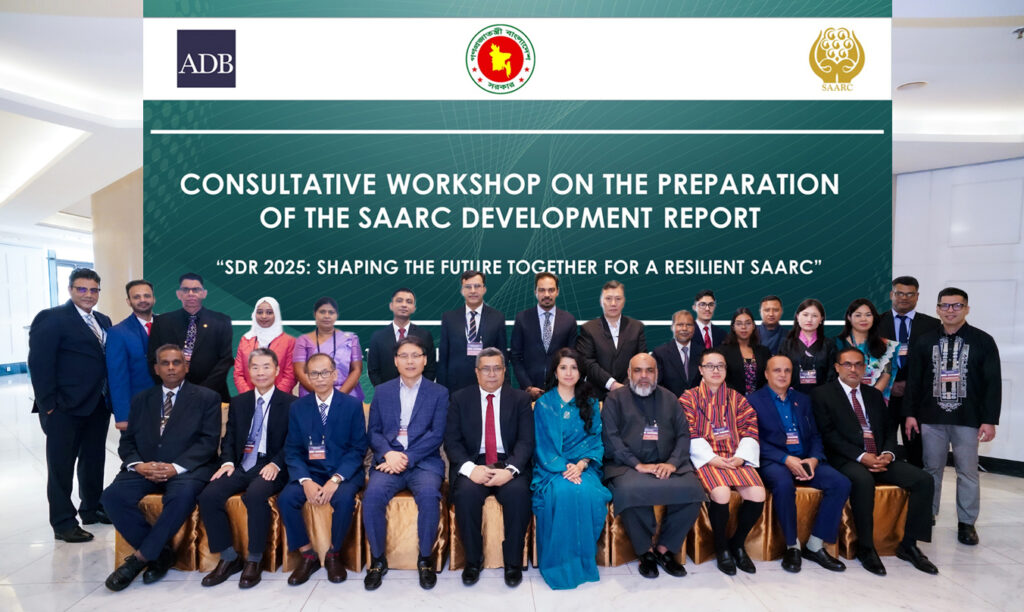
As a result, the other seven member countries came up with an “out-of-the-box” idea to save SAARC by temporarily skipping Afghanistan and moving to the next country in alphabetical order. Subsequently, all member countries unanimously agreed that Md. Golam Sarwar of Bangladesh would be the next Secretary General of SAARC. The decision to appoint a Secretary General without leaving the position vacant was a political decision taken collectively by the member countries under Nepal’s chairship. This demonstrated that all member countries want SAARC to function, despite bilateral problems among some of them.
Moreover, SAARC member countries have also been collaborating at the sub-regional level, such as through Bangladesh–Bhutan–India–Nepal and Nepal–India–Bangladesh trilateral cooperation. The ideal way to run SAARC is to move beyond political rivalry and focus on economic prosperity, which will benefit the region and its people.
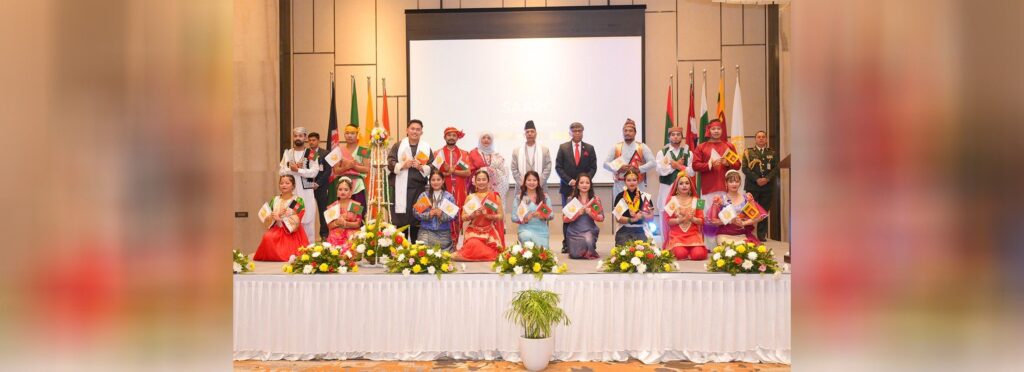
On the occasion of the 41st SAARC Charter Day, Nepal, as the current Chair, sent a message from Prime Minister Sushila Karki to the SAARC Secretariat stating that Nepal reiterates its steadfast commitment to working closely with all member states in the spirit of amity, solidarity, and consensus—the very principles enshrined in the SAARC Charter. “Together, we can accelerate progress toward our shared development goals and deliver tangible benefits to more than one-fourth of humanity that calls South Asia home,” the message stated. “What we require is a renewed resolve to revitalize SAARC and make it more dynamic, inclusive, and action-oriented. United in purpose, we can address our common challenges, safeguard our common interests, and fulfill the aspirations of our peoples.”
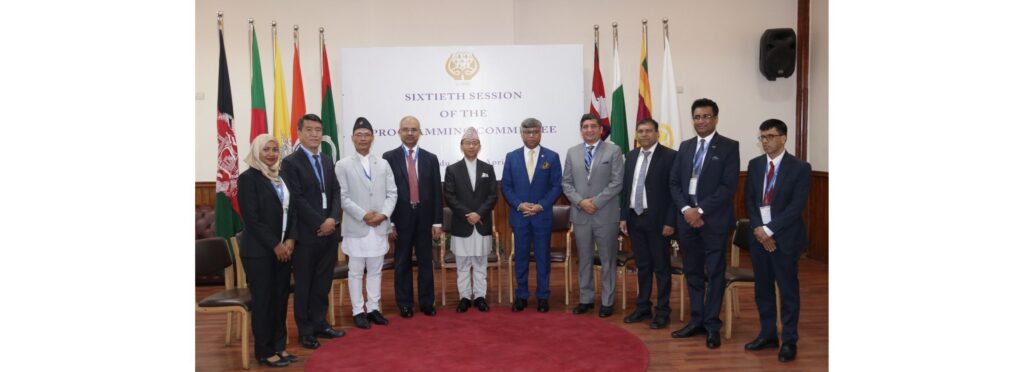
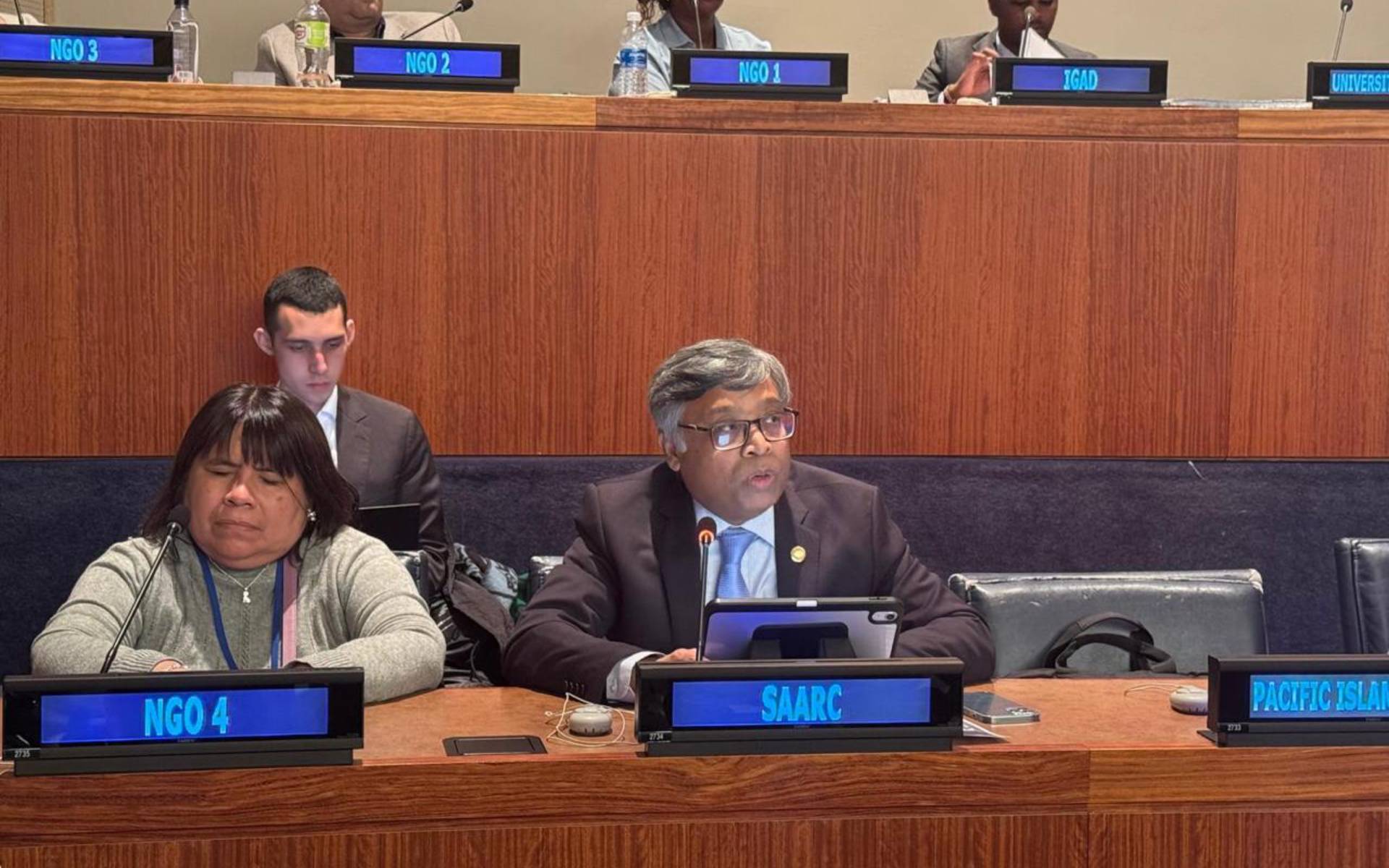
In his message, SAARC Secretary General Md. Golam Sarwar said that over the years, SAARC has emerged as an invaluable platform for constructive dialogue, meaningful collaboration, and collective action in the region. “Today, the areas of cooperation under the auspices of SAARC have expanded to encompass sectors as diverse as poverty alleviation, economy and trade, agriculture, education, energy, culture, regional connectivity, infrastructure development, climate change, investment, finance, security, disaster risk reduction and management, terrorism and drug trafficking, promotion of people-to-people contacts, and tourism, among others, catering to every sphere of human activity and geared toward improving living standards in the region,” the message stated. He further added that several intergovernmental mechanisms of SAARC, including Specialized Bodies and Regional Centres, have been actively pursuing their mandates to realize the Charter’s objectives.
To strengthen SAARC, we need to work more at the political level to foster economic development in South Asia.