South Asia is experiencing climate change at an accelerating rate, from the icy peaks of the Himalaya to all the way down to the floodplains of the Ganges and Brahmaputra. The geography of the region, covering Nepal, India, Bangladesh, Bhutan, Pakistan, and China, is interconnected by rivers, glaciers, monsoon systems, and ecosystems. Yet while environmental systems cross borders seamlessly, climate responses largely remain national. To create a climate-secure future in such an interconnected region, it requires cooperation from the Himalayan peaks to the downstream valleys and deltas.
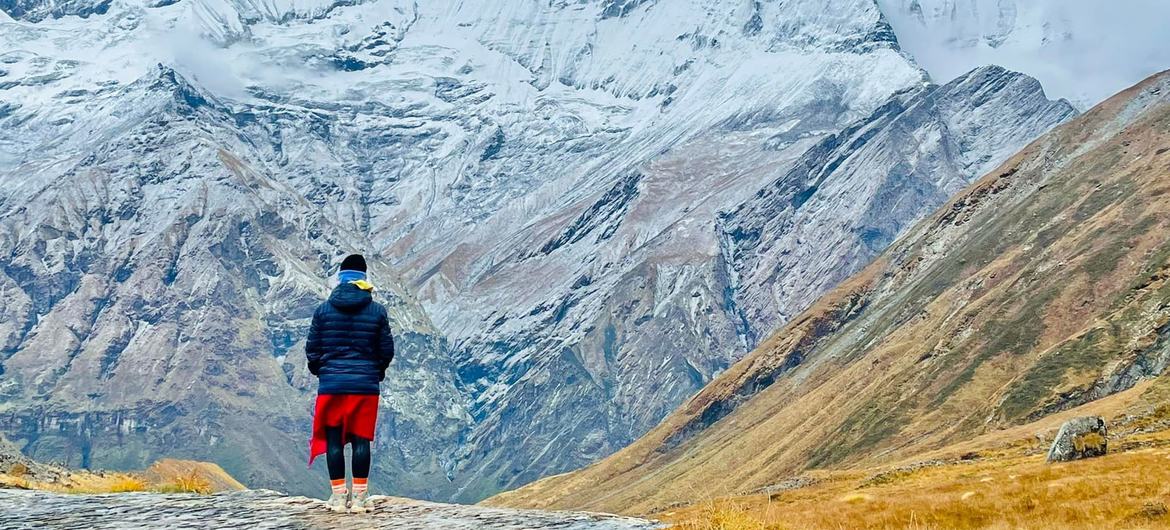
The Himalaya, often called the “Third Pole,” contains the largest ice reserves outside the Arctic and Antarctic. These glaciers sustain major rivers including the Indus, Ganges, and Brahmaputra which supports almost two billion people, but the cryosphere in the region is changing at a high rate due to the rising temperature.
The recent study shows that the increase in global temperatures between 1970 and 2015 was about 0.2 °C per decade, and since 2015, it has accelerated to roughly 0.35°C per decade. The warming in the Himalaya is expected even higher due to elevation-dependent warming, where high-altitude regions heat more quickly than lowlands. The rate of warming in the region has been estimated to be between 0.15 °C and 0.60 °C per decade across the region.
At the same time, the broader Asian region has become a global emissions hotspot. In 2024, global greenhouse gas emissions reached about 53.2 gigatonnes of CO₂ equivalent, with China contributing the highest 29.2% and India 8.22% of the world emission. These two adjacent nations have a total of 37.42% of the global emissions, which has a significant role in shaping the global climate trajectory. The vicinity of such large emission sources to the Himalayan cryosphere supports the susceptibility of the glaciers and ecosystems. Nevertheless, positive signs are also appearing, such as growing the push towards net-negative emissions pathways in China through adoption of renewable energy.
The Himalaya remains worrying in terms of future projections. By the end of the century, temperatures across high-mountain Asia could rise by 2.5 °C to 5.0 °C. Under high-emission scenarios, up to 65% of Himalayan ice mass could disappear by 2100, significantly changing river systems and water availability across South Asia.
The Himalaya–Karakoram region now has an estimated 40,800 sq km of glaciers. As these glaciers retreat, meltwater often accumulates in depressions, forming glacial lakes typically dammed by unstable moraine or ice barriers. Over the past three decades, Himalayan glacial lakes have expanded by roughly 26–30%. This expansion has increased the risk of glacial lake outburst floods (GLOFs), sudden releases of water caused by the failure of natural dams. Over 388 GLOFs have been documented in the Himalaya–Karakoram region. The causes are ice avalanches, landslides, earthquakes, and extreme rainfall. When such floods occur, they can rapidly destroy infrastructure, farmland, and settlements downstream.
Economic risks are also very high. In Nepal, worst-case GLOF scenarios from lakes such as Imja, Tsho Rolpa, and Thulagi could cause damages ranging from millions to hundreds of millions of dollars. Hydropower infrastructure, central to Nepal’s development, is particularly vulnerable to such disasters.
Climate risks are shared across the Himalayan arc. Bhutan faces threats from expanding glacial lakes such as Thorthormi, urging efforts to lower water levels and improve monitoring. Pakistan has experienced frequent GLOF events in Gilgit-Baltistan and Chitral areas, leading to expanded early-warning systems and community preparedness initiatives. In India, Himalayan states including Uttarakhand and Sikkim have experienced increasing disasters like flash floods and landslides. The 2021 Chamoli disaster demonstrated how cascading hazards can damage both communities and hydropower facilities.
These changes extend beyond mountain regions. Rivers originating in the Himalaya link upstream glacier dynamics with downstream populations across South Asia. Nepal’s glaciers have shrunk significantly in recent decades, increasing unstable glacial lakes in the Koshi, Gandaki, and Karnali basins, rivers that flow into India and Bangladesh.
The downstream countries already face growing climate pressures. Bangladesh experiences worsening floods and saltwater intrusion because of sea-level rise and altered river flows, while India must manage both water stress and intensified flooding on its huge plains. All these interconnections highlight one bare fact, climate change in South Asia is a regional issue.
Despite shared vulnerabilities, cross-border environmental cooperation remains limited. Increasing geopolitical tensions and competition over water resources have often slowed progress in data sharing and coordinated climate action. However, the climate systems do not observe political boundaries. Air pollution from one country can deposit black carbon on glaciers in another, accelerating melt, while monsoon systems and transboundary rivers link the ecological futures of the entire region.
Addressing these issues requires stronger regional collaboration. Science diplomacy can help build trust through collaborative glacier monitoring, joint research, and basin-wide data systems. Cooperation across river basins such as the Koshi or Brahmaputra could improve flood forecasting, disaster preparedness, and water management.
Nepal is well positioned to support such collaboration. Located between India and China and at the headwaters of major South Asian rivers, Nepal can help facilitate regional climate dialogue. By promoting research partnerships and sharing experience in community-based adaptation and glacial lake risk reduction, it can help bridge regional divides.
The Himalaya are becoming warmer, the glaciers are receding and the climate hazards, such as glacial floods to downstream inundation, are becoming more frequent. Protecting the region and the millions of people connected to its rivers will require nations to recognize their shared ecological future. From peaks to valleys, climate security in South Asia will depend on cooperation rather than isolation.