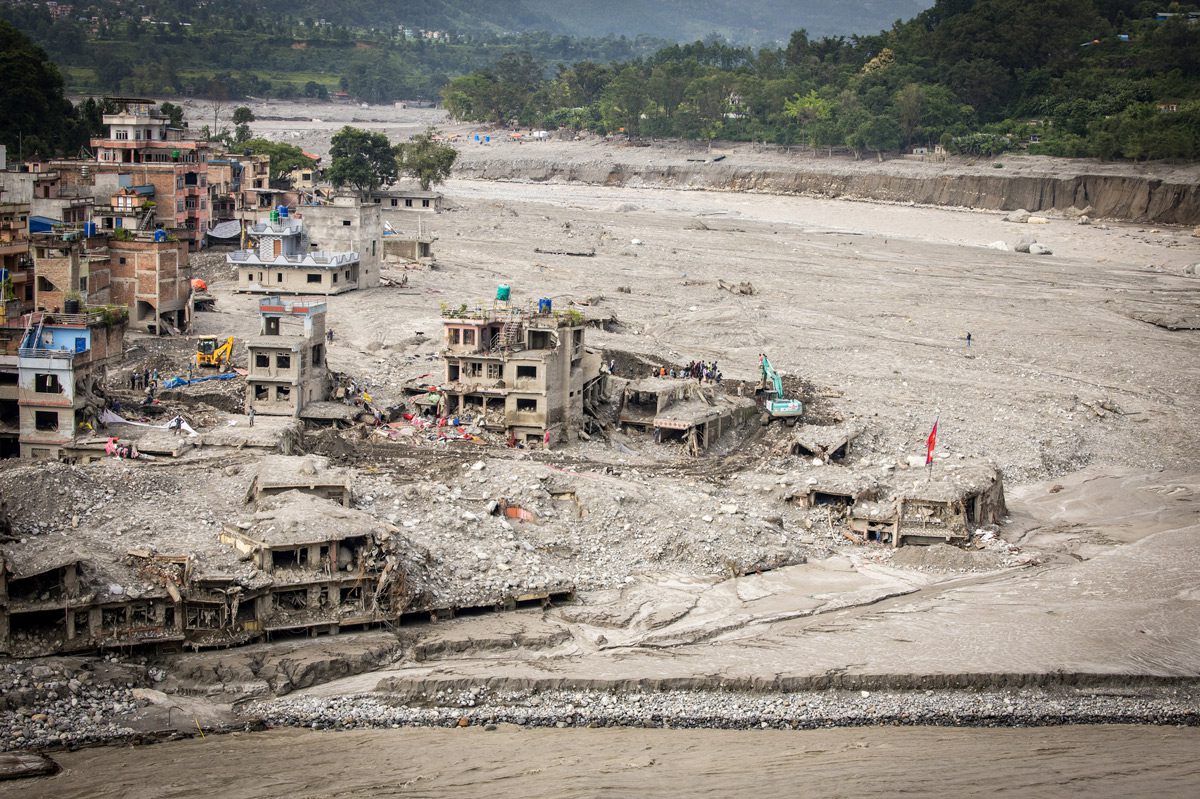
A traditional Nepali saying goes nakhaeko bish lageko, meaning ending up suffering from a poison you did not consume. In many ways, it captures the climate reality of Nepal. A country that accounts for around 0.027% of global greenhouse gas emissions happens to be among the countries most vulnerable to the impacts of climate change. The recent catastrophe in Rasuwa brings this injustice into sharp focus. What unfolded was not simply a flood, but a cascading chain of mountain hazards that swept through communities, livelihoods and critical infrastructure.
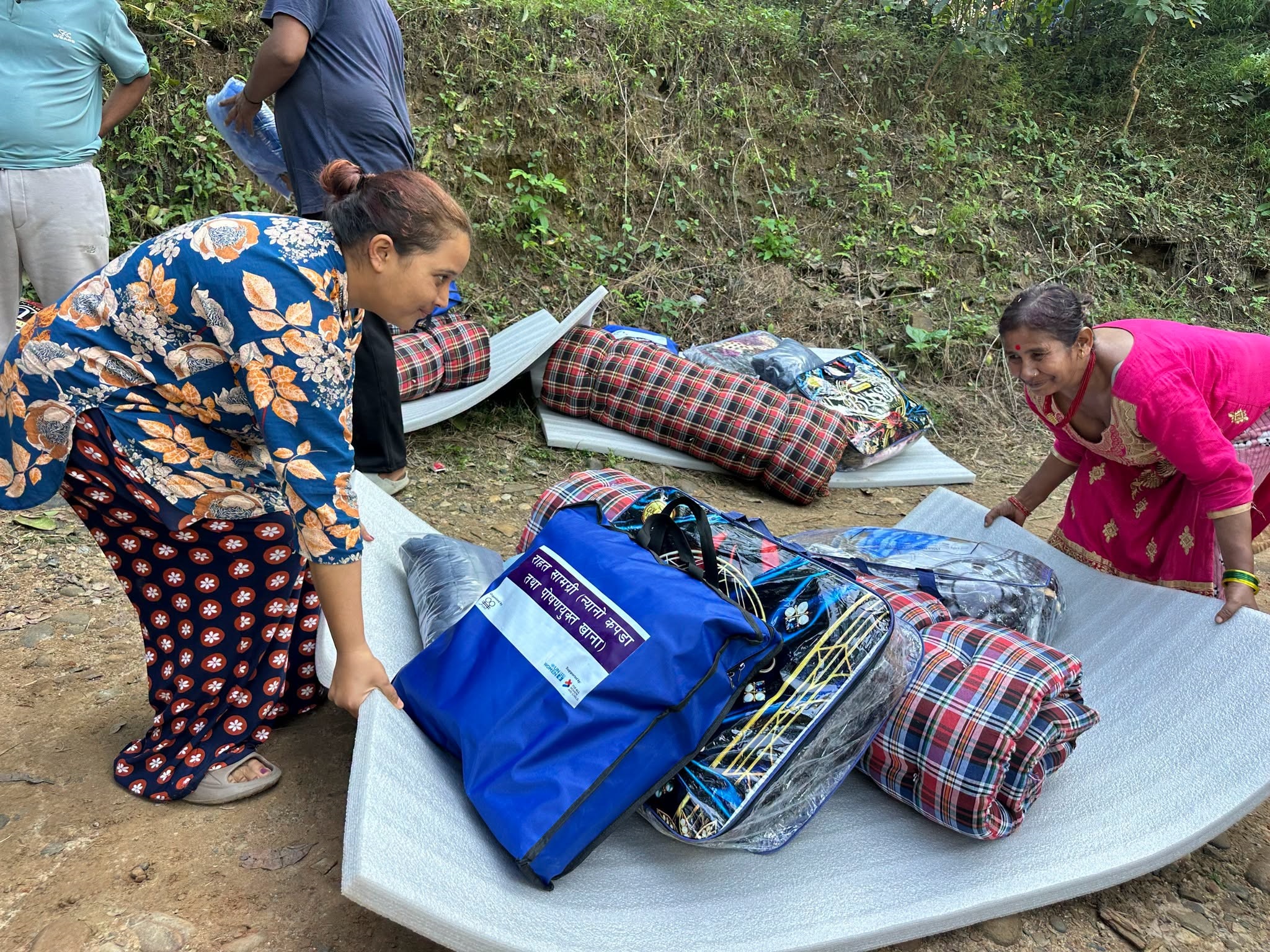
On August 26, 2026, this unequal climate reality took a devastating form in Rasuwa, in Nepal’s northern mountains. A catastrophic flood swept through Rasuwagadhi on the Nepal-China border before moving downstream along the Trishuli and Narayani river systems, affecting communities across multiple districts and causing widespread loss and damage to people’s lives, homes, roads, bridges, hydropower projects and other critical infrastructure. As of September 17, 2026, the reported death toll has crossed 1400 marks with over 5000 people still missing and families continuing to search for their loved ones. What began in the mountains has now become a national tragedy, exposing the immense human and economic costs of disaster in a climate-vulnerable country.
The story of this disaster, however, cannot be separated from the larger history of the climate crisis. For more than a century, the industrialized economies of the Global North have been powered by intensive fossil fuel extraction and consumption, releasing vast amounts of greenhouse gases into the atmosphere and driving global warming. The wealth and development built on this carbon-intensive growth have not been shared equally across the world. Meanwhile, countries like Nepal, with a negligible contribution to global emissions, are confronting the consequences of a warming planet, particularly in the fragile and rapidly changing Himalayan region. Even as developed countries continue to make billions in climate finance pledges through successive COPs, vulnerable countries still struggle to access adequate, predictable and accessible climate finance for adaptation and loss and damage. At the same time, through carbon credits, offsets and other market-based mechanisms, the Global North risks shifting the responsibility for climate action onto the Global South, placing the burden of mitigation on countries that have contributed the least to the crisis. Rather than confronting the fossil-fuel dependence at its source, such approaches are allowing high-emitting countries and corporations to continue polluting while relying on forests, land and carbon sinks in the Global South to compensate for their emissions. The climate crisis, therefore, is not only about rising temperatures. It is also about the unequal distribution of responsibility, vulnerability, resources and loss.
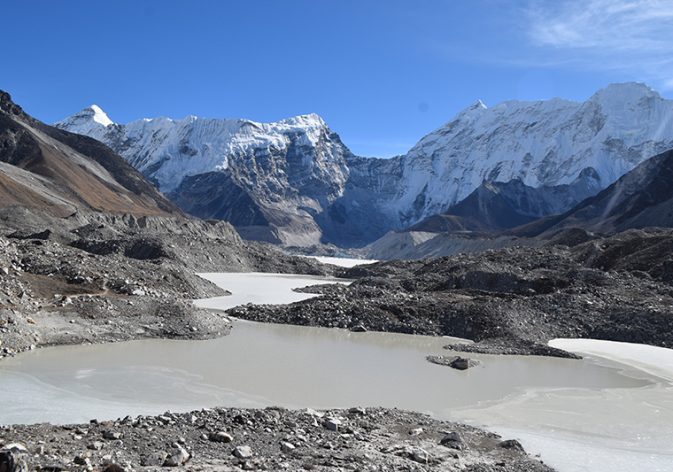
From Thame to Humla, and now Rasuwa, Nepal’s mountains have been sending increasingly urgent warnings. In August 2024, the Thame GLOF swept through a Sherpa settlement in Solukhumbu, while in May 2025, glacial lakes burst in Tilgaun, Humla, displacing communities and damaging local infrastructure. Now, the Rasuwa disaster has carried the consequences far beyond the mountains, with floodwaters and debris travelling through the Bhotekoshi, Trishuli and Narayani river systems and affecting communities across districts including Nuwakot, Dhading, Tanahu, Chitwan and Nawalparasi. These events are reminders that the risks emerging in Nepal’s mountains do not remain confined to the mountains, they move through rivers, communities, infrastructure and economies. And, while improving early warning, preparedness and resilient infrastructure is essential, we must also confront the root causes of a warming climate and the unequal system that has produced it.
For a country like Nepal, resilience cannot mean simply learning to survive one disaster after another. It must also mean demanding responsibility from those who have contributed most to the crisis and ensuring that those on the frontlines are not left to bear its costs alone.
The question of responsibility becomes unavoidable here. Nepal is caught in the stark imbalance of global climate crisis: Its communities are being asked to adapt to rapidly changing mountains, rivers and weather patterns, even as much of the emissions driving these changes originate elsewhere. Adaptation and resilience are necessary, but they cannot become substitutes for addressing the injustice at the root of the crisis. Vulnerable countries like Nepal need a fairer global response–one that recognizes historical responsibility, delivers adequate and accessible finance for adaptation and loss and damage, and holds major emitters accountable for the risks and losses their development pathways have imposed on those who contributed the least to the crisis.
Rasuwa should not become another disaster that we mourn today and forget tomorrow. We need to strongly raise our voices beyond borders. The mountains cannot negotiate with rising temperatures, but people can demand accountability from those who continue to fuel the crisis. Nepal must stand firm in demanding meaningful climate finance, and a just transition away from fossil fuels. At the same time, our own development must also put people, ecosystems and future generations at its center. Climate justice demands more than promises. It demands real finance, real accountability, real emissions reductions and an end to the fossil-fuel dependence that is driving the crisis.