
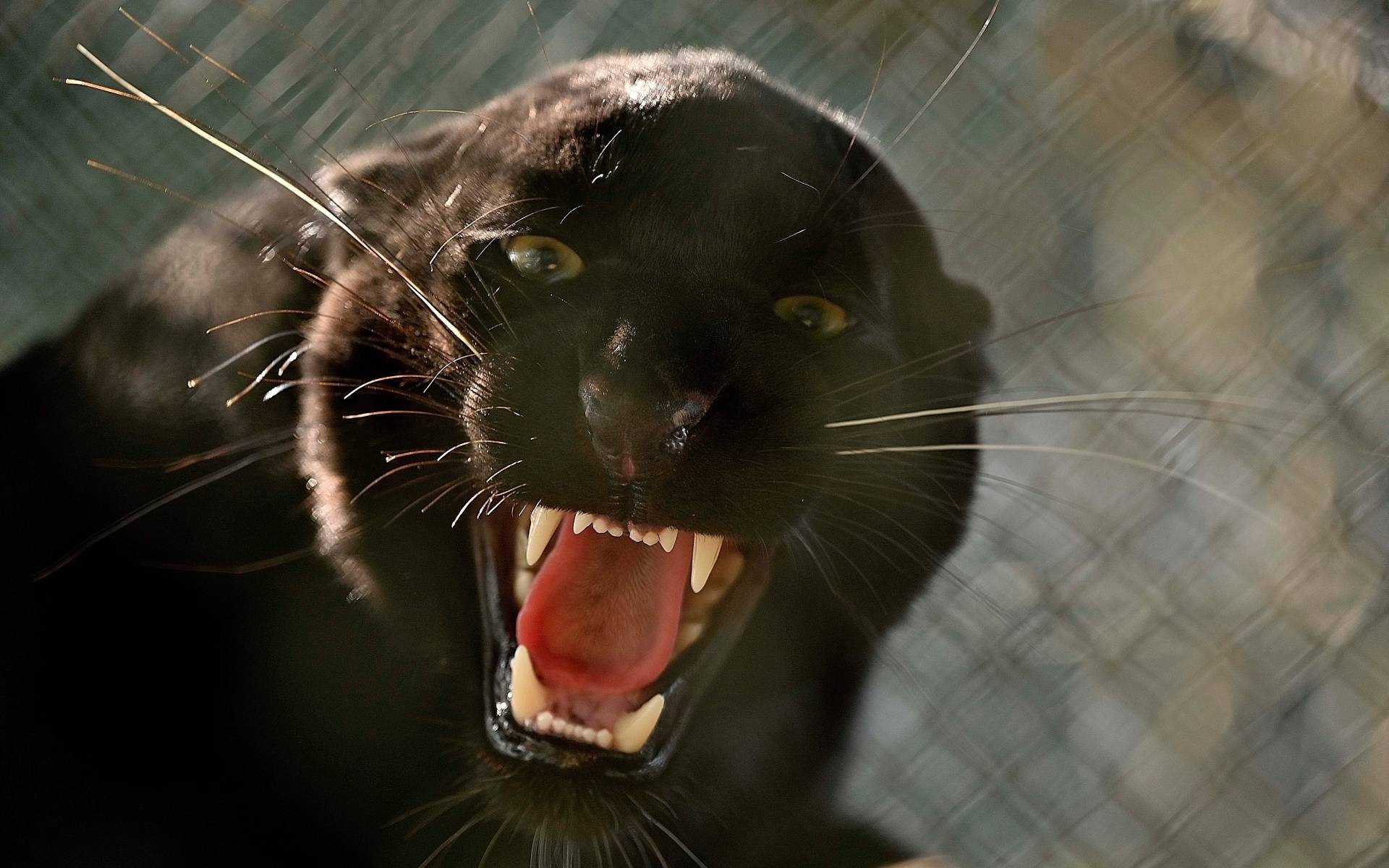
Last month, a melanistic leopard, often called the Black Panther, captured widespread attention when it was displayed at the Central Zoo in Jawalakhel, Lalitpur. With its gleaming white whiskers, the leopard’s image quickly went viral across social media.
The Black Panther, rescued from Ilam, is the first of its kind to be publicly displayed at the Central Zoo in nearly 30 years. Its rare coloration, known as melanism, has significant ecological and conservation implications in Nepal’s wild landscapes. The public fascination also points to an urgent narrative that blends evolutionary biology with escalating human–wildlife conflict along forest fringes in Nepal.
What Is Melanism?
Melanism refers to a genetic mutation that results in the overproduction of melanin, the pigment responsible for dark skin or fur in animals. Unlike common leopards that sport golden coats with rosetted patterns, melanistic leopards have a strikingly dark coat that makes them appear almost entirely black. While relatively rare, the trait has been documented in leopards, jaguars, and even some foxes and birds. The dark coat is not a marker of a new species but a color variant of the common leopard (Panthera pardus).
Evolutionary biologists have long been fascinated by animal coloration, recognizing that fur and skin color can have adaptive significance. Melanism is a coloration variant caused by excessive melanin production in the skin or hair follicles. Scientifically, melanism in leopards results from a gene mutation causing excessive pigment production specifically brought on by recessive gene mutations in Agouti Signaling Protein region.
Because the trait is recessive, both parents must carry the gene for a cub to be born black. The pelage of the common leopard typically features dark spots grouped in rosettes on a pale yellowish to golden background; these rosettes are still faintly visible beneath the dense black fur of the melanistic morph. Melanism has been reported in 11 felid species globally, with the common leopard being the best-known example of melanistic polymorphism across its vast range, including India, Nepal, and Africa.
Melanism in Nepal
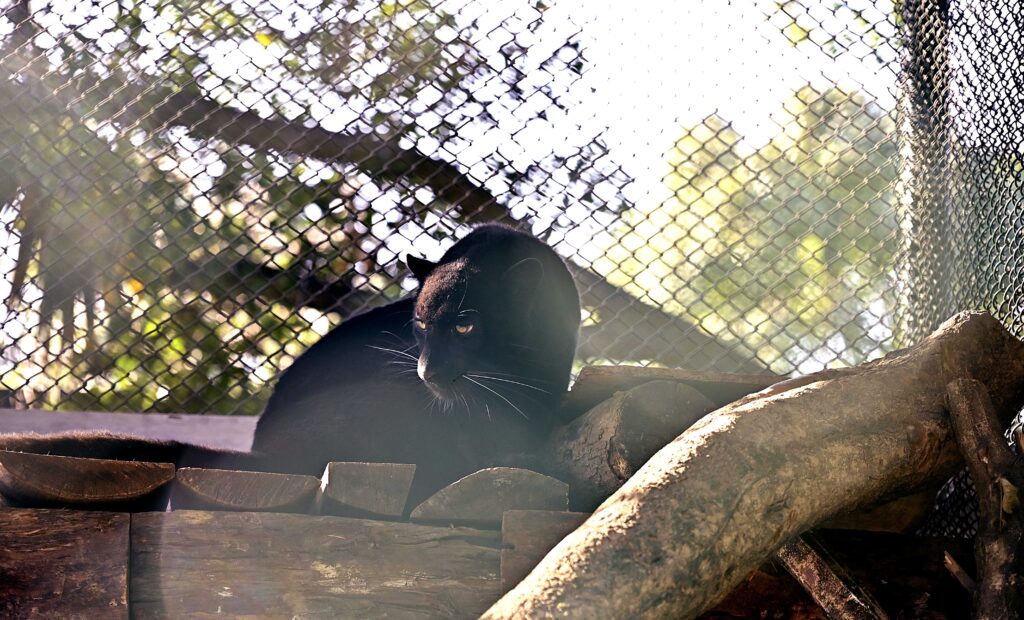
There has been no dedicated study on melanistic leopards in Nepal. Records are based on opportunistic sightings in reports from Nuwakot, Kavre, Ilam, Mugu, Taplejung, and elsewhere. The Central Zoo’s history with black leopards is poignant and indicative of the dangers these animals face near human habitat. A black leopard injured in Nuwakot was brought to the zoo in 1996 but died eight days later; its taxidermy is displayed in the zoo’s mini-museum. The leopard currently on display at the Central Zoo was also rescued from a goat barn in a village in Ilam.
Recent years have seen a worrying number of encounters in forest-fringed districts connected to the Kathmandu Valley, particularly in Kavrepalanchok. In 2021, a dead melanistic leopard was found near Panchkhal Municipality, and another, captured alive in Bhumlu Rural Municipality, died the next day. Two melanistic leopards were also captured on video in Bhumlu that same year. Details of these sightings were published as a short communication in the Nepalese Journal of Zoology (vol. 6, issue 2, December 2022).
In Nepal, melanistic leopards are occasionally sighted, but their prevalence and distribution remain poorly studied. Sightings in Kavrepalanchok have increased near human settlements. Unfortunately, many encounters have not been positive, with several melanistic leopards found dead or severely injured, suggesting growing threats from human–wildlife conflict.
The black coat, though seemingly advantageous in the wild, may ironically increase the likelihood of human encounters. Black leopards are harder to spot from a distance than their golden counterparts, making close encounters more likely. Moreover, local beliefs in Nepal often associate black animals with bad omens, which can increase threats to these rare creatures. It is suspected that some dead leopards were victims of vehicle collisions, poisoning, or retaliatory killings driven by fear.
Habitat loss due to urbanization, road construction, and encroachment into previously intact forests is fragmenting wildlife corridors. The 2015 earthquake, for instance, led to increased human settlement near forests, intensifying pressure on wildlife and ecosystems. New roads through forested areas further fragment habitat and restrict movement, making it harder for leopards to find prey and suitable territories. As they venture closer to settlements in search of prey, conflict risks rise, posing a serious threat to the survival of melanistic leopards in these regions.
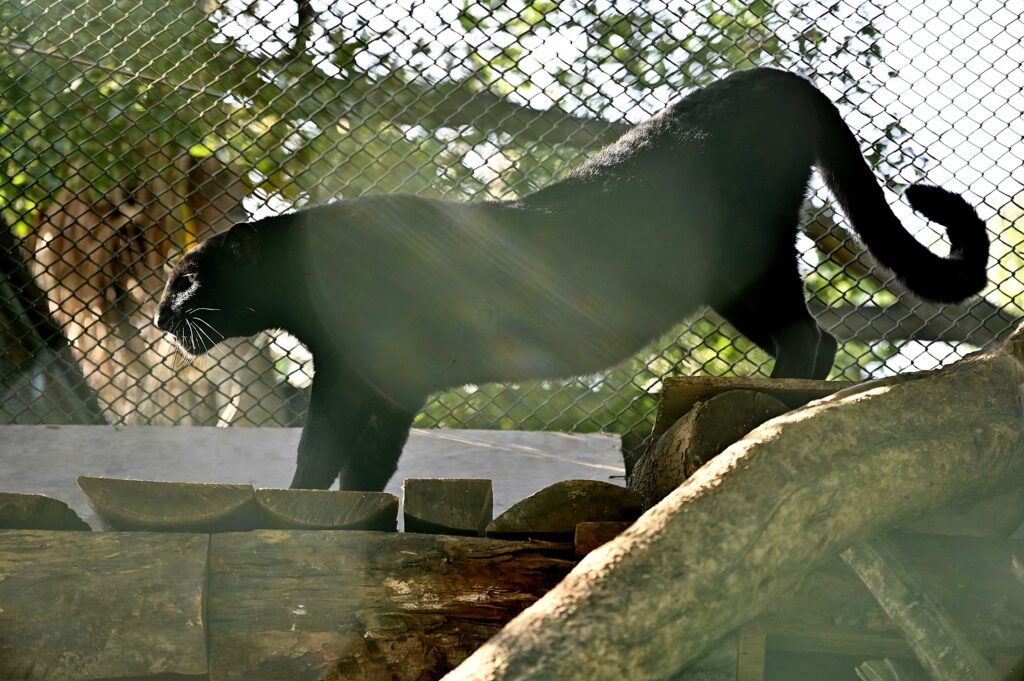
Additionally, the dark coat traps more heat, indicating that a changing climate may pose added risks by forcing leopards to seek darker, denser cover to avoid overheating. Their frequent appearance in open areas may be highly alarming. The melanistic leopard housed at the Central Zoo can be used to promote awareness, reduce human-wildlife conflict, and challenge negative cultural perceptions of the dark morph.
Urgent Need for Conservation
The melanistic leopard may be one of the most visually striking and fascinating creatures in the wild, yet it faces significant survival challenges. Conservation efforts must be strengthened to help these animals thrive in their natural habitats. With encounters increasing in populated areas, conservation has never been more urgent.
There is a need for detailed research on distribution, habitat preferences, and prey availability for melanistic leopards in Nepal. Without such data, effective conservation strategies to mitigate human–wildlife conflict and protect this rare genetic variant cannot be developed. Ecological studies on habitat use and investigations into the causes behind rising sightings are essential for understanding how best to conserve this elusive creature.
Furthermore, education campaigns are essential to inform local communities about the importance of conserving these leopards and to reduce the negative impact of superstition and retaliatory actions. The Central Zoo can play a major role, not only serving as a sanctuary for wildlife but also raising awareness about the importance of protecting rare animals.
The melanistic leopard is a rare morph of the common leopard, and its conservation matters. However, Nepal lacks fundamental ecological, genetic, and physiological information on this variant. The frequency of finding dead or severely injured melanistic leopards is an indicator of the threats to its survival.