Nations are not sustained by power, law, or geography alone; their ultimate foundation lies in trust, discipline, and shared national consciousness. When rulers place themselves above the rule of law, when state power becomes captive to corruption, nepotism, and self-interest, and when the voices of the people are persistently ignored, the nation begins its descent into crisis.
History shows that nations do not collapse overnight; their downfall is the cumulative result of prolonged political failure, moral decay, and institutional weakness. Nepal today stands at such a critical juncture. In moments like these, the nation searches for a final force capable of preventing total anarchy. In Nepal’s case, that force is not accidental; it is rooted in the state philosophy of Prithvi Narayan Shah, a balanced foreign policy, and the continuity of institutional discipline. The tangible embodiment of this continuity is the Nepali Army.
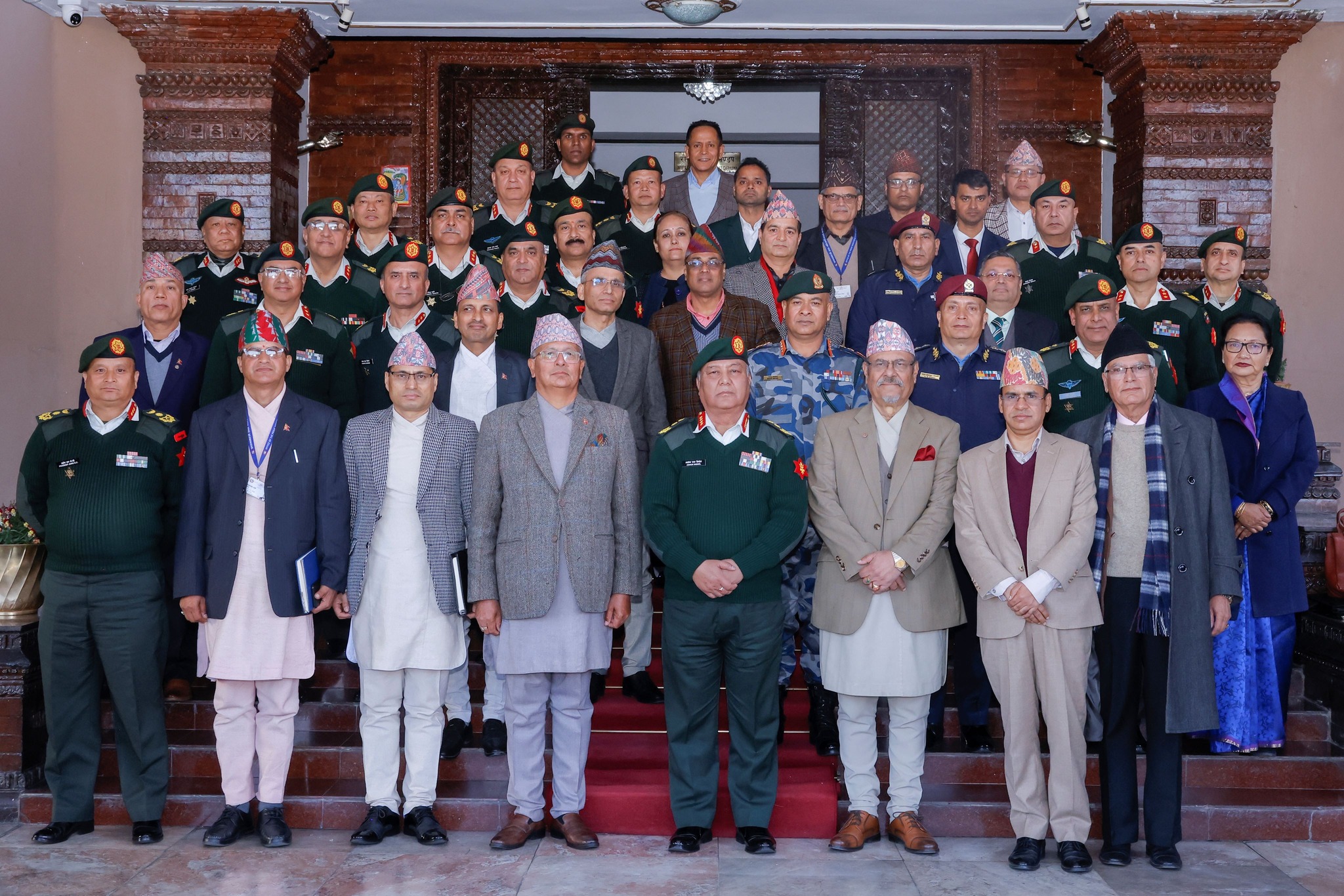
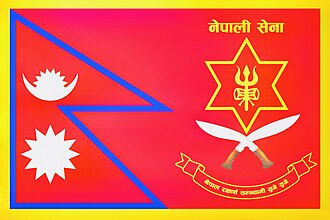
Prithvi Narayan Shah’s divine counsel states that “Nepal is a shared garden of four castes and thirty-six ethnic groups.” This is not merely a cultural metaphor; it forms the philosophical foundation of national unity. It defines Nepal as a pluralistic nation bound together by a shared identity. This vision has also shaped the character of the Nepali Army; it is not the instrument of any party, individual, or ideology; it is the shared guardian of the entire nation. The history of the Nepali Army is not only a history of war but also a history of nation-building, crisis management, and the protection of national unity.
National security is not limited to border defense alone. It encompasses what the nation and its citizens perceive: protection of citizens, language, religion, culture, and national heritage. In an open democratic system, sustaining sovereignty requires a strong economy, effective diplomacy, and a security apparatus equipped with modern technology. Geopolitically, Nepal is situated in an extremely sensitive region, facing internal instability, external pressures, and emerging power competition. In this complex environment, recent movements, particularly the events of September 9, have exposed serious vulnerabilities in Nepal’s internal security.
The September 9 incident starkly revealed the weaknesses in the security framework of the capital. In just a few hours, public infrastructure was destroyed, national assets were endangered, and the state’s control nearly collapsed. The lack of coordination among administrative authorities, local governments, and security institutions became apparent. Yet, in the midst of this chaos, it was the Nepali Army that ultimately played the decisive role in preventing complete collapse. This incident also illustrated that the concept of state security cannot be limited to external threats alone; it must include effective internal governance, rapid crisis response, and responsibility toward national assets. This is the true measure of sustainable national security.
Following the September 9 incident, a widespread misconception emerged—that the Nepali Army intended to impose military rule or act against democracy. This perception was driven by fear and misinterpretation. In reality, the Nepali Army acted in the constitutional, national, and civic interest during a critical crisis. Throughout history, the Nepali Army has never been a tool of any party, individual, or regime; it has consistently stood with the nation. Whether during the 2006 democratic movement, the Maoist insurgency, or the devastating 2015 earthquake, the Nepali Army has always been at the forefront of protecting citizens and national stability.
Why is the Nepali Army the “Ultimate Force”?
First, institutional continuity.
Governments may change, policies may shift, but the Army’s structure, chain of command, and national responsibilities remain stable. In times of political instability, the Army is the enduring backbone of the nation.
Second, discipline and unified command.
During crises, rapid decision-making and effective implementation are essential. The Nepali Army’s clear command structure, discipline, and training make it the most reliable institution in such moments.
Third, national legitimacy and public trust.
The Nepali Army does not represent a class, party, or region; it is the representative institution of the entire nation. In times of crisis, the Army is the people’s ultimate hope and source of confidence.
Fourth, multi-dimensional capability.
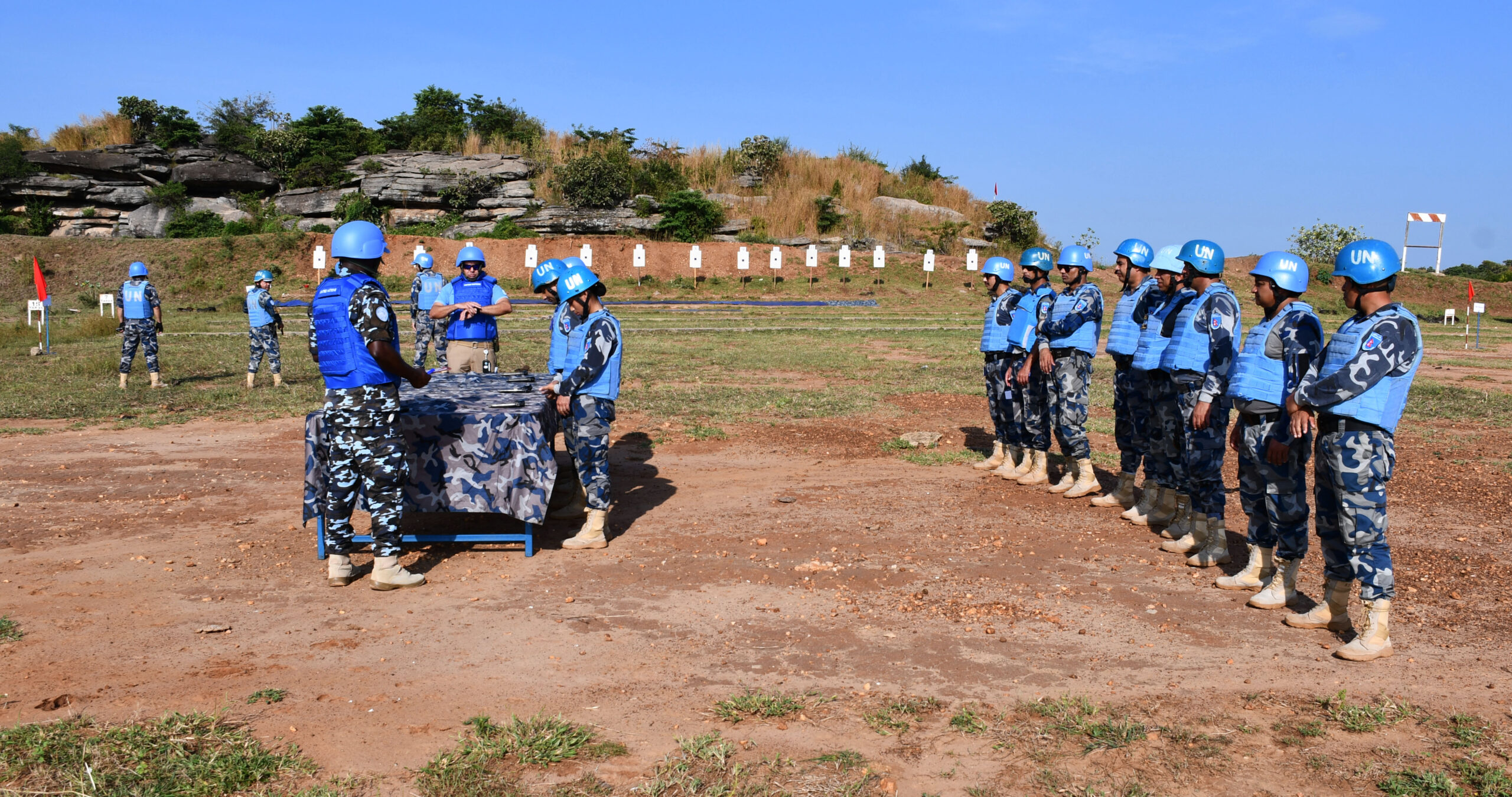
The Nepali Army is not limited to traditional defense. It has demonstrated its capacity in disaster management, rescue operations, development assistance, humanitarian relief, and international peacekeeping. Its professionalism in UN peace missions has earned global recognition and strengthened Nepal’s international standing.
Nepali Army and the United Nations: A Global Role
The Nepali Army has earned international recognition through its participation in United Nations peacekeeping missions. Its professionalism, discipline, and operational effectiveness have made it a trusted contributor to global peace. From conflict zones to post-disaster regions, Nepali troops have upheld the principles of neutrality, human rights, and humanitarian assistance. This global engagement reinforces Nepal’s reputation as a responsible, democratic nation while strengthening the Army’s institutional expertise in multi-dimensional operations. Participation in UN missions also demonstrates that the Army’s role extends beyond national defense; it serves as an instrument of global stability, reflecting Nepal’s commitment to peace and international cooperation.
Nepali Army as a ‘National Shield’
Calling the Nepali Army a “National Shield” does not imply mere weapons or military power. The shield is that which protects values, identity, and existence. The Army safeguards not only borders but also language, culture, constitution, and national unity, binding them together into a single fabric. Its role is profound and often invisible, providing citizens with a sense of psychological stability and national cohesion.
Nepal’s foreign policy is historically guided by the metaphor of being a “balancing pole between two rocks,” emphasizing caution, balance, and independent decision-making. In preserving this balance, the Army plays a critical role. It does not yield to external pressure; it protects Nepal’s sovereignty, territorial integrity, and decision-making autonomy.
However, the question remains: has the state provided the Nepali Army with the necessary political, legal, and technical support? Security reforms, modernization, cyber defense, and Irregular Warfare still require substantial investment. Political leadership must not drag the Nepali Army into controversy to cover its own failures. Instead, corruption-free governance, accountability, and the rule of law are the prerequisites for national security.
Nepal today does not need chaos but stability; not hatred, but unity; not destruction, but protection. Burning public property, demolishing national infrastructure, or legitimizing violence is not patriotism. True civic duty is the protection of national assets, institutions, and values.
At this decisive moment, forming a legitimate government, restoring peace, and instituting structural reforms must be the national priority. The Army must be supported, not politicized, and citizens must cooperate with security institutions rather than obstruct them.
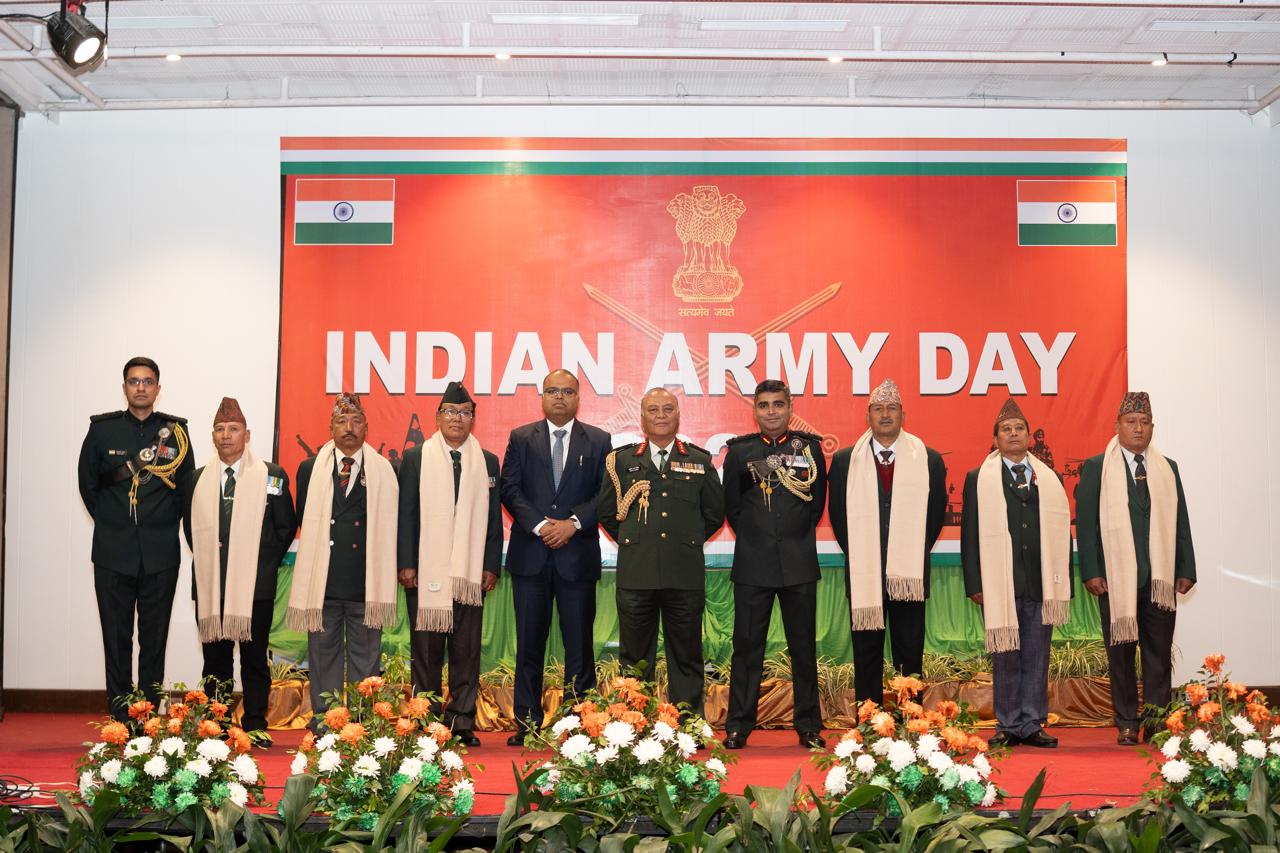
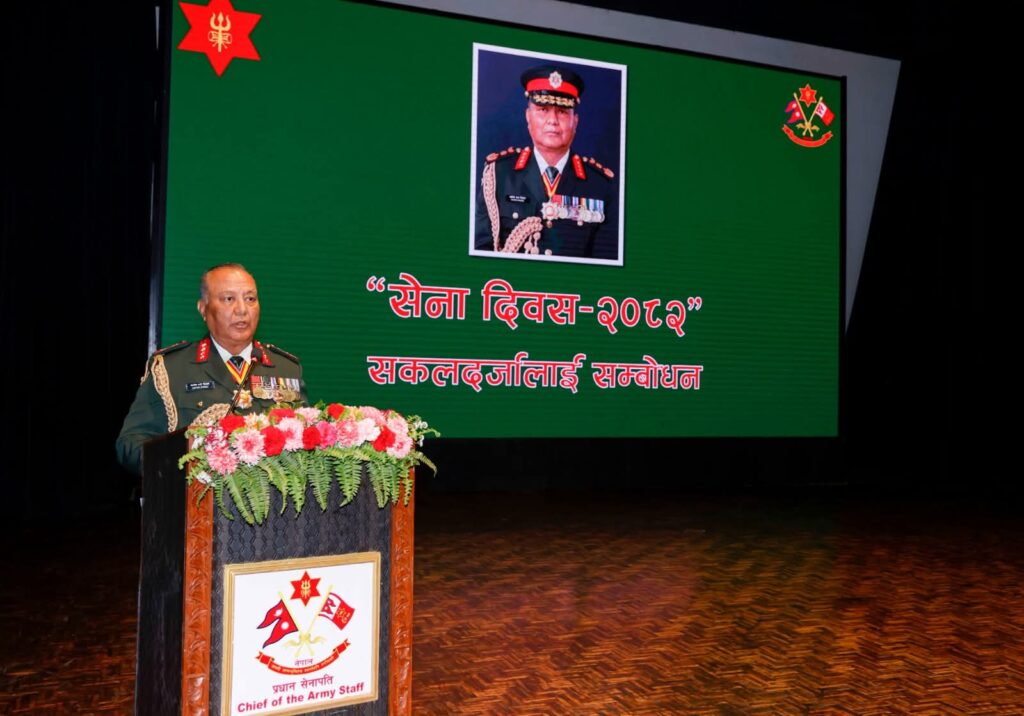
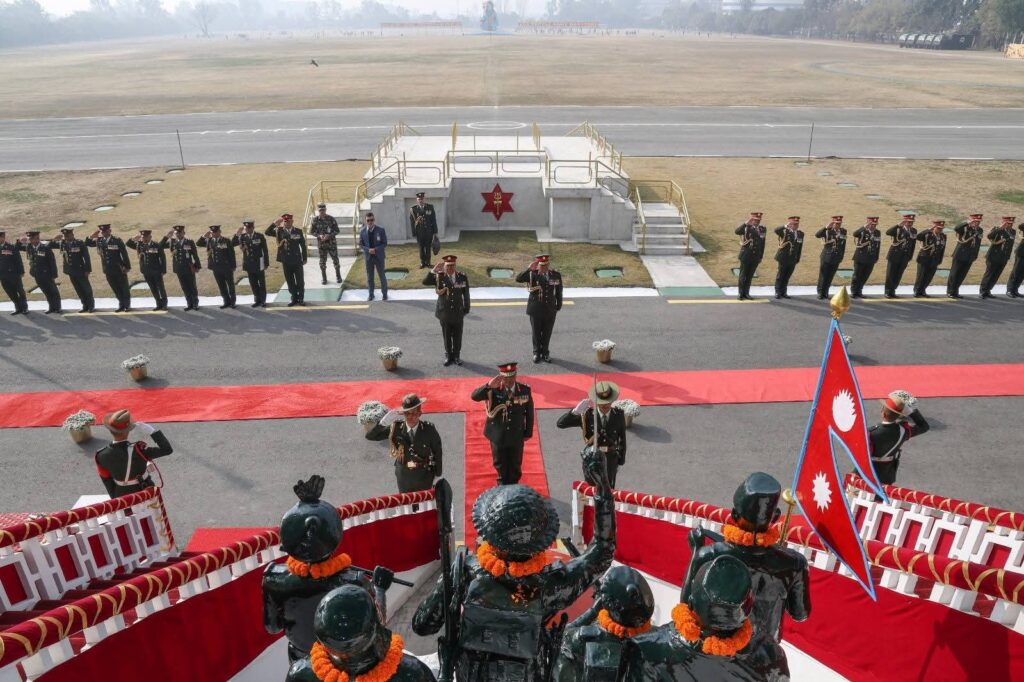
On Army Day 2083, the essential message is clear: the Nepali Army is not merely a reactive force; it is the enduring continuity of Nepal’s history, national identity, and ultimate protective shield. The seed of unity sown by Prithvi Narayan Shah, the path of balanced foreign policy, and the tradition of institutional discipline are all carried forward by the Nepali Army today.