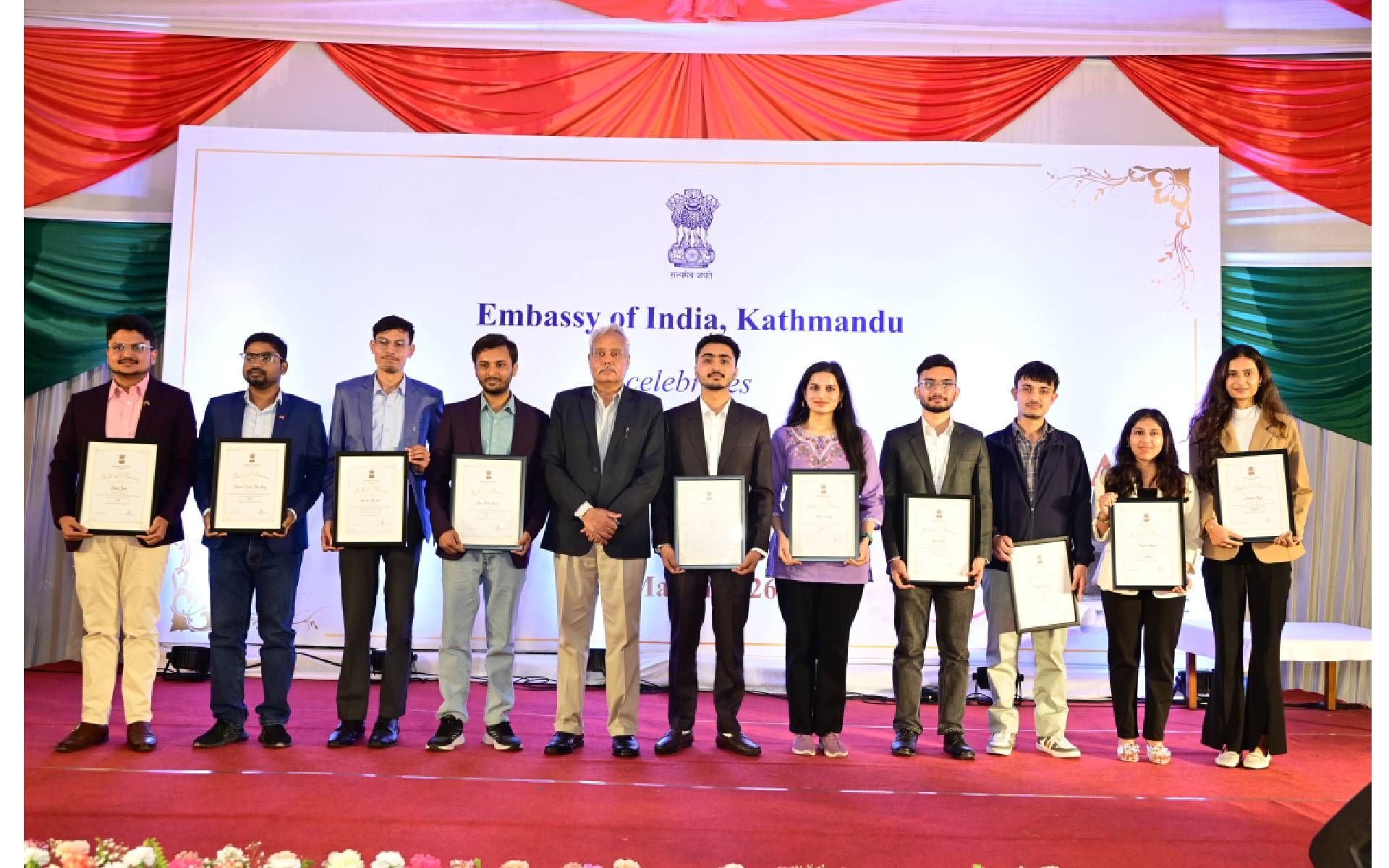
Kathmandu: The reasons Nepali students aspire to study abroad are well known: the desire for quality education and specialised programmes that may not be readily available in Nepal; the perception that foreign universities offer better academic opportunities, modern facilities and innovative teaching methods; and the prospects of international exposure, stronger career opportunities, professional networks and scholarships, among others.
While the United States, the United Kingdom, Australia, Canada and European countries are generally regarded as the most popular destinations for Nepali students, a significant number continue to choose India—Nepal’s next-door neighbour with which it shares close historical, cultural and people-to-people ties.
The latest data from India’s Ministry of Education show that Nepal accounted for 24.1 percent of all foreign student enrolments in India in the 2023–24 academic year, up from 21 percent in 2013–14. India hosted 58,134 foreign students from 173 countries during the year, making Nepal the largest source country.
India remains an important destination for Nepali students seeking academic and professional opportunities. Its proximity, shared cultural traditions and relatively accessible higher education system make it an attractive alternative to other destinations.
The open border between Nepal and India is an important enabling factor. Nepali students travelling to India do not need visas. The geographical proximity also makes it easier for students to travel home and maintain contact with their families. The overall cost of studying in India can also be considerably lower than that of studying in North America or Europe.
Besides, scholarships offered by the Government of India, Indian institutions and universities are another important attraction.
The Indian Council for Cultural Relations (ICCR), along with other scholarship and institutional arrangements, provides opportunities for Nepali students to pursue higher education in India. India has been offering scholarships to Nepali students for decades, covering a wide range of disciplines, including engineering, medicine, agriculture, pharmacology, food technology, computer applications, business administration, music and fine arts.
The scholarship programmes offered by India include the Atal Bihari Vajpayee General Scholarship Scheme (ABVGSS) and the Silver Jubilee Scholarship Scheme (SJSS) for undergraduate, postgraduate and PhD studies. There are also scholarships for students interested in traditional systems of medicine under the AYUSH Scholarship Scheme, while the COMPEX Scholarship Scheme provides opportunities for undergraduate study in fields including engineering, pharmacy, agriculture, food technology and nursing.
Other scholarship schemes support postgraduate study in areas such as engineering and agriculture.
According to the data of the Indian Embassy in Kathmandu, around 1,500 scholarships or seats are offered annually to Nepali nationals. Since 2001, India’s scholarship programme in Nepal has benefited approximately 40,000 students. The programme covers not only students studying in India but also students pursuing education in schools and colleges in Nepal.
“Such schemes attract Nepali students to India. A large number of Nepali students are studying at Delhi University and Jawaharlal Nehru University,” said Reshu Aryal Dhungana, educationist and member of the National Planning Commission of Nepal.
Scholarships are one of the major pull factors. According to her, problems within Nepal’s education sector—including political interference, delays in examinations and the publication of results—are additional factors that encourage young people to seek educational opportunities abroad, including India.
“India is a very viable and good place for people to consider for exposure and learning. I would say it’s an ideal destination for Nepali students to learn skills, return to Nepal and apply those skills back home,” Aryal said.
For many Nepali students, studying in India can also provide access to a large and diverse economy. Graduates may find opportunities for internships, professional networking and exposure to industries operating on a much larger scale than Nepal’s. Such exposure can be particularly valuable for students in fields such as engineering, information technology, medicine, business and management.
India’s universities and institutions also offer a wide range of programmes. Institutions such as the All India Institute of Medical Sciences (AIIMS), the University of Delhi, the Indian Institutes of Technology (IITs), Vellore Institute of Technology (VIT) and Manipal institutions are among the better-known names in Indian higher education.
For some Nepali students, studying in India can provide an affordable international education and exposure before they pursue further academic or professional opportunities elsewhere.
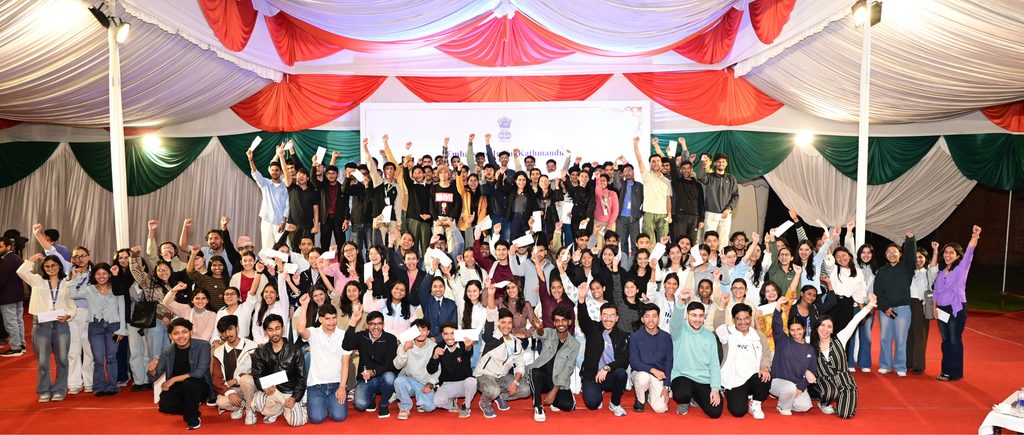
The attraction, however, is not limited to education. The experience of living in another country, interacting with people from different backgrounds and gaining independence can also shape students’ professional and personal development.
If students return to Nepal with new skills, professional networks and international exposure, their overseas education can contribute to the country’s human-resource development. But if they remain abroad permanently, it may contribute to Nepal’s continuing brain drain.
India offers an interesting example in this regard. For example, the Indian National Overseas Scholarship scheme funds Indian students from low-income households to pursue Master’s degree or PhD courses abroad. But after they graduate, students are required to return to India and serve in India for at least one year. The UK government’s Chevening Scholarship also requires scholars to return home for at least 2 years after their graduation.
Nepal may examine how scholarship programmes can be designed not only to finance education but also to encourage graduates to return and apply their knowledge at home.
One possible approach would be to introduce or expand government-funded scholarships linked to a return-home commitment. When the country creates adequate employment opportunities, competitive salaries and a professional environment in which their newly acquired skills can be used, scholarship recipients will be willing to return and build their careers at home.
Nepali students who study in India on scholarship return home full of confidence.
Dipesh Karki is among such students. Karki, a Nepali student who received a COMPEX Scholarship from the Embassy of India, said the opportunity transformed his life. He studied Electronics and Communication Engineering at the National Institute of Technology (NIT), Kurukshetra, India. According to him, this “opportunity opened a completely new world” for him.
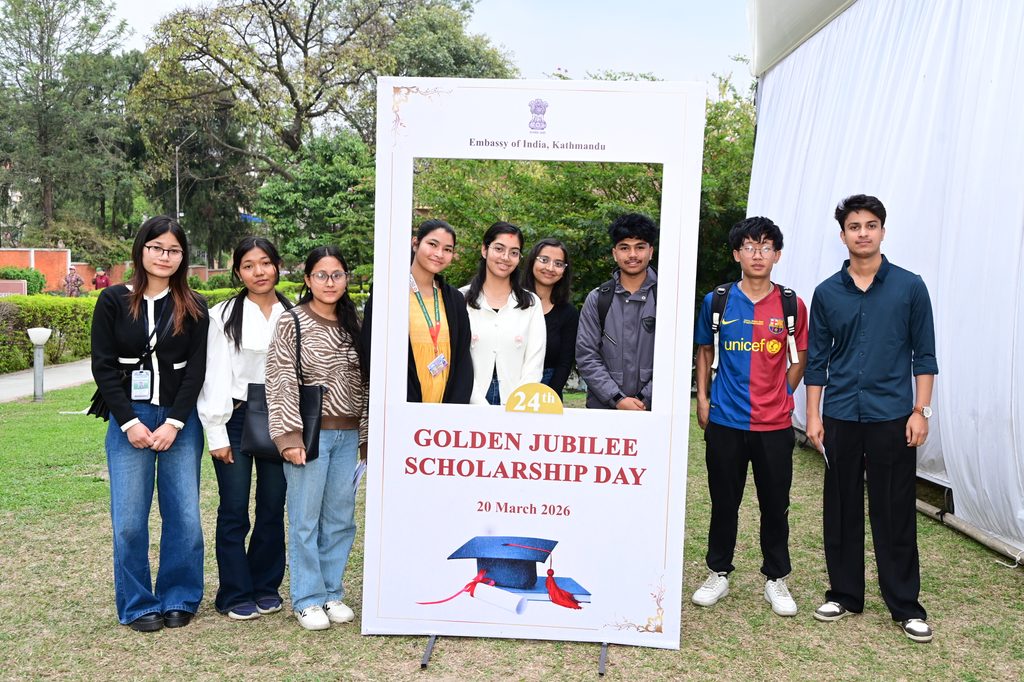
The scholarship opened a new world of opportunities. Academically, it gave him access to engineering education and exposure to a competitive learning environment. Professionally, it opened doors to opportunities he had not previously imagined. Exposure to diverse ideas, people, cultures and entrepreneurial possibilities also shaped his subsequent career. “The COMPEX Scholarship was one of the most defining moments of my life,” he recalled.