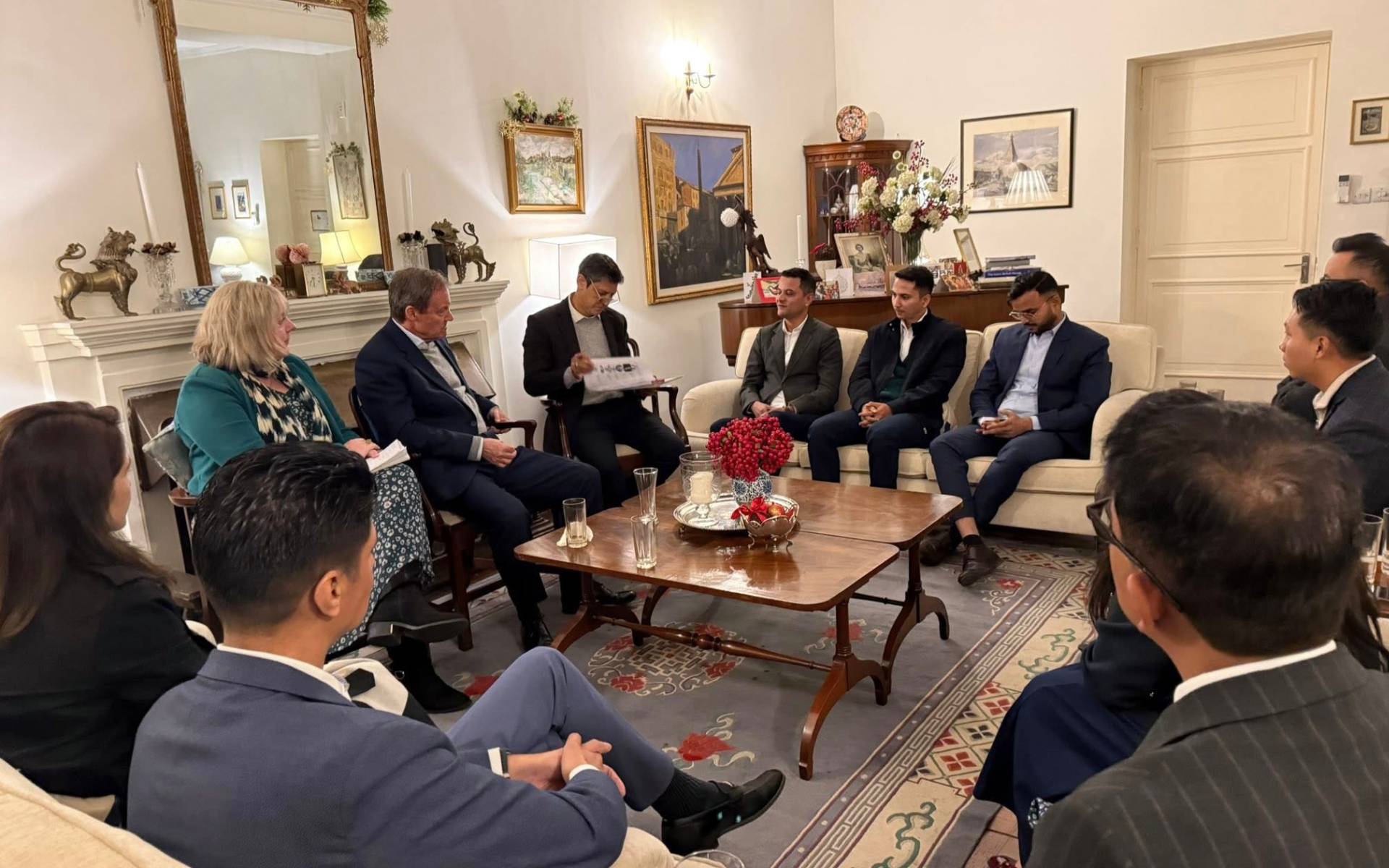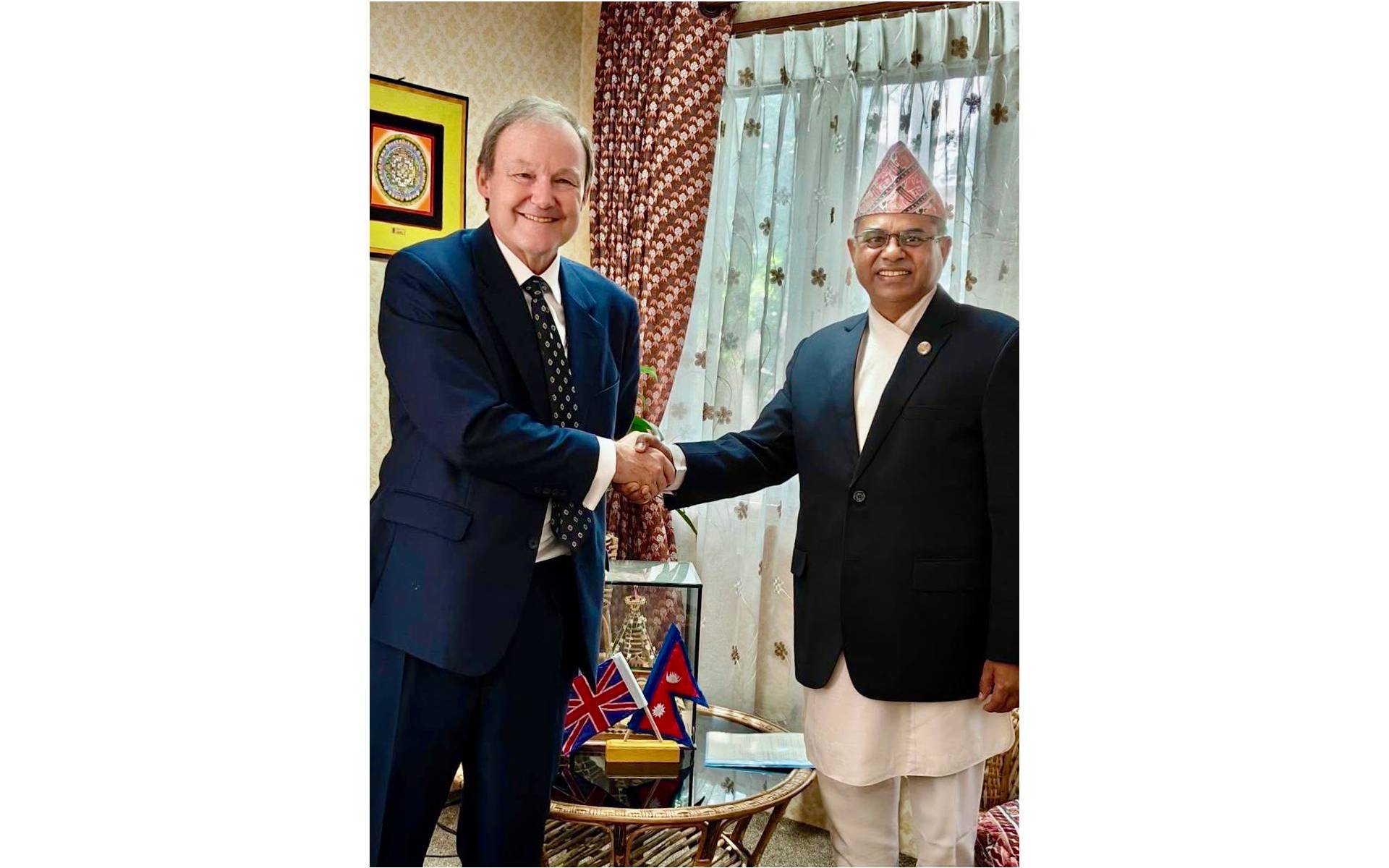
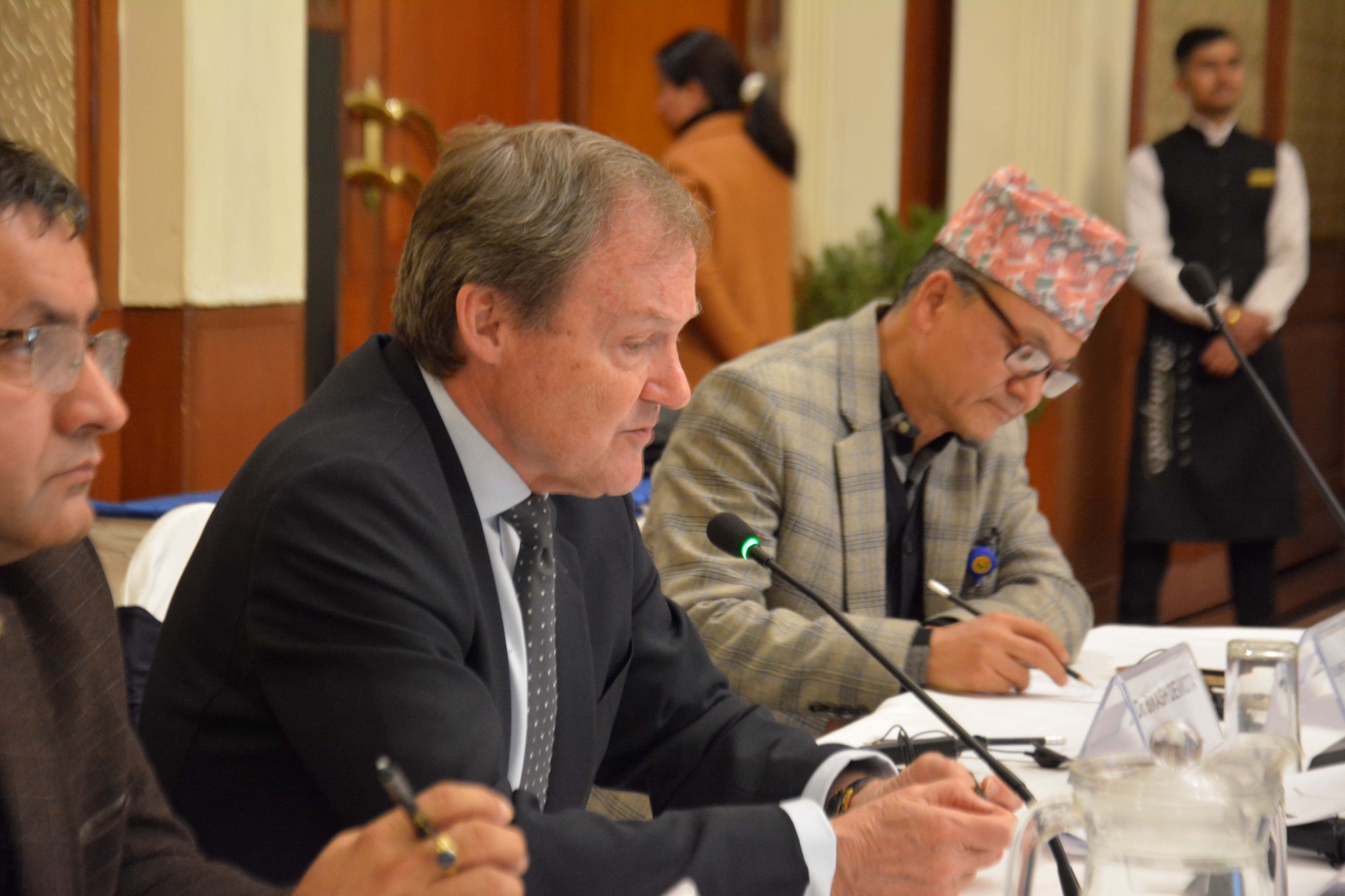
Kathmandu: The British Embassy in Kathmandu joined senior leaders of the Government of Nepal at a high-level roundtable discussion titled “Learning from the UK’s Fleming Fund to Inform Global Health Security Actions in Nepal.” The event focused on strengthening national and global responses to antimicrobial resistance (AMR) and enhancing health security.
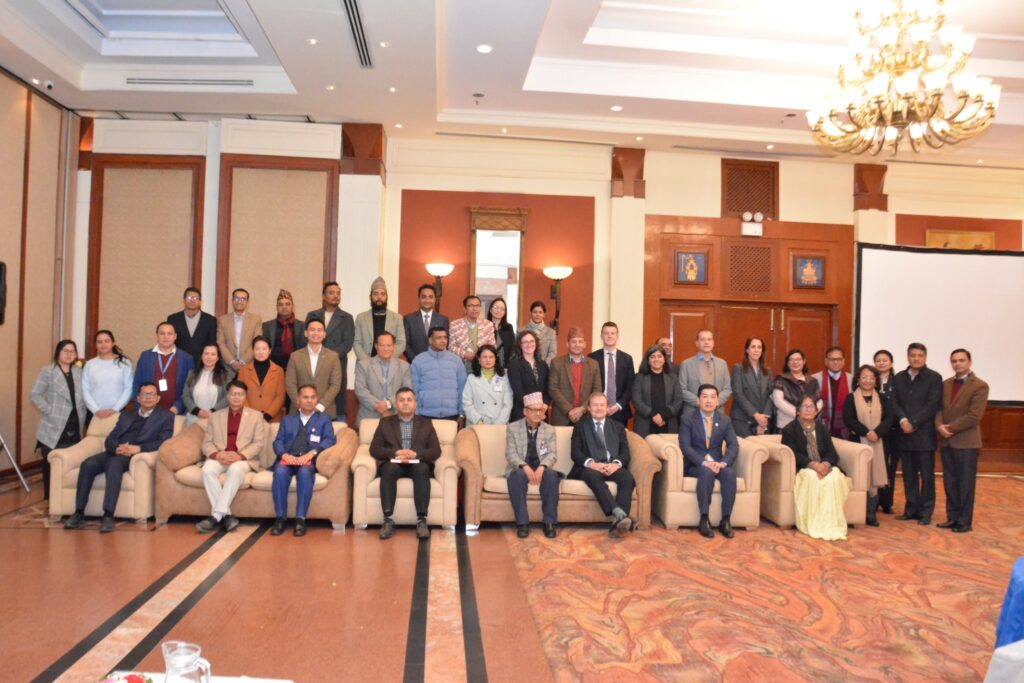
Addressing the forum, British Ambassador to Nepal Rob Fenn commended Nepal’s leadership in addressing AMR as a national development and health security priority. He noted Nepal’s significant progress, including the implementation of the National Action Plan on AMR (2024–2028), the establishment of a functional One Health governance structure, and regular reporting to the World Health Organization’s Global Antimicrobial Resistance and Use Surveillance System (GLASS).
Since 2018, the UK’s Fleming Fund has worked in close partnership with Nepal to strengthen AMR and antimicrobial use (AMU) surveillance across human health, animal health, food safety, and environmental sectors. Through this collaboration, 26 human health and seven animal health AMR surveillance sites have been established, alongside joint surveillance mechanisms spanning human, animal, food, and environmental sectors. The partnership has also supported two rounds of poultry and food AMR surveys, active AMU surveillance, and the training of more than 1,500 professionals in laboratories, diagnostics, and data analysis.
As a result of these efforts, Nepal has recorded a 3.8-fold increase in bacterial culture and susceptibility testing, contributing to improved diagnoses and safer antibiotic use. Laboratories have been upgraded, digital reporting systems strengthened, and GLASS reporting coverage significantly improved.
The British Embassy noted that these achievements extend beyond technical gains, translating into lives saved, infections prevented, and stronger global health security. The United Kingdom reaffirmed its continued commitment to advancing the One Health approach, tackling AMR as a global threat, and strengthening pandemic prevention, preparedness, and response in partnership with Nepal.