On July 31, 1992, a Thai Airways International Airbus A310 descending toward Kathmandu flew into a mountainside north of the valley. All 99 passengers and 14 crew were killed. Tribhuvan International Airport sits in a bowl of mountains, and at the time it had no surveillance radar. Controllers could not see where their traffic was.
The government of Nepal asked Japan for help, and within a few years Japan had installed the first radar Nepal ever possessed.
Three decades later, the radar coverage over Nepali skies, the navigation aids at remote mountain strips, and a generation of air traffic controllers trained in Sendai and Tokyo all trace back to that request. No partner has shaped Nepali aviation as consistently, as technically, or as quietly as Japan.
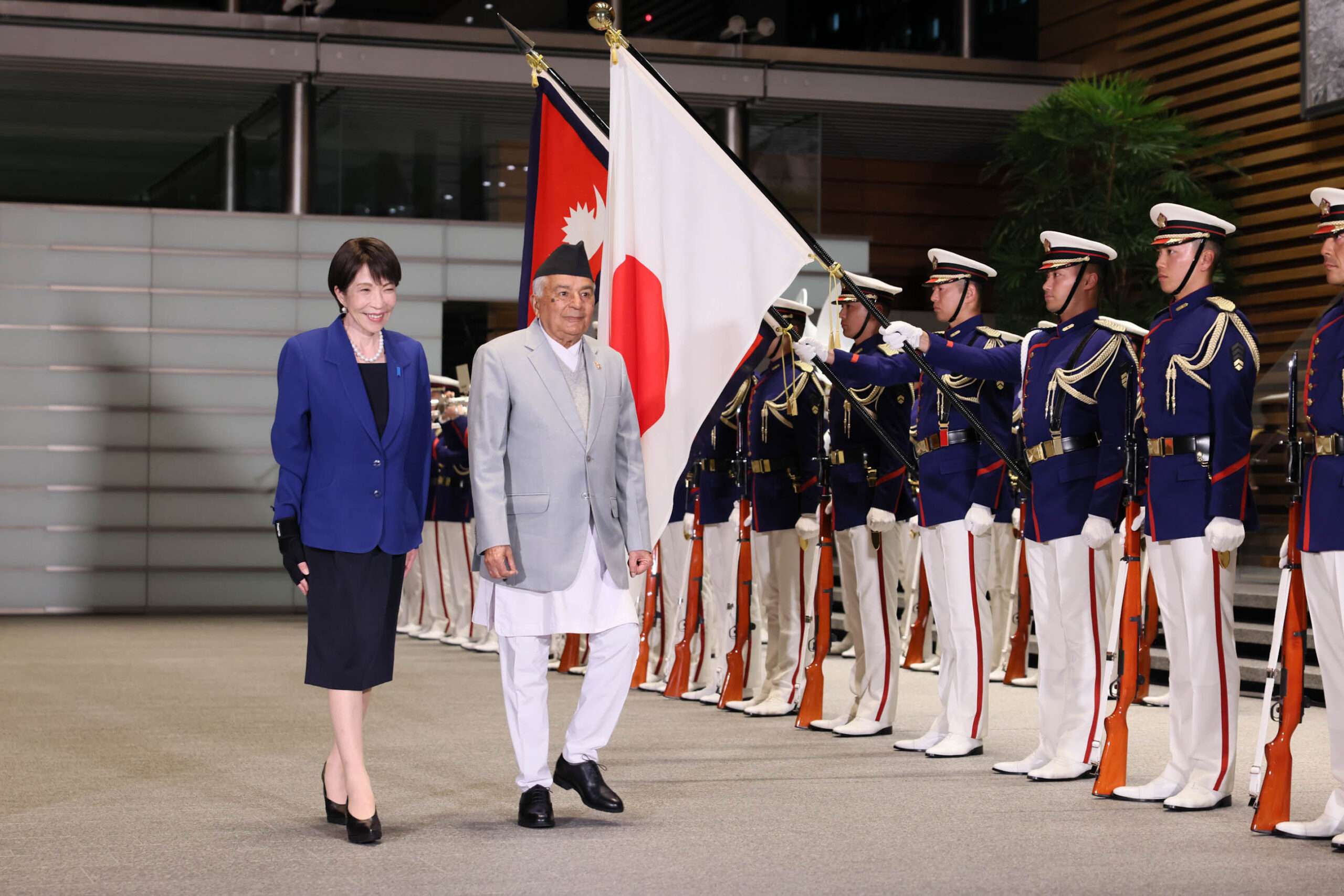
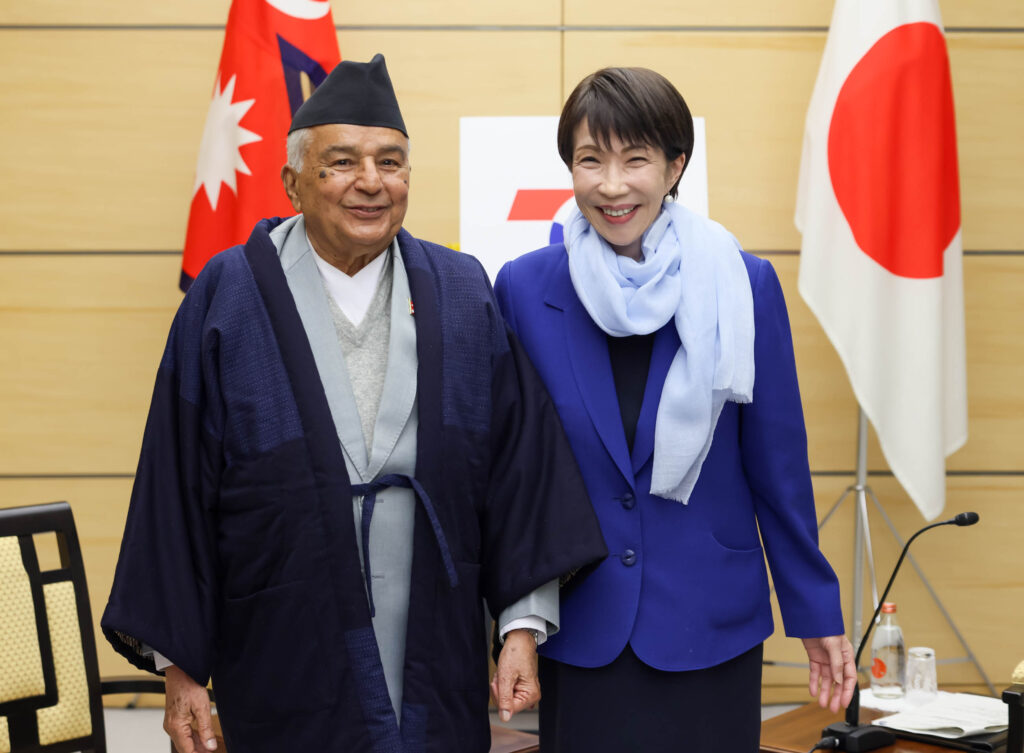
This year marks 70 years of diplomatic relations between Nepal and Japan, formalized on September 1, 1956. President Ramchandra Paudel went to Tokyo in February to mark the occasion, calling on the Emperor and meeting Prime Minister Takaichi Sanae. Anniversaries tend to produce ceremonies. What they rarely produce is an honest audit of what a partnership has delivered and what it has left undone. Nepali aviation is one of the few sectors where that audit gives a clear answer, and a clear agenda for the next ten years.
The timing matters. Nepal is trying to rebuild its international credibility after 12 years on the European Union’s Air Safety List, and credibility is something other states confer on institutions they trust. On paper Nepal is not failing. Its 2022 ICAO safety oversight audit scored 70.1 percent, above the 60 percent global benchmark, according to the Civil Aviation Authority of Nepal’s Aviation Safety Report 2024. Yet every Nepali operator is still banned from European skies, not because of any single airline but because of doubts about the regulator itself. A country can have rules and still not be trusted to enforce them. Nepal is also trying to fill two new international airports, in a region where governments now shop among competing infrastructure offers and where the structure of a partnership can matter as much as what gets built. Which partnerships actually leave durable national capacity behind, rather than monuments and repayment schedules, has become a foreign policy question.
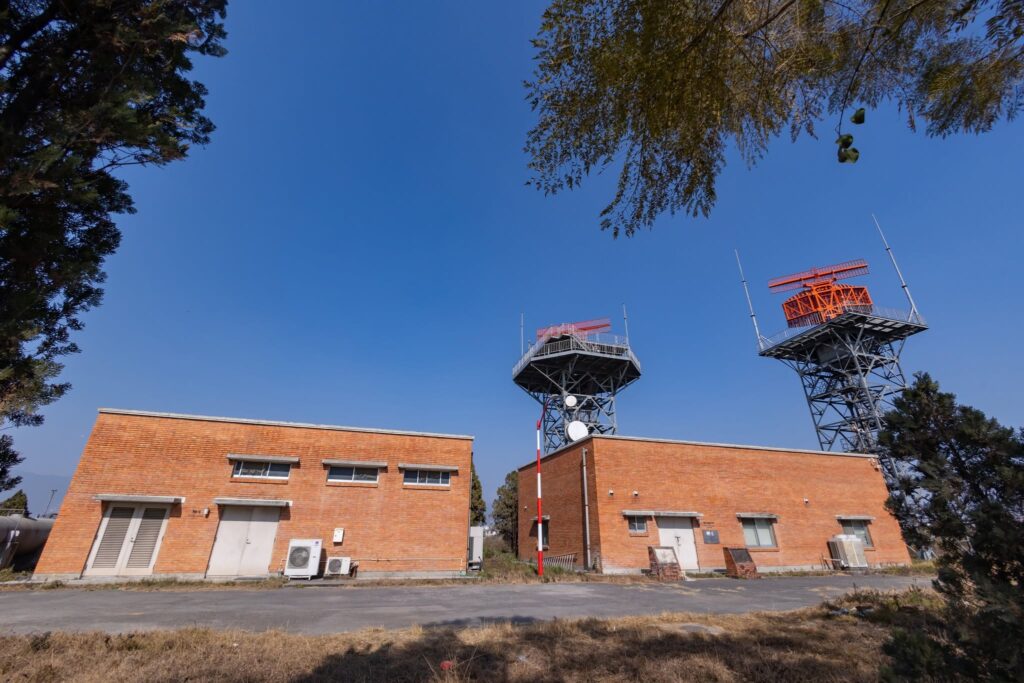
Japan’s aviation cooperation with Nepal began in 1988, by the Japan International Cooperation Agency’s own reckoning, and accelerated sharply after the 1992 crash. The first radar came soon after. Two decades later, the Tribhuvan International Airport Modernization Project delivered two next-generation Mode S monopulse secondary surveillance radars, one at the airport and the other on the ridge at Bhatte Danda in Lalitpur.
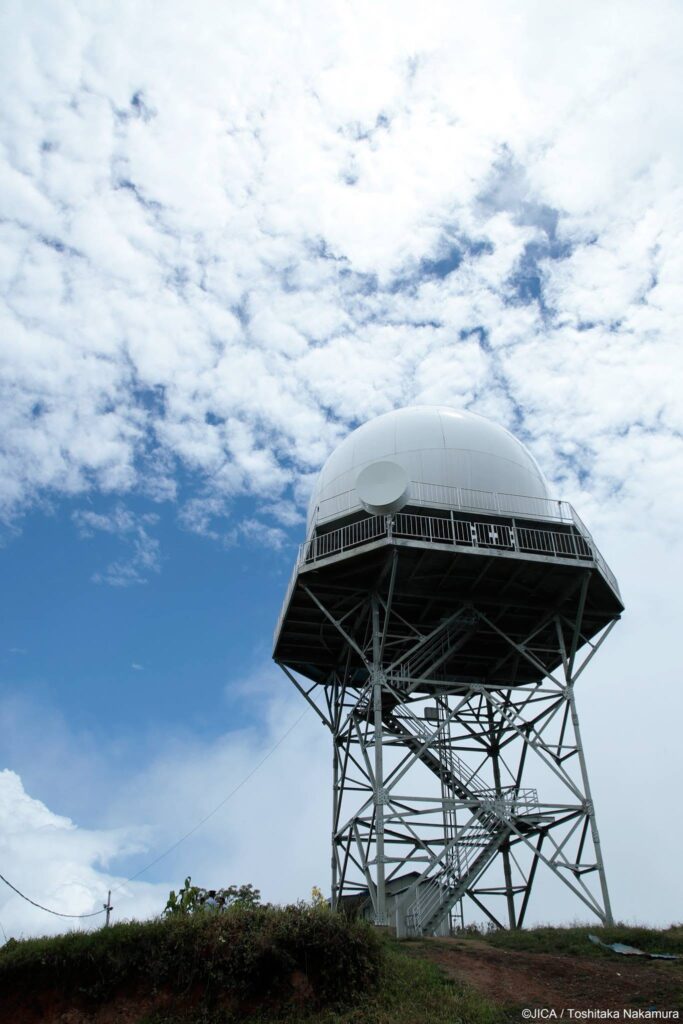
The system cost around 906 million Nepali rupees, was completed in 2016, and went operational in February 2018. Its en route coverage extends out to 200 nautical miles, reaching Dang in the west and the country’s eastern, northern, and southern fringes. Those radars are the reason controllers in Kathmandu can now see most of the airspace they are responsible for.
The grants did not stop at the capital. In 2016, Japan committed roughly 1.45 billion yen under a JICA grant agreement to install aviation safety facilities at eight airports. The package included an instrument landing system and distance-measuring equipment at Tribhuvan, navigation aids at Chandragadhi and Dhangadhi, and solar-powered runway lighting at five high-altitude strips that keep the mountain districts connected: Lukla, Jomsom, Jumla, Rara, and Simikot. None of this is glamorous work. But runway lights and navigation aids are what separate an airstrip that closes at the first cloud from one that keeps flying, and in the mountains that difference is counted in medical evacuations and supply flights rather than passenger numbers.
Hardware degrades without people to run it, and this is where the Japanese effort has been most distinctive. In 2019, the Japan Civil Aviation Bureau (JCAB) hosted Nepali air traffic safety electronics personnel at its Iwanuma training center, at Sendai Airport, and at Tokyo’s Haneda, training them to operate and maintain the very instrument landing systems Japan had funded. In 2022, JICA and the Civil Aviation Authority of Nepal signed a three-year technical cooperation project at Tribhuvan International Airport covering air traffic flow management, airport collaborative decision-making, and an upgrade of the communication, navigation, and surveillance backbone. The need is real. TIA handled 9.42 million passengers in 2024 against a design figure of 8 million, according to CAAN data. An airport in that position needs smarter sequencing of the traffic it already has at least as much as it needs new concrete.
I should declare an interest here, because it shapes how I read this record. I worked as a helicopter service engineer under JCAB’s regulatory framework, and I now work daily under the New Zealand and Australian regimes. What Japan transferred to Nepal was never just equipment. JCAB has a particular institutional character: a discipline around documentation, an insistence on recurrent competence checks, a habit of treating maintenance records as evidence rather than paperwork. That kind of thing is a culture, and cultures don’t travel in shipping crates. Nepal received the radars and the navigation aids. The harder question, 70 years in, is how much of the culture arrived with them.
Nepal’s two newest international airports were built on a different model. Pokhara International Airport was financed with a Chinese Export-Import Bank loan of roughly $216 million, a debt Nepal has since asked Beijing to convert into a grant, and one that became entangled in a public dispute over whether the airport belongs to the Belt and Road Initiative. Gautam Buddha International Airport at Bhairahawa was built largely on Asian Development Bank lending. Both are loan-and-construction relationships, and both now sit largely empty of international traffic. By the airport’s own records, Pokhara handled 42 international flights and 2,910 international passengers in its first 31 months. The terminal was built to process 650 passengers an hour.
Japan’s engagement is a different kind of thing: grant-based technical cooperation aimed at the parts of the system that earn no revenue. Safety, surveillance, training, the unprofitable mountain strips. None of it produces a ribbon-cutting photograph, which is probably why it gets so little attention. But some partnerships leave behind things a country can run on its own, and some leave things it has to keep paying for. This is also not charity. Quiet, grant-heavy, standards-first cooperation is Japan’s deliberate answer to Beijing’s lending diplomacy, the approach Tokyo markets as quality infrastructure, and Nepal is one of the few places where the two models sit side by side. A partner that delivers reliably and asks for little is easy to take for granted. It is exactly the partner a small state should study most closely.
Seventy years is a milestone for gratitude, but it is a better occasion for an agenda. The case for deepening this partnership now is that it has become genuinely reciprocal. Japan has something Nepal needs, Nepal has something Japan needs, and aviation is one of the rare channels where both move at once. Three steps would turn that into policy.
The first is accident investigation independence. Japan dismantled its own combined model in 2008 and established the Japan Transport Safety Board as a permanent, independent body, an Article 3 organization under the National Government Organization Act, operating to the no-blame principle of ICAO Annex 13. Nepal has nothing comparable. Its accident commissions are stood up after each crash and dissolved once the report is filed. A JCAB-CAAN twinning program on investigative independence, modeled on the JTSB’s statutory design, would transfer precisely the institutional architecture Nepal’s recent accident record shows it lacks. It is also the kind of credible, permanent institution the EU and ICAO look for before they extend trust.
The second is workforce mobility, and this is the clearest win for both sides. Japan faces a documented shortage of licensed aircraft maintenance engineers as its workforce ages. Its Specified Skilled Worker visa already lists aviation, including aircraft maintenance, as an eligible sector, and Nepal is a partner country under the scheme. Nepal, for its part, produces capable engineers who too often have nowhere regulated to go, so it exports them into low-skill, low-protection jobs in the Gulf. The missing piece is recognition. A bilateral pathway that maps CAAN’s Part 66-style maintenance licenses against Japanese requirements, supported through JICA’s human resource programs, would give Japan a pipeline of skilled technicians. It would give Nepal something worth more than remittances: a cohort of engineers who absorb Japan’s evidence-based maintenance culture from the inside and bring it home. Institutional culture moves with people who have worked inside it. It does not move with equipment.
The third is a national air navigation backbone rather than a Kathmandu one. Pokhara and Bhairahawa do not lack runways. They lack traffic, and the routes that would bring traffic depend on things no donor controls, from Indian airspace entry points to airline economics. What Japanese cooperation can do is make sure the system is ready when routes finally come, by extending the flow management, decision-making, and surveillance work already underway at Tribhuvan airport into a framework that takes in both new airports.
None of this substitutes for Nepal’s own homework, above all the long-pending separation of CAAN’s regulatory and service-provider roles, one of the structural reforms that European and ICAO assessors have pressed hardest for. That reform deserves its own article. But partnerships influence whether homework gets done, and Japan’s record suggests it is the partner most likely to help do it quietly and well.
The 9N-prefix on the tail of every Nepali aircraft is a promise the state makes to everyone who boards: that the system behind the aircraft works. For more than three decades Japan has helped Nepal keep that promise at the technical layer, in the radars, the navigation aids, and the controllers. The institutional layer is the work of the next decade, and it is work that serves both countries. The first phase of this cooperation built capability. The next one should build trust.