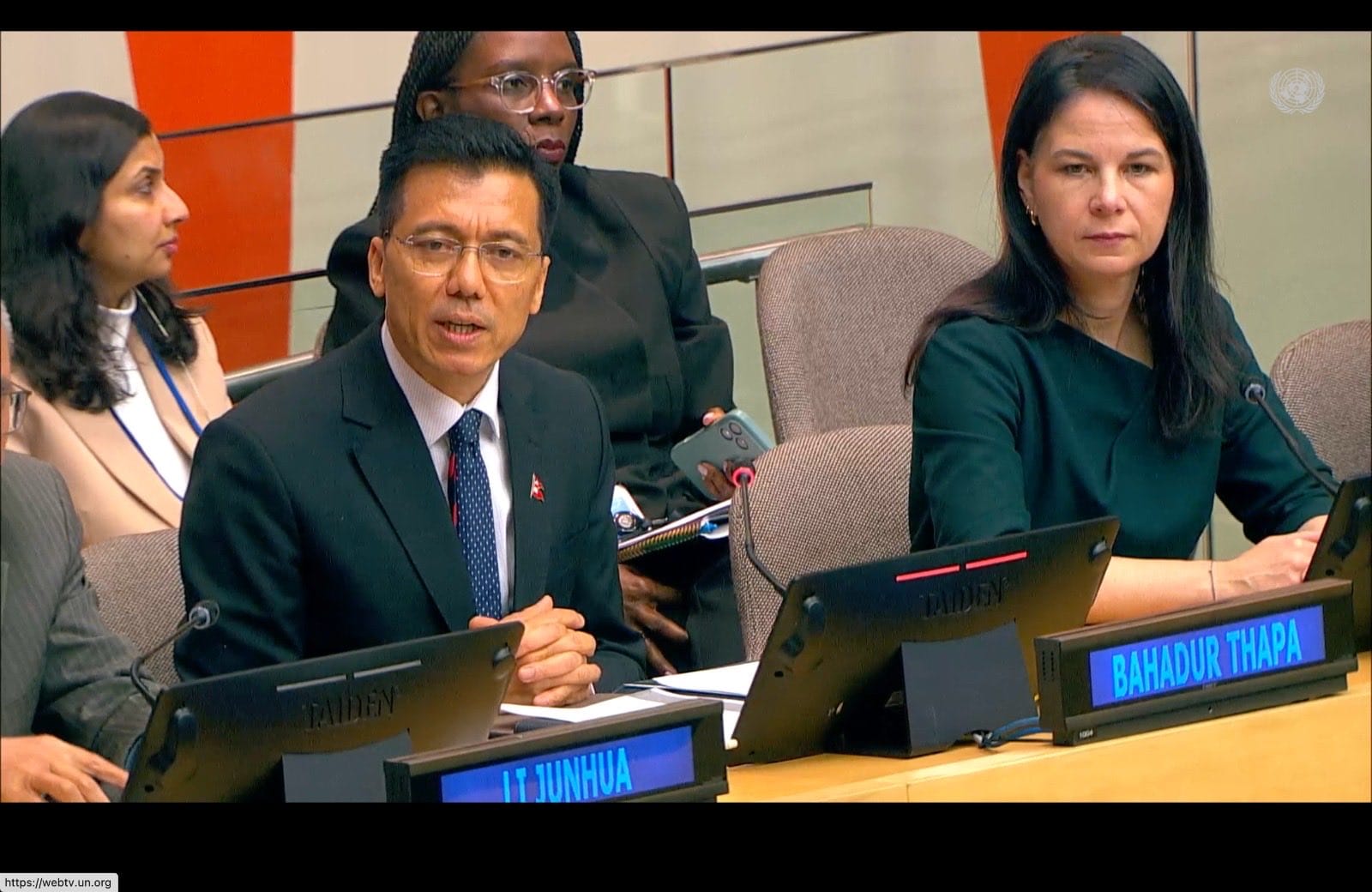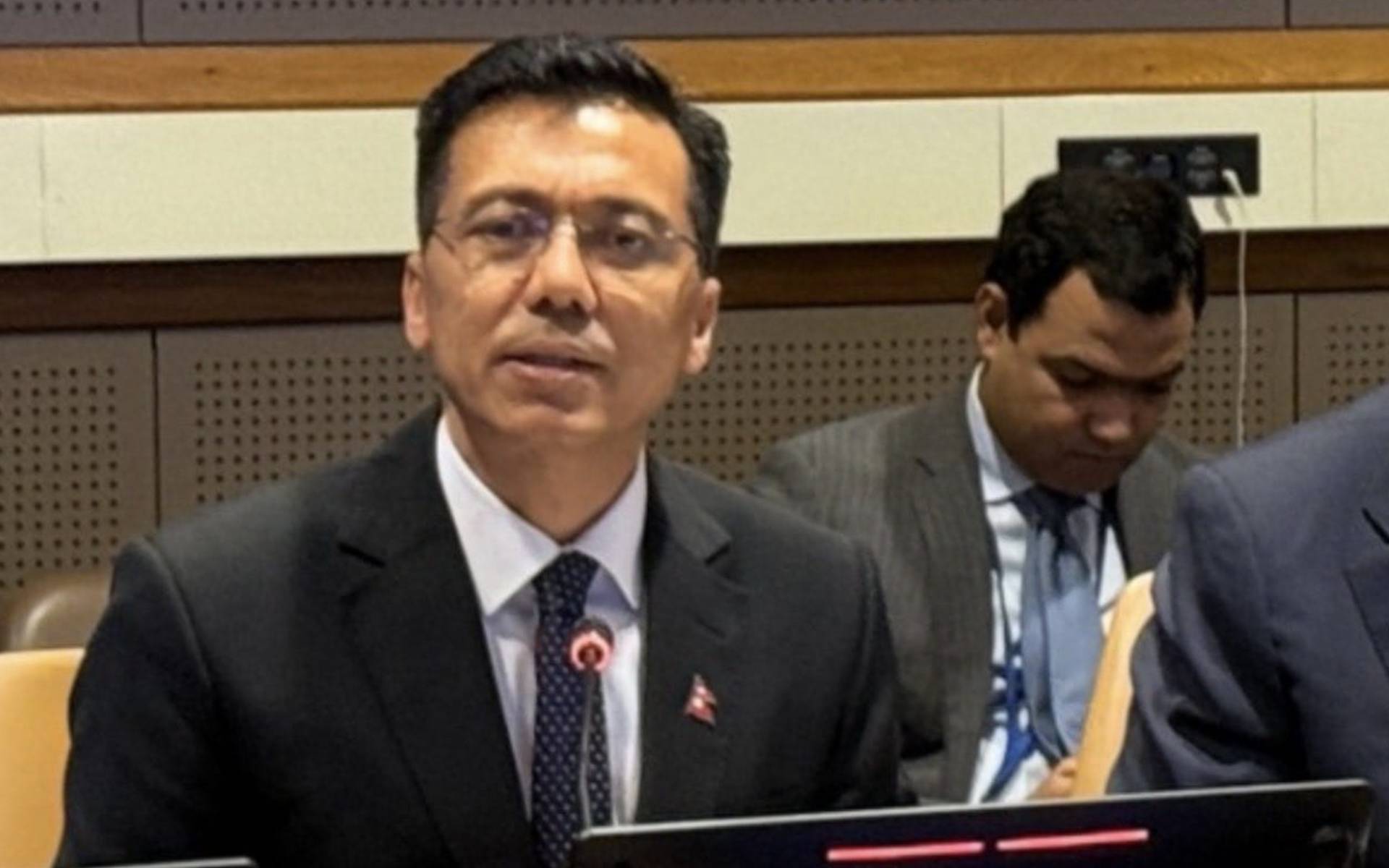
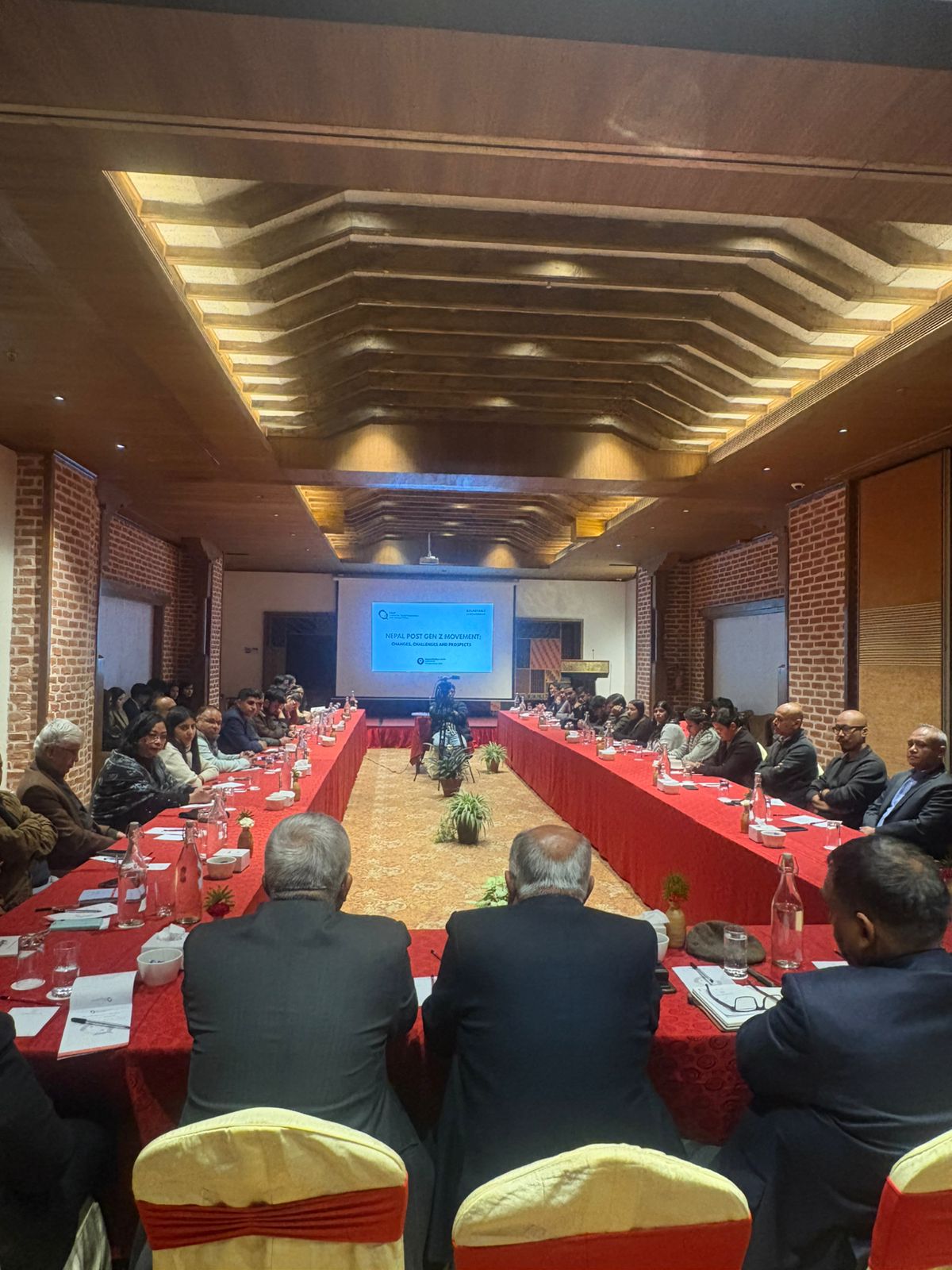
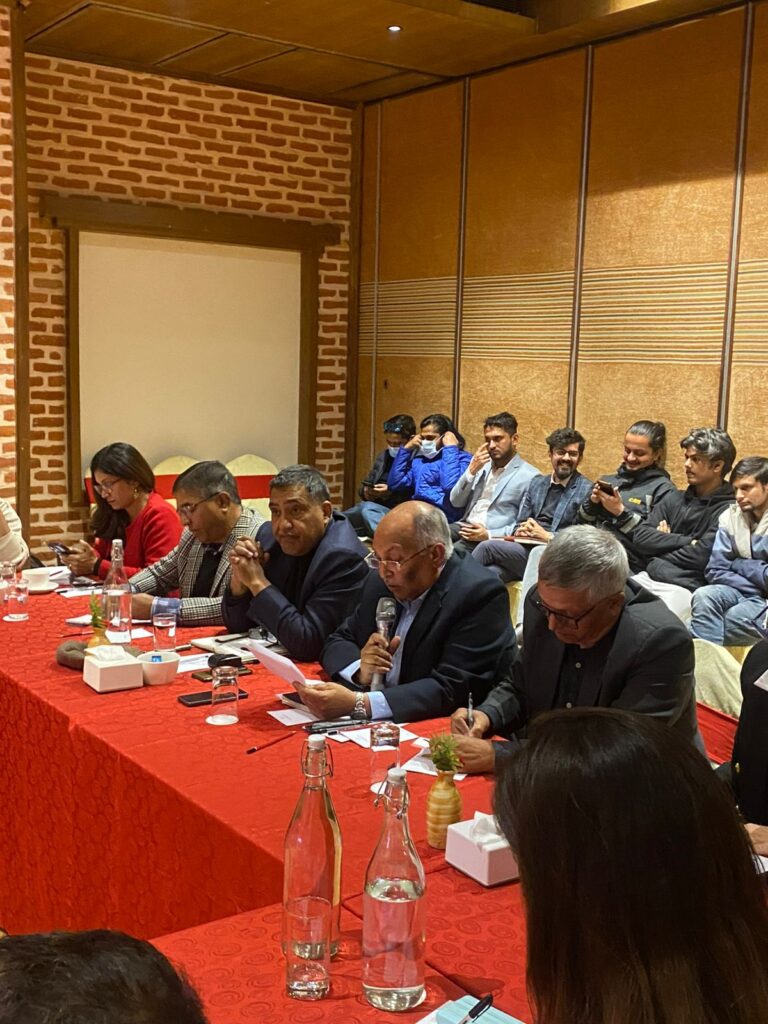
Kathmandu: The Centre for Social Innovation and Foreign Policy (CESIF), Nepal, hosted a roundtable discussion on Nepal Post GenZ Movement: Changes, Challenges, and Prospects on December 5, in Kathmandu. The dialogue brought together policymakers, Youth activists, diplomats, civil society leaders, and scholars to reflect on the causes of the movement, unpack its emerging challenges, and explore the pathways it opens for Nepal’s future.
The program commenced with welcome remarks by Amb. Vijay Kant Karna, CESIF’s Executive Chairperson, setting the tone for the discussion. In his welcome remarks, Amb. Karna underscored the need to critically examine the youth-led protests of September 8 and 9, including the mobilizations against systemic corruption, weakened institutions, and rising authoritarianism that ultimately reshaped Nepal’s political landscape. He highlighted how the movement exposed long-standing governance failures, from entrenched patronage networks to the erosion of democratic institutions. He also drew attention to the surge in misinformation and coordinated influence efforts that emerged in the aftermath, reinforcing the urgency for an evidence-based national dialogue. Analyzing the current scenario at hand, he stated that while the upcoming elections present a critical opportunity for democratic renewal, meaningful progress will still require sustained efforts to reverse decades of institutional decay. He concluded with a call to action, stating, “For Nepal to advance, we need principled leadership, resilient institutions, and a sincere national conversation based on evidence and democratic values.”
Tashi Lhazom, a youth activist, highlighted that the GenZ movement was a decentralized yet coordinated uprising driven by shared frustrations, where social media played a pivotal role, and Sudan Gurung emerged as a de facto leader out of necessity. She argued that while some dismiss the protests as aimless, they in fact carried clear objectives rooted in defending democracy from corruption, challenging a culture of “jholey-ism,” and demanding accountability from a government that, she emphasized, exists today because of the blood and sacrifice of young citizens. Lhazom stressed that the movement will define Nepal’s future, noting that its impact marks a turning point in the country’s democratic trajectory.
Ojaswee Bhattarai noted that the GenZ protests must be understood through the lens of rising class consciousness, where the “nepo-baby” discourse resonated because many young people saw deep socio-economic injustice, some advancing through connections, while others, despite hard work, found opportunities structurally out of reach. The movement, she argued, fundamentally changed Nepal’s political landscape by forcing recognition of youth as political actors, exposing exclusion in decision-making, and highlighting contradictions in leaders who once wrote manifestos in their youth but now resist making space for new generations. She emphasized that the path ahead requires platforms for youth participation, serious ideological development, and sustained intergenerational dialogue to ensure lasting democratic transformation.
Prakriti Dhakal noted that the current moment reflects the consequences of a democracy captured by a small few, urging policymakers to reconnect the voices from the streets with the priorities of the state. She suggested that Nepal’s youth now expect technocratic competence, new leadership, and clearer institutional direction. Looking ahead, she talked about the need for a more coherent framework and a collective commitment to move forward with clarity and purpose.
Manish Khanal, a lawyer by profession and a GenZ leader, said the protests grew from deep frustration among young people who face poor services, few jobs, and policies that restrict digital spaces instead of supporting them. Today’s youth are globally aware, yet they were kept out of major national debates, creating a growing gap between the state’s vision and people’s daily realities. He stressed that the movement has been widely misinterpreted online and affirmed that young Nepalis stand for the constitution and want a more transparent, accountable, and future-ready Nepal.
Asmita Rijal argued that the victims were children and that the country is forgetting the human rights violations they faced. She said she joined the September 8 protest because it resonated with her, and despite its loose structure, the movement proved the strength and political awareness of the youth. She added that instead of criticizing GenZ for forming political parties, Nepal must recognize youth diversity and address the frustration of young people struggling for opportunities.
Smita Yadav highlighted that Nepal faces major challenges, including corruption, unemployment, and political inefficiency, and stressed the need for transparency in party actions. She noted that the minimum wage of NPR 17,500 is insufficient and urged the country to develop its potential, comparing Nepal’s beauty to Switzerland. Advising the youth, she emphasized learning from history and past experiences to shape a better future.
Bhaskar Gautam said Nepal’s political parties have become closed “syndicates,” blocking youth, and the recent movement broke that barrier. He called the GenZ protests a collapse of public security and warned that without political ownership, such movements can be hijacked. He added that civic amnesia and outdated party systems are being challenged by digital technology, shifting how young people engage politically.
Sucheta Pyakurel argued that the current government lacks a moral mandate beyond holding elections, warning that extending its tenure beyond six months is unjust. She urged Gen Z to rise above legal constraints, emphasizing that true political change requires creativity beyond the “moral minimum” of existing laws, and criticized dominant narratives like “Khas Arya” nationalism for excluding women and minorities. Reflecting on recent unrest, she noted that the burning of Singha Durbar revealed a collapse of public ownership and cautioned against over-reliance on technocracy or alienating older generations, stressing the need for inclusive knowledge and shared responsibility in democracy.
Hari Sharma described the recent events as a fast-moving protest rather than a long-term movement, noting it transformed the “impossible” into the “possible” overnight. He credited Gen Z for safeguarding democracy by daring to question authority and argued that the state “melted down” during the protests, leaving elections as the only path to restore legitimacy. Highlighting Gen Z as an aspirational and globally connected generation, he emphasized the need for a society that acknowledges its full history rather than selectively choosing which events to accept.
Shankar Das Bairagi, Former Foreign Secretary and National Security Advisor, emphasized that there can be no effective delivery without a clear understanding of state processes and stressed the need for diplomacy that resists influence from geopolitical actors. He called for a national consensus on foreign policy guided by the “3D” principles of Defense, Development, and Dignity, and the “3C” framework of Consistency, Coherence, and Credibility. Highlighting Nepal’s current instability, he argued that legal legitimacy alone is insufficient without public trust, urging structural reforms and a new social contract to navigate both domestic and international challenges.
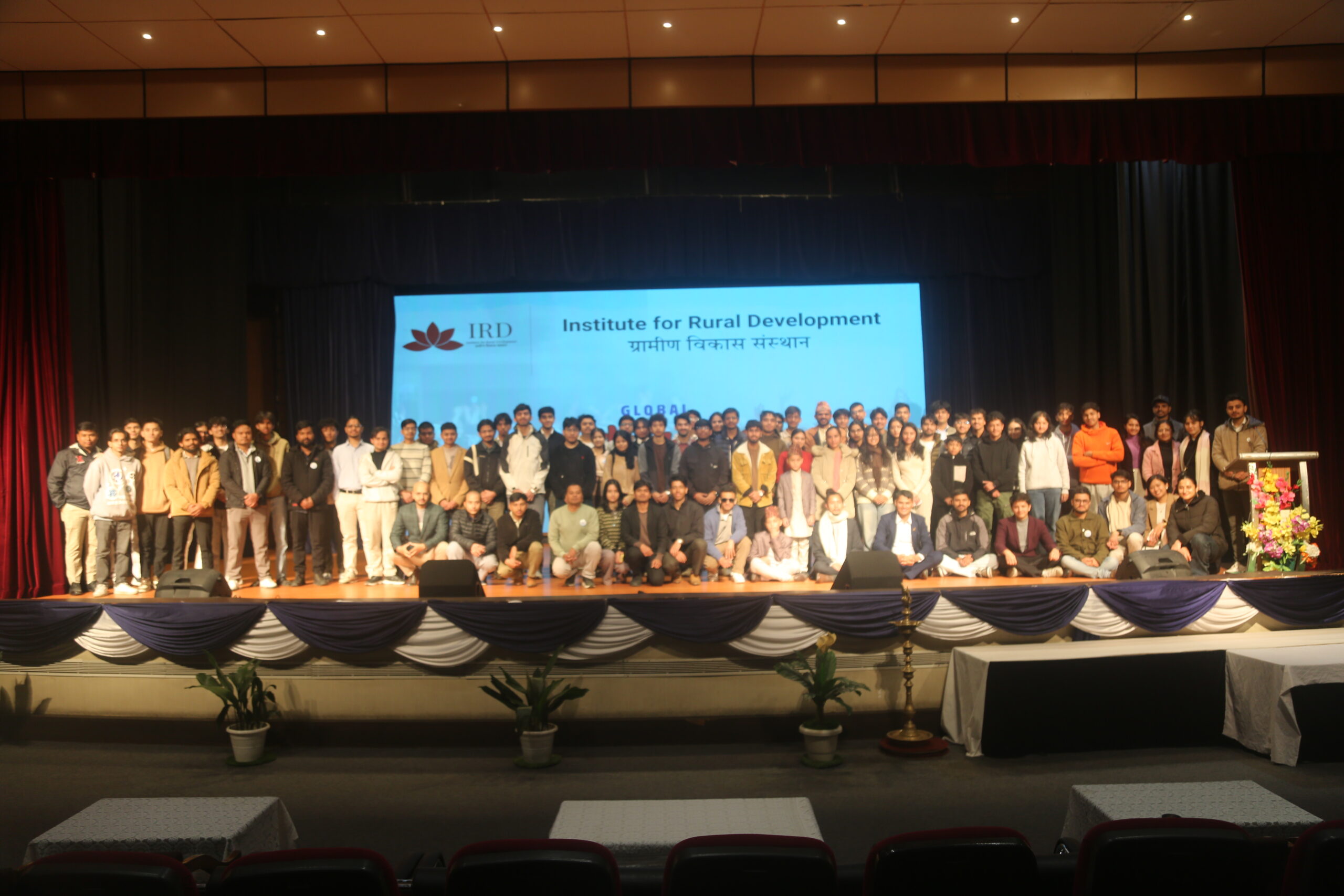
The event featured over 70 people, including young protestors, and experts. CESIF extends its sincere thanks to all participants for their candid contributions and reaffirmed its commitment to fostering discussions on several domestic and foreign policy dialogues.