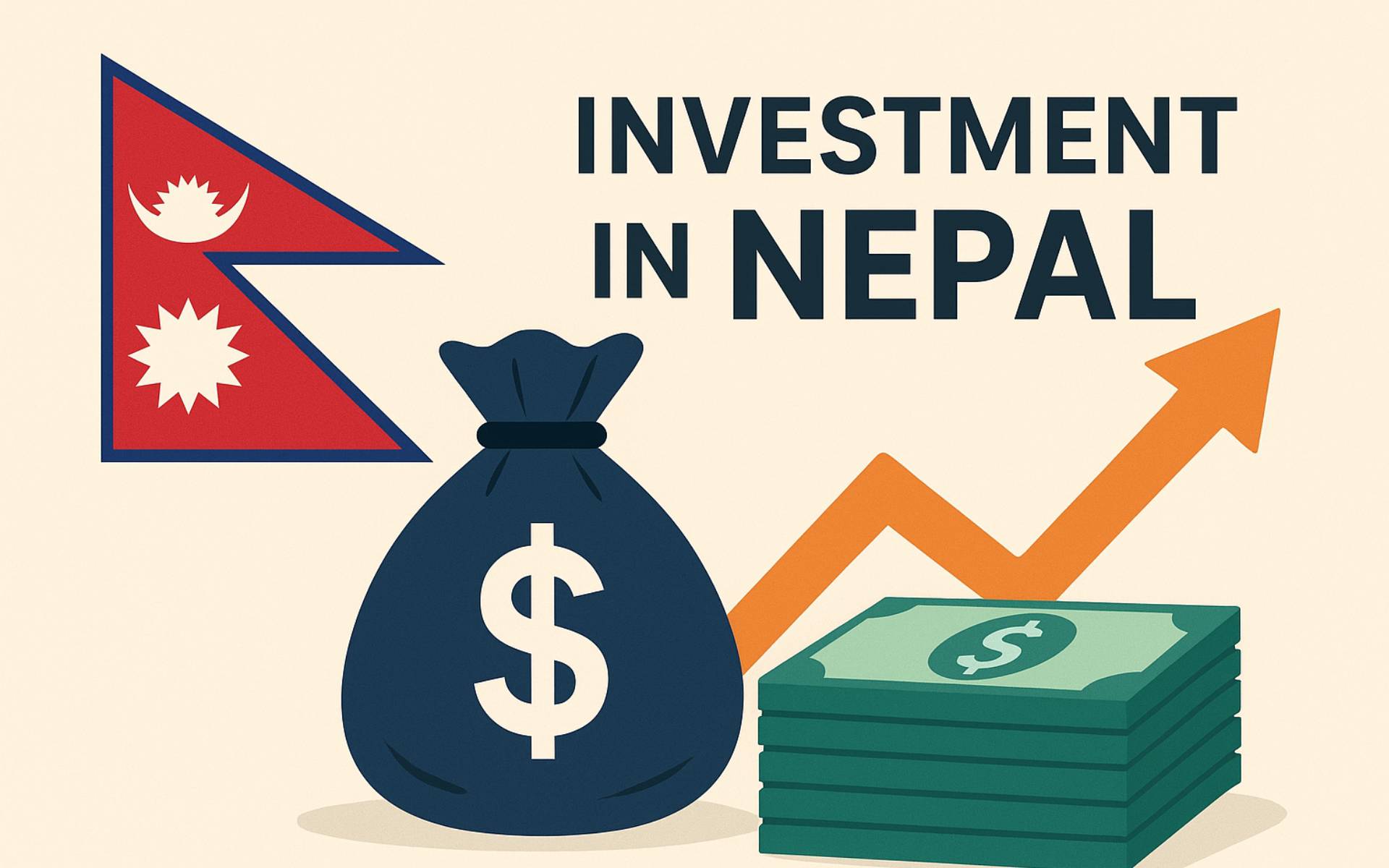
Foreign Direct Investment (FDI) inflow in Nepal stands at a dismal 0.13% of GDP in FY 2023/24. This underlines the urgent need for wide-ranging reforms to improve the investment environment. The investment climate is measured competitively, as countries worldwide vie to attract capital, rolling out the red carpet for investors. Attracting FDI in Nepal has become even more pressing following the arson and vandalism of industrial and business enterprises during the Gen Z uprising on September 8-9, 2025, that further exacerbated already deteriorating investor confidence.
Against this backdrop, restoring the country’s image and positioning Nepal as an attractive investment destination has become a herculean task. Promoting the country and its investment opportunities globally through diplomatic missions must go hand in hand with reforms in the country’s investment climate. Globally, investors are willing to take risks if returns are sufficiently high. With that in mind, Nepal should intensify investor mapping—identifying prospects based on sectors (including project-specific interests), proactively engaging them, and assuring high-level political commitment to safeguard their investments by minimising potential risks and threats. Diplomats engaging with investors should be strongly backed by political leadership, including priority meetings with prospective investors to reaffirm that the Government of Nepal is fully committed to protecting their investments. Diplomatic missions should, as far as possible, be incentivised based on their performance in economic diplomacy.
Moreover, investment projects must be tailored to the needs of foreign investors and aligned with national development priorities. Only well-conceived, bankable projects should be showcased or pitched. Project preparation requires a competent team within the investment promotion and facilitation agency, equipped to carry out preparatory work while keeping cumbersome bureaucracy and procedural hurdles at bay. The Investment Board Nepal (IBN) has been tasked with project preparation and facilitation, in coordination with ministries and relevant authorities, for large-scale investments. The Department of Industry is responsible for SMEs and mid-level enterprises. In this context, two investment promotion agencies are currently functioning in the country. The latest amendment to the Foreign Investment and Technology Transfer Act (FITTA) further extended investment-approval authority to the Department of Industry (DoI) and the Industrial Promotion Board, chaired by the Minister of Industry, Commerce and Supplies. However, their authority remains limited to acting as nodal agencies. Strengthening IBN and the DoI as investment promotion and facilitation agencies is crucial, given their expertise and networks within the investment ecosystem.
On the other hand, underlying challenges to effective economic diplomacy must be addressed. Beyond equipping diplomatic missions with adequate resources, personnel posted abroad should receive proper training on investment-related laws and procedures, opportunity scoping, project marketing, roadshows, communication, coordination, networking, and negotiation skills. They should also be authorized, under coordination with IBN, the DoI, and relevant authorities, to sign MoUs or agreements initiating project surveys. IBN handles large investments of Rs. 6 billion and above, including electricity projects of 200 MW and above. The orientation currently provided to ambassadors by the Institute of Foreign Affairs (IFA) is insufficient to build the knowledge required for economic diplomacy, particularly regarding investment promotion.
The major bottlenecks in investment promotion and economic diplomacy remain inadequate resources, lukewarm responses from concerned authorities in Nepal, and limited expertise among diplomats dealing with investment matters.
The Gen Z uprising in Nepal was primarily a protest against corruption, nepotism, and poor governance. Corruption and weak governance are fundamental obstacles to attracting investment. If the spirit of the Gen Z movement is channeled into governance reforms, transparency, and anti-corruption efforts, it will significantly improve the investment climate and help attract global capital. However, the fundamentals of the investment ecosystem cannot be ignored. Efforts should focus on investments with high probabilities of actualization, not merely headline commitments. Higher actualization will narrow the gap between commitments and net investment inflows.
First and foremost, foreign investors already operating in Nepal must be treated well; they are the country’s goodwill ambassadors. Second, the morale of the domestic private sector and the government must remain high, as they are the first point of reference for prospective foreign investors. Third, investors from neighboring and friendly countries with strong economic ties should be engaged proactively. Beyond that, every potential investor, from any corner of the world, should be treated equally.
Nepal began prioritising inward FDI with the launch of its Sixth Five-Year Plan in FY 1980/81. According to Nepal Rastra Bank’s Survey on FDI in Nepal (2023/24), total FDI stock has reached Rs. 333 billion—comprising 50.7 percent paid-up capital, 36.7 percent reserves, and 12.6 percent loans. By total FDI stock, India ranks first (32.3 percent), followed by China (10.2 percent), Singapore (8.3 percent), Ireland (6.9 percent), and South Korea (6.1 percent).
In a nutshell, attracting investment is a multidisciplinary task that depends on the dynamism and proficiency of professionals within the investment ecosystem and a conducive investment climate in the country.