Nepal maintains a light diplomatic footprint, shaped by a foreign policy imagination that often concedes political destiny to its geography. Its diplomatic outreach remains concentrated in a narrow triangle: the neighbourhood, labor destinations, and the Global North. This is increasingly out of step with global shifts. This century will be shaped by Asia and Africa, where demographic momentum and rising aggregate demand are shifting the geography of growth. In contrast, much of the Western world faces aging populations and slower long-term growth.
Nepal is not unaware of these changes. The foreign policy (2020) recognizes shifts in power dynamics and increased economic interdependencies. It acknowledges the imminent rise of the marginalized but fails to provide a concrete pathway to embrace challenges and opportunities that come along. Nepal must work proactively to carve space for itself on global and regional stages. Africa, the world’s youngest continent and an increasingly significant geopolitical and economic actor, offers a compelling starting point.
Why Africa matters
With a median age of 19.2 years, Africa remains the world’s youngest region. As of mid-2024, 39% of Africa’s population was under age 15, compared to 25% globally; for sub-Saharan Africa, the figure was 41%. This demographic divergence is projected to deepen in the second half of the 21st century. By 2050, one in four people on the planet will be African.
Young Africans will lead the continent into the African century. It will have profound effects on the world order with some states possibly emerging as new world powers. Change is underway, with Africa projected to account for 12 of the world’s 20 fastest-growing economies in 2025 and with 24 African countries expected to grow above 5 percent.
States and businesses have realized Africa’s potential and hence strategically re-engaged in the continent–this time on relatively equal footing, giving Africa greater global prominence and political voice. Investors are rushing to Africa as they look to tap into a market where consumer expenditure is expected to grow rapidly to US$2.5 trillion by 2030. Meanwhile, countries, including India, Turkey, Qatar, Brazil and the UAE, have increased their diplomatic presence in Africa, recognizing that influence on the continent will matter more in the decades ahead.
Africa’s political weight is also rising. The African Union’s permanent membership in the G20, the expansion of BRICS to include more African economies, and growing calls for permanent African representation on the UN Security Council all point in the same direction: Africa will have a larger say in shaping global governance. Africa is keen on creating partnerships which engage them on equal footing. Nepal has an opening to be a partner without colonial baggage or overt geopolitical designs.
Nepal-Africa relations
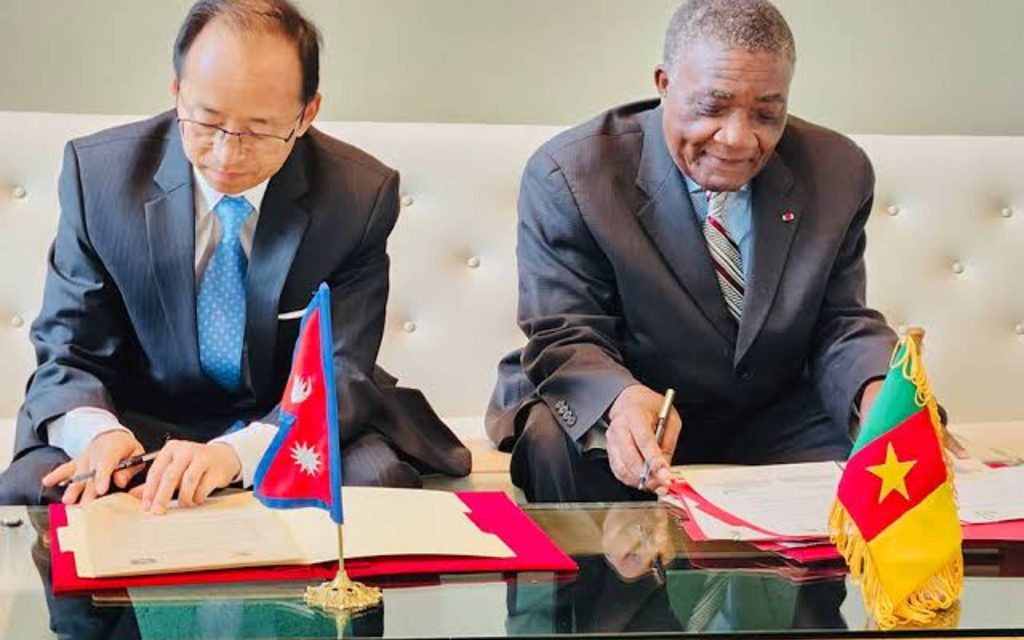
Nepal’s diplomatic engagement with Africa began with Egypt in 1957 and South Africa in 1994, but has since remained thin. The last Nepali head-of-state visit to the continent was in 2005, when the former King visited Egypt.
Nepal’s economic engagement with Africa remains negligible. In 2024, Africa accounted for only 0.062% of Nepal’s imports and 0.135% of exports–a strikingly low share for a continent of 54 countries. The gap is not only commercial but institutional, reflected in limited diplomatic presence, weak business networks, and the absence of a sustained engagement strategy.
Nepal and many African countries face similar structural challenges. Like Nepal, much of Africa bears disproportionate climate impacts despite being responsible for minimal emissions. Furthermore, out of 44 UN-designated LDCs, 32 are in Africa, 13 of which are also landlocked like Nepal. As LDCs and LLDCs negotiate agreements in international forums as a collective unit, deeper engagement with African countries could help Nepal strengthen its bargaining power, prepare for graduation, and negotiate common positions on climate resilience, development finance, and trade vulnerabilities.
Nepal’s limited foreign policy engagement has also kept people-to-people ties underdeveloped. Africans know little about Nepal while many Nepalis continue to hold misleading perceptions of Africa. Nepal’s Africa strategy must be built on a strong pillar of people-to-people connections nurtured via socio-cultural exchange, tourism promotion, knowledge-sharing, and private-sector links.
Existing networks in sports, business, and tourism can provide practical entry points. The Bilateral Air Service Agreement with Rwanda, for instance, could be built upon to foster deeper cultural exchanges and tourism initiatives.
Africa’s growing middle class and rising number of high-net-worth individuals point to future tourism and investment potential. Yet, Nepal lacks disaggregated data on African visitors, making it harder to design targeted outreach. This is a missed opportunity.
Nepal and Africa share rich traditions, youthful societies, and strong community cultures. These commonalities can become the basis for a more imaginative public diplomacy strategy.
Expanding Nepal’s diplomatic footprint in Africa does not require embassies in every capital. The standard objection is fiscal, but 21st-century diplomacy is no longer limited to brick-and-mortar missions. For instance, track-two diplomacy can build on already existing private sector ties and knowledge networks to provide impetus to project Nepal’s values in African markets. Virtual embassies can also provide digital representation without the full cost of physical missions. Used strategically, these tools can help Nepal establish presence, build trust, and prepare the ground for deeper diplomatic and economic relations.
Way forward
Africa’s rise demands Nepal’s genuine acknowledgment. At a minimum, a symposium of relevant stakeholders to critically assess its engagement with the continent and identify actionable pathways forward.
A comprehensive review of the status of Nepal’s diplomatic footprint in Africa including impacts of existing diplomatic missions is needed. The agenda can be spearheaded by Nepal government’s Institute of Foreign Affairs in collaboration with relevant stakeholders. Supplementary to the review, groundwork must be initiated on a concrete Africa Engagement Strategy. It must be based on a foundational understanding that Africa is not monolithic and every sub-region within it brings a unique set of challenges and opportunities.
Engaging Africa is a strategic endeavor for the long term. Expanding footprint on the continent is not about immediate gains but rather cultivating spaces where Nepal can position itself as a neutral and reliable partner. The costs associated should be viewed as a forward-looking investment which will pave the way for future partnerships and benefits.
With the African Union (AU) headquarters in Addis Ababa, Ethiopia is a natural re-starting point for Nepal to expand its footprint in Africa. The city is a global diplomatic hub hosting over 134 diplomatic missions–including 53 African missions–and serves as a continental base to many international organizations. Addis would not only allow Nepal a diplomatic stepping stone into the country but also the continent as a whole.
Some groundwork already exists. Since the establishment of the Honorary Consulate of Ethiopia in Nepal in 2017, discussions have touched on private-sector cooperation, cultural exchange, tourism promotion, air-service links, visa facilitation, and bilateral consultation mechanisms.
Nepal’s Embassy in Cairo is concurrently accredited to Ethiopia, but this arrangement cannot substitute for sustained engagement in Addis. A mission located more than 2,400 kilometres away cannot realistically manage the multidimensional demands of engagement in Addis. The European equivalent would be a mission somewhere in Greece overlooking Nepal’s engagement with Brussels and the EU at large, which is inconceivable.
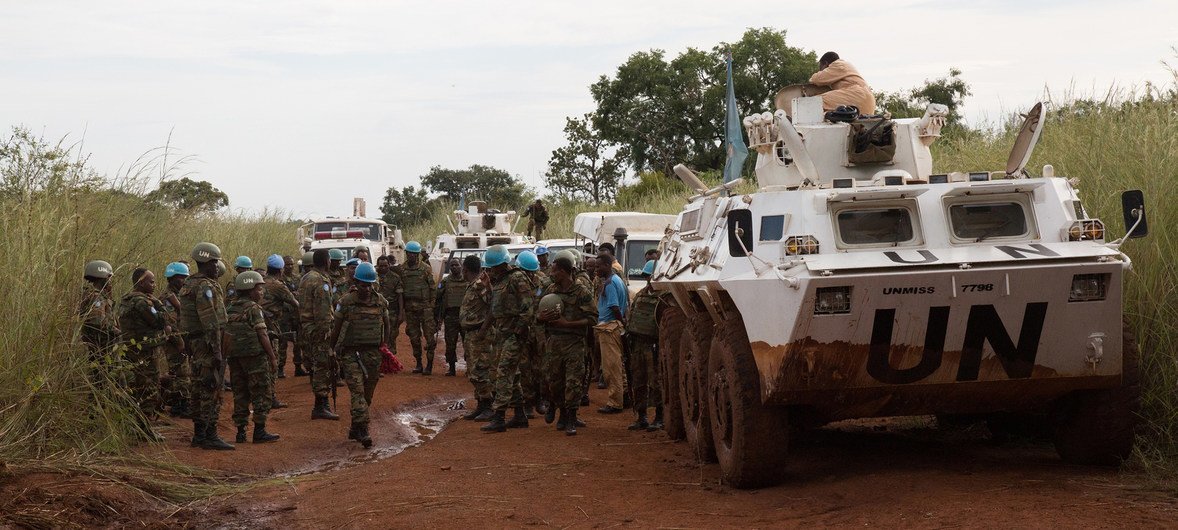
Nairobi should be another priority node in Nepal’s Africa outreach. As the only UN headquarters office in the Global South and the home of UNEP, it offers Nepal a strategic platform for South-South cooperation on climate, conservation, and environmental diplomacy. Nepal can build on its experiences as a leader in conservation efforts and previous related collaborations with Kenya. Nepal already has useful entry points: a non-resident ambassador to Kenya, an Honorary Consulate in Nairobi, and peacekeeping cooperation with Kenyan forces under the United Nations Organization Stabilization Mission in the Democratic Republic of the Congo (MONUSCO). These links should be converted into sustained track-two and track-three engagement.
Nepal should also look beyond bilateral ties and engage Africa’s Regional Economic Communities (RECs), the building blocks of continental integration. The AU recognizes eight RECs. Given Nepal’s existing missions and the strategic value of Addis, initial engagement could focus on the East African Community (EAC), the Intergovernmental Authority on Development (IGAD) and the South African Development Community (SADC), while gradually opening channels with the Economic Community of West African States (ECOWAS) and Nigeria.
Nigeria deserves particular attention as Africa’s most populous country, one of its largest economies, and a major technology hub through Lagos. As Nepal advances its own digital transformation, it has much to learn from Nigeria’s concerted efforts to evolve from passive consumers of AI to net producers of talent and solutions that compete globally.
Nepal’s place in a shifting world requires a foreign policy revamp to foster relationships with countries and regions which will thrive moving ahead. Africa is among the front-runners. Nepal does not need an expensive diplomatic expansion to begin. It needs a clear African engagement strategy. The path will not be free of challenges given shared political, economic, and climate vulnerabilities.
Africa’s rise is imminent. The question is whether Nepal wants to continue being a bystander or take proactive steps to become part of the story.