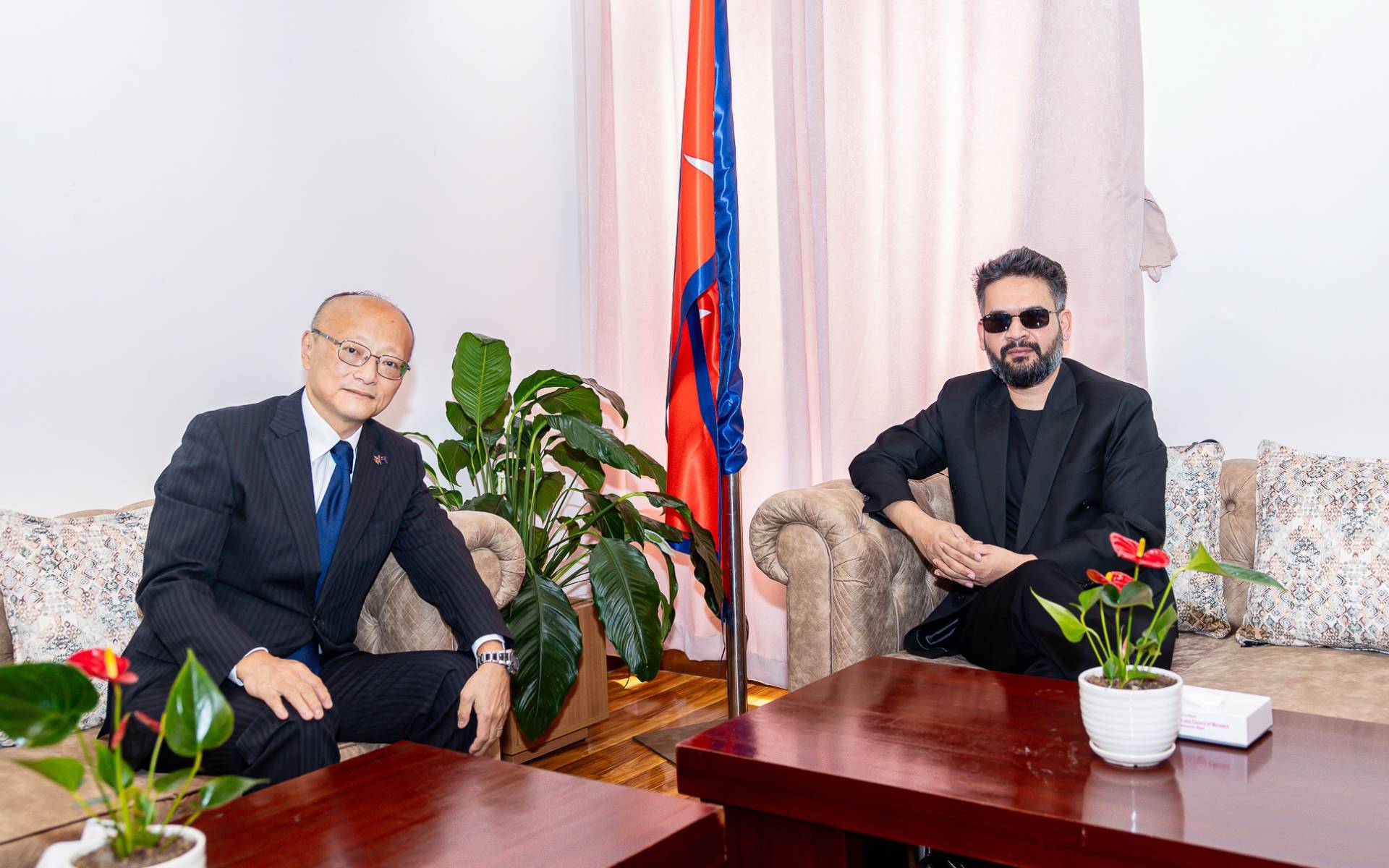
Kathmandu: President of the Asian Development Bank (ADB), Masato Kanda, arrived in Kathmandu for an official visit on July 6. Upon arriving here, he reiterated ADB’s commitment to continually support the nation’s development, transformation, and long-term economic growth. He emphasized that ADB will keep backing infrastructure development essential for job creation and expanding new economic opportunities.
ADB stands as one of Nepal’s major development partners and according to President Kanda, various development projects worth approximately USD 3.9 billion are currently active in Nepal with ADB funding. Such projects include “Integrated Water Supply and Sewerage Management (Sector) Project”, “Promoting Food Systems Transformation in South Asia”, and “Training the Trainers—Institutionalizing Public Debt Analytical Capacity”. According to ADB, they support Nepal by promoting private sector–led, employment-intensive, and green economic transformation, while strengthening human capital and public services and enhancing environmental sustainability and resilience.
During his visit, he met with the government ministers and discussed development priorities to be set by Nepal’s new government. He also conveyed his confidence that the six-decade-long cooperation and partnership between Nepal and the ADB will grow even stronger in the days ahead.
Moving forward, ADB plans to scale up its support, with annual lending expected to reach up to $660 million this year and $2.4 billion under ADB’s Country Partnership Strategy for Nepal 2025–2029. This support will prioritize employment creation, private sector development, sustainable infrastructure, public service delivery, resilience, empowerment of women and disadvantaged and vulnerable groups, and digital transformation, while mobilizing additional resources through cofinancing and innovative instruments such as green and local currency bonds.
Meeting with Prime Minister
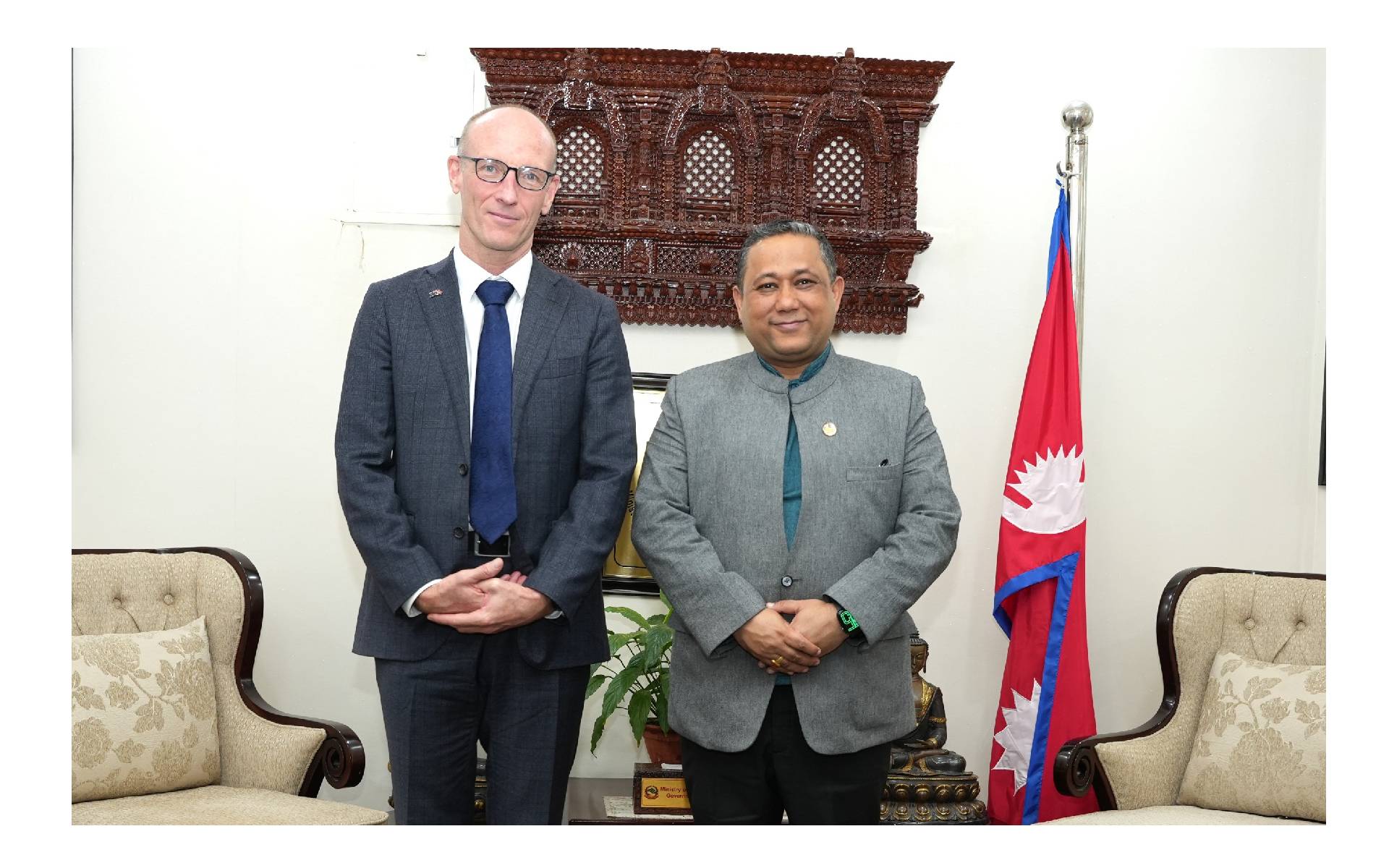
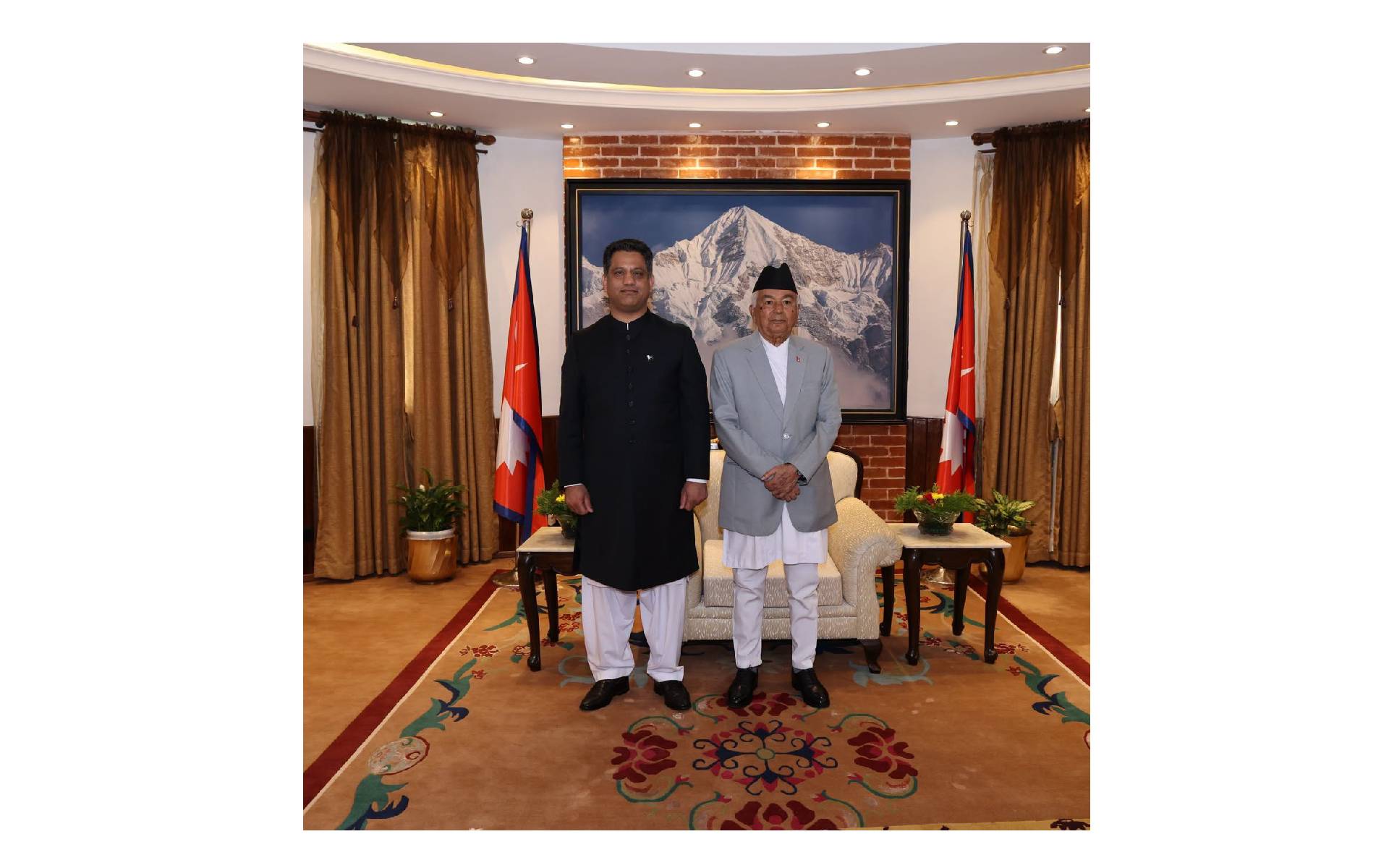
The ADB President met with Rt. Hon. Prime Minister Balendra Shah in Kathmandu as ADB and Nepal marked 60 years of partnership and deepened support for the country’s economic transformation, job creation, and investment. President Kanda is the first foreign official with whom Prime Minister Shah had one-on-one meetings after taking office in March.
President Kanda and PM Shah met on July 7 and according to Prime Minister Shah’s press and research expert Dipa Dahal, during the courtesy meeting that lasted for half an hour, Prime Minister Shah expressed his belief that in the coming days, Nepal will take a new leap in development through good governance and transparency. There was a positive discussion between the two parties on promoting hydroelectricity and tourism as the backbone of Nepal’s economy, cooperation on digitization and tourist road infrastructure.
“Nepal is at a defining moment, with an opportunity to build a more dynamic and resilient economy,” said President Kanda. “ADB is stepping up as Nepal’s largest development partner, with additional support expected to reach $2.4 billion through 2029. Our focus is on results for people: more jobs, stronger businesses, and better livelihoods for communities across Nepal.”
Loan agreement
During Kanda’s visit, ADB signed two loan agreements totaling $165 million as part of its annual commitment. A $115 million project will bring reliable, safely managed water and sanitation services to more than 850,000 people, while a $50 million policy-based loan will modernize the systems that move goods across Nepal’s borders, helping businesses reduce costs, improve efficiency, and enhance competitiveness through digitalization and streamlined procedures.
Inauguration of substations
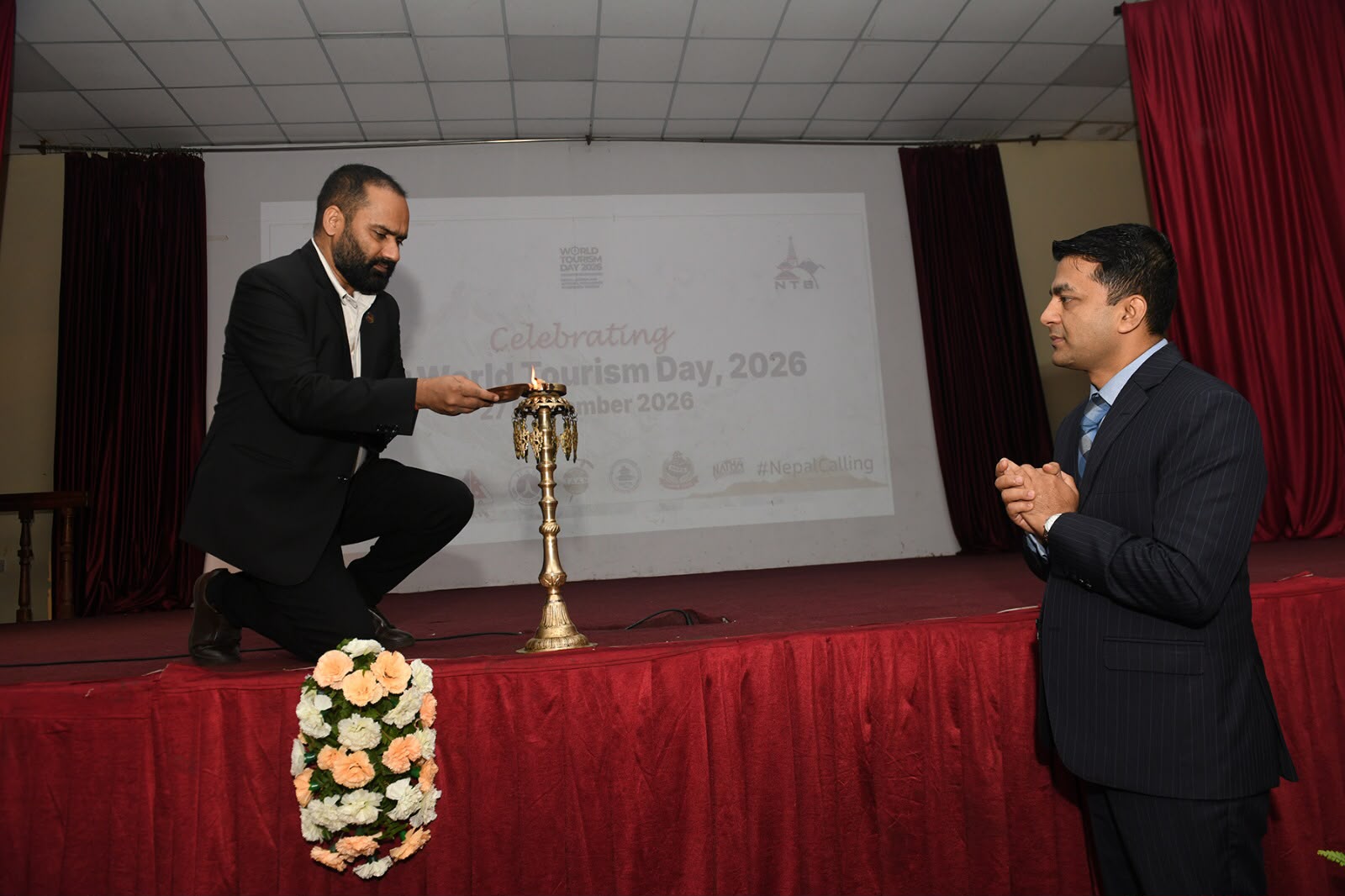
At the Nepal Electricity Authority, ADB President Kanda visited the Distribution Command and Control Center and the ADB-financed Data Center, where real-time monitoring and better data management has helped strengthen Nepal’s power system.
Together with the Hon. Minister of Energy, Water Resources, and Irrigation, Biraj Bhakta Shrestha, and the Ambassador of Norway to Nepal, H.E. Dagny Mjøs, Kanda virtually inaugurated the Markichowk and Mulpani substations, which he stated will help strengthen electricity supply in Kathmandu and other major demand centers. President Kanda expressed confidence in the substation to enhance the capacity of the power distribution system, improve the stability of electricity supply, and strengthen the overall reliability of the power network.
Speaking at the inauguration ceremony, Minister Shrestha expressed confidence that the operation of the Mulpani 132 kV and Markichok 220 kV substations would significantly strengthen Nepal’s electricity transmission system. He said that expanding transmission infrastructure would not only improve the quality of electricity supply but also help meet the country’s growing energy demand.
The Minister further stated that continued investment in the energy sector and the development of modern infrastructure would enhance Nepal’s energy security, contributing to economic prosperity, industrial development, and the achievement of sustainable development goals.
“These investments are helping lay the foundations for cross-border power trade. ADB will continue supporting Nepal in harnessing clean energy as a driver of growth and deeper regional integration across South Asia,” Kanda said.
Visit to school
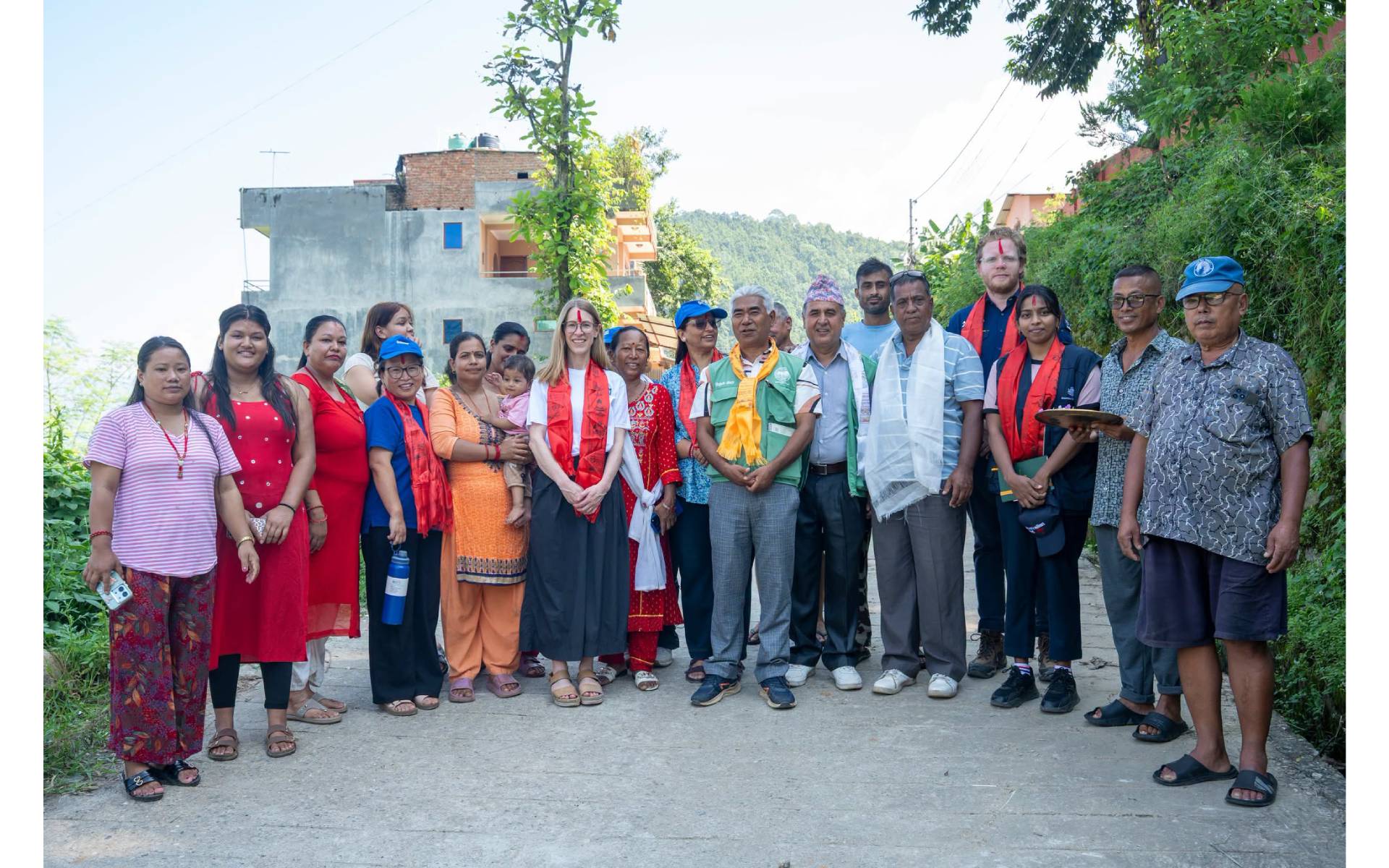
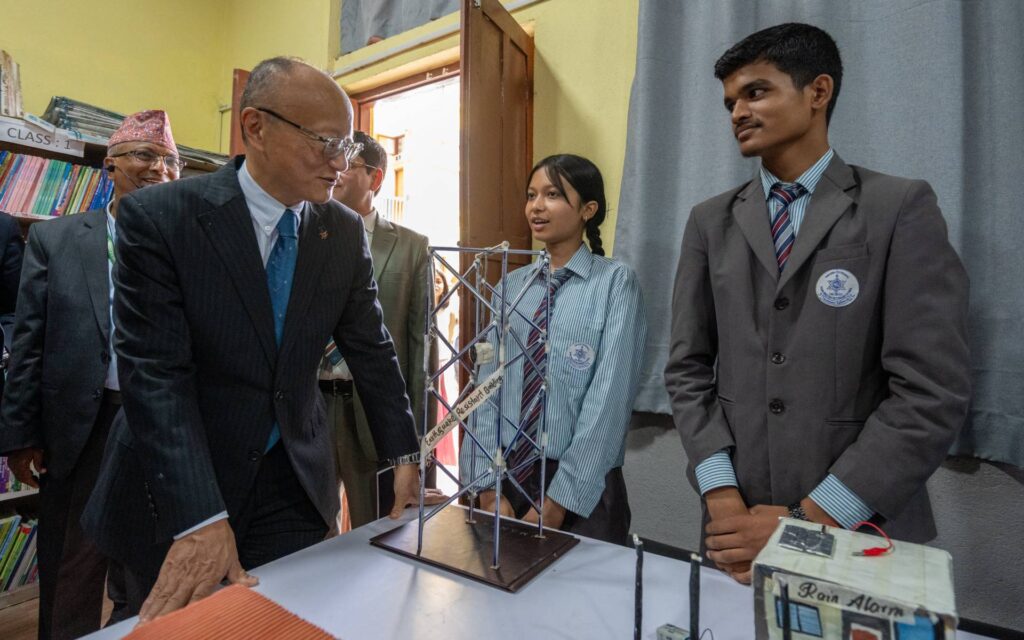
ADB President Kanda also visited the Viswa Niketan Secondary School, where he saw how investment in safer, more resilient schools can become an investment in Nepal’s future. Rebuilt after the 2015 earthquake, the school is now equipped with modern science and technology facilities as part of ADB’s continued investment in disaster risk management and human capital.
He was joined by Hon. Minister for Education and Sports, Sasmit Pokharel, in launching a new module to strengthen AI literacy and teachers’ digital skills. Students also demonstrated an AI-based tool designed to assess scientific inquiry and creative problem-solving skills.
President Kanda said: “Our goal is not only to build safer schools, but also to help teachers and students learn, adapt, and thrive in a rapidly changing world. The next step is to learn from these new initiatives and explore how they can be expanded across Nepal’s public school system.”
Meeting with Finance Minister
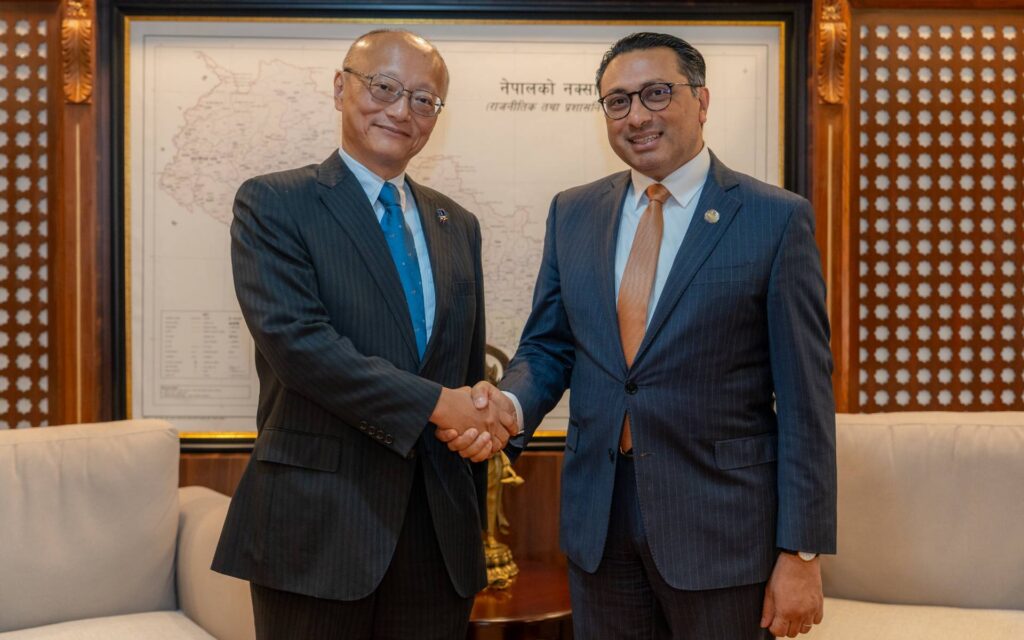
ADB President Kanda also met with the Hon. Finance Minister Swarnim Wagle where he congratulated him on the government’s first budget and reform agenda.
He stated that ADB is determined to support the government’s efforts to strengthen the business environment and mobilize investment. Their conversation focused on the resilience of Nepal’s economy amid a string of shocks.
President Kanda and Minister Wagle also witnessed the signing of two ADB loans totaling $165 million. A $115 million project will improve water supply and sanitation services for more than 850,000 people across municipalities. A $50 million loan will modernize the systems that move goods across Nepal’s borders, helping Nepali businesses compete more effectively.
Meeting with business leaders
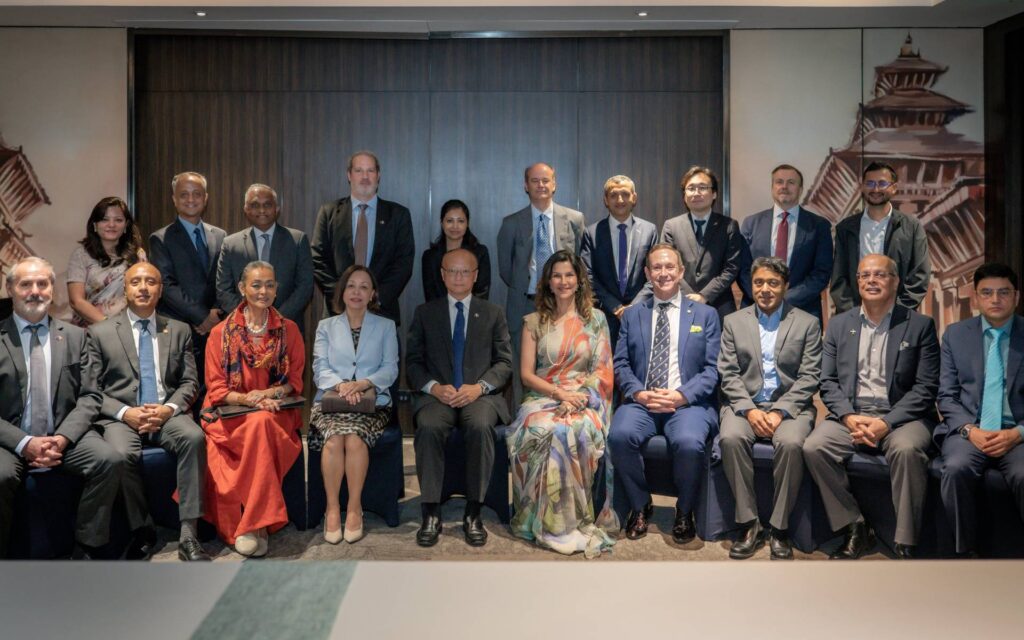
ADB President Kanda met with business leaders across Nepal’s economy to hear about the barriers holding back private investment and the opportunities with the greatest potential to create jobs and drive growth.
According to Kanda, they all agreed, “Nepal does not lack potential. But unlocking that potential will require greater policy predictability, consistent regulation, better access to finance, and a stronger pipeline of viable projects.”
He emphasized that these efforts must move together. Strong policies without bankable projects will not mobilize capital, while promising projects cannot scale without the right enabling environment.
He stated the insights shared during the meeting with business leaders will help shape ADB’s support for policy reforms, bankable projects and partnerships, and risk-sharing tools that can crowd in private capital.