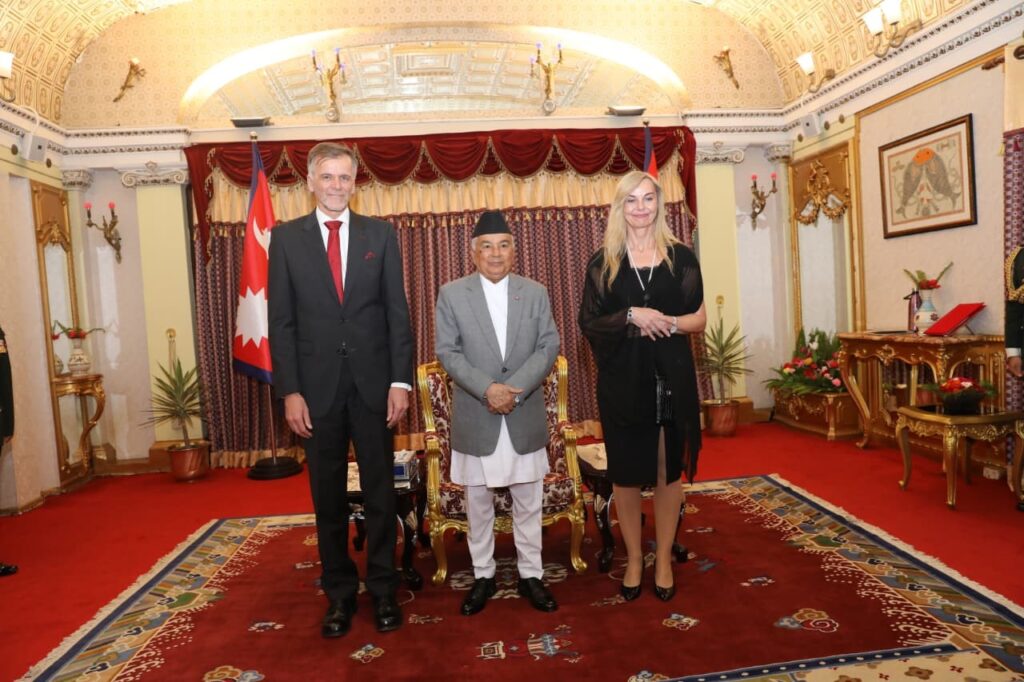
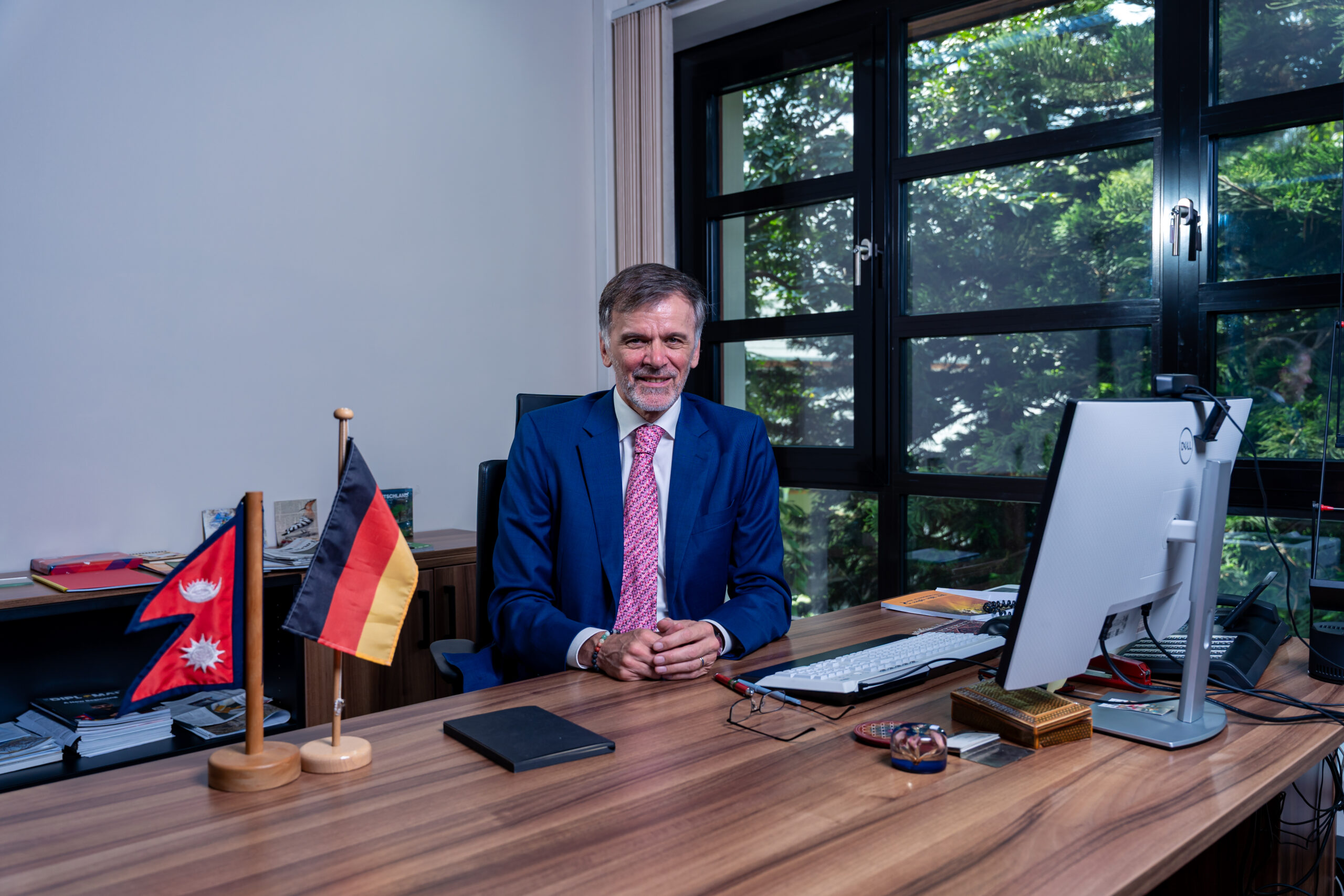
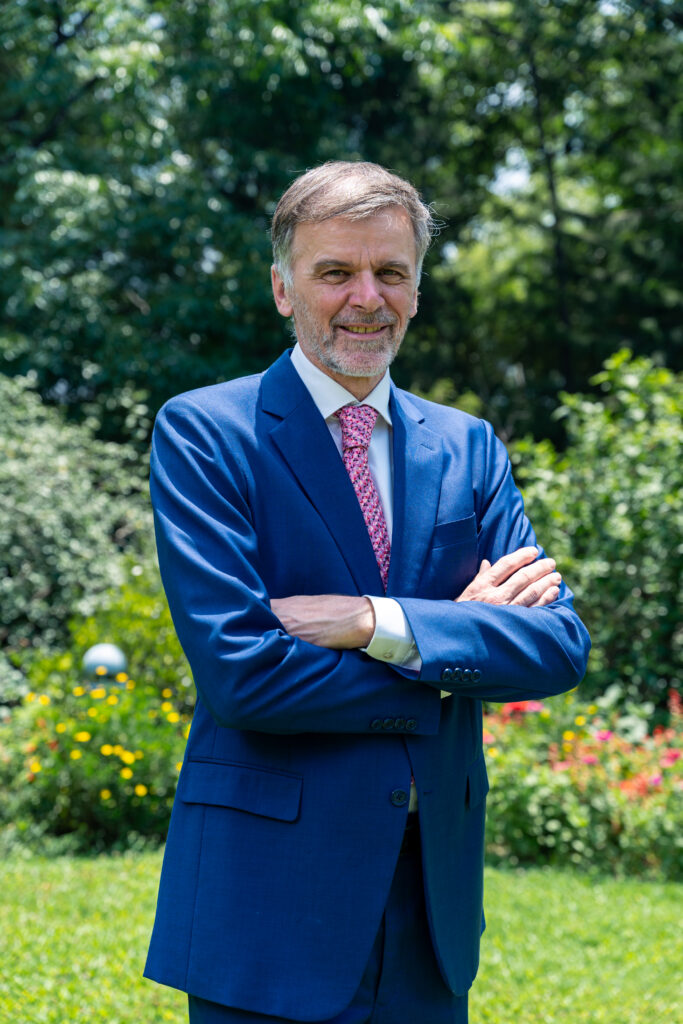
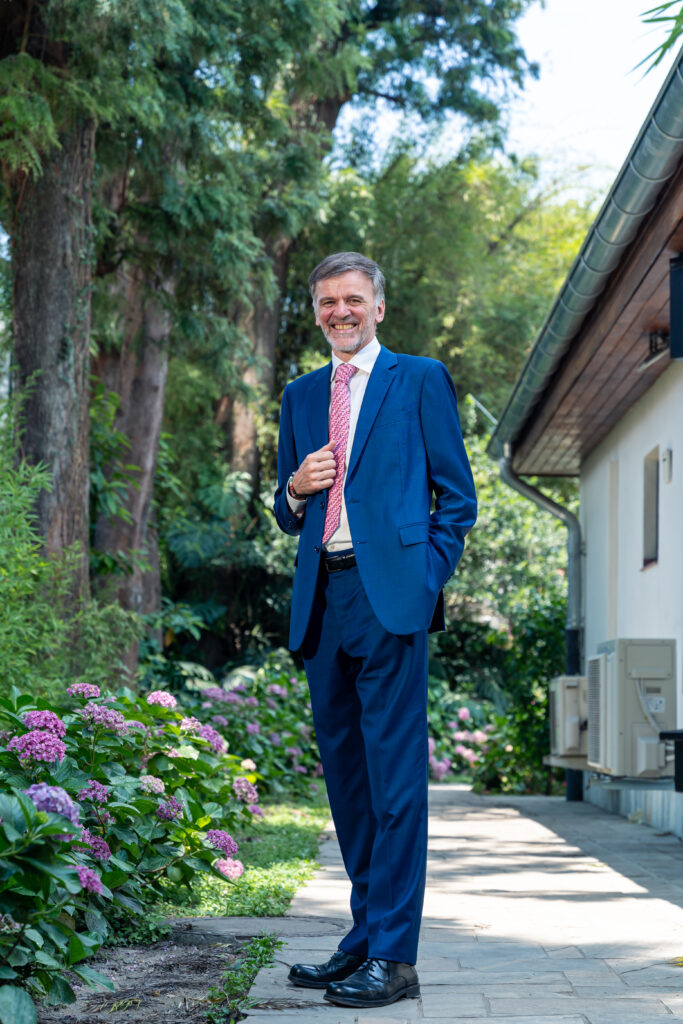
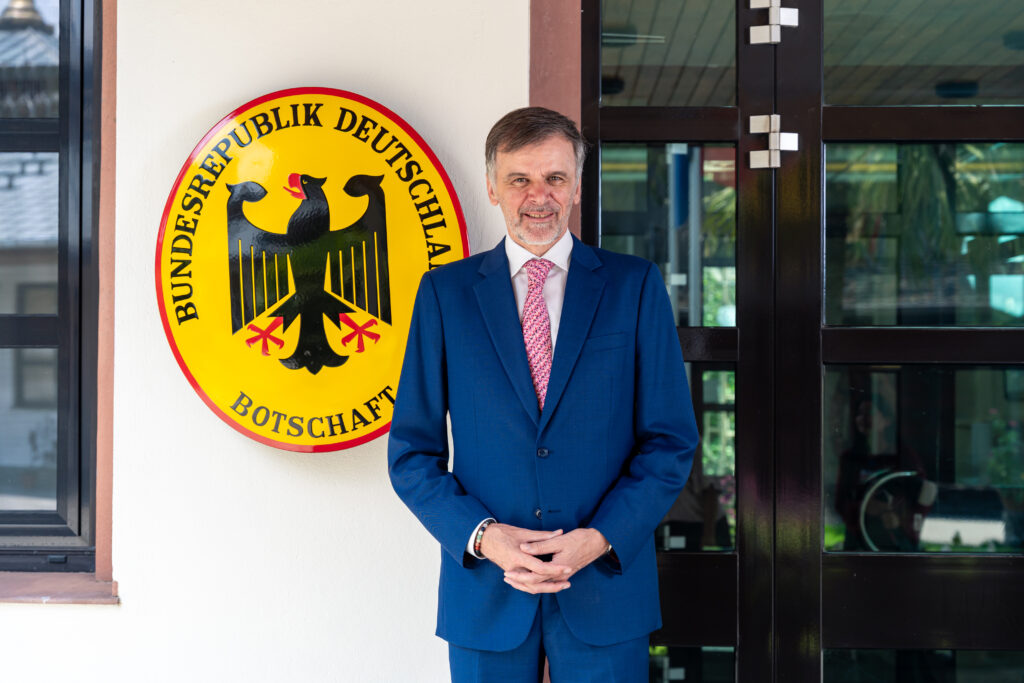
Ever since the establishment of diplomatic ties between Nepal and Germany in 1958, Germany has been a steadfast reliable development partner of Nepal on multiple areas of trade, development, health, education, agriculture, promotion of renewable energies, among many others. Germany has been supporting Nepal’s efforts of sustainable economic development with a view to Nepal’s graduation from LDC status in the coming years. How has the journey of this continued cooperation been? What are some of the landmark footprints of German cooperation in Nepal? What are some of the areas in which the two countries can collaborate to further enhance the relations between the two countries in the days to come? H. E. Udo Eugen Volz, Ambassador Extraordinary and Plenipotentiary of the Federal Republic of Germany to Nepal, shared his perspectives in an interview with the Editorial Board of The Diplomat Nepal Magazine.
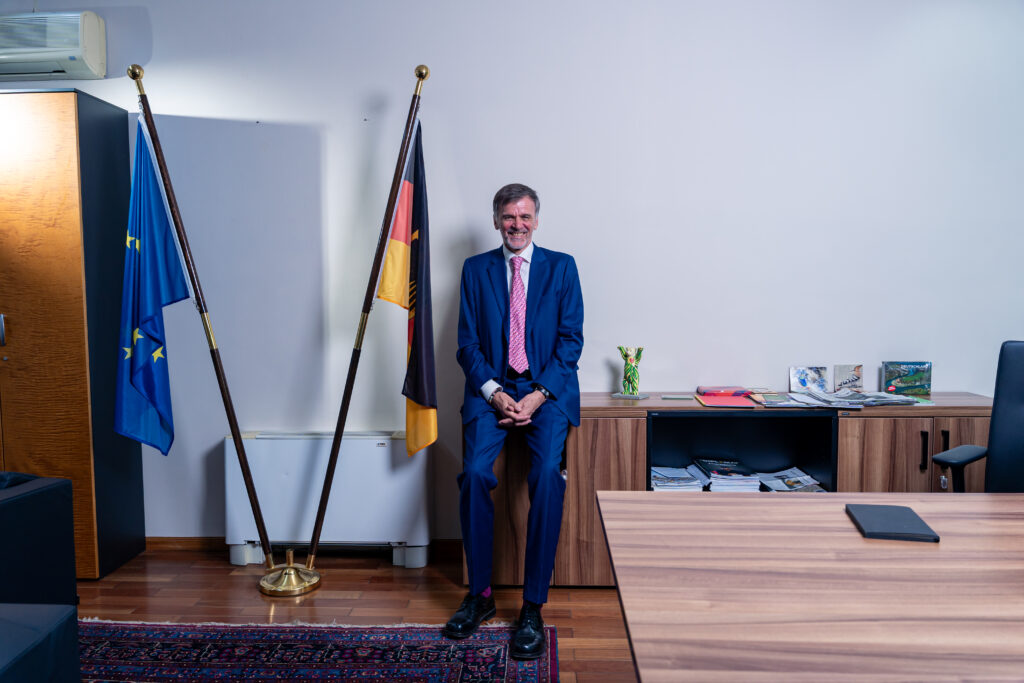
Your Excellency, Germany and Nepal have nurtured a warm and enduring friendship across decades. How would you describe the spirit of this relationship today, and what moments during your tenure have reinforced your confidence in its strength?
The relations between Germany and Nepal are excellent, whether we look at the Government-to-Government relations or at the people-to-people contacts. Germany and Nepal have been working together closely in development cooperation to the benefit of the Nepali people and in international fora like the UN for many decades. Many German citizens have developed close bonds with Nepalis and Nepali communities, very often after a first touristic and mountaineering visit.
During my brief tenure so far, I find it very encouraging how positive and full of trust the mutual perception and image is.
Germany has been one of Nepal’s most steadfast development partners. Looking back with pride, which area of cooperation do you feel has created the most lasting and meaningful change in the lives of ordinary Nepali people?
I have been deeply impressed by the countless projects that have been carried across the country with German public and private support since the 1960s. Therefore, it is difficult to say that one single project has been the most meaningful. Let me mention two examples: The reconstruction of temples and buildings in Bhaktapur Durbar Square, accompanied by establishing water infrastructure, lasted from 1975 to the late 1980s. It has been one of the biggest efforts in our history of development cooperation globally and everyone who takes a walk there today—whether German or Nepali—will feel proud of what has been achieved. Secondly, we have been continuously active in the field of energy for a long time. Producing clean energy from hydropower and delivering it to so many communities surely has a lasting effect on people’s lives.
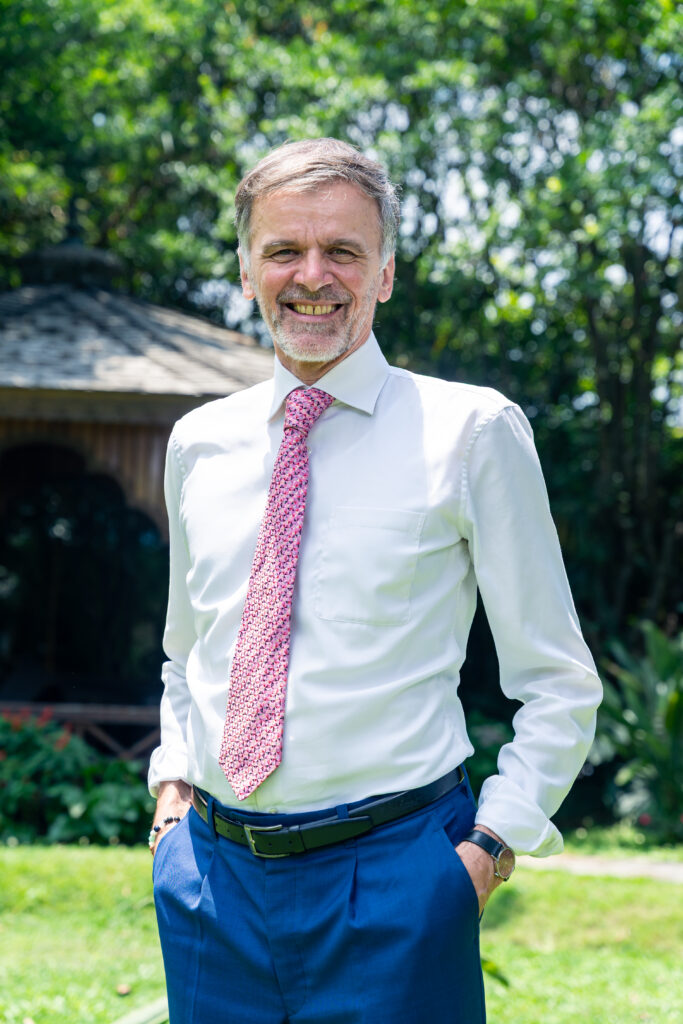
Nepal today is a country of great ambition positioning itself as a destination for green energy, innovation, diplo-tech, and responsible investment. How do you see the prospects of cooperation between Nepal and Germany to translate this ambition into reality?
Over the next few years, I would expect that the focus will increasingly shift from Government-to-Government cooperation to a more active and comprehensive engagement of the private sector from Germany and Nepal.
Germany is admired all over the world for its vocational training system, its engineering excellence, and its Mittelstand culture of quality. As Nepal aims to upgrade its domestic production, which aspects of the German experience do you believe could inspire Nepal’s own economic story?
Indeed, providing a suitable framework also for SMEs, which we call the Mittelstand in Germany, is an important task as SMEs in Germany also offer more jobs than all the well-known and big companies. To include vocational training in its educational curriculum is a political decision that a Government may take and Germany will be happy to share its experiences in this field.
Nepal is increasingly recognised as one of the most climate-vulnerable nations on earth though it contributes remarkably little to the crisis it faces. How can Germany and Nepal deepen their partnership on climate action, renewable energy, and environmental protection?
I fully agree that Nepal, and especially the Himalayas, is at high risk when it comes to climate change impacts. Our cooperation on renewable energy is well established. Production of hydropower and its transmission are at the centre of our cooperation. We also support providing e-vehicles for transport like mini and large buses, e-charging stations and e-ticketing for commuters. Through the International Climate Initiative (ICI) the German Government supports solutions to climate change issues under the Paris Agreement and it is open for projects under the Nepali Nationally Determined Contributions.
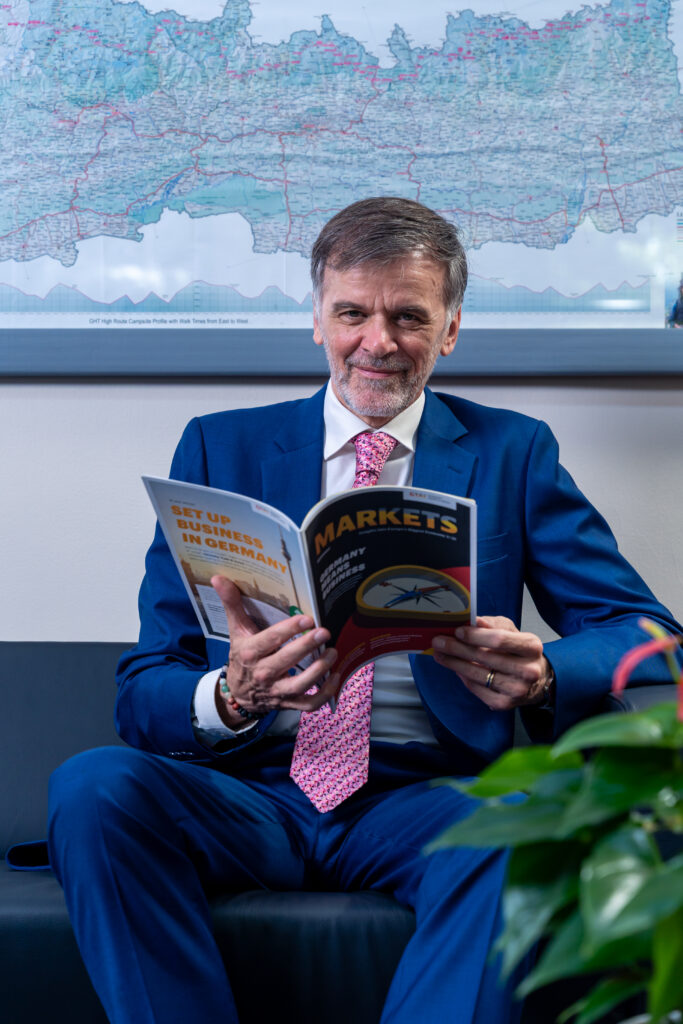
Soft power is often the most enduring legacy of any diplomatic relationship. In your experience, what aspects of Nepal’s culture, spirituality, mountains, and people have most captured the imagination and hearts of the German people?
Undoubtedly, Nepali hospitality in its many forms is a wonderful experience for German visitors although not only for them. It is not just the genuine friendliness that characterizes Nepali people, it is also accompanied by the preparedness to share whatever is available, also the little that people may have especially in remote areas. Also, the tolerance and respect among the many cultures and religions in Nepal are an asset.
Nepal’s democratic journey, from conflict to constitution, from monarchy to a federal republic, is truly one of the remarkable political stories of our time. How does Germany view Nepal’s democratic progress?
Germany has been a partner to Nepal for a very long time. We acknowledge the democratic progress that has been achieved and we tried to assist in difficult times, especially after 2006 in the implementation of the Comprehensive Peace Agreement. The current period marks a democratic renewal—an experience that Nepal shares with many other democratic countries. Once achieved, democracy remains work in progress, with varying degrees of intensity.
Education and people-to-people exchange are the threads that weave lasting bonds between nations. How can Germany and Nepal expand academic collaboration, youth exchange, and skills partnerships to bring their two peoples even closer together?
As mentioned before, the people-to-people contacts between our two countries are broad and vibrant. This includes academic exchange as many Nepalis after studying in Germany returned home and are now members of the Nepal Germany Academic Association (NEGAAS) which today has more than 200 very active members. Youth exchange does happen despite the geographic distance between Germany and Nepal. For example, very recently, a juvenile soccer team visited Germany, a practice established a number of years ago.
Germany has become a country that—given our aging society—is offering many jobs to foreigners. Given the fast-growing demand of jobseekers in Nepal this can be turned into a win-win situation. Actually, we do see a marked increase in interest by young Nepalis in studying, working and training in Germany.
Nepal is a land of breathtaking beauty, ancient heritage, and warm hospitality, and Germany is one of its cherished tourism partners. What opportunities do you see to deepen cultural exchange and bring more German visitors to discover the full richness of Nepal?
The number of German tourists has been increasing recently and has almost reached the pre-Covid number of 36,000 per year. But numbers alone are not sufficient to describe the dynamics. There is a certain trend to go beyond mountaineering, to visit cultural festivals and ancient sites. The Nepali aspiration to become a wellness destination will certainly add to this.
Your Excellency, every diplomatic posting has moments that transcend protocol and touch the heart. What has been your most memorable personal or professional experience since arriving in Nepal?
Looking at my work experience in less than a year in Nepal, I would say it has been breathtaking. The fast transition from protest, violence and unrest to the formation of an interim government within a few days was absolutely surprising. And so were the successfully held elections and their outcome. This has sparked so many hopes and changed the mood. A unique experience!
Nepal is known to leave a deep impression on those who are fortunate enough to live here. How have you and your family experienced life in Nepal, and what aspects of Nepali society, warmth, and culture have touched you most personally?
I have been very much impressed by how religious rites are an integral part of many people’s daily lives in Kathmandu. In comparison, in Germany daily exercises of religious devotion have become less frequent and visible. In the same vein, the intermingled presence of Buddhist and Hindu religions in temples was a surprise to me.
Diplomatic life can be demanding, and behind every Ambassador is a family that shares both the challenges and the richness of the journey. We would love to know, how has your wife embraced life in Nepal? Are there particular experiences, places, festivals, or moments that she has found especially meaningful or memorable during your time here together?
For my wife, embracing a new posting depends also on how easily she connects to local people on her social network. Besides that, the cultural background of Nepal and her love for hiking and mountains were the reasons that drew her here. During the last eight months, we stayed at a hotel due to the renovation of the German Residence. These months have been one of the most memorable experiences for my wife. Not only that the staff became like a family for her due to their empathy, friendliness and excellent service, reading every wish from your lips, but also the owner’s family became extremely dear to her (and to me). They also put her in touch with many very interesting Nepali people, especially women. Another reason which brought her here is her passion for practicing and teaching yoga and meditation. When she arrives at her class, the participants already sit quietly till the class begins, some of them meditating. She has described this atmosphere several times as magic, as if there was a certain energy already in the room and around the people, created probably by centuries of practiced wisdom.
Looking to the horizon, what new areas of partnership would you most like to see flourish between Germany and Nepal, and what is the boldest idea you hope to help bring to life before your tenure concludes?
Circular migration, with Nepalis going to Germany to study, work and train and coming back to Nepal at a later stage would benefit both countries immensely and its expansion is therefore on my wish list. To see German language studies established as a major at university level would be a wonderful achievement.
Finally, your excellency, what message would you like to share with the readers of The Diplomat Nepal, about the future of this cherished friendship, and about the enduring importance of diplomacy, dialogue, and partnership in our world today?
It’s upon us, German and Nepali people alike, to appreciate what has been achieved jointly, which is very impressive, and to keep exploring what’s going on in both our countries. That will allow us to identify new opportunities. In a similar way, diplomacy, dialogue and partnership are the prerequisites to confront global challenges and threats with the best chances to succeed.