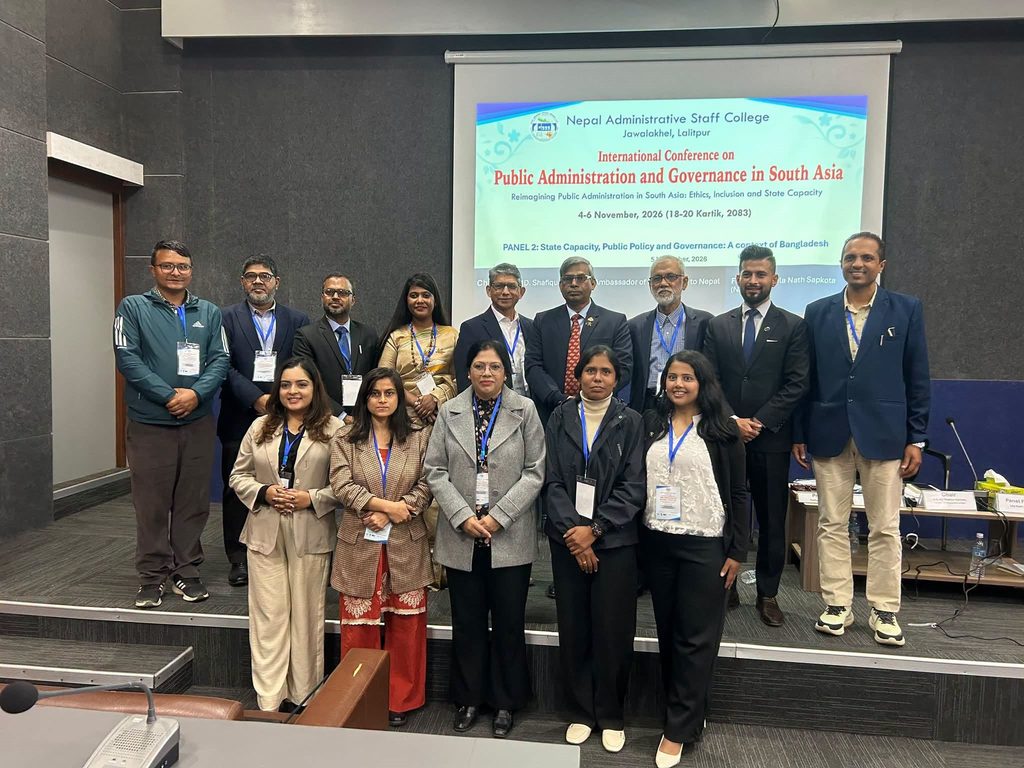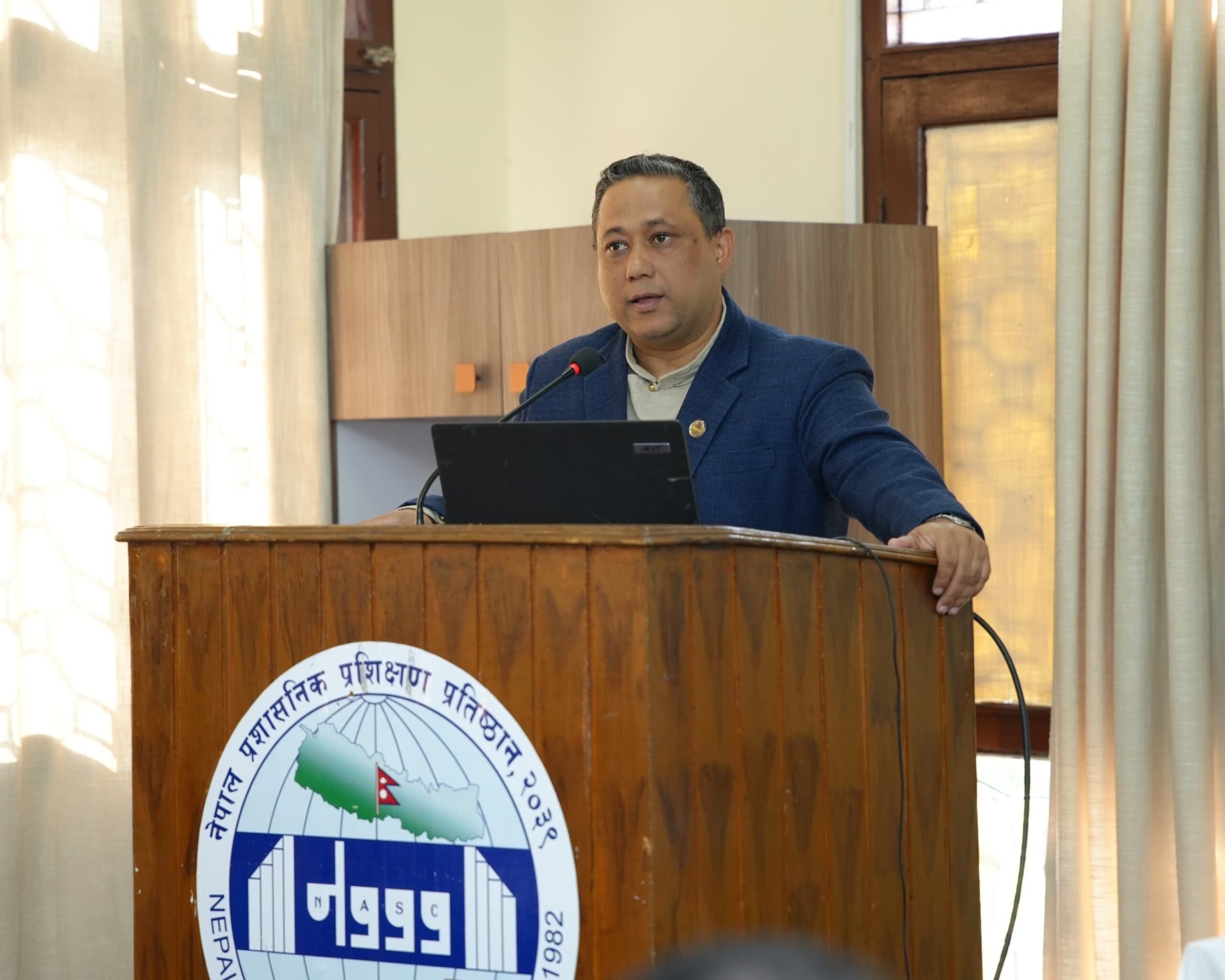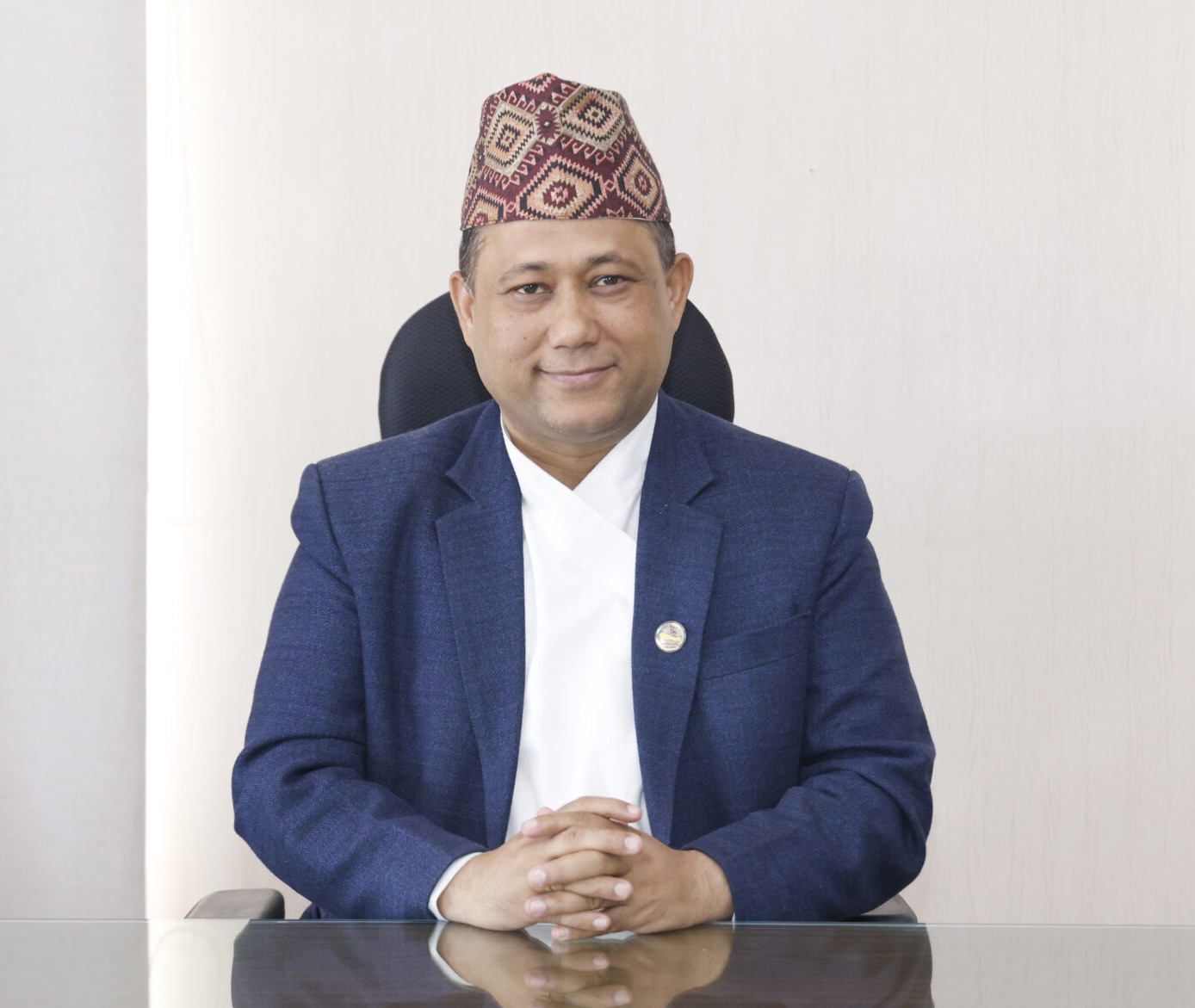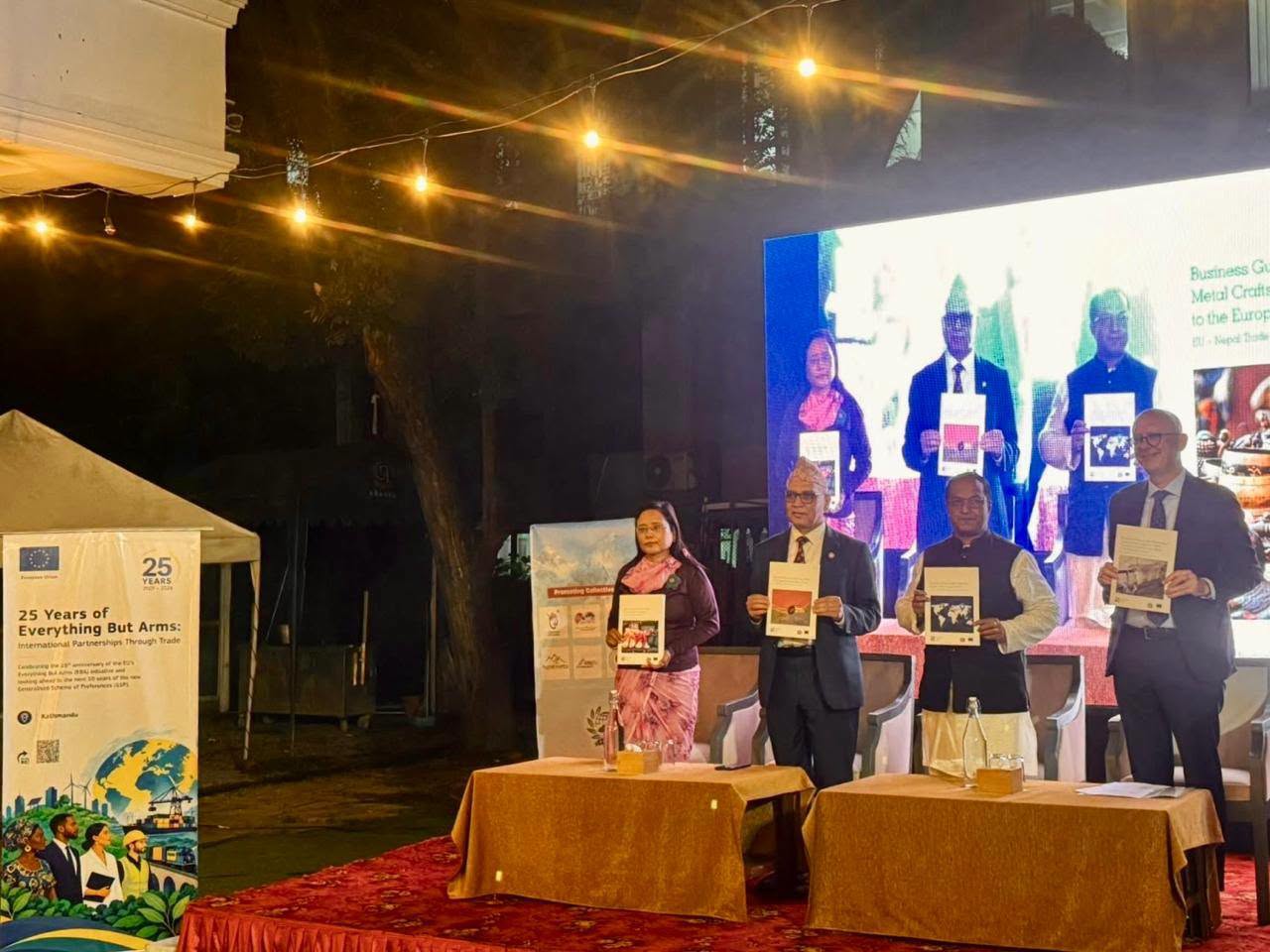
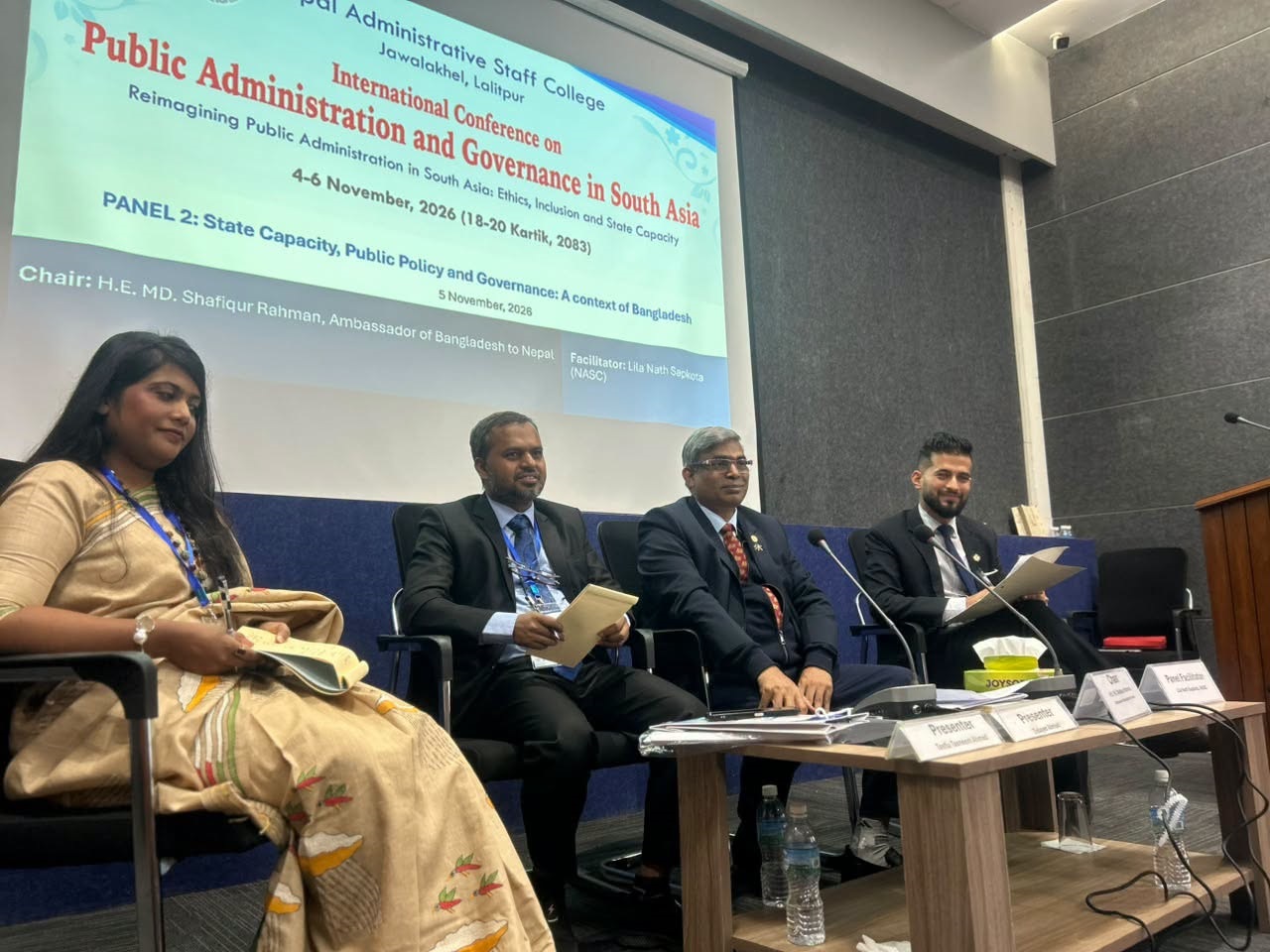
Kathmandu: Ambassador of Bangladesh to Nepal, H.E. Shafiqur Rahman, chaired a panel discussion on ‘State Capacity, Public Policy and Governance: The Context of Bangladesh’ at the Nepal Administrative Staff College in Kathmandu.
The discussion was part of a regional programme on Public Administration and Governance in South Asia, held under the theme ‘Reimagining Public Administration in South Asia: Ethics, Inclusion and State Capacity’, the Embassy of Bangladesh said in a social media post on Thursday, November 5.
In his introductory remarks, Ambassador Rahman highlighted Bangladesh’s remarkable development journey since gaining independence in 1971, noting its transformation from a country with limited resources into a vibrant developing economy.
He attributed this progress to export-led industrialisation, private-sector facilitation, structural adjustment, early integration into global supply chains, infrastructure expansion and digital transformation.
The Ambassador particularly highlighted Bangladesh’s achievements in poverty reduction, women’s empowerment, reducing mortality rates and promoting inclusive development. He acknowledged the contributions of microfinance institutions, non-governmental organisations (NGOs) and women’s participation in self-employment activities to the country’s socioeconomic progress.
He also highlighted the role of private investment in the ready-made garment (RMG) sector, jute industry and shipbuilding in driving economic growth.
Underscoring the importance of human capital development, resource mobilisation and bureaucratic reforms, H.E. Rahman stressed the need for effective domestic policies and international cooperation, including support from development partners.
He observed that effective governance requires more than establishing institutions and formulating policies. It also depends on efficient implementation, institutional coordination and the ability to translate people’s aspirations into improved public services.
He further emphasised the complementary roles of civil society, academia, the private sector and NGOs in strengthening state capacity and improving governance.
Referring to Nepal’s experiences in democratic participation, institutional development and administrative reforms, the Ambassador said sharing experiences between Bangladesh and Nepal could provide valuable insights into public administration and governance across South Asia.
Rahman also highlighted Bangladesh’s role in global governance under the United Nations framework, citing its active engagement in international climate negotiations and cooperation in trade, development and migration. He reaffirmed Bangladesh’s commitment to contributing to global peace, security and stability as a responsible member of the international community.
According to the Embassy, three research papers were presented during the panel session. The first, ‘State Capacity and Governance Outcomes in Developing Countries’, was presented by Shirin Sultana, Research Associate at BGIM. Dr Zobair Ahmed, Associate Professor at BGIM, presented the second paper, titled ‘State Capacity and Public Policy Formulation and Governance in Bangladesh: A Critical Review’. The third paper, ‘Academic vs Practitioner Perspectives on State Capacity’, was presented by Tasfia Tasneem Ahmed, Assistant Professor at BGIM.