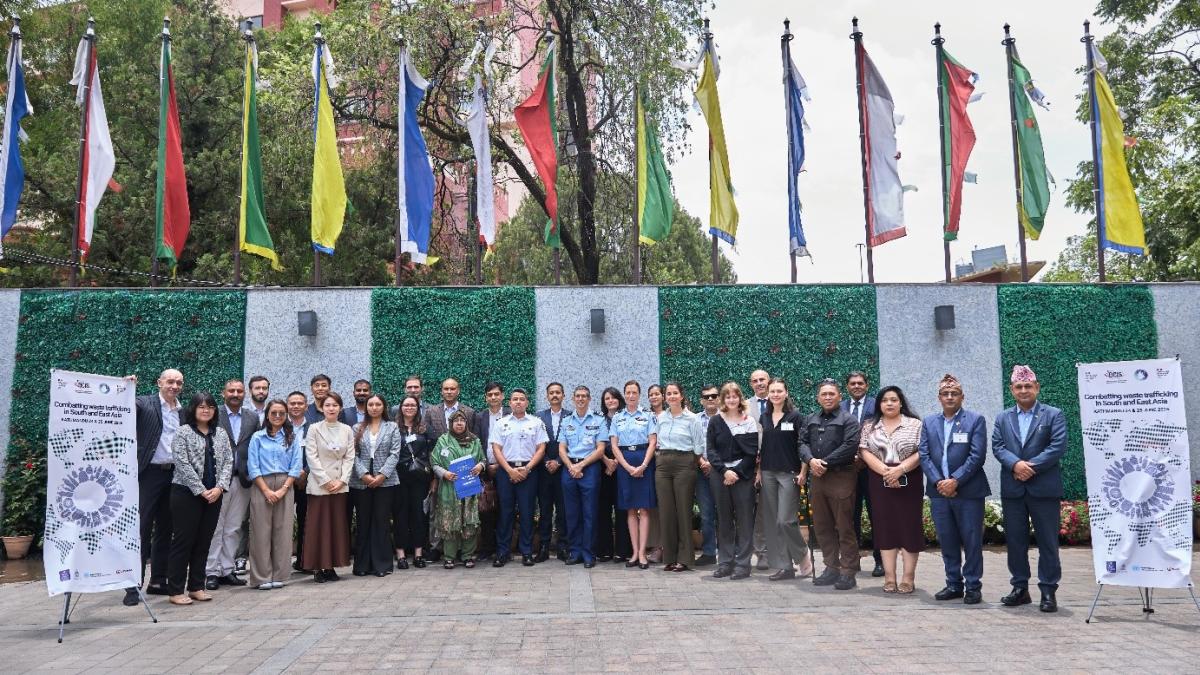
Kathmandu: Following the success of the previous regional seminar in 2024 in Nepal on combatting poaching and wildlife trafficking, the Embassy of France in Nepal and the French Homeland Security Service, Embassy of France in India (non-resident for Nepal, Bangladesh, Sri Lanka and Maldives), organized a second edition on environmental crime focused on combatting waste trafficking in South and Southeast Asia.
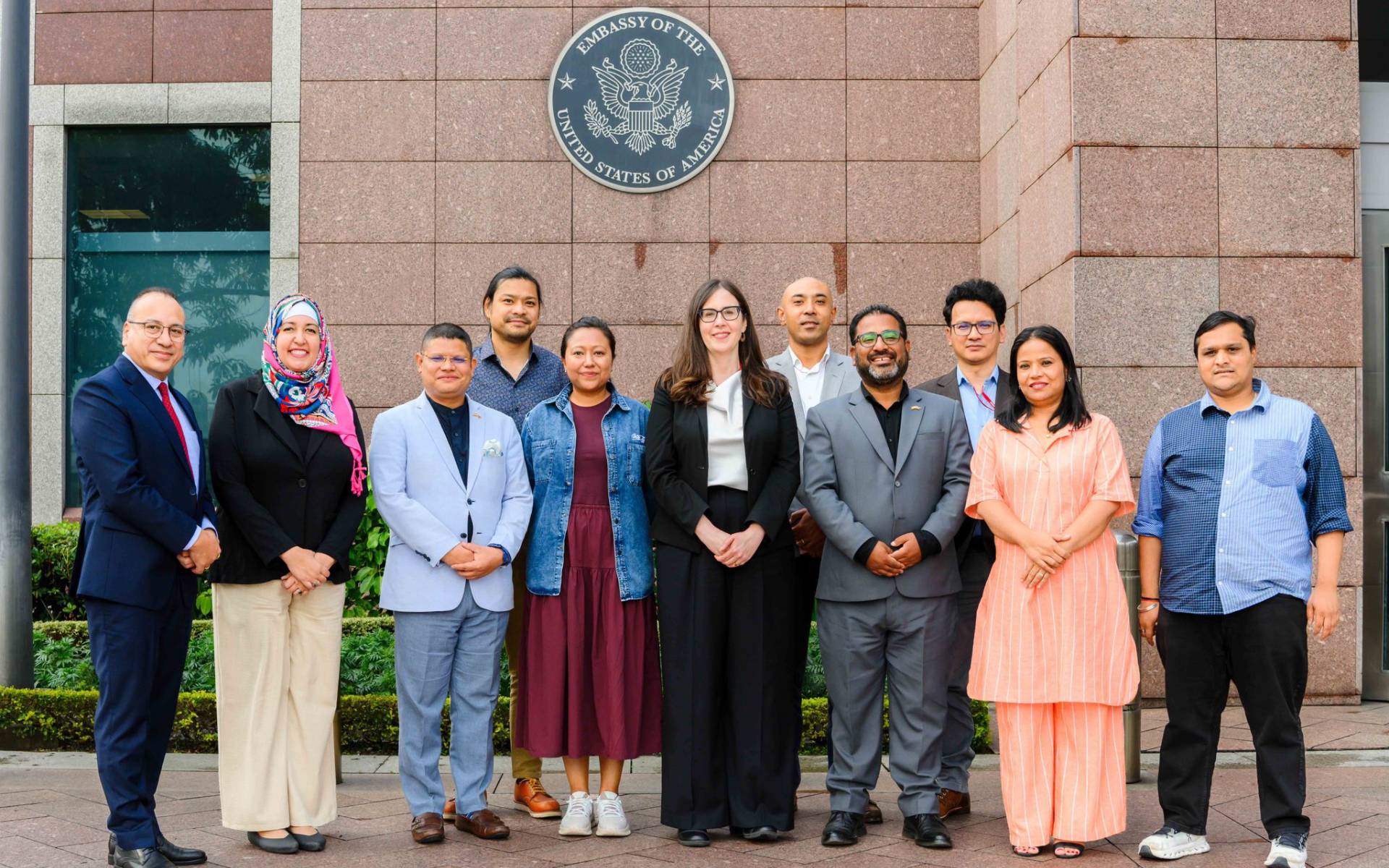
The seminar brought together participants from Nepal’s Department of Customs, Nepal Police, Armed Police Force, Ministry of Forests and Environment, Ministry of Home Affairs; the Law Enforcement Directorate for Environment and Public Health of the French National Gendarmerie (CESAN); participants and representatives from Bangladesh, Sri Lanka, Cambodia, India, Indonesia, Singapore, Vietnam; international institutions such as INTERPOL and UNODC, and the private sector.
The aim of this regional seminar on combating waste trafficking was therefore to create a forum for sharing practical techniques at all levels and exchanges of views among stakeholders from various countries in the region affected by this issue.
In her opening remarks, Ms Elsa CALLEY, Chargée d’Affaires a.i. of the Embassy of France in Nepal, thanked the various authorities of Nepal for facilitating the organization of the seminar, noting that “this initiative underscores both France’s and Nepal’s commitments to fighting such crimes and to become major partners with all law enforcement agencies in the area”. Ms. Christel FONTAINE, Deputy Homeland Security Attaché posted at the Embassy of France in India, highlighted the Significance of the issue: “environmental crime, including waste trafficking, is now the fourth most lucrative criminal activity globally, generating an estimated $70-213 billion annually”.
On the institutional side, Colonel Sébastien NOCHEZ from the Law Enforcement Directorate for Environment and Public Health of the French National Gendarmerie (CESAN) presented the role of France in tackling environmental crime from the prevention to criminal investigations and based on an integrated and coordinated approach, for an efficient response at national and international level. He then presented the European programme “UNITE” that CESAN led in 2023-2024 in collaboration with many stakeholders from European, Asian and African countries and NGOs to fight against waste trafficking, especially in South and Southeast Asia, underlining its success but also “the need to go one step further”.
Ms Muendao SUANDEE from United Nations Office on Drugs and Crime (UNODC) presented the regional project WasteNet, reiterating the need for “stronger inter-agency collaboration, and faster mutual legal assistance to trace both the shipments and the financial network behind them”. Finally, M. Michele Viale, Operations coordinator of INTERPOL Environmental Security Sub-Directorate engaged in the repression of crime against the environment, through international police cooperation saying that “illicit waste trafficking is a global problem that enriches criminal groups at the expense of the environment and human health, and a global response is needed.”
M. Guillaume DOURDIN, CEO of Veolia in India, a French enterprise specialised in water, energy and waste management, mentioned the importance of recycling value chain, the paradox of circular economy and how it could be a waste-solution in the future.
Case studies showed how Sri Lanka, located in the middle of this traffic in the Indian Ocean, is undergoing a lot of harbour pression with a strong burden on the shipping lines according to M. Shahabdeen LUCKMAN from Sri Lanka’s customs, and how “Bangladesh stands at the frontline of environmental maritime defense as one of the major trading nations in the Bay of Bengal and the second-largest country to accommodate the ship recycling industry” according to Lieutenant Commander Abid Bin MANJUR, Bangladesh Coast Guard.
The seminar concluded with an inspiring visit to Moware Lab in Kathmandu, a Nepali social enterprise that transforms plastic and glass waste collected in the Sagarmatha National Park into art and household items.
This seminar was organized as part of the Nepal-France Green Roadmap, a framework for cooperation between the two countries on environmental issues, which was adopted in 2023.
The event was financially supported by the French Ministry for Europe and Foreign Affairs’ Security and Defence Cooperation Directorate (DCSD) and the International Security Cooperation Directorate (DCIS).