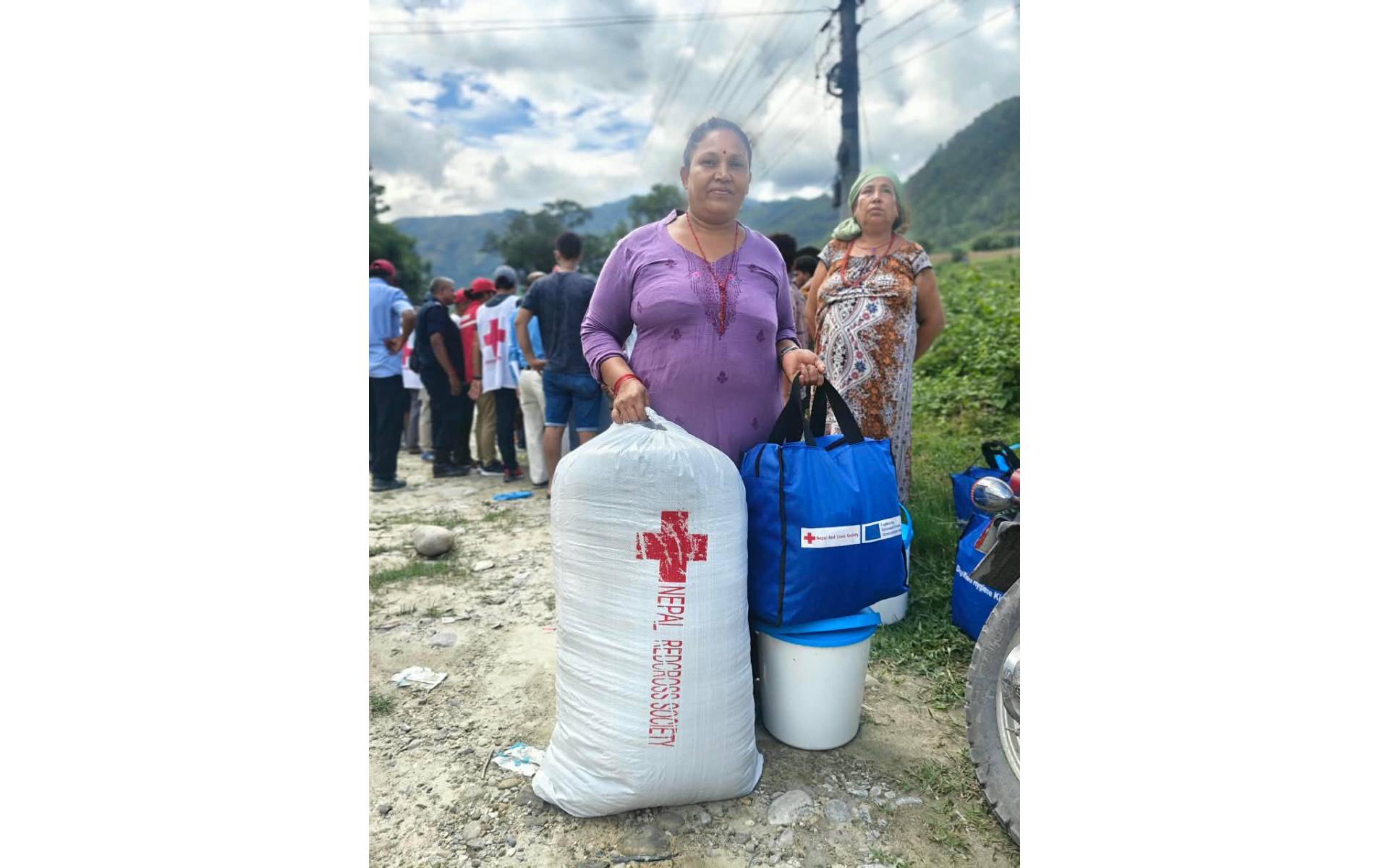
Kathmandu: The European Union (EU) is providing a further NPR 89 million in humanitarian aid to support communities affected by the devastating flash floods in Nepal. This brings the total emergency funding for the disaster to over NPR 445 million (EUR 2.5 million).
The new funding will support an International Federation of Red Cross and Red Crescent Societies (IFRC) Disaster Response Emergency Fund (DREF) operation led by the Nepal Red Cross Society. The operation aims to assist up to 20,000 people – around 4,000 households – in Bagmati Province with emergency and transitional shelter, cash assistance, water and sanitation, healthcare, mental health and psychosocial support, protection and other essential assistance.
The funding comes as Nepal continues to respond to catastrophic flash floods that struck on 26 August, causing extensive loss of life and widespread damage to homes, infrastructure and essential services. Since that date, the Copernicus satellite service has been providing maps to support the response.
The EU is also mobilising in-kind assistance. Through the EU’s Civil Protection Mechanism, Germany, Luxembourg, Latvia and Sweden are sending shelter and hygiene items, forensic equipment and other supplies.
Furthermore, the EU is organising a Humanitarian Air Bridge to Kathmandu. A flight with over 80 tonnes of supplies from the EU’s emergency stock in Copenhagen is scheduled to arrive later this week.
The EU and its Member States are amongst the world’s leading donors of humanitarian aid. Relief assistance is an expression of European solidarity towards people in need around the world. It aims to save lives, prevent, and alleviate human suffering and safeguard the integrity and human dignity of populations affected by natural disasters and man-made crises.
Through its Civil Protection and Humanitarian Aid department, the EU helps millions of victims of conflicts and disasters every year. With headquarters in Brussels and a global network of field offices, the EU provides assistance to the most vulnerable people on the basis of humanitarian needs.
The European Commission has signed a €16 million humanitarian delegation agreement with the International Federation of Red Cross and Red Crescent Societies (IFRC), to support the Federation's Disaster Response Emergency Fund (DREF).
The DREF was established in 1979 and is supported by contributions from donors. Each time a National Red Cross or Red Crescent Society needs immediate financial support to respond to a disaster, it can request funds from DREF. The IFRC allocates grants from the Fund, which can be replenished by the donors.