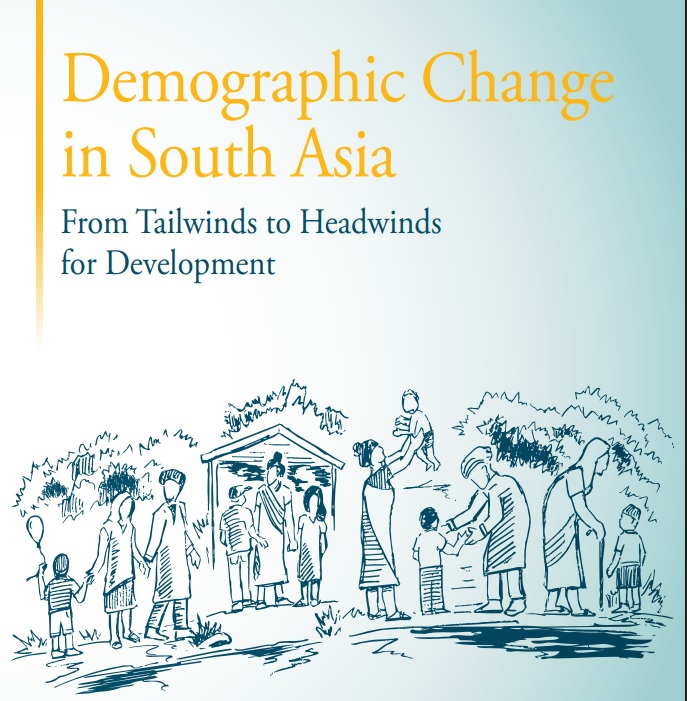
Experts have stressed the growing need for Nepal to connect people with decent employment, social protection and care services amid continued exodus of working-age population and a projected rise in the elderly population.
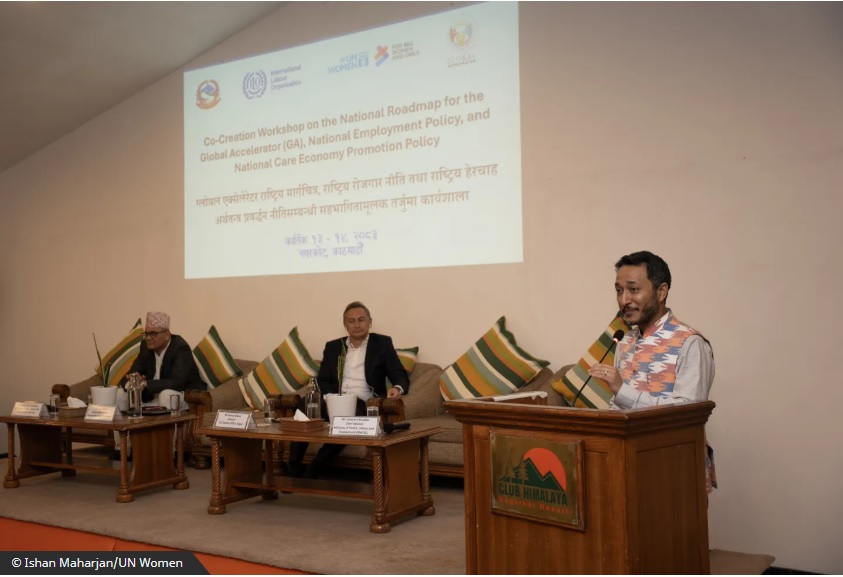
They expressed such views during a two-day workshop attended by government representatives, academia and United Nations agencies on October 30-31, 2026.
The workshop focused on jobs, social protection and the care economy as part of efforts to drive decent job creation while achieving inclusive growth and response to the country’s changing demographic realities, reads a joint statement issued by the International Labour Organisation (ILO) and UN Women Nepal.
As per the 2021 Census, the present growing youth population is in immediate need for adequate decent employment including resilient social protection whereas in the future the population aged 60 years and above is projected to reach over 7.1 million by 2051, coupled with persistent migration trend, will be increasing demand for care and support services, the statement added.
Opening the workshop, Dr Pukar Malla, Honourable Member, National Planning Commission, emphasized the importance of exploring growth in focus sectors of agriculture, tourism, construction, care economy and ICT and digitalization as way forward for employment creation and social protection expansion.
During the workshop, participants engaged in discussions around three strategic entry points to advance employment and social protection in Nepal, as proposed in the National Roadmap on Jobs and Social Protection for Just Transitions, developed by Nepal as a pathfinder country under the Global Accelerator on Jobs and Social Protection for Just Transitions (GA).
Key stakeholders identified priority actions to strengthen employment, skills development, and social protection in Nepal.
For Technical and Vocational Education and Training (TVET), participants emphasized stronger coordination across all three tiers of government to implement the National Qualifications Framework (NQF), establish an integrated digital database of training providers and skilled workers, increase research investment, and improve skills testing.
To expand social protection, participants recommended more flexible, needs-based programmes and adapting contributory social security schemes to include micro and small enterprises, temporary and part-time workers. They also stressed stronger protection for vulnerable groups, including street children, older persons, and women facing violence.
Participants further highlighted the need for integrated digital systems to simplify enterprise registration, strengthen labour market information, facilitate social security enrolment, and accelerate formalization. They called for better interoperability and coordination of existing digital initiatives to enable accessible, one-stop services, alongside national policy guidance that supports context-specific implementation by provincial and local governments.
As a part of the workshop, the sub-committees formed to carry out Rapid Diagnostics on National Employment Policy (NEP) and National Care Economy Promotion Policy (NCEPP) presented the findings of the assessments. The presentations were followed by constructive discussions and feedback from stakeholders, which helped refine and finalize the assessments. Building on these outcomes, the formulation processes for both policies are expected to commence shortly, with a target of finalizing the policies within the next 100 working days.
The two-day Co-Creation Workshop on the National Roadmap for the Global Accelerator on Jobs and Social Protection for Just Transitions, the National Employment Policy, and the National Care Economy Promotion Policy was led by the National Planning Commission (NPC) and the Ministry of Youth Labour and Employment (MoYLE) with technical support from the International Labour Organization (ILO) and UN Women.
The workshop concluded with a call for strengthened collaboration and commitment among stakeholders across sectors to review, refine and finalize the National Roadmap and two proposed policies. The workshop underscored the importance of translating these collective efforts into actionable policies and strategies that promote decent employment, strengthen social protection and advance a just and inclusive transition, ensuring that women, children and vulnerable populations are not left behind.