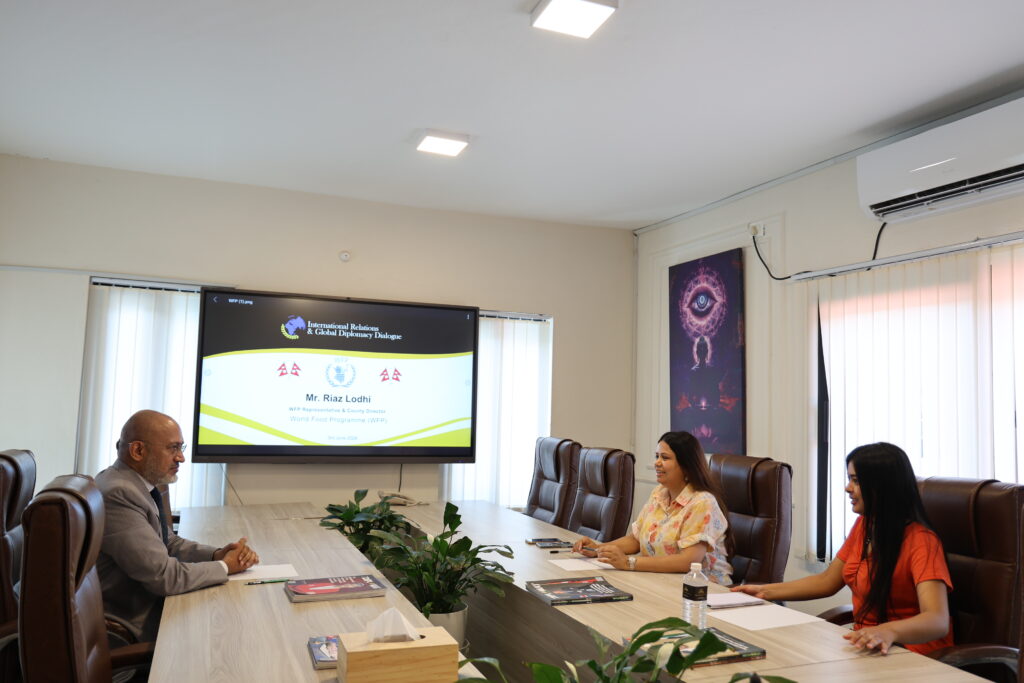
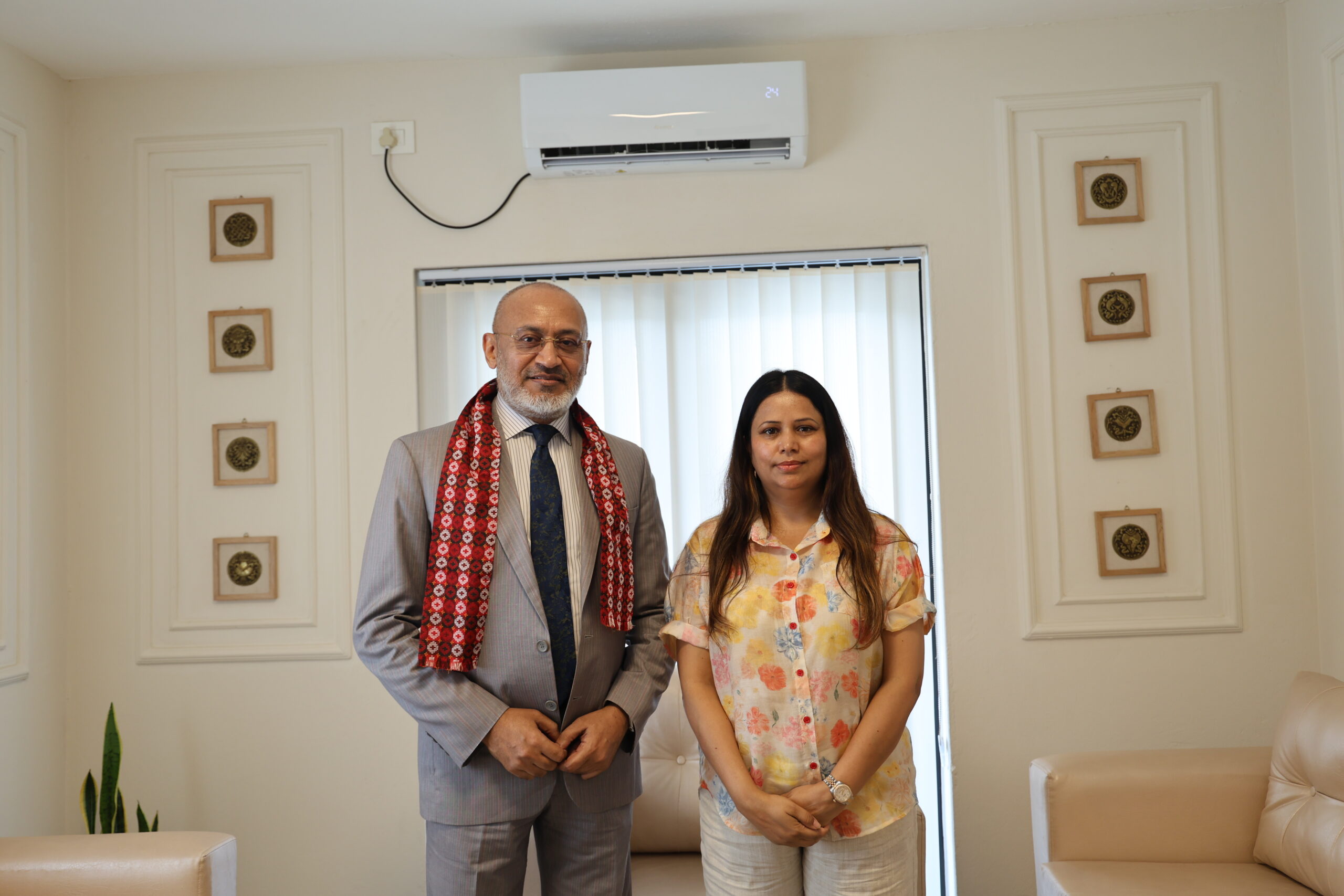
Kathmandu: Amb. Dr. Sarmila Parajuli Dhakal, President of the International Relations & Global Diplomacy Dialogue (IRGDD), held a high-level strategic consultation with Mr. Riaz Lodhi, Country Director and Representative of the World Food Programme (WFP) Nepal, at the IRGDD premises in Kathmandu.
During the meeting, Amb. Dr. Parajuli Dhakal officially welcomed Mr. Lodhi as an Honorary Member of the Ambassadors Club Nepal, cementing a strong institutional partnership between the two organizations.
Mr. Lodhi congratulated IRGDD on its high-level work and applauded its role in bridging the communication gap between Nepal and the diplomatic community through these initiatives. He noted that Nepal is at a critical development crossroads following the government’s strategic decision to postpone its Least Developed Country (LDC) graduation, which was initially scheduled for November 2026. He emphasized that IRGDD provides the exact ecosystem Nepal needs by successfully connecting the government, the diplomatic community, and international organizations.
Amb. Dr. Parajuli Dhakal outlined IRGDD’s institutional framework anchored in its four core pillars, The Ambassadors Club Nepal, IRGDD, The Diplomat Nepal, and Diplomatic Academy Nepal (DAN). Under the guiding principle of “Development through Diplomacy,” she reiterated that IRGDD actively utilizes various modern facets of statecraft, including sports, science, culture, and technological innovation/AI, to drive national development.
Recognizing the strategic role of food diplomacy in advancing sustainable development, IRGDD and WFP explored opportunities to strengthen Nepal’s food systems, enhance climate resilience, and mobilize international partnerships in support of the country’s development priorities. By combining WFP’s technical expertise with IRGDD’s diplomatic outreach and policy engagement platforms, the partnership aims to support Nepal’s journey toward greater food sovereignty.
The meeting concluded with a shared commitment to continue dialogue and identify areas of collaboration that can translate this vision into actionable initiatives. Both sides reaffirmed the importance of partnership-driven approaches, innovation, and international cooperation in building a more resilient, food-secure, and prosperous Nepal.