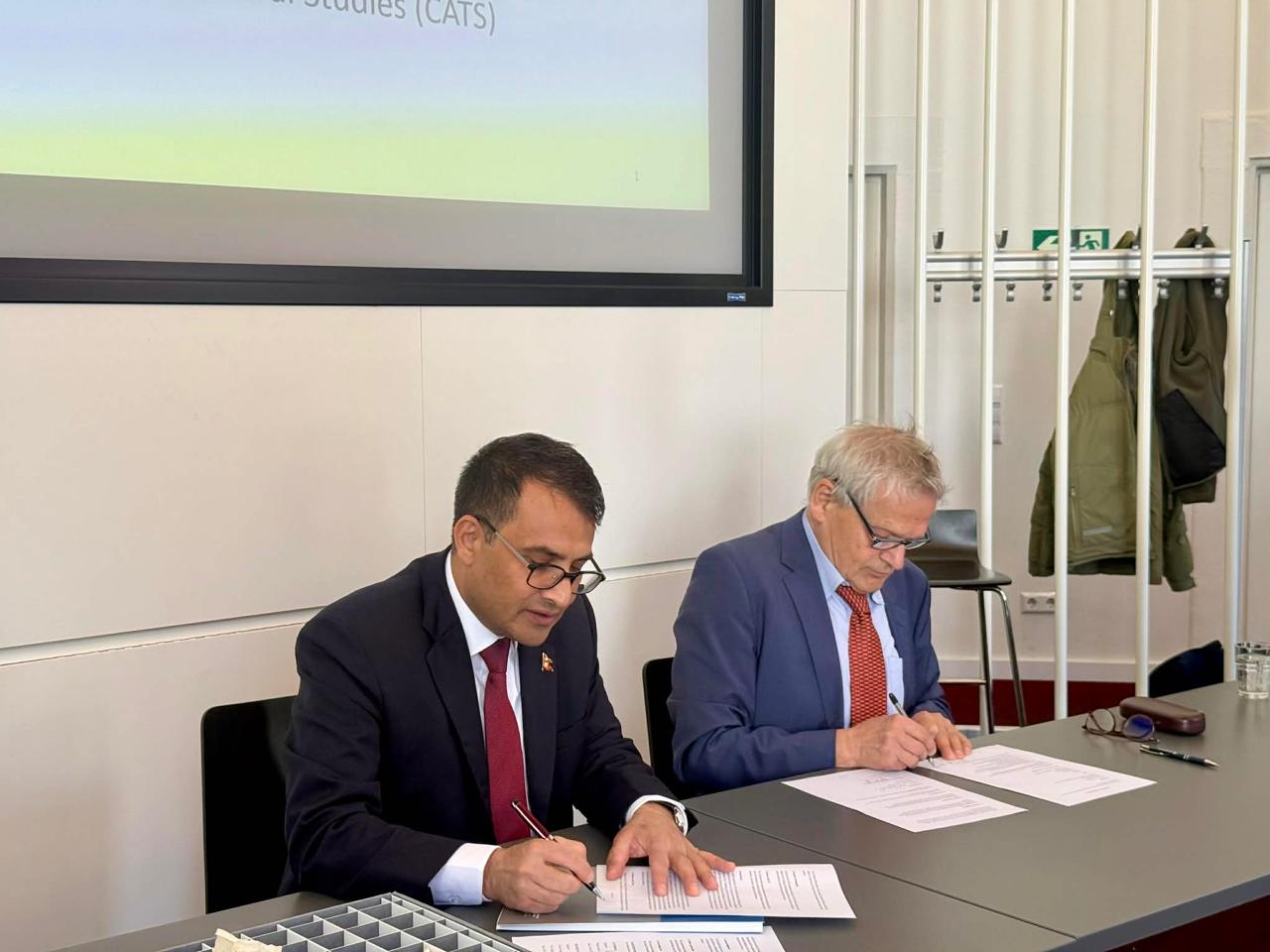
Kathmandu: Nepal is set to receive more than 800 rare historical manuscripts from Germany following the signing of a handover agreement between the Embassy of Nepal in Berlin and Heidelberg University at a ceremony held at the Centre for Asian and Transcultural Studies (CATS) in Heidelberg on April 23.
Chargé d’Affaires a.i. Sagar Prasad Phuyal and Professor Dr. Axel Michaels signed the agreement for the restitution of a significant collection of Nepal’s historical manuscripts, widely known as the Walter Rindfleisch Collection. The materials, dating from the 13th to the 20th century, include more than 800 rare items, among them 460 highly fragile palm-leaf manuscripts written in Sanskrit and Nepal Bhasha (Newari) using the Bhujimol script.
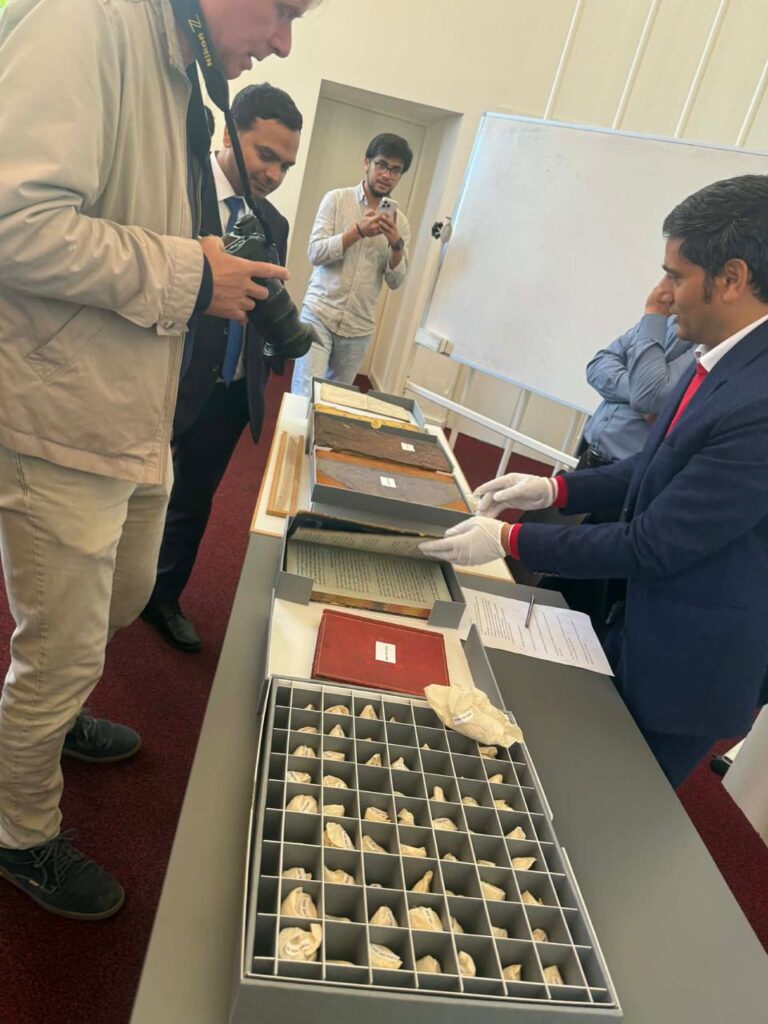
The collection also features royal documents, court records, Sanskrit and Tantric texts, Ayurveda manuscripts, personal notes, travel diaries and historically important correspondence. According to officials, some of the palm-leaf manuscripts represent among the earliest recorded manuscript traditions of Nepal.
The manuscripts were entrusted by a private German collector to Professor Michaels with the intention of returning them to Nepal. Prior to repatriation, the collection underwent extensive conservation, digitization and scientific cataloguing under his leadership with support from the Heidelberg University Library.
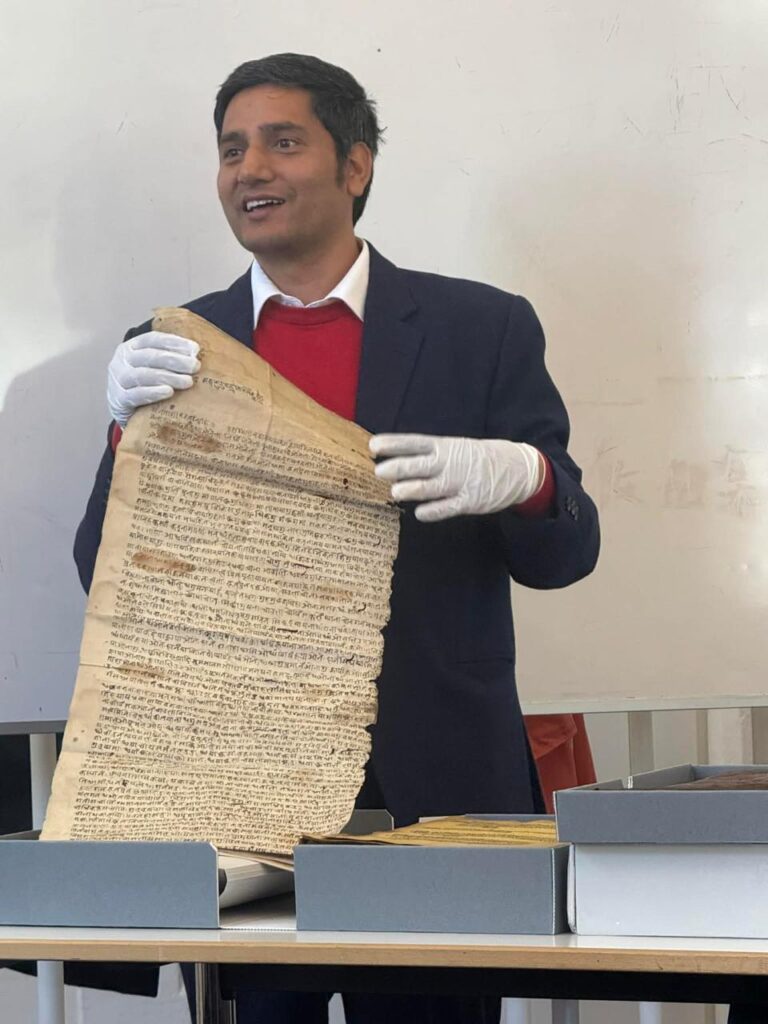
Receiving the manuscripts, Phuyal expressed appreciation to Professor Michaels and all those involved in the preservation and restitution process. He said the gesture reflects deep respect for Nepal’s cultural heritage and contributes to ongoing efforts to recover and safeguard the country’s historical assets. He also acknowledged the academic contributions of scholars at Heidelberg’s South Asian Institute in advancing research on Nepal’s cultural heritage.
Speaking at the ceremony, Vice-Rector for International Affairs and Diversity Professor Dr. Marc-Philippe Weller reaffirmed the university’s commitment to academic cooperation and ethical stewardship of cultural heritage. Professor Michaels highlighted the cultural and historical significance of the collection, describing it as likely the largest assemblage of Nepali palm-leaf manuscripts outside Nepal. He noted that digitization would enable global scholarly access, while physical return represents an important step toward cultural restitution.
Head of the South Asian Institute Professor Dr. Hans Harder commended the role of the institute and CATS in archiving and preparing the heritage documents.
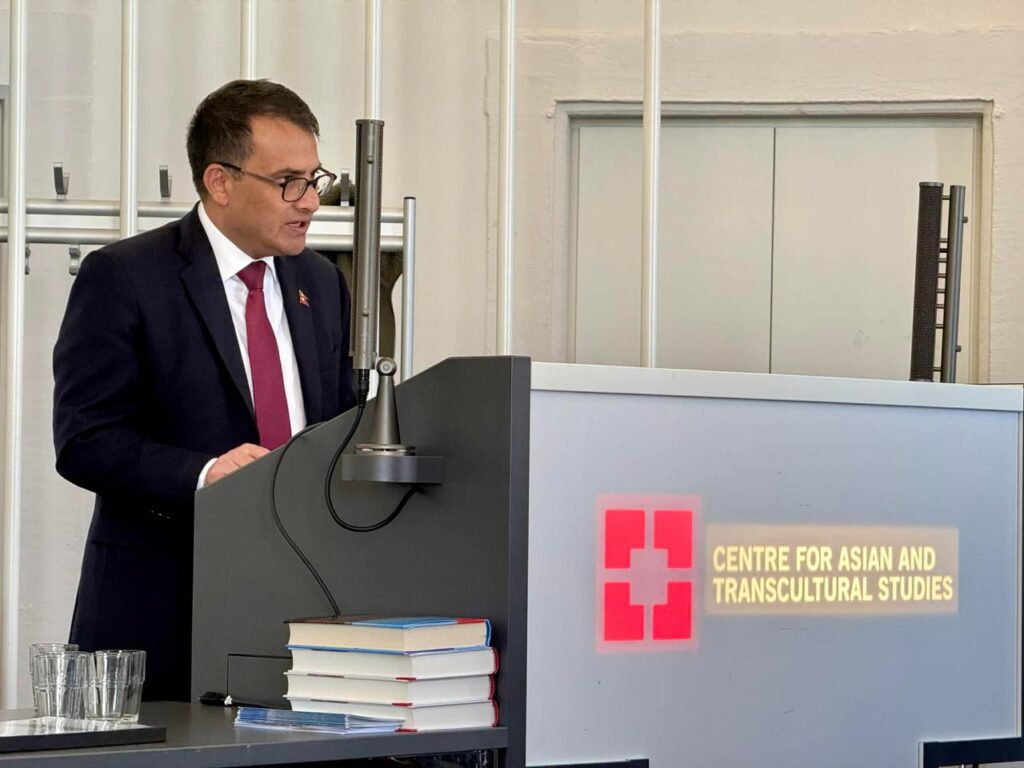
Professor Dr. Christiane Brosius highlighted the Nepal Heritage Documentation Project and stressed collaborative preservation efforts, particularly following the 2015 earthquake. Researchers Dr. Manik Bajracharya and Dr. Rajan Khatiwoda also presented the process of receiving, cataloguing, conserving and preparing the collection for restitution.
Both the Embassy of Nepal and Heidelberg University expressed commitment to strengthening academic and cultural collaboration, emphasizing the importance of preserving heritage and enhancing people-to-people ties between Nepal and Germany.
The manuscripts will be transferred to Nepal and handed over to the relevant national authorities for preservation, research and public access. Representatives from Heidelberg University, scholars, students and media personnel attended the ceremony, along with Embassy officials.