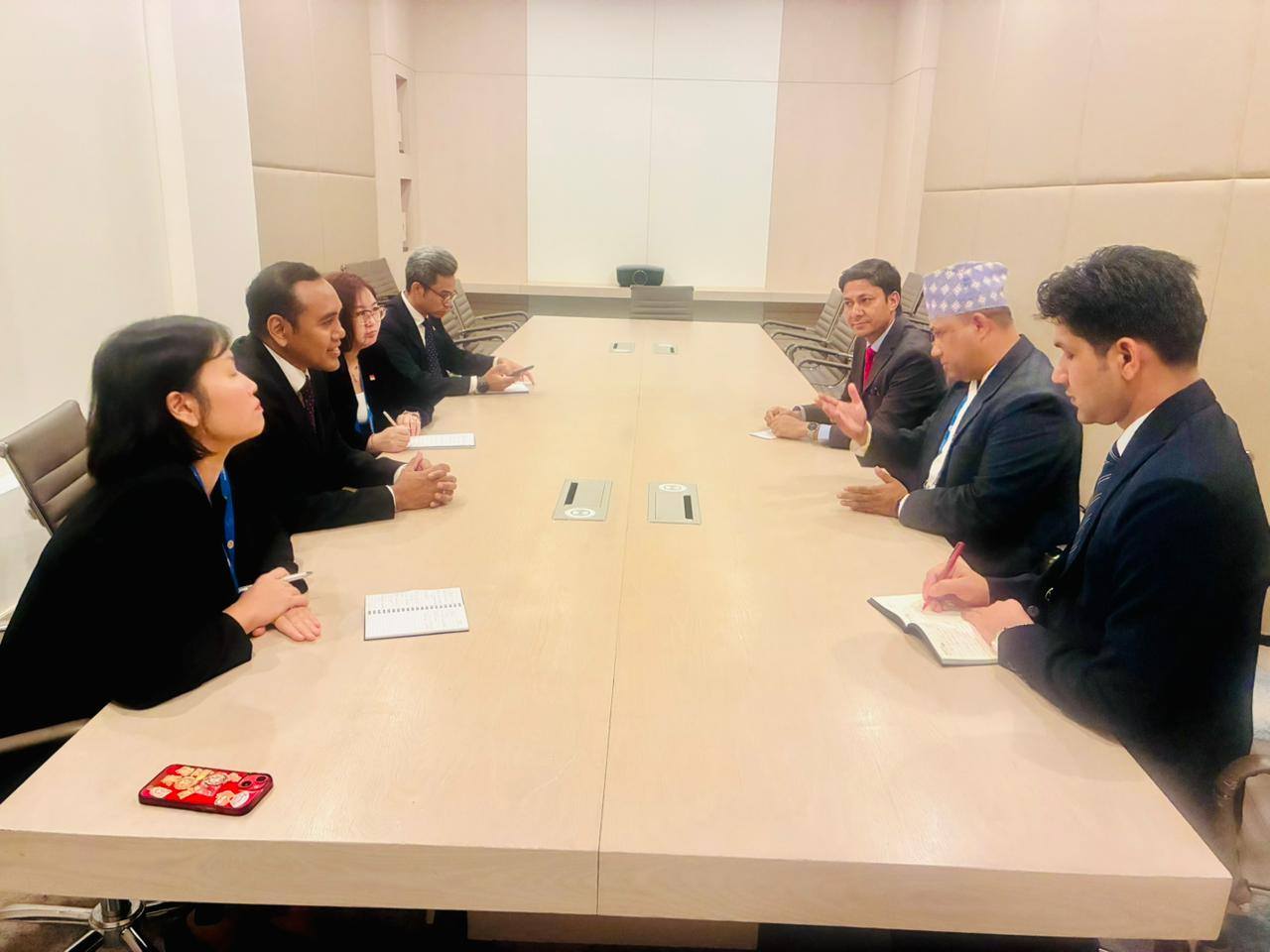
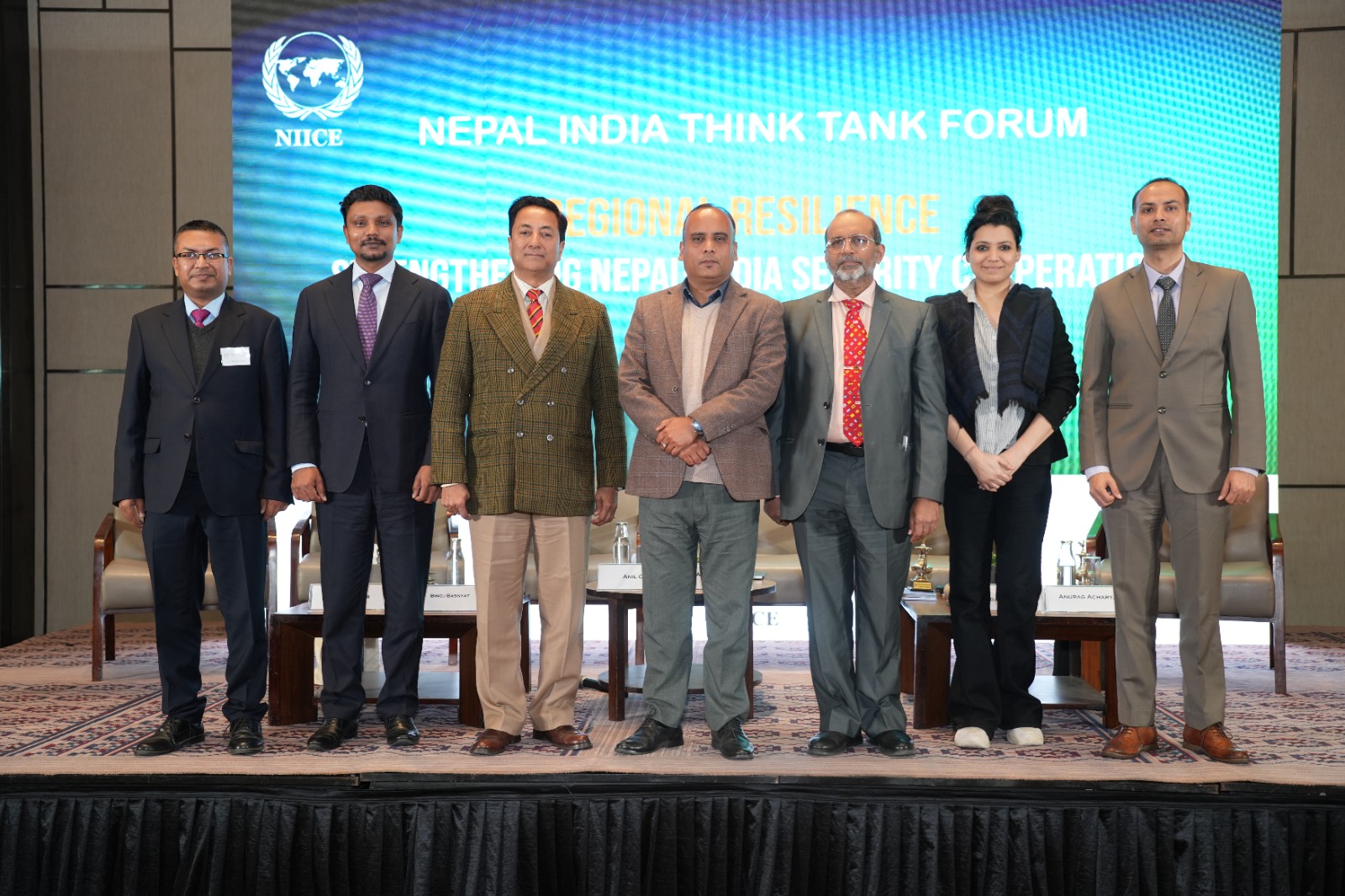
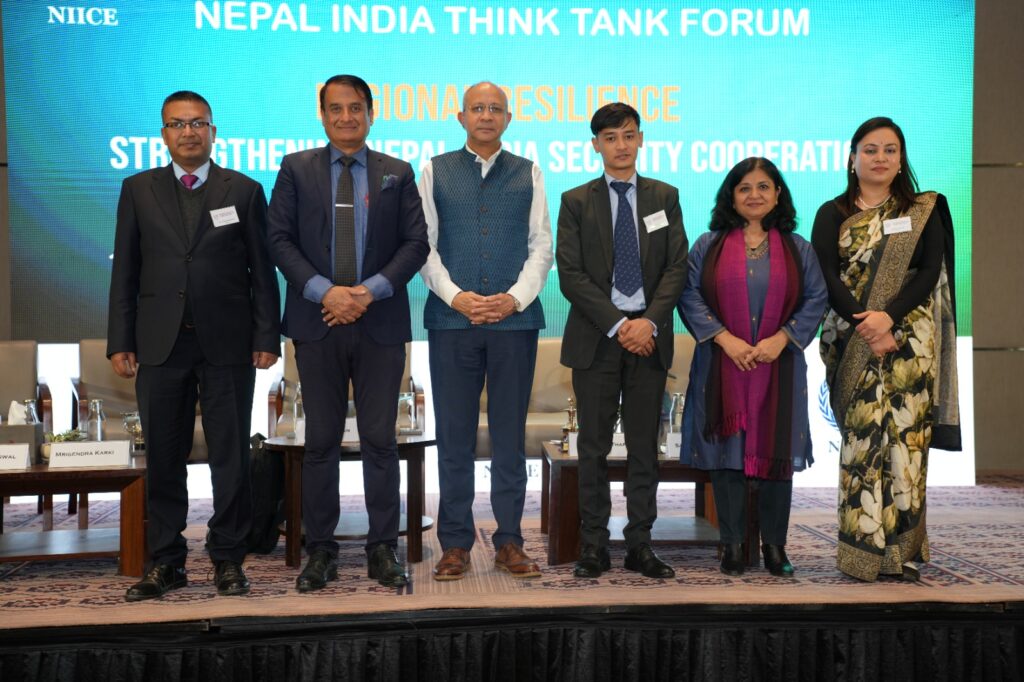
Kathmandu: The Nepal Institute of International Cooperation and Engagement (NIICE) hosted the Nepal-India Think Tank Forum on Regional Resilience: Strengthening Nepal-India Security Cooperation with the senior experts from major think tanks of India and Nepal on February 10.
Vice Admiral Sanjay Jasjit Singh (Retd.), the Director General of the United Service Institution of India, oldest think tank of the Indian military shared that “Nepalese courage and valour have been at the forefront of Indian military strength and national security.” He also shared that “Agniveer scheme is open to Nepali citizens at par with Indians, and is akin to the earlier pre-1970s non-pensionable colour service. The scheme offers an opportunity to invest in human capital, with disciplined, motivated, empowered youth that strengthens and enriches society.”
Another prominent speaker, Ambassador Pankaj Saran, Former National Security Advisor of India and Convenor at NatStrat shared that he has been impressed by the interaction with Youths of Nepal and youth of both India and Nepal should engage to share the future of Nepal-India relations.
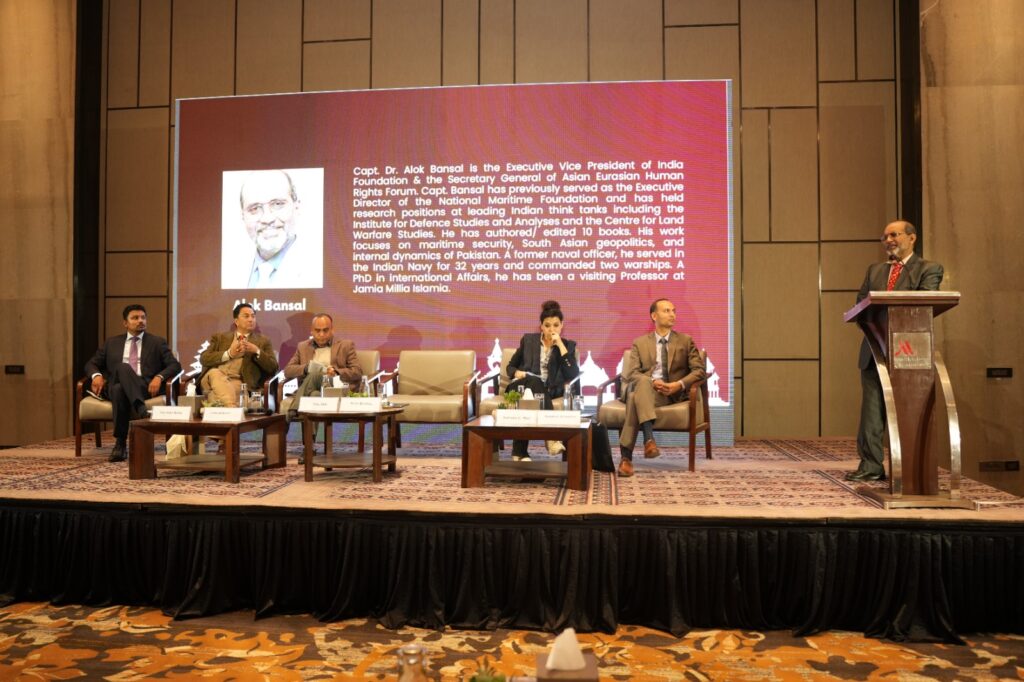
Alok Bansal, Executive Vice President of India Foundation shared that India is a major victim of cross-border terrorism and it has a huge impact on Nepal as well.
Similarly, Professor Sangeeta Thapliyal of Jawaharlal Nehru University stated that India–Nepal relations benefit from the work of think tanks and academic centers, and there is significant scope to strengthen collaboration. The Governments of India and Nepal should promote think tanks and research.
Dr. Gaurav Saini, co-founder of the Council for Strategic and Defence Research, said the India–Nepal border is unique for its deep trade, cultural, and people-to-people ties, but its porous nature also creates shared security challenges. He highlighted human trafficking, narcotics smuggling, and counterfeit currency as transnational threats affecting both countries, citing a January 2026 seizure of counterfeit Nepali currency by Bihar Police.
Maj. Gen. Binoj Basnyat (Retd.), Political and Security Analyst, said Nepal’s Gen Z demonstrations were not unexpected, though their unfolding came as a surprise. While stressing the importance of elections, he questioned whether they would ensure strategic stability, warning that without generational renewal and institutional reform, elections may only repeat existing cycles. He described the post-election period as a “strategic pause rather than a strategic solution” and called for inclusive dialogue.
Anurag Acharya, Director PEI discussed three major avenues including Physical connectivity, Trade and Digital connectivity that have contributed to improved bilateral ties. He also discussed emerging avenues like Tech Integration, Religious and Cultural Tourism and Sports that could further contribute to business and economy on both sides.
Bibek Dhoj Thapa, Program Coordinator at NIICE emphasized that India–Nepal relations should focus on partnership with the rising youth population, seeing India not as a post-colonial power but as a strategic partner. Highlighting shared challenges such as water resource management, climate change, and security, he suggested initiatives like India–Nepal Youth Climate Fellowships and expanded soft power engagement.
Sumitra Karki, the Director of NIICE, who emphasized the need to engage academically and policy-wise in enhancing bilateral relationships. Karki said that they had a strong conviction that the Government of India must continue to encourage Nepal studies in India, and the Government of Nepal must encourage India studies back home, and knowledge exchange and institutional support can only enhance mutual understanding between the two nations.
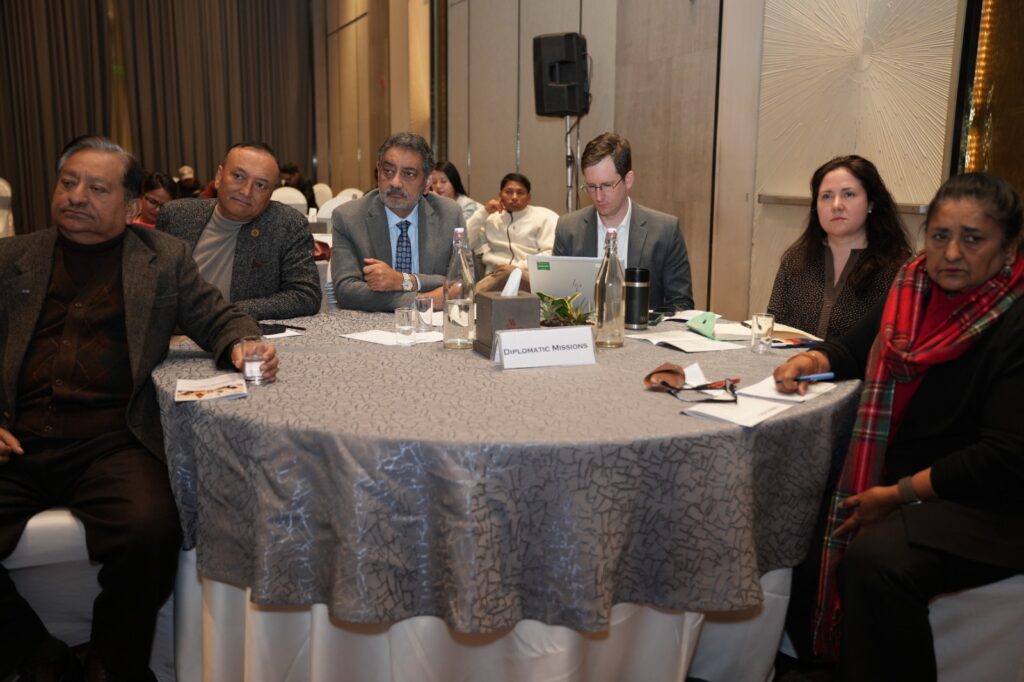
The speakers put a collective emphasis on the importance of convergence in terms of security interests, continuity of cooperation, and policy coordination between Nepal and India in order to deal with the traditional as well as non-traditional security issues. The session was concluded with an interactive question and answer session where the members interacted on the issue of defence cooperation, regional stability, and the prospects of cooperation.