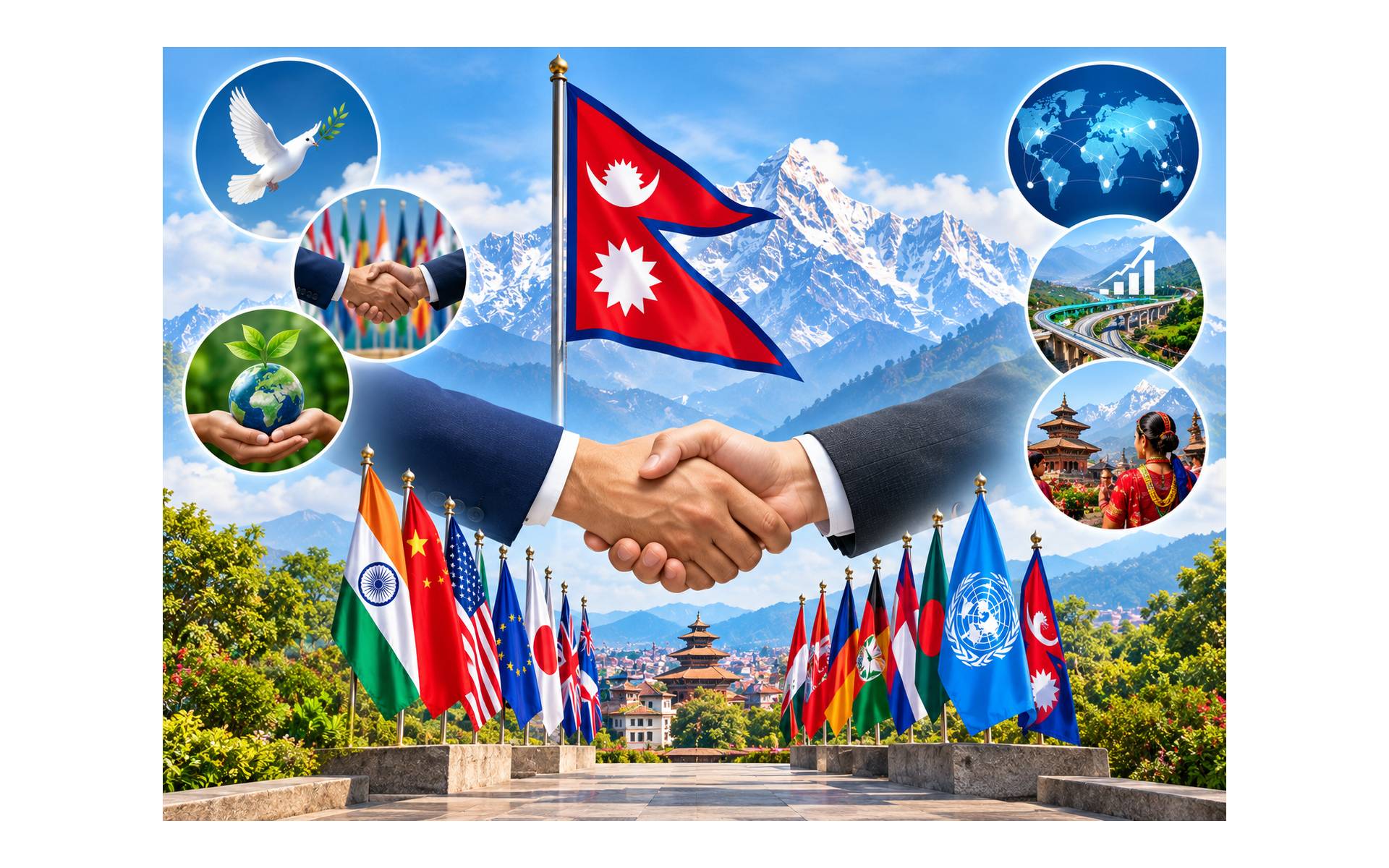
Nepal’s geopolitical realities demand a capable, balanced, visionary, and results-oriented diplomacy.
Nepal’s ‘Foreign Policy’ (2020) identifies 20 policy priorities based on 14 guiding principles. These priorities encompass bilateral relations, multilateral cooperation, a rules-based international order, regional cooperation, economic diplomacy, the protection of natural and legal rights and interests, public diplomacy, academic diplomacy, and the institutional strengthening of the Ministry of Foreign Affairs. However, the institutional strengthening of the Ministry of Foreign Affairs is not a substantive foreign policy priority. If this aspect is considered separately, Nepal’s foreign policy effectively contains nineteen core priorities.
So, are all 19 priorities of Nepal’s foreign policy equally important? Is it realistically possible to allocate equal levels of resources, time, and diplomatic effort to every priority? In my view, the answer is no. Every country must determine its foreign policy priorities according to its history, geopolitical position, national capabilities, international environment, and long-term national interests.
Diplomacy as power
In Western strategic thought, the Diplomacy, Information, Military, and Economy (DIME) framework is widely regarded as an element of national power. Countries such as the United States have extensively incorporated this concept into their national security and strategic planning. In recent years, this framework has evolved into DIME-FIL—meaning Diplomacy, Information, Military, Economy, Finance, Intelligence, and Law Enforcement.
Eastern strategic theorist Sun Tzu regarded diplomacy as more effective than warfare itself. His principle of “Winning Without Fighting” argues that achieving strategic objectives through diplomacy, negotiation, persuasion, and psychological influence represents the highest form of victory. The modern concept of Comprehensive National Power (CNP) extends beyond military and economic strength by incorporating national unity, political stability, human and natural resources, culture, technology, innovation, soft power, and international reputation as essential elements of national power.
Likewise, Kautilya’s Saptanga Theory identifies seven fundamental elements of the state: the ruler, ministers, territory and population, fortified infrastructure, treasury, armed forces, and allies. In particular, the concept of allies (Mitra) reflects Kautilya’s recognition of diplomacy, international relations, and strategic partnerships as indispensable components of statecraft. Taken together, these traditions highlight diplomacy as an indispensable instrument of national power.
For a country like Nepal with a sensitive geopolitical location, limited economic resources, and comparatively modest military capabilities, diplomacy constitutes the country’s most effective element of national power. Nepal’s geopolitical realities demand a capable, balanced, visionary, and results-oriented diplomacy. Another important advantage of diplomacy lies in its high cost-effectiveness. Expanding military capabilities or building economic power requires enormous investments of resources and time. Diplomacy, however, enables a country to safeguard national interests through dialogue, trust-building, cooperation, and strategic partnerships at comparatively low cost.
So, Nepal must strengthen its diplomatic institutions by making them more professional, research-driven, institutionally robust, and results-oriented to implement its foreign policy effectively, protect national interests, and expand its international influence.
For a country characterized by limited economic resources, a relatively small diplomatic workforce, and a unique geopolitical position, it is neither practical nor effective to allocate equal resources, time, and diplomatic efforts to all 19 foreign policy priorities. Such an approach would disperse scarce national resources across too many areas, making it difficult to achieve meaningful outcomes. Furthermore, Nepal’s relationships with other countries are not uniform in terms of strategic significance or national interest. The nature of Nepal’s interests, opportunities, and challenges differs considerably among neighbouring countries, major economic partners, development partners, labour destination countries, regional organizations, and global powers.
In this context, Nepal should adopt a more country-specific approach to foreign policy. Diplomatic priorities should be formulated separately for each country based on Nepal’s national interests, security concerns, economic opportunities, and strategic requirements. Therefore, Nepal’s foreign policy priorities should be reviewed in accordance with the evolving international environment, geopolitical realities, national capabilities, and long-term national interests.
Six priorities
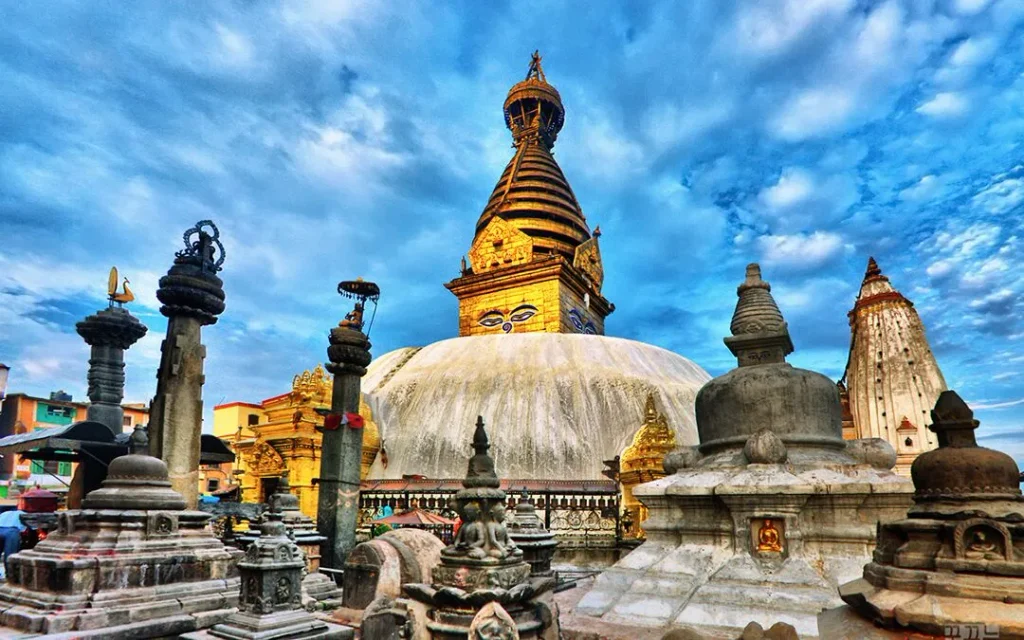
First, King Prithvi Narayan Shah, the founder of modern Nepal, famously described the country as ‘a yam between two boulders.’ This metaphor captures Nepal’s geopolitical reality and provides a fundamental guiding principle for its foreign policy. Its central message is that Nepal should accord special priority to maintaining stable, balanced, and enduring relations with its two immediate neighbours.
The metaphor of the boulders is particularly significant. Governments and political leadership may change, but their core strategic interests generally endure. Nepal’s foreign policy must therefore be formulated with due recognition of these long-term realities. In the contemporary context, this concept also suggests that Nepal should not incline to any.
Likewise, the yam symbolizes not weakness but strategic flexibility, adaptability, prudent use of opportunities, and the preservation of independent national identity. Nepal should neither align itself exclusively with any major power nor become entangled in geopolitical rivalry. Instead, it should maintain an independent decision-making capacity, uphold sovereign equality, and pursue balanced relations with both countries. The metaphor of yam should therefore be reinterpreted not as a symbol of vulnerability, but as an expression of strategic realism, balance, flexibility, and the prudent utilization of opportunities.
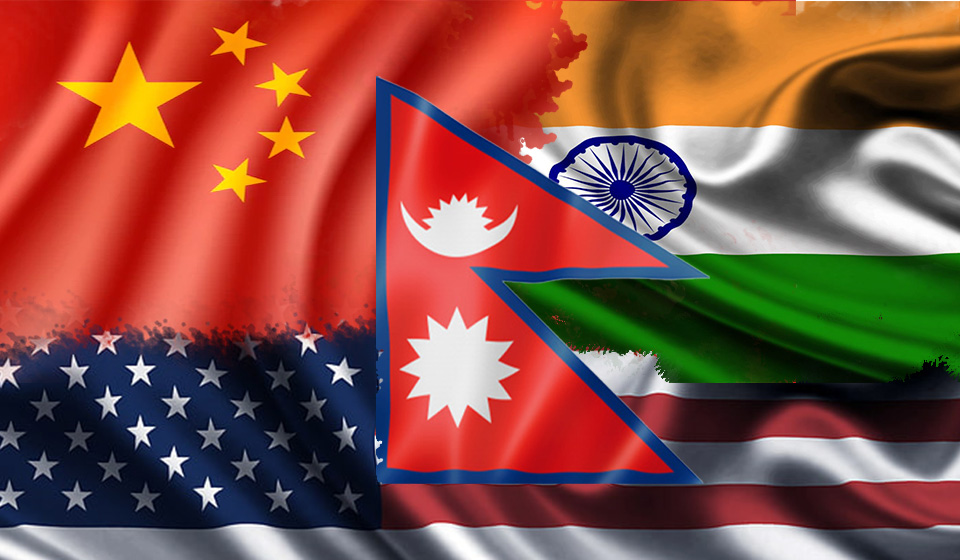
Second, Nepal is home to the world’s most significant Hindu and Buddhist civilizations. Sacred sites such as Pashupatinath, Muktinath, Janakpur, and Lumbini provide Nepal with exceptional opportunities to develop religious tourism. These sites hold profound spiritual significance for millions of Hindus and Buddhists throughout South and East Asia. The combined population of Hindus and Buddhists in neighbouring regions is estimated to be over a billion. Even attracting a small proportion of this potential market could generate transformative impacts on Nepal’s tourism industry, employment, transportation, agriculture, and overall economy.
Religious tourism should therefore become an important priority of Nepal’s foreign policy. Nepal’s diplomatic missions abroad should incorporate the promotion of religious tourism into their regular activities by targeting India and countries with large Buddhist populations through promotional campaigns, pilgrimage packages, expanded air connectivity, simplified visa procedures, and enhanced cultural cooperation.
Third, the most serious socio-economic challenge confronting Nepal today is the large-scale outmigration of the young population. Villages are increasingly depopulated, agricultural land is being abandoned, commercial activities are slowing, and the shortage of productive human resources continues to grow. This trend has directly affected Nepal’s labour force, productive capacity, demographic structure, and long-term economic development. If it continues unabated, Nepal may face severe shortages of skilled human resources in the coming decades, posing significant economic and national security challenges.
Nepalis working in Malaysia and the Gulf countries may eventually return home, but a substantial number of those who migrated to developed countries for higher education, professional careers, or permanent settlement are increasingly choosing to remain abroad. Along with these individuals, Nepal is also losing valuable knowledge, skills, technology, entrepreneurial capacity, international networks, and financial capital. Furthermore, as second and third generation Nepalis grow up overseas, there is a growing risk that their emotional, cultural, and practical ties with Nepal will gradually weaken. In these circumstances, it is not wise to view the Nepali diaspora merely as a source of remittance.
Accordingly, Nepal’s foreign policy and diplomacy should accord high priority to strengthening relations with the Nepali diaspora. Diplomatic missions abroad should evolve beyond their traditional consular functions and become active centres for encouraging the Nepali diaspora for investment, innovation, knowledge transfer and technological cooperation. If overseas Nepalis can be institutionally and emotionally reconnected with their ancestral homeland, they can make substantial contributions to Nepal’s economic prosperity, social revitalization, and long-term national development.
Fourth, Nepal is a country endowed with abundant natural resources and enormous development potential. Its vast water resources, significant hydropower potential, fertile agricultural land, rich biodiversity, forests, medicinal herbs, mineral deposits, the Himalayas, and unique religious and cultural heritage collectively provide exceptional opportunities for long-term economic prosperity. Nevertheless, despite these immense advantages, Nepal has not been able to fully utilize its natural resources due to the absence of a long-term strategic vision, political instability, policy inconsistency, delays in decision-making, inadequate infrastructure, and the influence of vested interest groups.
In the changed context, Nepal’s economic diplomacy should become a major instrument for attracting foreign direct investment (FDI), expanding exports, promoting tourism, and facilitating technology transfer. Nepal’s diplomatic missions abroad should evolve into effective institutions dedicated to promoting trade, investment, technological cooperation, and broader economic collaboration.
Fifth, Article 5 of the Constitution of Nepal (2015) defines national interest also as the protection of the dignity and interests of Nepali citizens. Today, many Nepali citizens reside abroad for education, employment, business, and permanent settlement and make significant contributions to Nepal’s economy and international image. However, many of them continue to face vulnerabilities related to labour rights, social protection, legal assistance, and emergency support.
In this context, Nepal’s foreign policy should place the protection of the dignity, rights, and welfare of Nepali citizens abroad among its highest priorities. These concerns should become integral components of Nepal’s bilateral relations with host countries.
Nepali diplomatic missions should no longer function merely as offices providing passports and administrative services. Instead, they should develop into capable institutions responsible for protecting the rights of Nepali citizens, facilitating legal assistance, coordinating emergency responses, and maintaining continuous engagement with Nepali communities abroad.
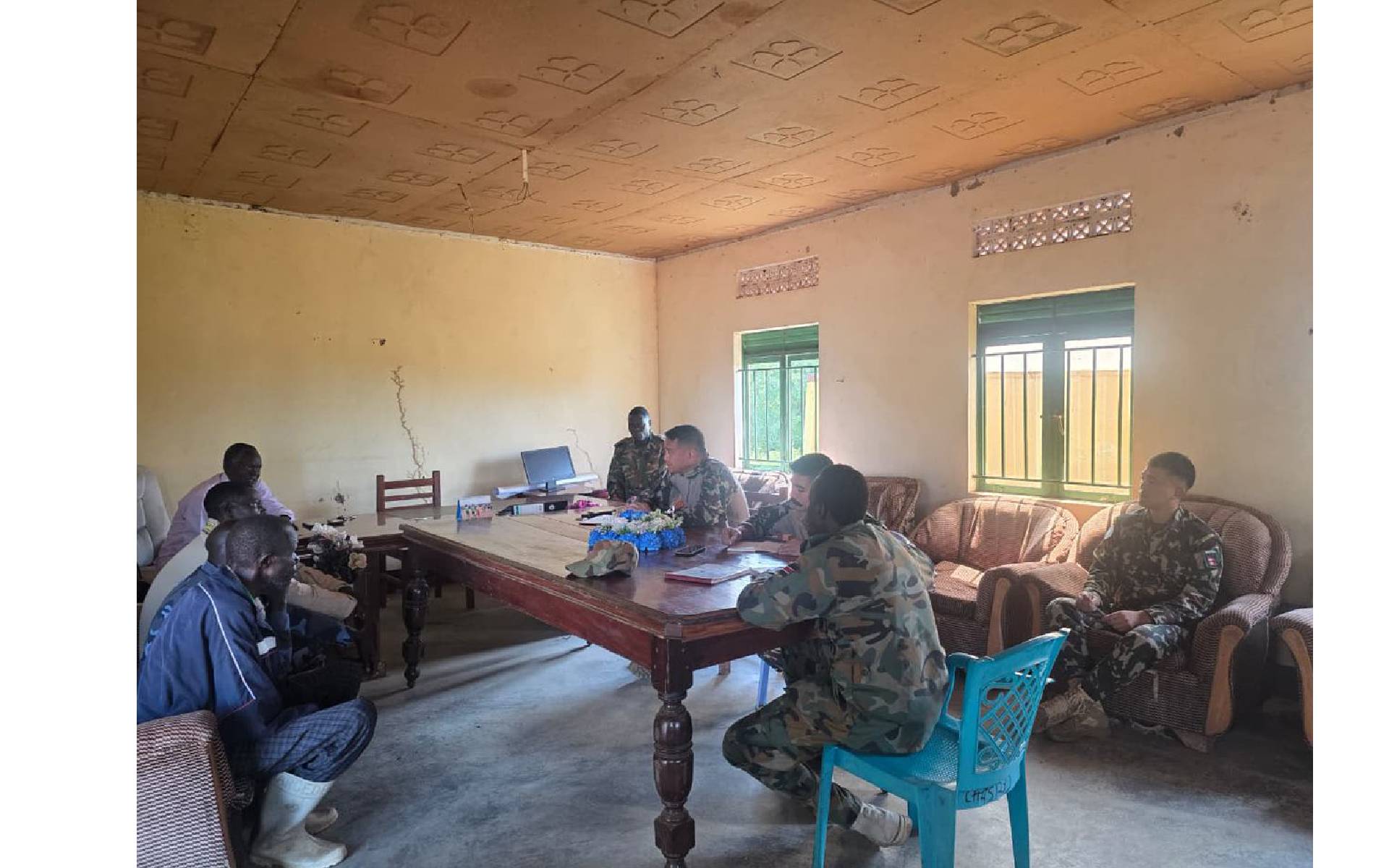
Finally, for more than seven decades, Nepal has made continuous contributions to United Nations peacekeeping operations. During this period, thousands of Nepali security personnel have served in conflict-affected countries around the world, contributing to peacekeeping, civilian protection, and international stability. Thousands of others continue to serve in various UN missions even today. During these operations, more than seventy Nepali peacekeepers have sacrificed their lives, while hundreds have sustained injuries in the service of global peace.
Nepal’s consistent, impartial, and professional contribution to international peacekeeping has become one of the country’s most valuable diplomatic assets. Its commitment to peacekeeping has established it as a responsible, reliable, and peace-loving nation within the international community. Such a reputation cannot be built overnight.
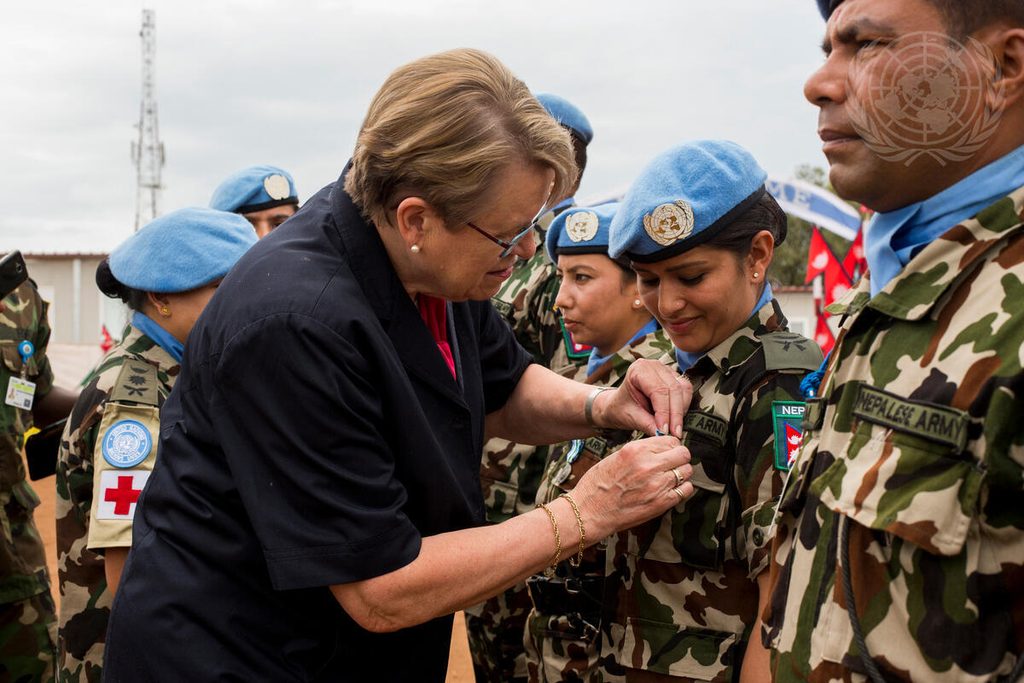
Therefore, Nepal’s participation in United Nations peacekeeping should not be viewed solely as military engagement but as a strategic diplomatic asset. It should be utilized to strengthen Nepal’s multilateral diplomacy, expand cooperation with the United Nations and other international partners, and enhance Nepal’s influence, credibility, and visibility in international forums.
Utilizing the instruments
The success of any foreign policy ultimately depends on its effective implementation. The Ministry of Foreign Affairs, Nepali diplomatic missions abroad, and all institutions associated with foreign relations constitute the principal mechanisms through which foreign policy is translated into action. Regardless of how well-designed a foreign policy may be, it cannot produce meaningful results unless the institutions responsible for its implementation are capable, professional, and results-oriented.
Nepal’s diplomatic history, particularly during the 1960s, demonstrated a distinctive international identity through its active participation in the Non-Aligned Movement, the United Nations, and other multilateral forums. However, today’s international environment is significantly more complex. Economic competition, rapid technological change, and evolving geopolitical dynamics have greatly expanded the scope of diplomacy. Consequently, Nepal’s diplomatic institutions must also undergo comprehensive transformation to meet these emerging challenges. This demands organizations that are technology-driven, specialized, professional, accountable, and results-oriented.
Heads of Nepali diplomatic missions should be assigned measurable responsibilities relating to investment promotion, trade expansion, tourism development, engagement with the Nepali diaspora, international partnerships, and the advancement of Nepal’s national interests. Their performance should be evaluated regularly through objective indicators based on the specific strategic priorities of each country of assignment.
World history demonstrates that effective diplomacy is not confined to any single profession or career service. Political leaders, career diplomats, military leaders, and distinguished individuals from other professional backgrounds have all made remarkable contributions to diplomacy. Therefore, appointments to ambassadorial and other senior diplomatic positions should be guided by merit, professional experience, leadership ability, integrity, international understanding, and an unwavering commitment to Nepal’s national interests. Moreover, every diplomatic appointment should be linked to clearly defined performance outcomes. The evaluation of diplomatic performance should be both country-specific and objective-specific.
Foreign policy objectives and priorities are, by their very nature, multidimensional. However, no country can realistically or effectively allocate equal attention, resources, and diplomatic efforts to every objective. The success of foreign policy depends not on the breadth of its agenda but on the clear identification of national priorities, effective implementation, and the achievement of tangible outcomes that advance the national interest.
Given Nepal’s historical experience, sensitive geopolitical location, limited economic and military capabilities, evolving international environment, and long-term national aspirations, diplomacy remains the country’s most effective instrument of national power. Accordingly, Nepal’s foreign policy should move beyond traditional formalities and evolve into a results-oriented, national interest-driven, and forward-looking strategy. By redefining its foreign policy priorities around these objectives, Nepal can utilize its limited resources more strategically and pursue a balanced, effective, and results-oriented diplomacy capable of advancing its long-term national interests.