Kathmandu: Synthetic-drug markets across South Asia are evolving in different ways, but countries face common challenges in detecting emerging substances, connecting cases, tracing illicit proceeds and strengthening cooperation, according to a new UNODC regional report based on assessments covering Bangladesh, Maldives, Nepal and Sri Lanka.
The report, ‘South Asia in Focus: Synthetic Drugs and Precursor Trends,’ finds distinct national patterns: Bangladesh has an established high-volume Yaba market; Nepal faces significant illicit circulation of controlled pharmaceuticals; the Maldives is exposed to synthetic drugs through maritime, aviation, postal and courier routes; while methamphetamine has become increasingly prominent in Sri Lanka.
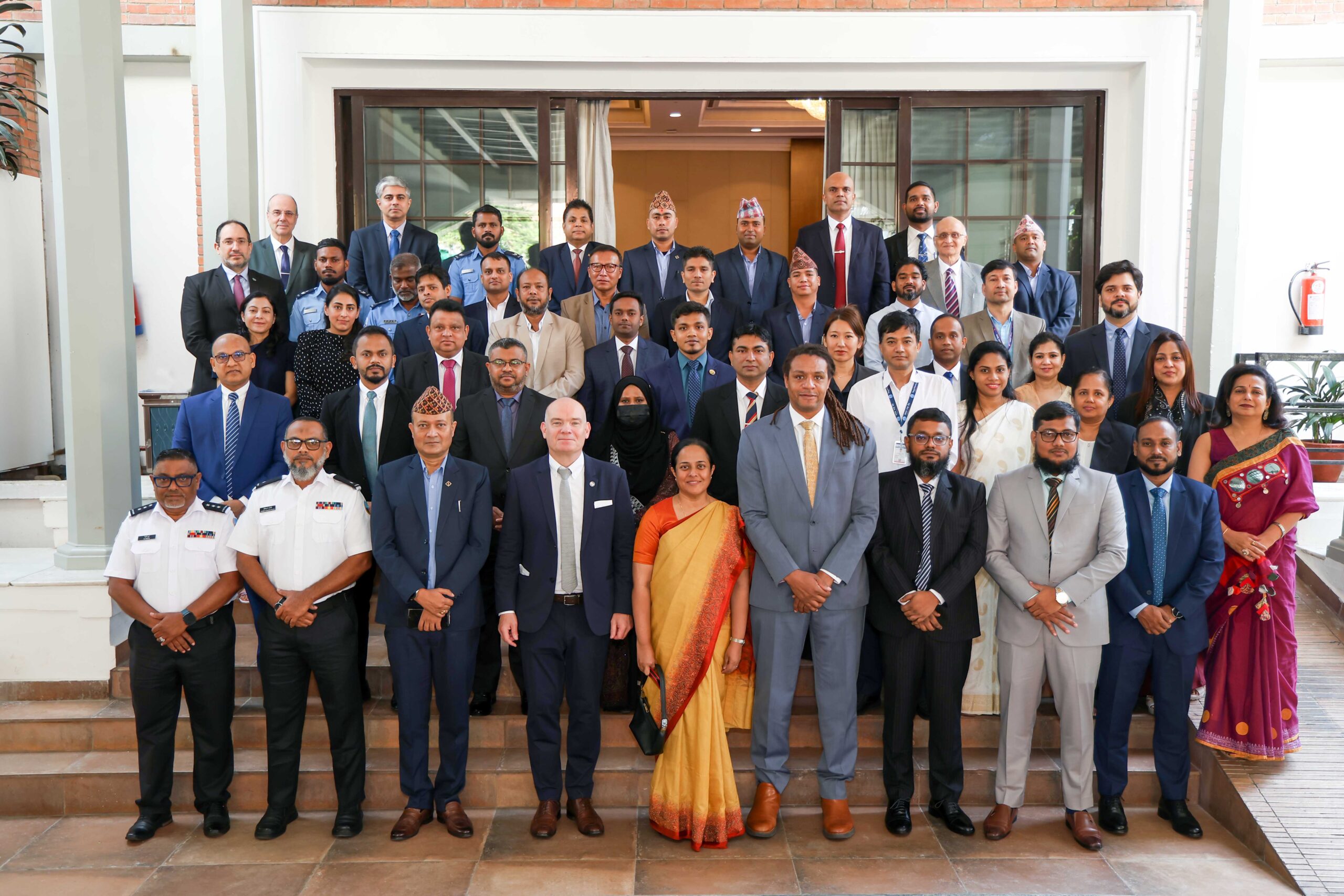
The report was launched in Kathmandu on September 28 in the presence of H.E. Ruwanthi Delpitiya, Ambassador of Sri Lanka to Nepal; Wilbert Vaughn, Acting Deputy Chief of Mission of the US Embassy; Durga Raj Regmi, Superintendent of Police and Second-in-Command of Narcotics Control Board of Nepal; Daiyan Ibn Hasan, Lead Specialist of BIMSTEC Secretariat; and Kristian Holge, Regional Representative of UNODC Regional Office for South Asia, alongside law-enforcement and criminal justice practitioners from across the region. The launch also featured three complementary UNODC knowledge products designed to help authorities translate evidence into practice.
“We now have a stronger evidence base on how synthetic drugs and precursors are affecting South Asia. It shows a rapidly evolving threat, with criminal networks adapting across routes and borders. Our response must keep pace, with stronger early warning, forensic and investigative capacity, better information-sharing and regional cooperation,” said Representative Holge, “The new knowledge products and tools aim to translate this evidence into practical guidance for countries to strengthen capacities and respond faster to these emerging threats.”
Four countries, four profiles
In Nepal, diversion of controlled pharmaceuticals is a key concern: The assessment highlights cross-border movement and illicit distribution of controlled pharmaceuticals, including tramadol, tapentadol, benzodiazepines and codeine. It also points to repeated movement of these substances through land corridors, passenger and cargo channels, and postal and courier services. One February 2025 operation in Kathmandu recovered 564,100 tramadol tablets. The findings point to the need to better understand the chain from importation and wholesale distribution to pharmacies and onward diversion.
Reflecting on the findings, Second-in-Command Regmi said, ““Many of the challenges that affect one country affect the wider region as well. That is why we see regional initiatives as an opportunity to strengthen relationships that have practical value.”
In Bangladesh, Yaba is a central challenge: Bangladesh’s synthetic-drugs situation is defined by an entrenched Yaba market, substantial estimated domestic demand and trafficking channels that extend from the Myanmar-facing border into inland, coastal, air and parcel systems. Nationally reported Yaba/Amphetamine-Type Stimulants (ATS)-tablet seizures rose to 43,562,811 in 2025 following the sharp decline in 2024. Regional analysis places Bangladesh within a wider methamphetamine-tablet economy connected to South-East Asian production.
In the Maldives, evidence points to multiple routes of exposure: Synthetic drugs are detected through maritime, aviation, postal and courier channels. Seizures rose from 25.27 kg in 2023 to 38.31 kg in 2024, with 16.04 kg recorded in January–June 2025.
In Sri Lanka, Methamphetamine is now the principal synthetic drug encountered by national authorities: Methamphetamine-related arrests reached 92,650 in 2025, accounting for 35.3 per cent of all drug arrests. The assessment also identifies maritime trafficking as the main channel for large consignments, alongside smaller detections through air-passenger, postal and courier channels.
“The United States sees international and regional cooperation as vital in the fight against drug trafficking. There is no single South Asian model for addressing complex criminal threats. Our role as international partners is to acknowledge the differences while facilitating exchange of knowledge, ideas and tools between countries. That is one of the main reasons we value regional initiatives such as this one,” said Acting Deputy Chief Vaughn.
The assessment also emphasizes five common challenges in the region: First, substances are evolving rapidly, making timely identification and forensic capacity critical. Second, trafficking exploits multiple channels, from land borders and maritime routes to airports, parcels and courier services, requiring coordinated responses across the supply chain. Third, gaps remain in understanding precursor movement and pharmaceutical diversion, including the information, monitoring and regulatory arrangements needed to detect diversion. Fourth, poly-drug use remains an important public-health concern. Fifth, understanding networks, financial flows and digital evidence is critical in countering the synthetic drug challenge.
From assessment to action
Alongside the assessments, three complementary knowledge products were also presented to help authorities translate evidence into practice.
The Guidance Tool for Strengthening National Responses to Synthetic Drugs and Chemical Precursors helps national authorities review policy, institutional and operational arrangements, identify gaps and prioritize action. It covers intelligence and early warning, forensics, coordinated investigations, financial investigation and asset recovery, and national and international cooperation.
The Practical Operational Reference Guide for Law Enforcement Agencies brings these issues into the investigation process. It provides practical reference points on intelligence-led investigations, detection and identification, evidence management, special investigative techniques, international cooperation, financial investigation, asset recovery, asset management and inter-agency information-sharing.
The Integrated Training Modules for Law Enforcement Agencies turn these areas into structured capacity development. Six modules use case-based discussions, practical exercises and facilitator-led scenarios covering intelligence-led policing, detection and identification, special investigative techniques, international and regional cooperation, asset recovery and drug-related asset management.
Together, the three resources provide a practical pathway: identify where national systems need strengthening; support practitioners through the investigative process; and build the skills needed to apply these approaches in practice.
The work was undertaken under a UNODC regional initiative to strengthen cooperation and law-enforcement capacity against synthetic drugs in South Asia, with financial support from the United States Government. It draws on national data, forensic and precursor information, documented cases and consultations with law-enforcement, customs, maritime, health and financial-intelligence authorities.