Eighty years ago, in the shadow of the most devastating war humanity had ever known, the world made a choice — hope over despair, cooperation over division, and peace over power.
It began with words that still echo across generations: “We the peoples of the United Nations, determined to save succeeding generations from the scourge of war…” Those words were not written in comfort. They were written by women and men who had seen cities reduced to rubble, families torn apart, and humanity pushed to its darkest edge.
When the United Nations first opened its doors, many of its staff bore the visible wounds of war — scars, burns, and limps. They had witnessed the horrors of concentration camps, the cruelty of combat, and the devastation of entire nations. And yet — precisely because of what they had seen — they chose to serve peace.
They understood something profound: that peace is not naïve; that justice is not sentimental; and that the most courageous, practical, and necessary pursuit of all is cooperation. The United Nations is not just a set of buildings. It is not just words on paper. It (UN) is alive — in people. In peacekeepers who stand between conflict and calm. In humanitarians who reach the unreachable. In diplomats who choose dialogue over discord. And in nations that believe global challenges demand global solutions. For eight decades, this living legacy has delivered extraordinary results — wars prevented, children educated, diseases eradicated, the ozone layer healed, and above all, the prevention of a third world war.
It reminds us of one essential truth: anything — and everything — is possible when we stand united. As we mark 80 years of the United Nations and 70 years of partnership here in Nepal, we do so in a world changing at great speed — a world that calls not for retreat, but for renewal. Renewal of trust. Renewal of cooperation. Renewal of multilateralism that delivers for people, for peace, and for the planet. At the heart of this renewal lies a simple truth: peace is not the dividend of development — peace is its foundation. And the only way forward — now as then — is together, just as we have worked, haat ma haat milaai (hand-in-hand), with the Government and people of Nepal.
Nepal’s Gift to Global Peace
Before speaking of what the United Nations has done in Nepal, it is right to begin with what Nepal has given to the United Nations — and to the world.
For decades, Nepal has been among the UN’s most steadfast and principled contributors to global peace. Today, 6,031 Nepali military and police personnel serve in UN peacekeeping missions, making Nepal one of the largest contributors worldwide.
In some of the world’s most fragile places, these women and men in blue helmets stand between violence and hope. They protect civilians, uphold fragile ceasefires, and help peace take root where fear often runs deeper than trust. Far from home, they carry Nepal’s values — courage, discipline, humility, and service — in everything they do. This is peace not as an idea, but as daily practice. Solidarity not in words, but in uniform. Nepal does not merely support peace in principle. Nepal delivers peace in practice. For this, the United Nations — and the world — owes Nepal its deepest respect.
Seventy Years of Partnership with Nepal
In this same spirit, Nepal and the United Nations have walked together for seventy years — supporting national priorities and translating ambition into results. Over these decades, Nepal has achieved remarkable progress. Poverty declined from over 42 percent to under 19 percent. Hunger and undernutrition fell through investments in social protection, food security, and rural development.
In health, Nepal’s achievements are extraordinary. Maternal mortality was cut by more than half. Polio and maternal and neonatal tetanus were eliminated. Immunization coverage now exceeds 90 percent, and infant mortality dropped from 139 to 24 deaths per 1,000 live births. Education expanded nationwide, achieving near-universal primary enrolment, with major gains for girls and marginalized communities.
Nepal became the first country in South Asia to declare itself Open Defecation Free, while access to safe water and sanitation expanded dramatically. Through more than 14,000 Community Forest User Groups, forest cover nearly doubled — restoring ecosystems, strengthening livelihoods, and protecting biodiversity.
Early investments in renewable energy, including micro-hydro, brought power to remote communities, enabling thousands of rural enterprises. When disaster struck in 2015, partnership proved its strength — reaching 3.7 million people, supporting the reconstruction of over 600,000 homes, mobilizing US$4.4 billion, and restoring Nepal’s treasured cultural heritage.
Following conflict, the United Nations supported Nepal’s nationally led peace process, the 2015 Constitution, and seven major elections — strengthening democratic participation for millions. Across all this progress, people remained at the centre. Women’s representation in Parliament reached 33 percent. Child marriage and child labour declined. Stunting was cut by more than half.
Youth, Inclusion, and the Future
Today, Nepal stands at a crossroads — full of challenge, but also promise. The recent youth-led movement reminds us that democracy is alive. This is not merely protest; it is civic energy — a generation saying: we will shape our future, and we will be heard.
The journey ahead cannot be for some — it must be for all. Women, youth, and marginalized communities must not only be included; they must help lead and decide. Guided by Nepal’s 16th Plan and the UN Cooperation Framework, our partnership now looks forward — strengthening social protection, climate resilience, digital transformation, human rights, and inclusive growth. I am inspired every day by the resilience of women, the energy of youth, and the quiet determination that flows from the Terai to the Himalayas.
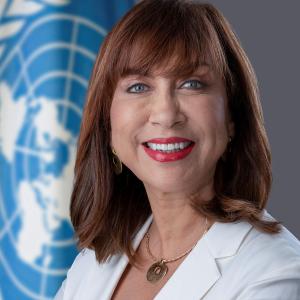
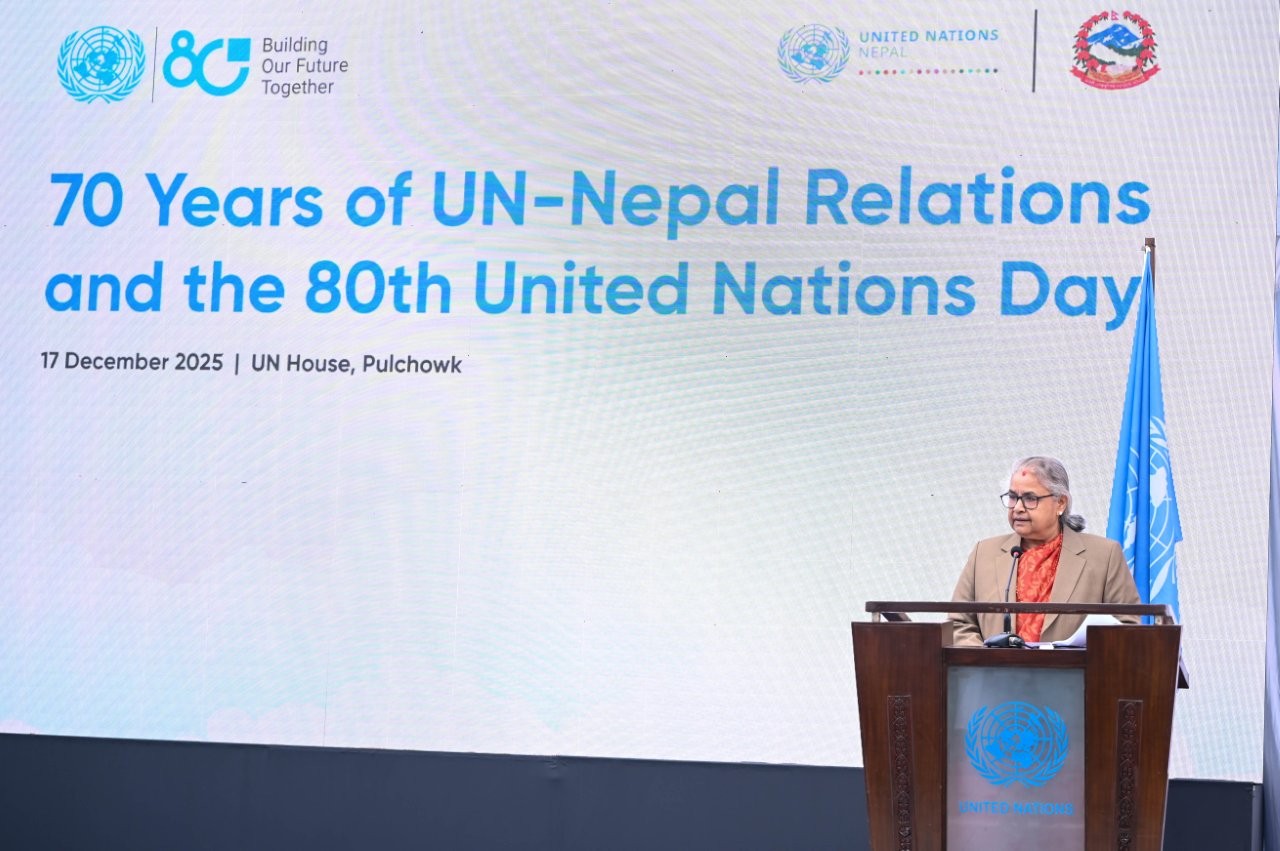
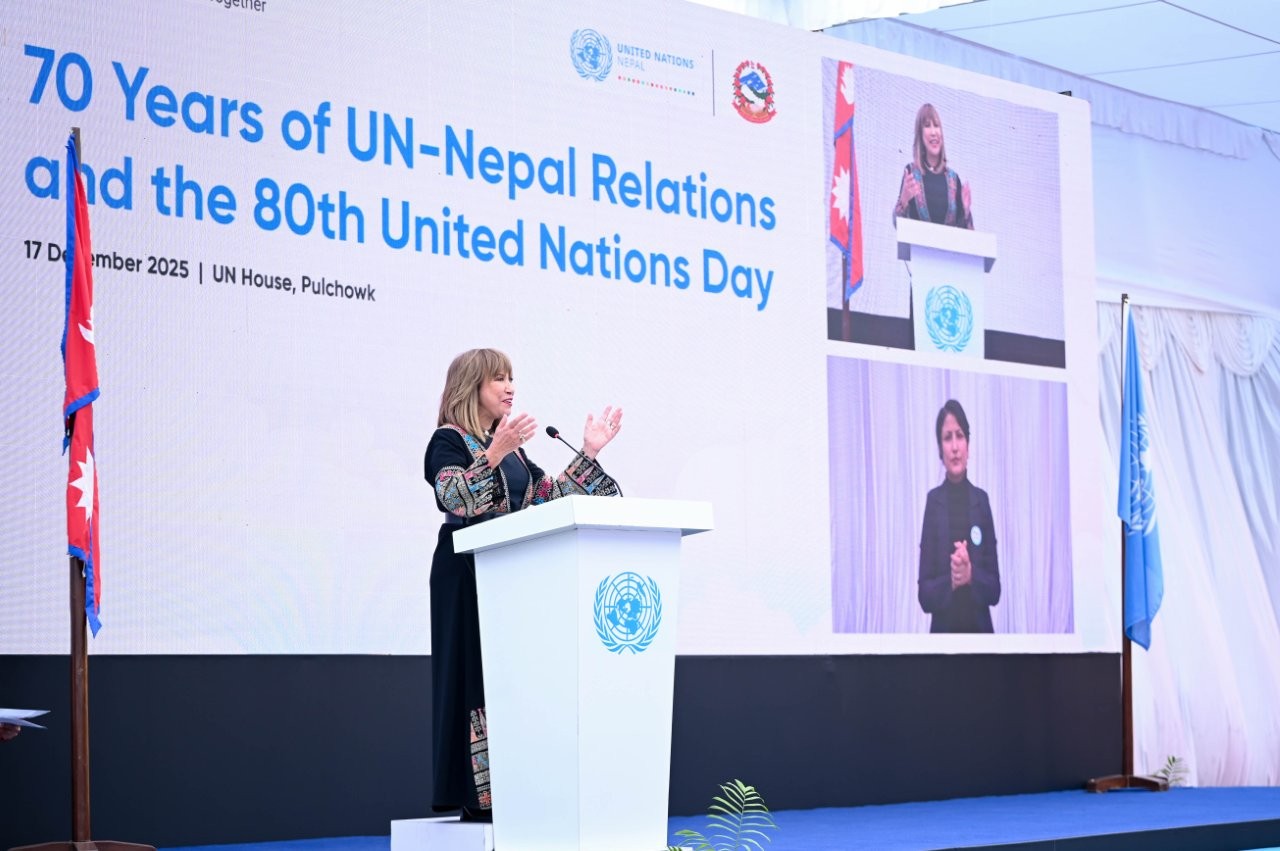
(This article is an edited version of the statement delivered by the United Nations Resident Coordinator Hanaa Singer-Hamdy at a program organized by the United Nations-Nepal, marking 80 years of the UN and 70 years of partnership with Nepal, held on December 17 at the UN House in Pulchowk, Lalitpur.)