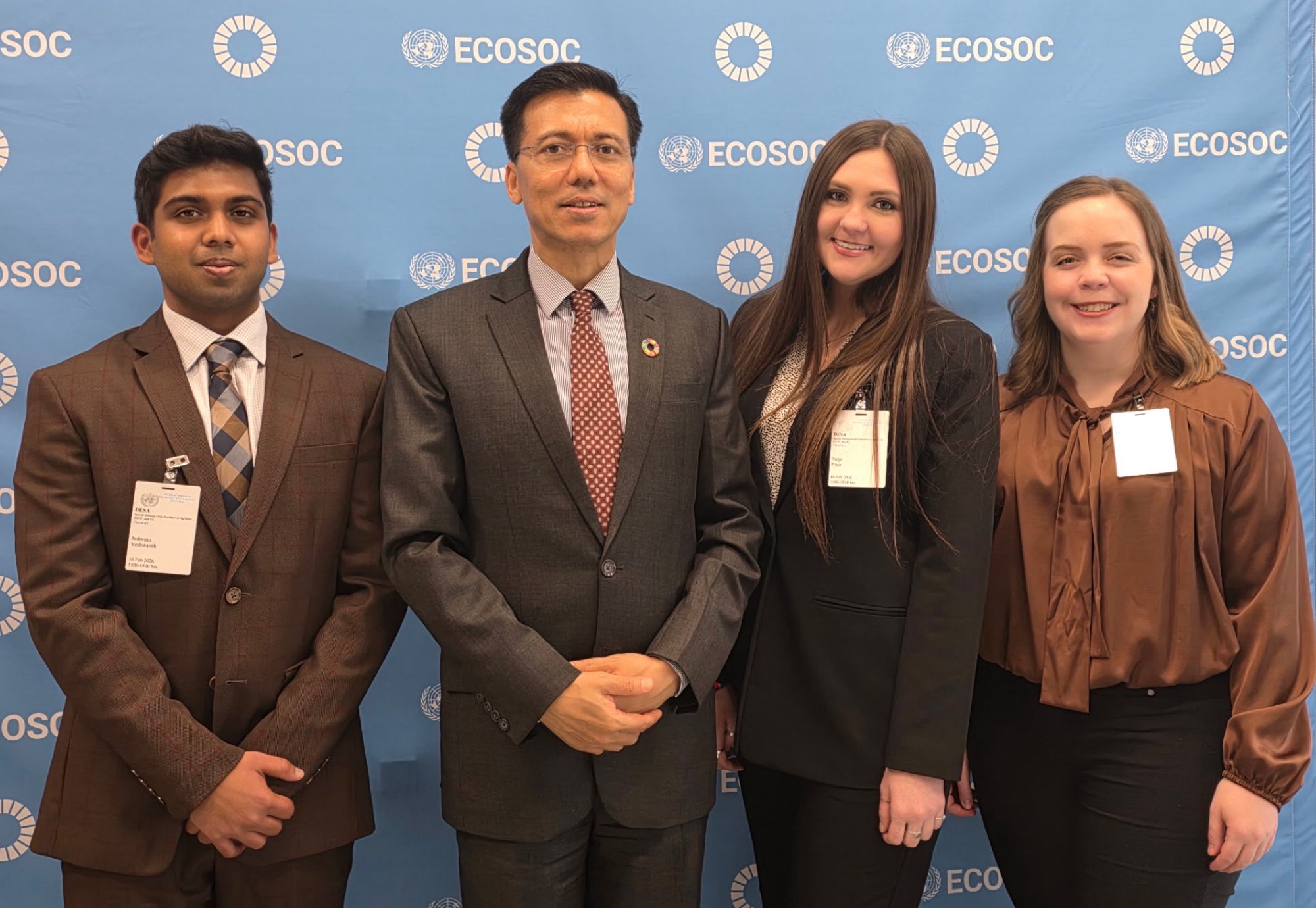
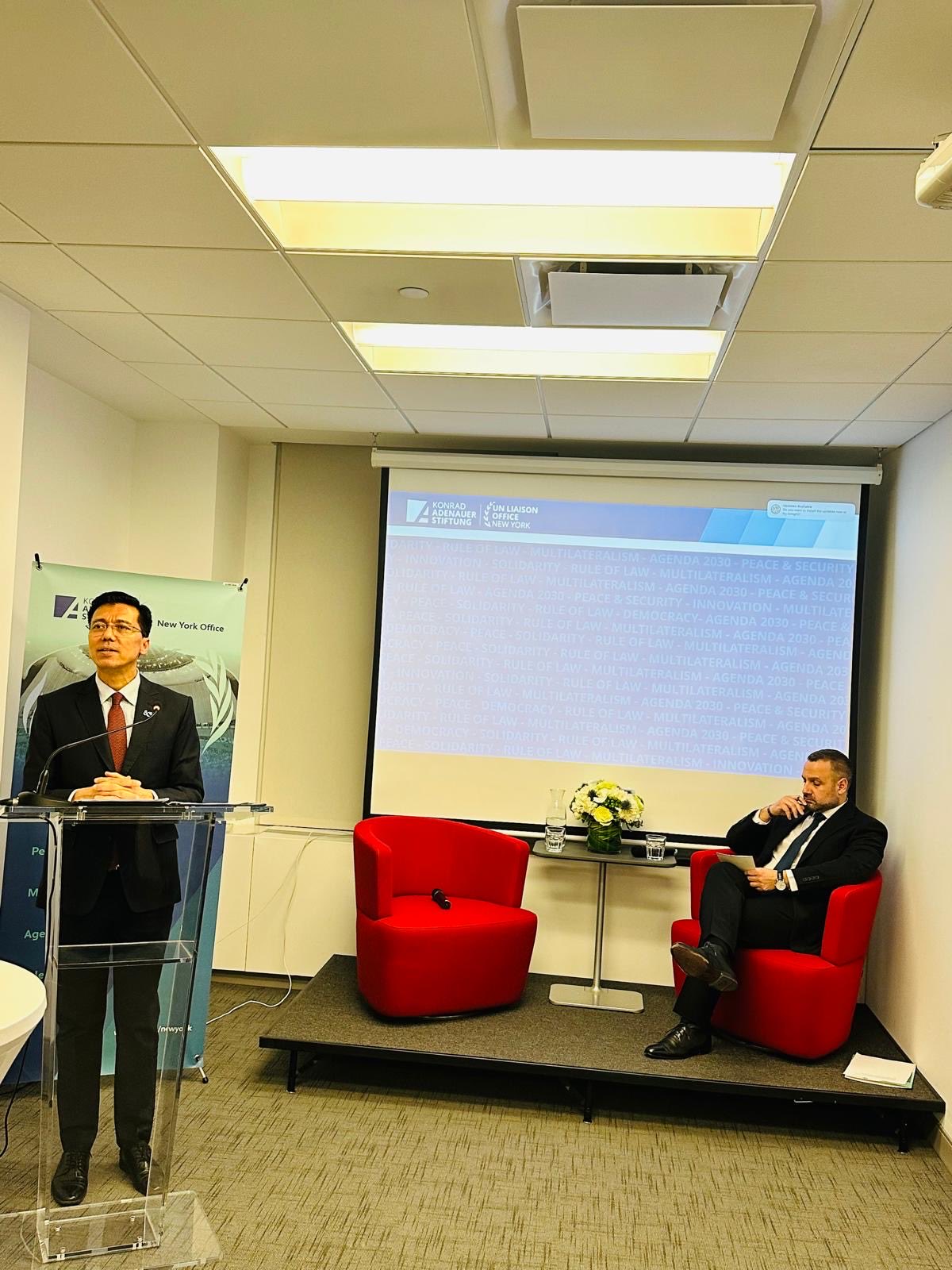
This year, we commemorate the 80th anniversary of the UN Economic and Social Council, alongside the 150th birthday of Konrad Adenauer. His legacy serves as a timely reminder of why the multilateral system was built in the first place.
Not merely to coexist. But to actively deliver stability and to deliver development. For all through sustained cooperation. Adenauer believed deeply in cooperation among nations, in bridging divides, and in bringing courage to rebuild trust where it had been broken.
His vision embodied a timeless principle: that is human progress depends on our ability to act together. In this score, Adenauer’s legacy is inseparable from the principles of multilateralism, and it supports the mandate of ECOSOC. We meet today at an inflection point. Global uncertainty is growing. Geopolitical tensions are rising.
Economic pressures are deepening. And the distance between global commitments and lived realities on the ground too often remains wide.
But history teaches us that it is precisely in these moments of strain, that multilateralism proves its worth.
Not through symbolic gestures, but through practical cooperation that improves lives, that expands opportunity and that restores hope. This, ultimately, is the measure by which our multilateral system will be judged. Does it make a meaningful difference in the lives of everyone, and not just the privileged few? Does it uphold the dignity and potential of all peoples?
Just a few weeks ago, on 23rd January, we celebrated ECOSOC at 80. We reflected on a simple but enduring truth: that multilateralism must do more than convene—it must deliver inclusive progress that leaves no one behind. “Delivering Better” is the guiding principle of my Presidency, and the spirit with which I address you today.
As President of ECOSOC at 80, I am focused on strengthening collaboration and partnerships, because no country, no institution and no sector can meet today’s challenges alone. For multilateralism to deliver in the 21st century, it must evolve. In a rapidly shifting, digitized world our resilience and ability to adapt depends on responsive, coherent and focused policies and practices.
For multilateralism to remain effective, it must renew the trust on which collective action depends. This is why I often say that multilateralism is not self‑sustaining. It requires stewardship. It requires political will. And it requires a constant reminder that all nations are bound by shared challenges and shared aspirations.
We can observe this is true just by looking at the global development landscape. Many countries face shrinking fiscal space, rising debt, vulnerability to shocks and a rapidly closing window to achieve the 2030 Agenda and its SDGs.
And yet, we also see extraordinary potential, from innovation from young entrepreneurs to leadership across regions seeking a more sustainable and equitable future. To bridge the gap between potential and progress, we need a multilateral system that functions as an ecosystem of collaboration, connecting resources with needs, knowledge with action, and global ambition with national implementation.
This is where ECOSOC plays an indispensable role. ECOSOC’s unique convening power allows us to galvanize member states, the UN system, the international financial institutions and all stakeholders to translate global commitments into impact on the ground. In keeping with my promise to “Deliver Better,” I have outlined four important priorities that reflect where the Council can make a measurable, meaningful difference:
First: Transforming agrifood systems and tackling inequality. Food insecurity and rural vulnerability remain pressing global concerns. Our upcoming Special Meeting on agrifood systems will focus on advancing equitable, resilient transformations and leveraging the finance and technology to do so.
Second: Accelerating digital inclusion and youth entrepreneurship. We cannot achieve sustainable development without empowering young people.
Digital technologies are opening unprecedented opportunities—but only if access is universal and equitable. ECOSOC will convene Special Meeting on digital inclusion, to be held back-to-back with the STI Forum in May.
Third: Advancing climate action and resilience. Communities worldwide are grappling with climate impacts that hit the most vulnerable hardest.
ECOSOC’s work across its segments aims to link climate action with financing, adaptation, and resilience, and turn global climate commitments into transformative action on the ground.
Fourth: Strengthening financing for development. Progress is impossible without a fairer, more coherent international financial architecture.
That is why ECOSOC will drive forward implementation of the Sevilla Commitment, and why we are deepening engagement with the Bretton Woods Institutions. I have also prioritised the needs of countries in special situations — Least Developed Countries, Landlocked Developing Countries, and Small Island Developing States — whose distinct structural vulnerabilities demand solutions grounded in equity, resilience, and shared responsibility.
We have also centred our work on gender equality, meaningful youth engagement, vibrant civil society participation, data-driven policymaking, and a steadfast commitment to resilience and equity. As we reflect on Adenauer’s legacy, we see a leader who understood that peace, stability and prosperity are built through cooperation, not in isolation.
He believed that nations rise when they choose partnership over rivalry, principle over expediency, and long‑term vision over short‑term gains.
Today, these lessons should ring truer than ever. Adenauer’s belief in shared values aligns deeply with the 2030 Agenda’s promise of dignity and opportunity for all. His commitment to dialogue mirrors ECOSOC’s inclusive platform, where civil society, youth, the private sector, and academia join member states to shape solutions. And his conviction that unity strengthens humanity echoes in our own efforts to renew trust in our multilateral institutions.
The best way to honor his legacy is to act in that same spirit: to build bridges across regions and sectors, to elevate cooperation, and to follow through on decisions that can uplift the most vulnerable. If the world is losing faith in multilateralism, then the solution is not less cooperation—but better cooperation. Cooperation that delivers. Cooperation that listens. Cooperation that puts people first.
We must realize that we all become stronger when we come together, when we act together, when we choose cooperation over confrontation, and when development is pursued not as a charity but as justice. After all, peace, prosperity, and human dignity are not accidents of history; they are built through strong partnership and genuine cooperation.
As President of ECOSOC, I am committed to ensuring that our work reflects this vision. I will continue collaborating closely with the President of the General Assembly to reinforce coherence across the UN system. And I will continue engaging all stakeholders to ensure that ECOSOC remains a platform worthy of the challenges and the hopes of our time.
For ECOSOC is strongest when it breathes life into the multilateral ideal, uniting the insights of all stakeholders with a coordinated UN system to support Member States. As I look around the room, I see familiar faces and new friends who have served as partners in achieving the 2030 Agenda.
Our presence here tonight is a testament to the fact. While the challenges we face are global, so too is our resolve to overcome them. I look forward to working with all of you to unite the best of our shared humanity. Together, we can ensure that sustainable development is not just a goal we pursue, but a reality we achieve. This is the promise of ECOSOC at 80. This is the legacy of Konrad Adenauer at 150. This is our shared commitment to delivering better.
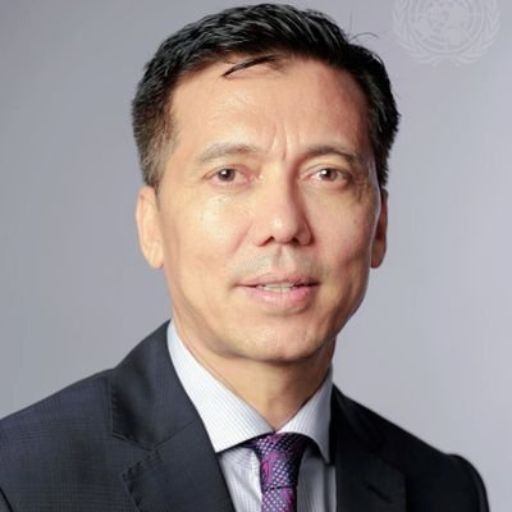
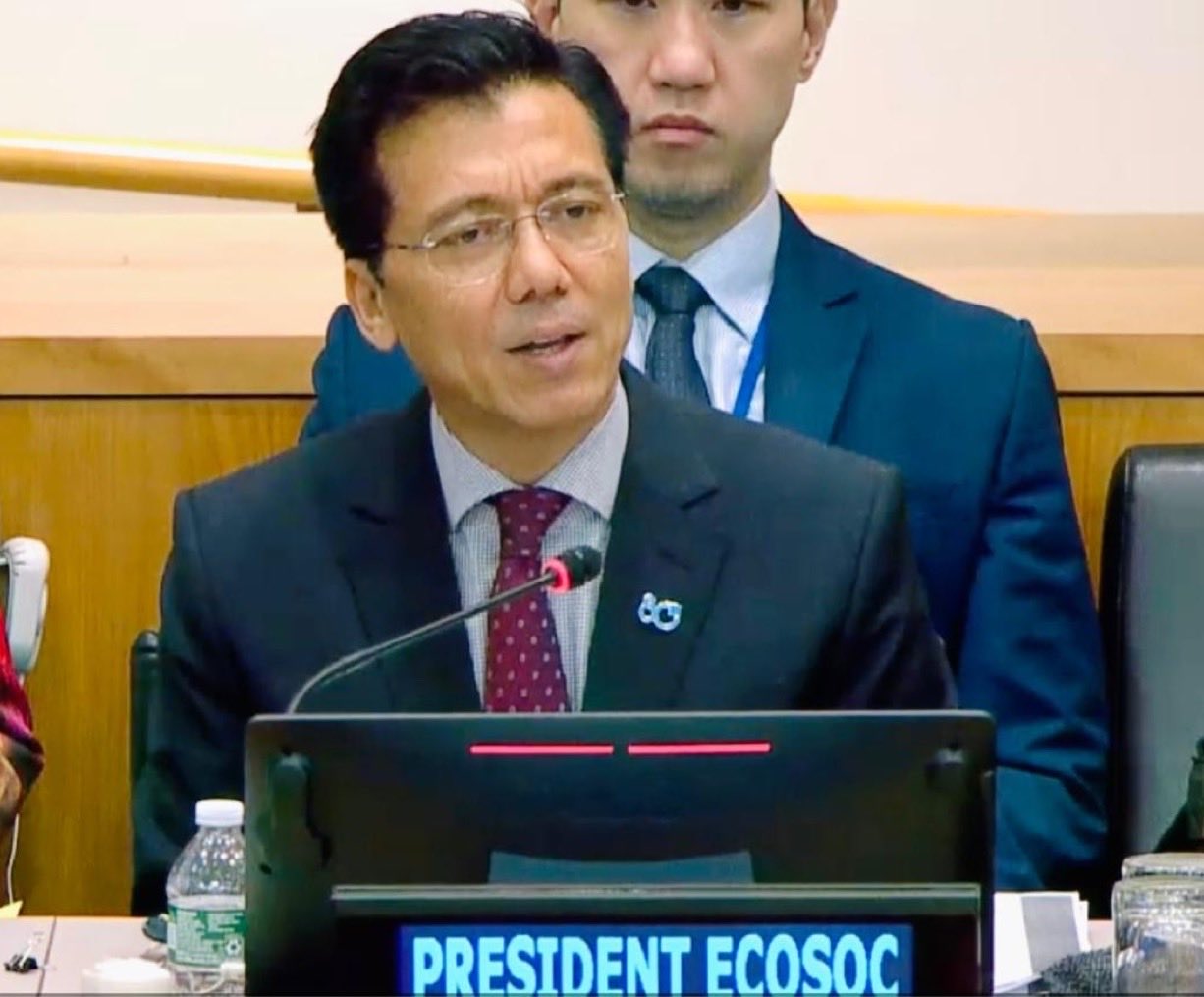
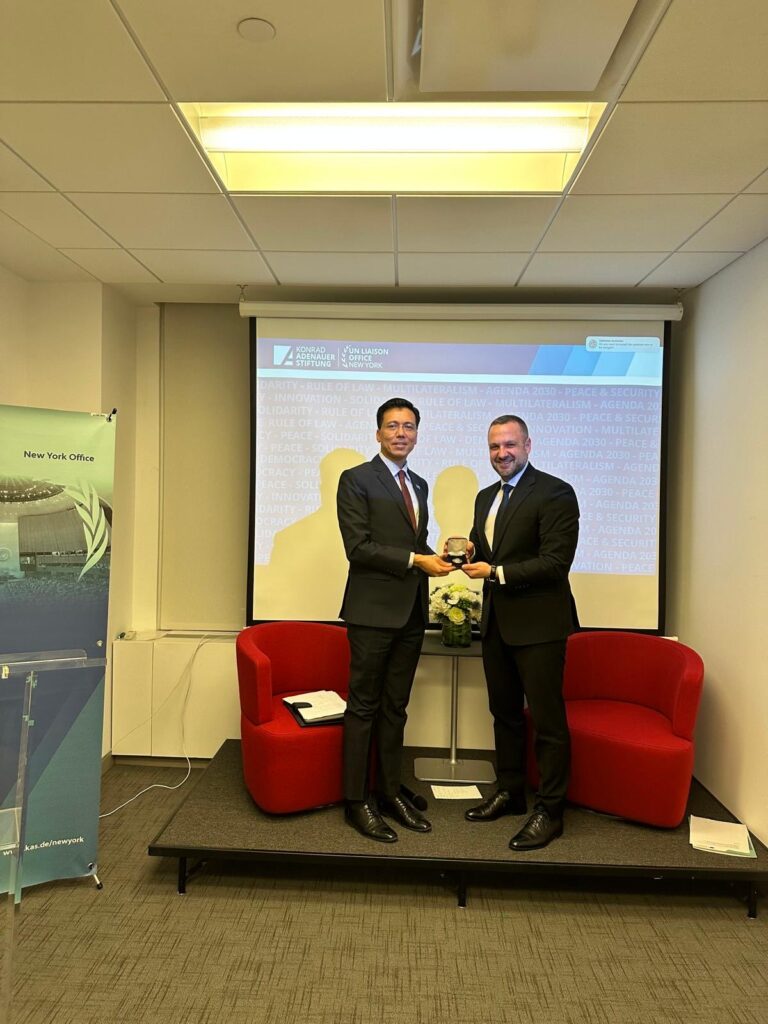
(The article is an edited version of the keynote address delivered by Lok Bahadur Thapa, President of the UN Economic and Social Council, at the KAS NY Annual Adenauer Address in New York.)