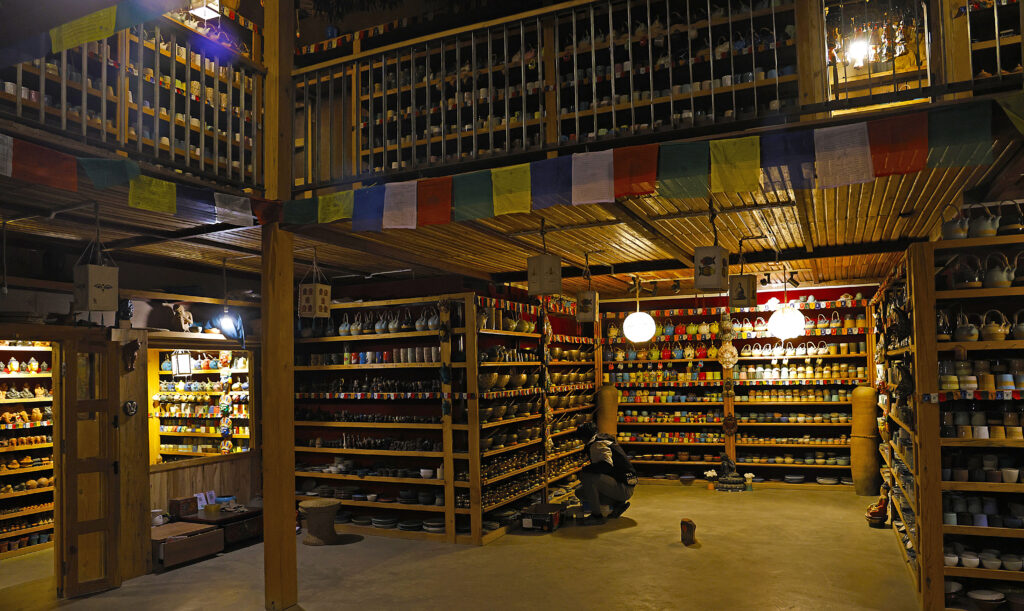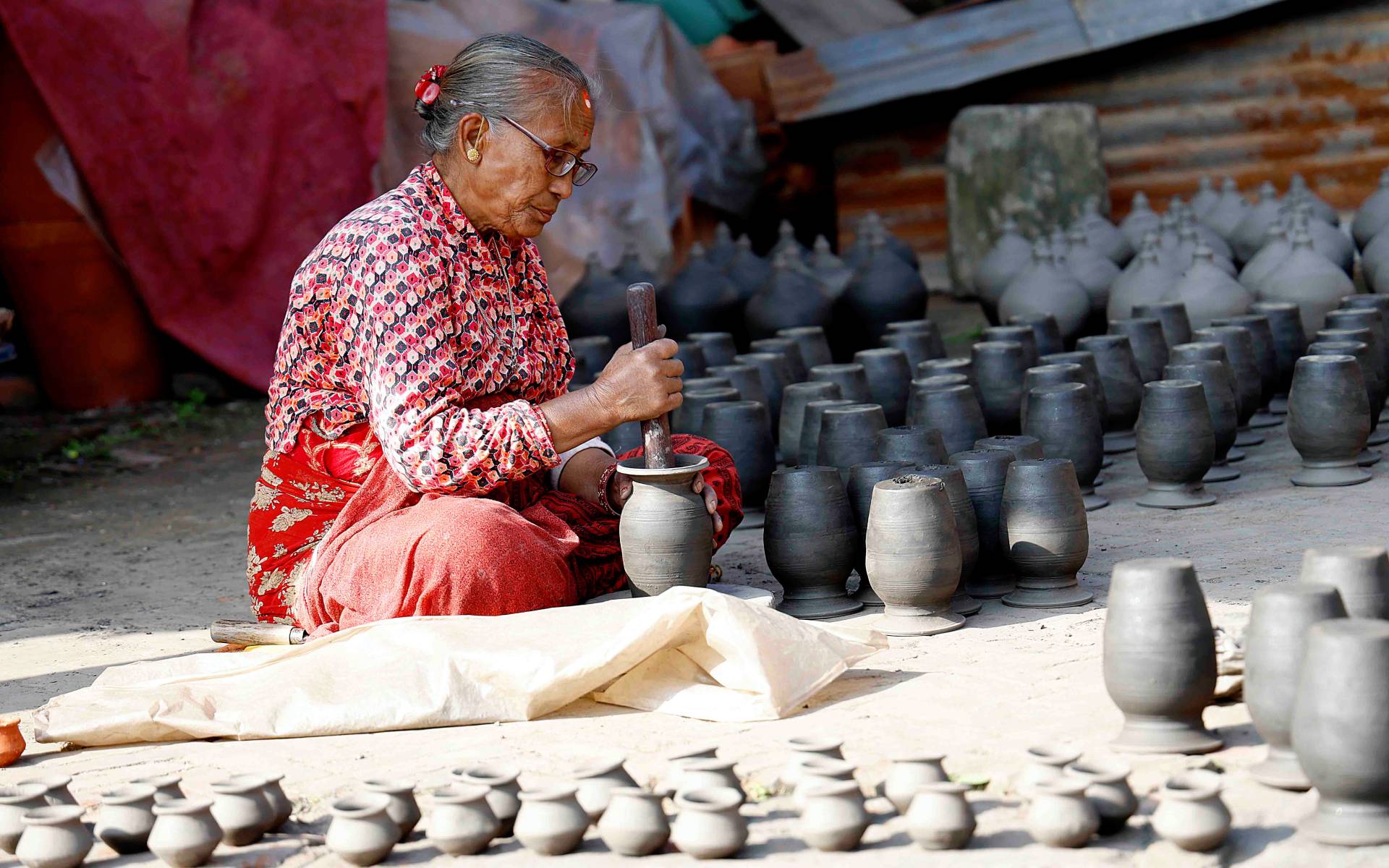

After the quiet grandeur of Bhaktapur’s Durbar Square, another world opens just a short walk away at Pottery Square, where the earth itself seems to breathe through clay. Here, in the heart of Talakwa, Bhaktapur-4, the ancient craft of pottery has shaped not only utensils and sculptures, but the very rhythm of life. For generations, the Prajapati community has kept this tradition alive, their hands moving with a grace born of centuries. Today, visitors from around the world gather to watch these artisans coax bowls, lamps, and vessels out of spinning mud, transforming simple earth into quiet beauty.
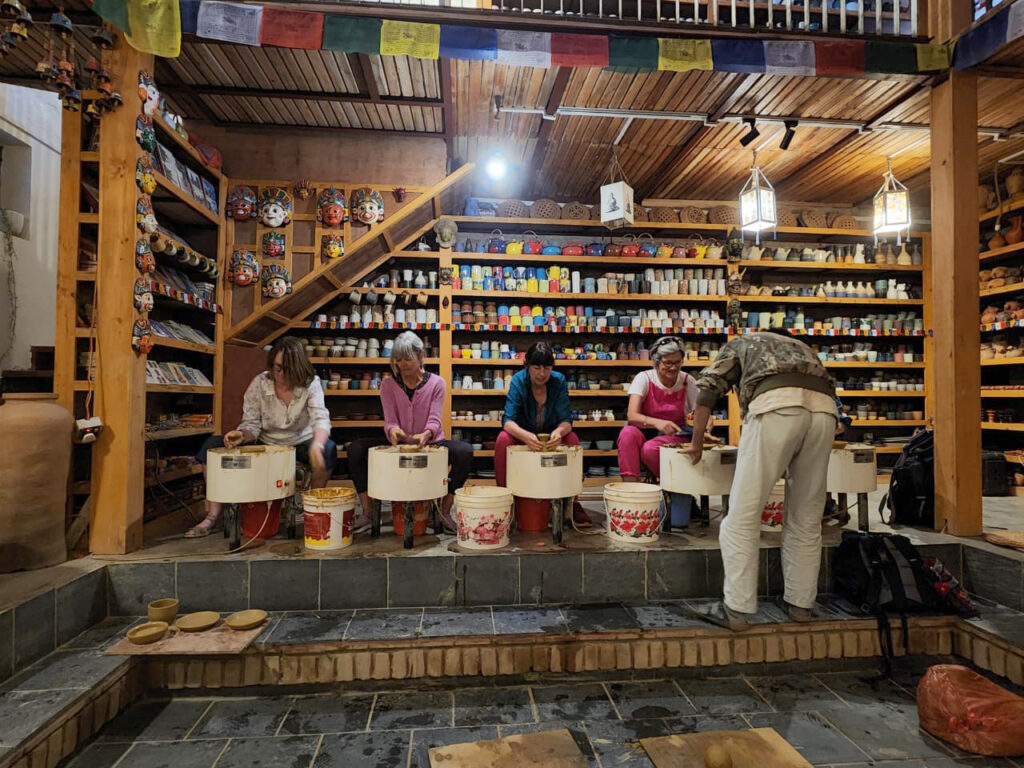
Rows of small signboards reading “Pottery Training Centre” beckon tourists to try the wheel for themselves. Inside one of these studios, artisan Sajan Prajapati wipes his hands on his apron and smiles. “Foreigners especially love it,” he says. “They enjoy the feel of the clay, the spinning wheel. For a short session we take only Rs 100 to Rs 200. It helps us a lot.” Nearby, Australian visitor Herina Mark leans over an electric wheel, her fingers trembling with excitement as a lump of clay slowly rises and takes shape under her touch. She laughs softly, calling the moment “deeply relaxing and joyful.”
Travelers stand around her with phones held high, fascinated not by modern tools, but by how simple the craft truly is; just hands, clay, and the hum of a wheel.Though mastering the skill takes months or even years, most visitors come for the pure delight of touching something real, something ancient. This small, playful interaction has unexpectedly sparked a trend: Nepali youths now flock to the square too, sharing their own pottery sessions on social media, giving a new life to an age-old craft.
Yet beneath the rising popularity, a quiet worry lingers. Around 65 Prajapati families continue this tradition in Pottery Square, and despite growing crowds, they haven’t raised their prices this year. Many fear how long they can sustain their livelihoods if things don’t change. Pottery Square carries a warmth that cannot be priced. The air fills with the earthy scent of wet clay, the soft thump of shaping hands, and the gentle whir of turning wheels.
And in that small square, where the past still whispers from every brick, visitors are reminded why Bhaktapur is not just a city of monuments, it is Nepal’s living museum, where stories are shaped one pot at a time.