Kathmandu: A nation situated between two large neighbors and the world’s fastest growing economies, Nepal has always sought to balance relations with these two countries by enhancing mutual trust and cooperation.
This June marked the reaffirmation of that approach. Foreign Minister Shisir Khanal traveled first to India and then to China, while Rastriya Swatantra Party President Rabi Lamichhane also visited New Delhi.
This was the first high-level official bilateral engagement with India and China by the ruling party leadership since the government of Rastriya Swatantra Party (RSP) came to power on March 27.
These visits to India and China were significant because there were concerns about how the new government would engage with the immediate neighbors—which are also Nepal’s long-time development partners.
The visit to India by the Foreign Minister as well as the party president Rabi Lamichhane was closely watched because they came in the wake of the government of Nepal expressing concern over the relaunch of trade between India and China via Lipulekh pass. Besides, the statement by Prime Minister Balendra Shah from the parliament on issues surrounding Lipulekh, Limpiyadhura and Kalapani was thought to have ruffled a few feathers in New Delhi, and, apparently, also in Beijing.
Also, there were reports regarding Indian Foreign Secretary Vikram Misri’s visit to Nepal being postponed over the apparent refusal of Prime Minister Balendra Shah to hold one-on-one meetings with foreign ambassadors and foreign secretaries. PM Shah has instead hosted the foreign ambassadors and representatives of diplomatic missions in Nepal collectively.
Though Indian Prime Minister Narendra Modi is reported to have extended an invitation to PM Shah, if and when the Nepal PM may visit India is not yet clear.
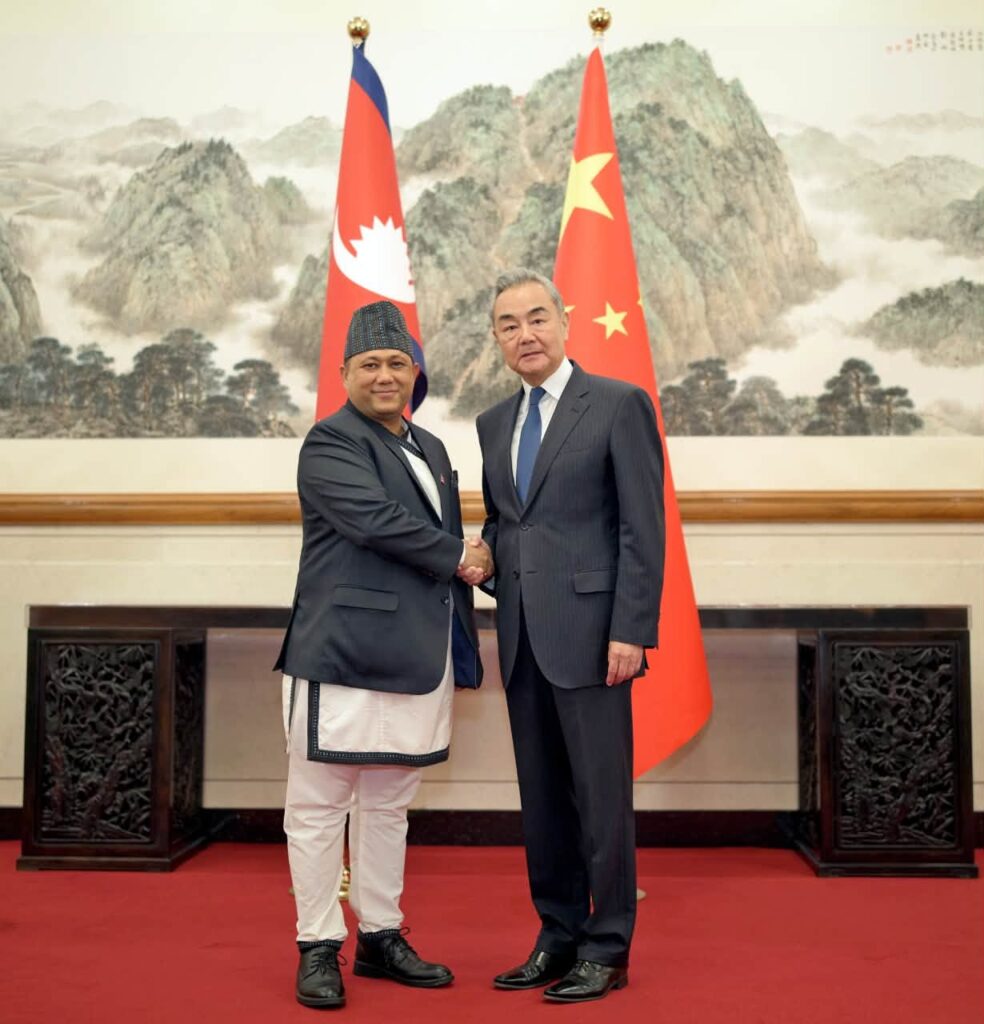
Reaching out to India
In this context, Former Deputy Prime Minister and RSP president Rabi Lamichhane visited India from June 1-5 at the invitation of Bharatiya Janata Party’s National President, Nitin Nabin. During his visit, Lamichhane held meetings with the Minister for External Affairs, Dr. S. Jaishankar, and the Minister for Home Affairs, Amit Shah.
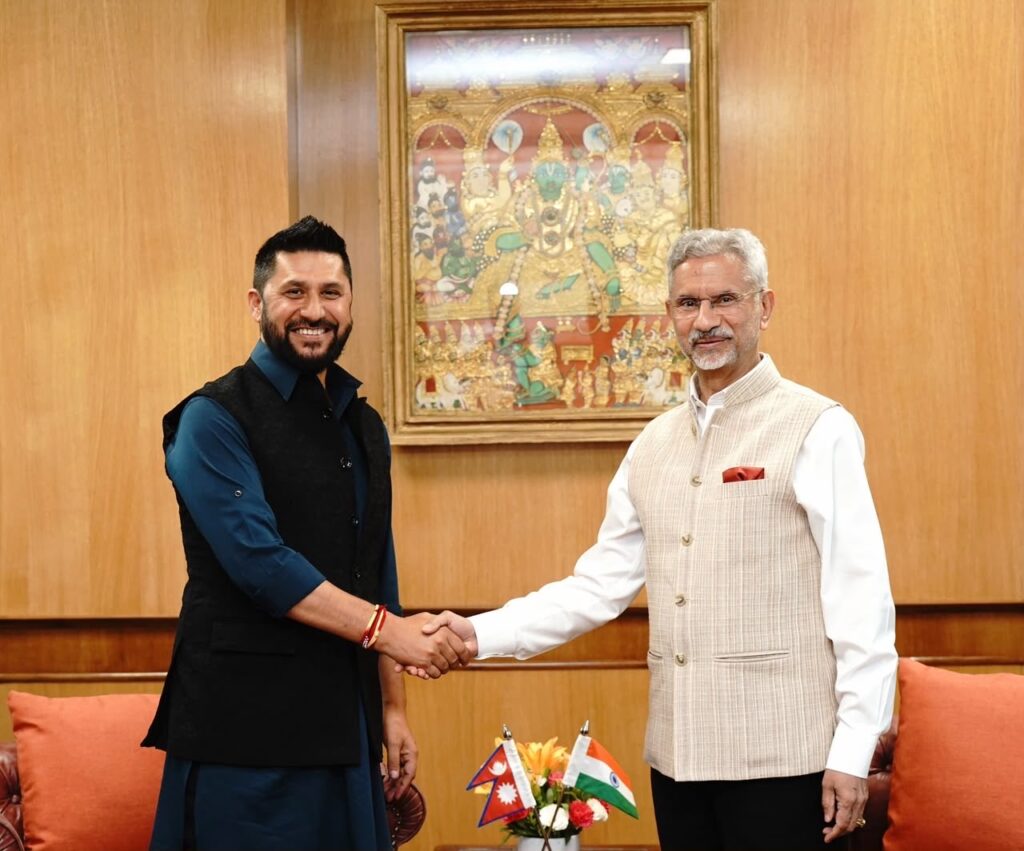
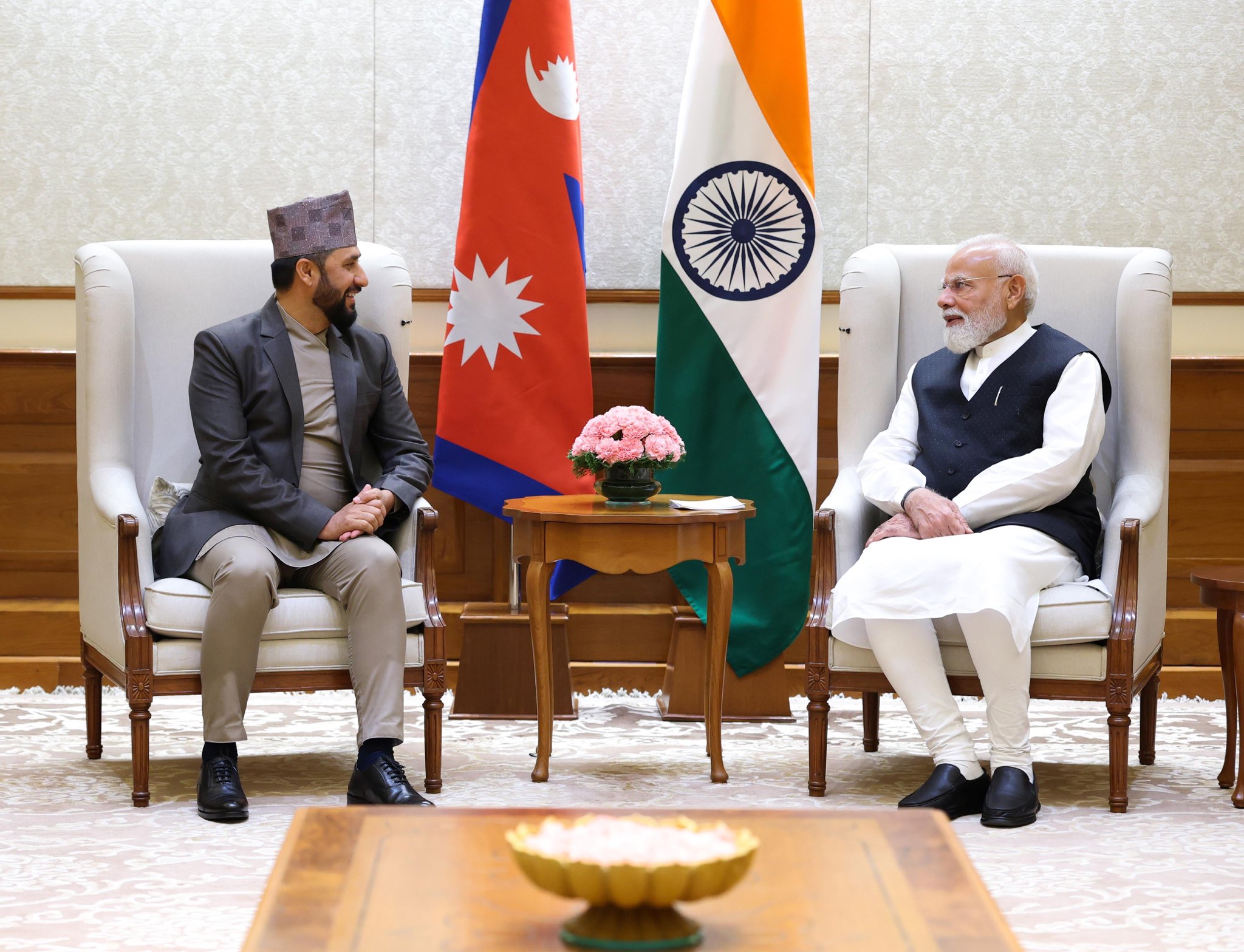
His meeting with Indian Prime Minister Narendra Modi was of particular importance because this was the first meeting between the two leaders. During the meeting, PM Modi expressed his delight to meet Lamichhane and said he welcomed the former’s desire to work closely with India for a shared and prosperous future. “Nepal is a priority partner under our Neighbourhood First policy, and we look forward to collaborating with the new government to elevate the special and multifaceted relationship between our two countries to greater heights,” Modi said.
The grand welcome Indian side extended to Lamichhane was a signal that India was interested in working together with new leadership in Nepal.
Lamichhane’s visit set the tone for an official visit to India by foreign minister Sishir Khanal. Coincidentally, or perhaps planned that way, Khanal started the visit on June 5, the day the RSP chair returned to Kathmandu after wrapping up his New Delhi tour.
The visit of Foreign Minister to New Delhi provided an opportunity to ease any concerns and build confidence and helped to open new avenues for partnership and friendship.
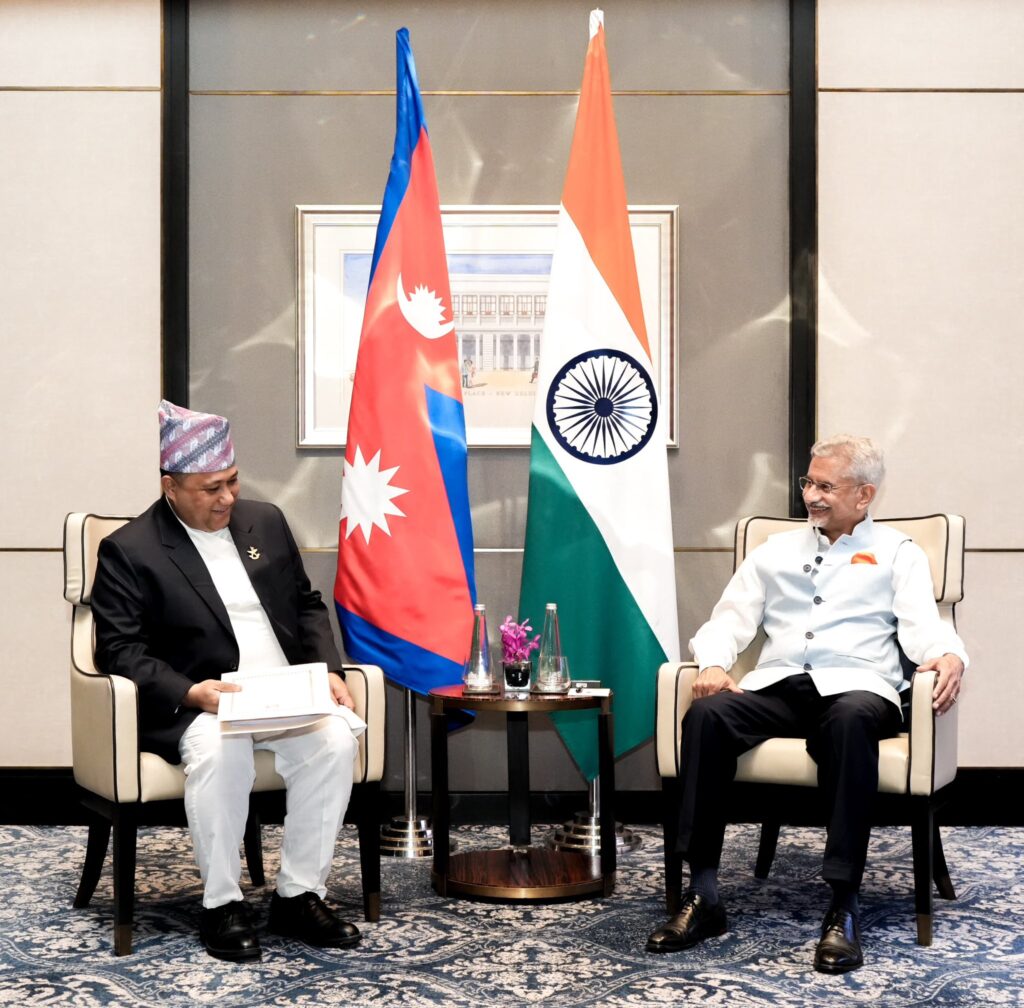
During his visit to New Delhi, Shisir Khanal held bilateral talks with the Minister of External Affairs. During the meeting, the two Ministers held wide-ranging and productive discussions on the full spectrum of Nepal-India bilateral relations. The discussions were centered on trade, economic cooperation, cross-border connectivity, energy partnership, water resources management, and the promotion of people-to-people exchanges. Commitments were reaffirmed to strengthen the enduring partnership between the two countries, which share an age-old multifaceted relationship.
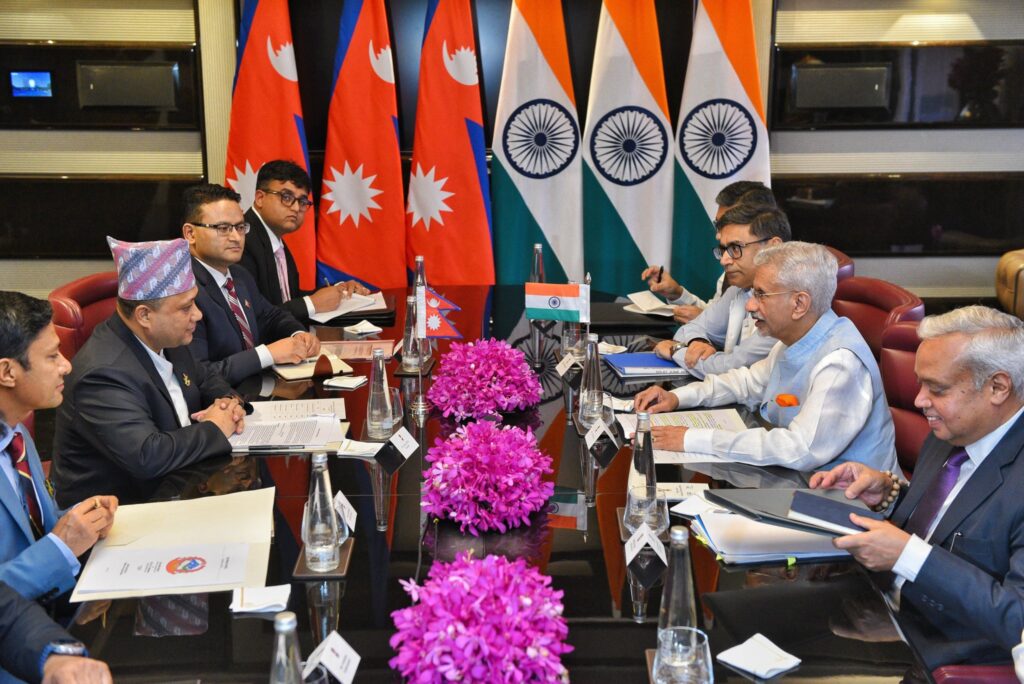
While reviewing the progress made on various ongoing bilateral projects and cooperation initiatives, and exchanging views on ways to accelerate their implementation, they also discussed regional and international issues of mutual concern, including cooperation within multilateral forums.
Particularly noteworthy were the joint announcements on Operationalisation of the P2P Cross Border Payment transactions under the MoU between NCHL and NPCI signed in June 2023 and handing over of 72 health sector and 12 cultural sector post-earthquake reconstruction projects in Nepal built with India’s development assistance. Additionally, the MoU was exchanged between Kathmandu University School of Engineering’s Centre for Digital Public Infrastructure and Artificial Intelligence and Digital India Bhashini Division for co-creating National Digital Infrastructure for “Voice First” Language Translation Platform.
Operationalisation of the P2P Cross Border Payment is expected to make digital transactions for businesspeople, students, and tourists from Nepal and India in the days to come.
Besides, Shisir Khanal also held a meeting with Dr. Vijay Chauthaiwale, In-Charge of the Bharatiya Janata Party (BJP) Foreign Affairs Department, during which they discussed strengthening bilateral relations, deepening party-to-party engagements, and expanding the people-to-people ties.
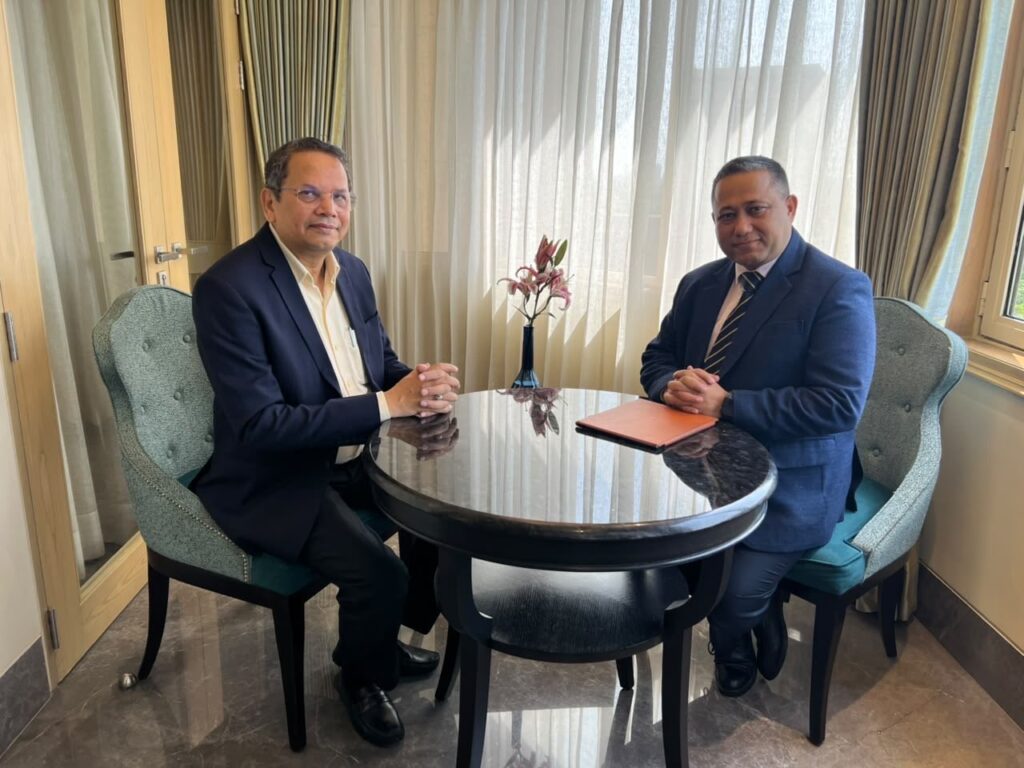
The foreign minister reiterated that Nepal’s foreign policy is guided by the aspirations of the Nepali people for transformation and economic growth.
Foreign Minister Khanal described his India visit as successful and meaningful. Apprising the House of Representatives about his June 5-7 India visit, Minister Khanal said the entire gamut of bilateral relations was discussed during his meeting with Indian counterpart. “The visit has created a solid foundation for fostering further cooperation in a result-oriented manner. We’ve had an opportunity to articulate well for making our balanced, independent and multidimensional relations further strong,” he told the parliament on June 10.
Engagement with China
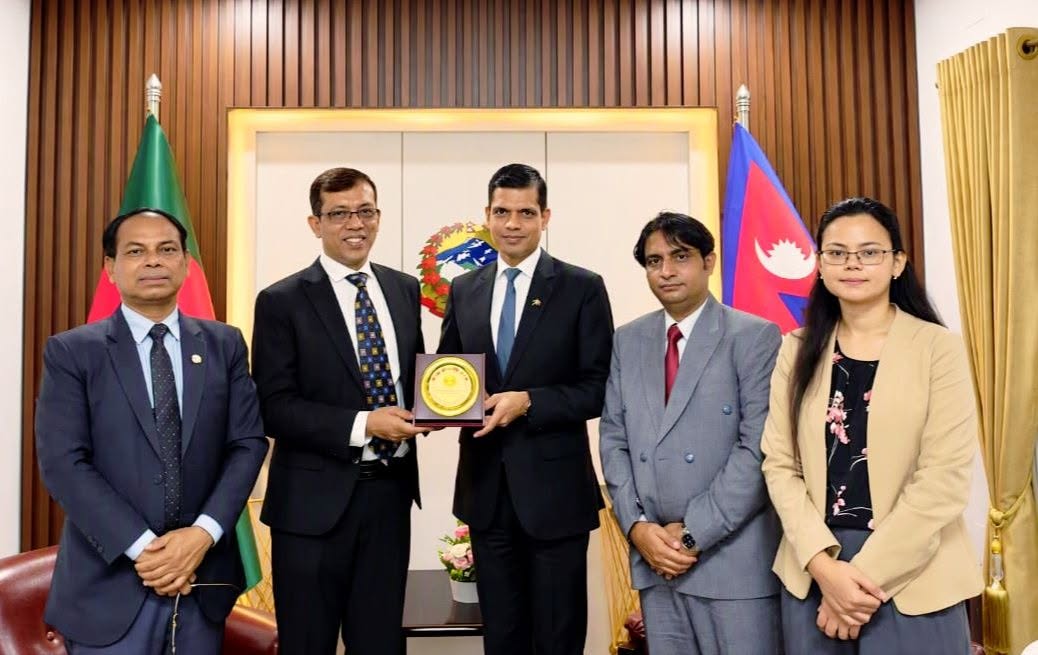
Ten days after foreign minister returned home from India, he embarked on the tour to China—his first since taking office in March. During the visit to China, Minister Khanal held bilateral talks with Wang Yi, Minister of Foreign Affairs of China.
They held substantive discussions covering the entire gamut of Nepal-China relations that are marked by friendliness, goodwill and cooperation. The Nepali side reaffirmed the Government of Nepal’s firm commitment to the ‘One China Principle,’ ensuring that Nepali territory will not be allowed to be used for any activities against China. The Chinese side reiterated its firm commitment to Nepal’s sovereignty, territorial integrity and independence while assuring its full support to the Government of Nepal’s priority in the areas of good governance and economic growth.
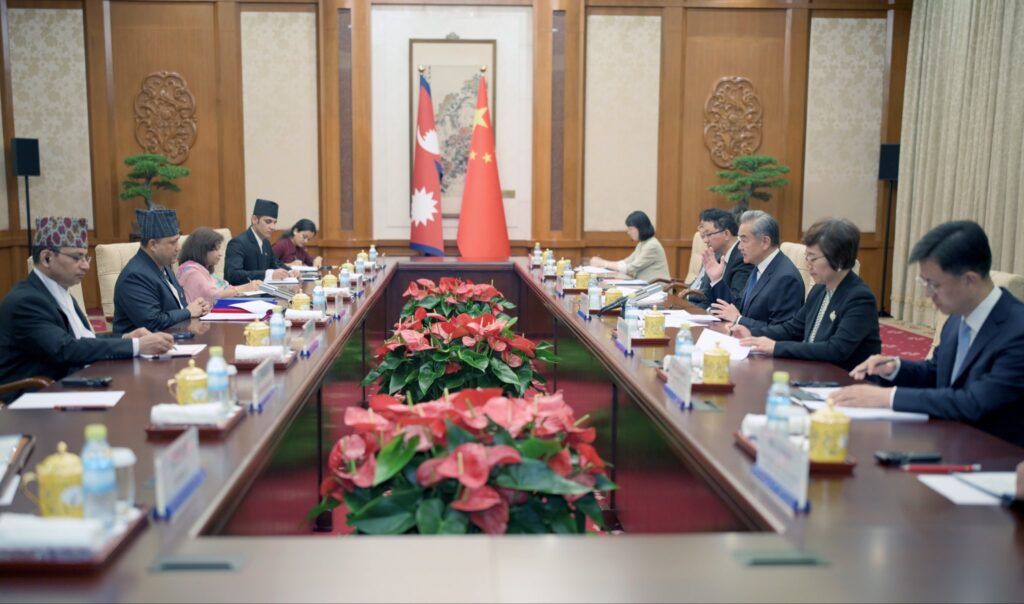
After the acknowledgment of mutual respect and shared commitment towards each other’s priorities and sensitivities, the talks focused on advancing cooperation across multiple sectors. These include infrastructures, connectivity, border management, energy, trade, investment, agriculture, technology transfer, information technology and the digitalization, tourism, chemical fertilizers, petroleum and natural gas exploration, and people-to-people relations.
Both sides expressed a strong commitment to speedy implementation of programmes and projects agreed upon in the past. In addition, they emphasized on further advancing cooperation on matters of common interest in multilateral and regional forums.
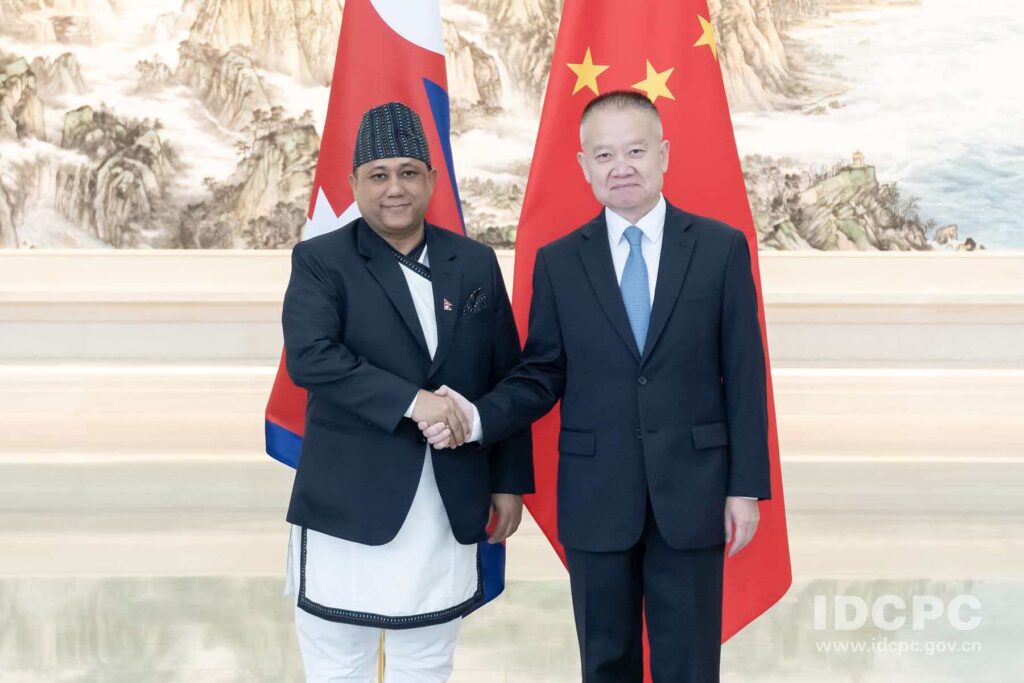
Following the meeting, Minister Khanal attended the dinner hosted in his honor by Minister Wang. Minister Khanal also held a meeting with H.E. Liu Haixing, Minister of the International Department of the Central Committee of the Communist Party of China (IDCPC), in Beijing. They exchanged views on further strengthening Nepal-China relations including party-to-party exchanges.
The Minister also visited the Institute of Tibetan Plateau Research, Chinese Academy of Sciences (CAS), in Beijing. He received briefings on the activities of the institute, particularly, ongoing collaboration with Nepali institutions, including Tribhuvan University. Minister Khanal emphasized the need for deepening cooperation between the two sides in the field of science and technology.
India and China are not only Nepal’s neighbors sharing relations at multiple levels, they have also been financing Nepal’s infrastructure development for a long time. India, for example, has financed projects related to roads and bridges, hydropower, schools and colleges, hospitals and health posts, drinking water systems, irrigation, electrification, cultural heritage restoration, integrated border infrastructure among others. The people-to-people contacts and tourism exchanges make for significant areas of cooperation. Indian tourists account for a sizable number of tourists coming to Nepal. According to the recent data, the number of Indian tourists visiting Nepal to escape the scorching heat has been increasing.
One could say pretty much the same thing about China. China has also been a key development partner of Nepal. Kathmandu Ring Road Improvement Project, Araniko Highway rehabilitation, Syaphrubesi–Rasuwagadhi Road upgrading and many others are notable examples of Chinese assistance to Nepal.
Well-wishing Nepal
Indian and Chinese leaders were among the first to extend best wishes and to send congratulatory messages to the RSP leaders when the party won a landslide in March, 2026 House of Representatives elections.
Right after the election results were announced, Indian Prime Minister Narendra Modi congratulated Rabi Lamichhane, the RSP president and senior party leader Balendra Shah, whom the party had fielded as the Prime Minister candidate for the new government, on their electoral victories in Nepal. The Indian PM had expressed confidence in strengthening ties between the two countries.
PM Modi had held telephone conversations with Lamichhane and Shah. During the discussions, Modi had congratulated both leaders on their victories as well as the RSP’s ‘resounding success’ in the national polls.
Modi conveyed his best wishes to the leaders for the formation of the new government in Nepal and reiterated India’s commitment to work closely with the new leadership for the mutual prosperity and progress of both nations. “India remains committed to working together for the well-being of our two countries,” Modi had said, emphasizing the long-standing cultural, economic and people-to-people ties between Nepal and India.
Modi also expressed confidence that bilateral relations would continue to strengthen in the coming years through collaborative efforts. He noted that with joint endeavours, relations between the two countries would ‘scale new heights.’ Both Lamichhane and Shah thanked Prime Minister Modi for his warm wishes and for recognizing the democratic mandate of the Nepali people.
“RSP and our government will remain dedicated to fostering a relationship built on mutual respect and shared prosperity where RSP will prioritize on development diplomacy,” Lamichhane wrote on X. “We look forward to a partnership with India that scales new heights through cooperation in connectivity, cultural tourism, energy, and trade, ensuring a prosperous future for the people of both countries.” Likewise, Balendra Shah responded to a congratulatory message from Indian Prime Minister Narendra Modi on March 10.
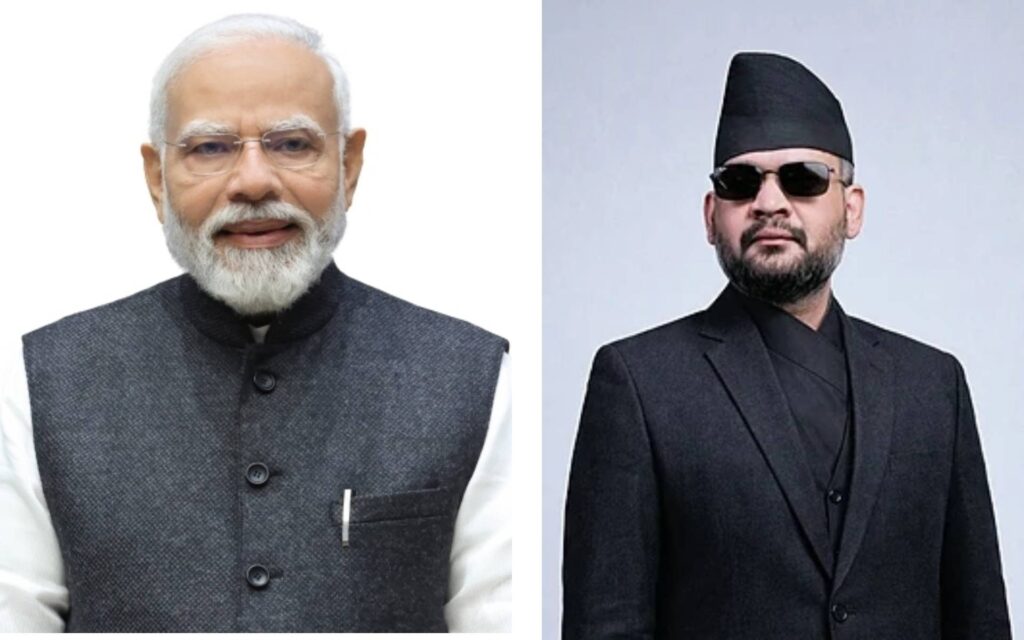
In his response, Shah thanked the Indian Prime Minister for the message and expressed confidence that the two sides would work together to strengthen the longstanding ties between Nepal and India.
“Thank you for the best wishes, Honorable Prime Minister Narendra Modi. I am confident that we will cooperate to make the historical, close and multifaceted relations between Nepal and India even stronger, deeper and more result-oriented in the coming days,” Shah wrote. In the same message, Shah had also congratulated the Government and people of India on their sporting achievement, praising the country for winning the World Cup title for the second consecutive time.
Similarly, Chinese Premier Li Qiang had also extended congratulations to Balen Shah on his appointment as the Prime Minister of Nepal. In a congratulatory message, the Chinese Premier had expressed commitment to strengthening bilateral cooperation and partnership.
Stating that China and Nepal are traditional neighboring countries connected by mountains and rivers, Premier Li noted that over the 71 years since the establishment of diplomatic relations, bilateral ties have developed based on the “Five Principles of Peaceful Coexistence.” Li also conveyed that China will support the Nepal government’s efforts toward good governance and reaffirmed continued support for Nepal’s independence, sovereignty, and territorial integrity.
Given the context of Indian and Chinese side expressing their goodwill and wishes to the new leadership in Nepal following the March polls, it was only natural that Nepal would seek closer engagement with both India and China for development diplomacy, strengthening partnerships and collaboration, while clearly articulating Nepal’s position and priorities, the task that the foreign minister appears to have accomplished during his visits to the neighboring countries.
Sustaining the momentum
As Dr. Dinesh Bhattarai and Mr. Purshottam Poudel have shared with The Diplomat Nepal, the visits to India and China have opened up avenues for Nepal to secure support from both neighbors to realize the government’s vision of ‘economic diplomacy’ and ‘development diplomacy’ in action in the days to come. How effectively this momentum can be sustained will depend on the government’s ability to translate the goodwill generated by these visits into concrete cooperation, long-term partnerships, and measurable outcomes.
While a single visit cannot determine the entire course of bilateral relations, the Foreign Minister’s official visits to India and China have offered an early indication of the direction Nepal intends to pursue in its engagement with its two closest neighbours. They have set the tone for what could shape the next phase of Nepal’s neighbourhood diplomacy.
‘Always Good for Countries to Keep Talking’
These visits have opened new avenues for cooperation and laid the groundwork for higher-level engagements in the months ahead.
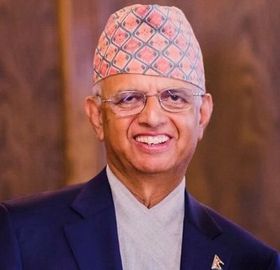
Dr. Dinesh Bhattarai
Dr Dinesh Bhattarai, former ambassador, was Foreign Affairs Adviser to the Prime Ministers of Nepal in 2014-2015 and 2017-2018.
After Nepal’s interim government was formed following the Gen Z uprising in September 2025, Indian Prime Minister Narendra Modi expressed warm sentiments toward Nepal and the Nepali people. Speaking at a public event in Manipur, he congratulated Sushila Karki on becoming Nepal’s interim Prime Minister, hailing her as the country’s first woman to hold the post. Calling her appointment a milestone for women’s empowerment, he expressed confidence that she would lead Nepal toward peace, stability, and prosperity. I recall him saying ‘Nepal, in the lap of the Himalayas, is our close friend. On behalf of 1.4 billion Indians, I extend my best wishes to Prime Minister Sushila Karki.’
Although Prime Minister Modi personally telephoned RSP Chair Rabi Lamichhane and Balendra Shah to congratulate them on their electoral victory in March, the same level of public warmth initially did not appear to be extended to the new government. Speculation was that New Delhi was taking a cautious approach to the new post-election government in Nepal.
In this context, the subsequent visits by Rabi Lamichhane and the Foreign Minister this June helped dispel that perception. The Nepali side appeared keen to better understand the perspectives and priorities of its two immediate neighbors. For their part, both India and China conveyed a clear message of their willingness to work closely with Nepal in areas such as trade, connectivity, and people-to-people exchanges. The Chinese side, in particular, reinforced the importance of good-neighborly relations by reminding Nepal’s Foreign Minister that ‘close neighbors are better than distant relatives.’
These visits also gave Nepal’s leadership an opportunity to better understand the concerns and expectations that both India and China have regarding Nepal. Such firsthand engagement is essential for understanding the ground realities that shape bilateral relations.
Understanding each other’s concerns and priorities is fundamental to effective foreign policy. These visits have opened new avenues for cooperation and laid the groundwork for higher-level engagements in the months ahead. It is always beneficial for countries to keep talking and communicating, particularly among neighbors. Hopefully, these exchanges will help Nepal shape a more focused agenda for its relations with both India and China. Constructive cooperation with its two neighbors will be crucial to realizing what the RSP and the government have described as ‘development diplomacy’ and ‘economic diplomacy.’
Balancing Neighbors
While addressing the core security concerns of both India and China, Nepal should also actively engage with them to advance its own national priorities.

Purushottam Poudel
Following the Gen Z movement of September 8-9, the general election held on March 5 and the subsequent formation of a single-party government led by senior Rastriya Swatantra Party (RSP) leader Balen Shah left both of Nepal’s neighbours appearing somewhat uncertain about the country’s evolving political landscape.
Against this backdrop, the visit of RSP Chair Rabi Lamichhane to India, followed shortly afterwards by Foreign Minister Shishir Khanal’s visit to India and China, appears to have helped ease some of that uncertainty. In diplomacy, however, the outcomes of high-level engagements rarely become apparent immediately. It is therefore too early to assess the tangible achievements of these visits in any meaningful sense.
Nevertheless, the visits have helped address a number of technical and procedural concerns that either had the potential to emerge or were already anticipated in Nepal’s bilateral relations with its two neighbours. While their long-term strategic significance will only become clearer over time, they have at least contributed to reducing immediate ambiguities surrounding Nepal’s foreign policy direction.
As of now Nepal’s relations with both of its neighbours seems to have revitalised after the two high profile visits. The visits, which were intended to shift bilateral engagement towards economic prosperity, effectively resulted in agreements on diplomacy, infrastructural development and digital integration which are something to be lauded.
Amid the shifting dynamics of global politics, both of Nepal’s neighbours, India and China, appear to share a common concern regarding their relations with South Asian countries: ensuring that neighbouring states do not become a source of strategic or security concern. In Nepal’s case, it is evident that security remains the foremost priority for both countries. While their focus was traditionally centred on conventional security issues, it has gradually expanded to include a range of non-traditional security challenges.
Against this backdrop, Nepal must be able to reassure both neighbours that their legitimate security concerns are understood and appropriately addressed. Building and maintaining the confidence of both India and China on such matters will remain essential to preserving stable bilateral relations and safeguarding Nepal’s broader strategic interests.
While security remains the primary strategic interest of both of Nepal’s neighbours, Nepal’s own overriding priority is development. Despite being situated between the world’s second- and seventh-largest economies, Nepal continues to rank among the least developed countries—a reality that raises serious questions about its development trajectory.
The inability of Nepal’s traditional political parties to adequately address issues of economic development, employment, and good governance was one of the principal factors that fuelled last year’s youth-led political uprising. The public demand for meaningful reform reflected growing frustration with decades of underperformance in these critical areas.
Going forward, Nepal must pursue a balanced approach. While addressing the core security concerns of both India and China, it should also actively engage with them to advance its own national priorities, particularly economic development, infrastructure, investment, employment generation, and improved governance. Aligning cooperation with both neighbours around these shared interests will be essential if Nepal is to translate its strategic location into tangible developmental gains.