
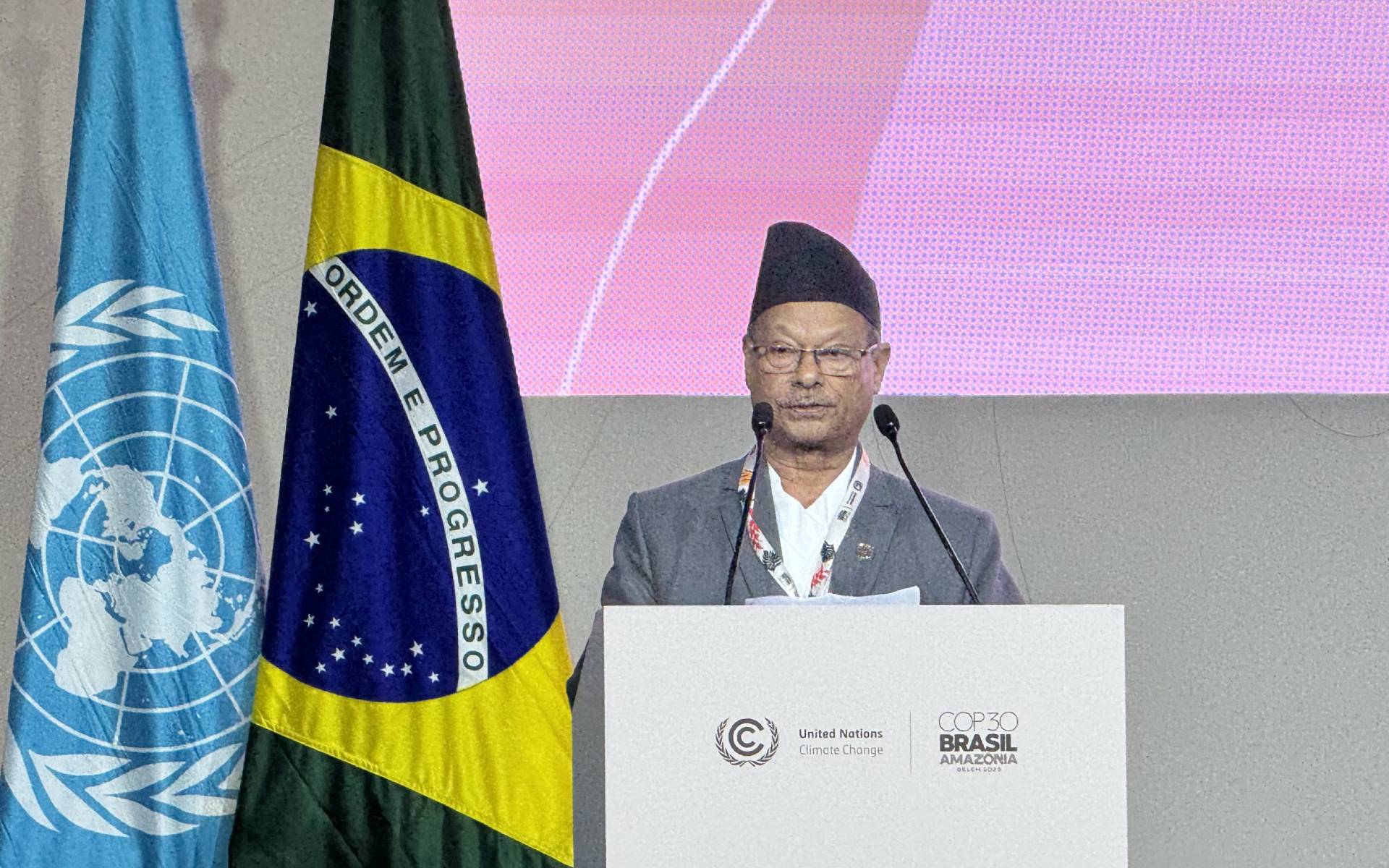
The 30th Conference of the Parties to the United Nations Framework Convention on Climate Change (COP-30) has concluded in Belém, Brazil. Held from November 10-21, 2025, the conference attracted 194 countries, making it the second largest UN climate conference in history. The conference was extended by a day after the member states failed to reach an agreement within the initial timeframe because of their differing positions on issues such as fossil fuels, adaptation finance, and climate justice. This increased frustration among the member states as reducing fossil fuels is very important to control climate change.
The two-week COP-30 conference focused on assessing the serious impacts of climate change, finding long-term solutions and structuring climate finance. Climate experts have assessed that significant progress has been made, especially on mountains, rainforests, marine ecosystems and greenhouse gas reduction. COP-30 also adopted a ‘Global Ambition’ action plan to implement the target of reducing global emissions by 43 percent by 2030. In addition, there was agreement to increase investment in renewable energy, gradually reduce fossil fuel subsidies, and provide adaptation support to climate-vulnerable communities.
After a long wait for the mountain countries, the mountain agenda also formally entered the negotiations this year. The conference prioritized the rapidly melting glaciers, unusual floods and landslides, and chronic water shortages in the Himalayan region. This indicates that the voices of the mountain countries, including Nepal, are being presented more effectively. The conference recommended new commitments to the sustainability of the disaster fund, concessional loan structures, and policy reforms to attract the private sector. Rich countries have reiterated their pledge to continue to increase technical and financial assistance to developing countries. However, many challenges remain in implementation.
Addressing the closing ceremony of the conference, Simon Stiell, UN Climate Change Executive Secretary, said that 194 countries stood in solidarity with solid and unwavering support for climate cooperation despite the intense political storms. He stated that the Paris Agreement was moving forward effectively, saying that nations stood together at the conference to maintain the 1.5 degree temperature target. Executive Secretary Stiell said that while current geopolitical tensions, divisions and climate denial have affected international cooperation, the solidarity of 194 countries is a significant source of hope for climate action. He highlighted the new agreement on climate resilience, clean energy and a just transition as a major achievement of COP-30. The agenda put forward by COP-30 will include USD1 trillion for clean electricity grids, protecting and restoring hundreds of millions of hectares of forests, land and oceans, and making more than 400 million people climate-resilient.
Experts say that the overall achievements were average considering the participation, discussions, and conclusions from around the world at this conference. The decision of the US withdrawing from the Paris Agreement after Donald Trump was elected as the president for a second term in the US did not seem to be encouraging. The conference was held amidst conflicts in various parts of the world, including the polarization seen between Europe and Russia due to the Russia-Ukraine war, and the recent ceasefire in the devastating Israel-Gaza conflict.
According to climate expert Manjeet Dhakal, the COP-30 conference was held in a challenging environment, including the global geopolitical situation, a significant increase in climate change incidents, and 10 years of the Paris Agreement. In such a situation, he said, the participating countries, under the auspices of the UN, succeeded in signaling a consensus to address the climate impacts through cooperation.
The inclusion of the issue of tripling adaptation assistance raised by least developed countries was also positive, and the issues of the Himalayas raised by countries such as Nepal, Bhutan, Kyrgyzstan and others have been addressed to some extent. However, Dhakal said that concrete achievements have not been made on the topic of reducing carbon emissions because of the pressure from oil-producing countries.
According to Dr. Madan Prasad Pariyar, Minister of Agriculture and Livestock Development, who led the Nepali delegation to the conference, said the conference has been fruitful in highlighting Nepal’s challenges. Addressing the ministerial session of the conference, he said that developed countries should fulfill their past commitments on climate finance. He stressed that all parties, including emerging economies, should be constructively involved in achieving the 1.5 degree Celsius target to control global warming.
Minister Dr. Pariyar recalled the context of the Sagarmatha Dialogue that happened in Kathmandu last month, which urged the immediate inclusion of the Himalayan agenda in the UNFCCC process. Nepal also emphasized issues such as increasing climate finance, easy access, process simplification and technology transfer for countries like Nepal, which are affected by the effects of climate change.
Similarly, Secretary of the Ministry of Forests and Environment, Dr. Rajendra Prasad Mishra, while delivering a speech on behalf of Nepal at the ‘Leader Summit’ held on the eve of the COP-30 conference, said that everyone should work together to protect the earth. He said that the Himalayan region is not only the identity of Nepal but also a major source of biodiversity, clean air and water for billions of people, and stressed the need for collective efforts to protect it. Secretary Dr. Mishra stated that the climate crisis is intensifying in Nepal and informed that this year alone, more than 300 Nepalis have lost their lives because of floods, landslides, droughts, glacial lake outbursts, and forest fires.
According to Dr. Maheshwar Dhakal, Chief and Joint Secretary of the Climate Change Management Division of the Ministry of Forests, at the conference, Nepal had informed the world about the good practices and efforts made in highlighting climate issues, conservation and adaptation. Nepal raised issues such as climate change, adaptation, mitigation, carbon finance and Article 6 of the Paris Agreement, climate finance, capacity building and technology transfer, and climate justice.
Nepal has been drawing the world’s attention to the impact of climate change on the Himalayan ecosystem, especially since COP-15 held in Copenhagen, Denmark in 2009. Although the world community has agreed to limit the global temperature increase to 1.5 degrees Celsius by the end of this century, the average temperature in the Himalayan region is expected to exceed 1.8 degrees Celsius before 2050. In addition, studies have estimated that two-thirds of the glaciers in the region will melt due to high temperature increase. Therefore, it is necessary to understand the sensitivity of this issue and take effective steps to protect the mountains.