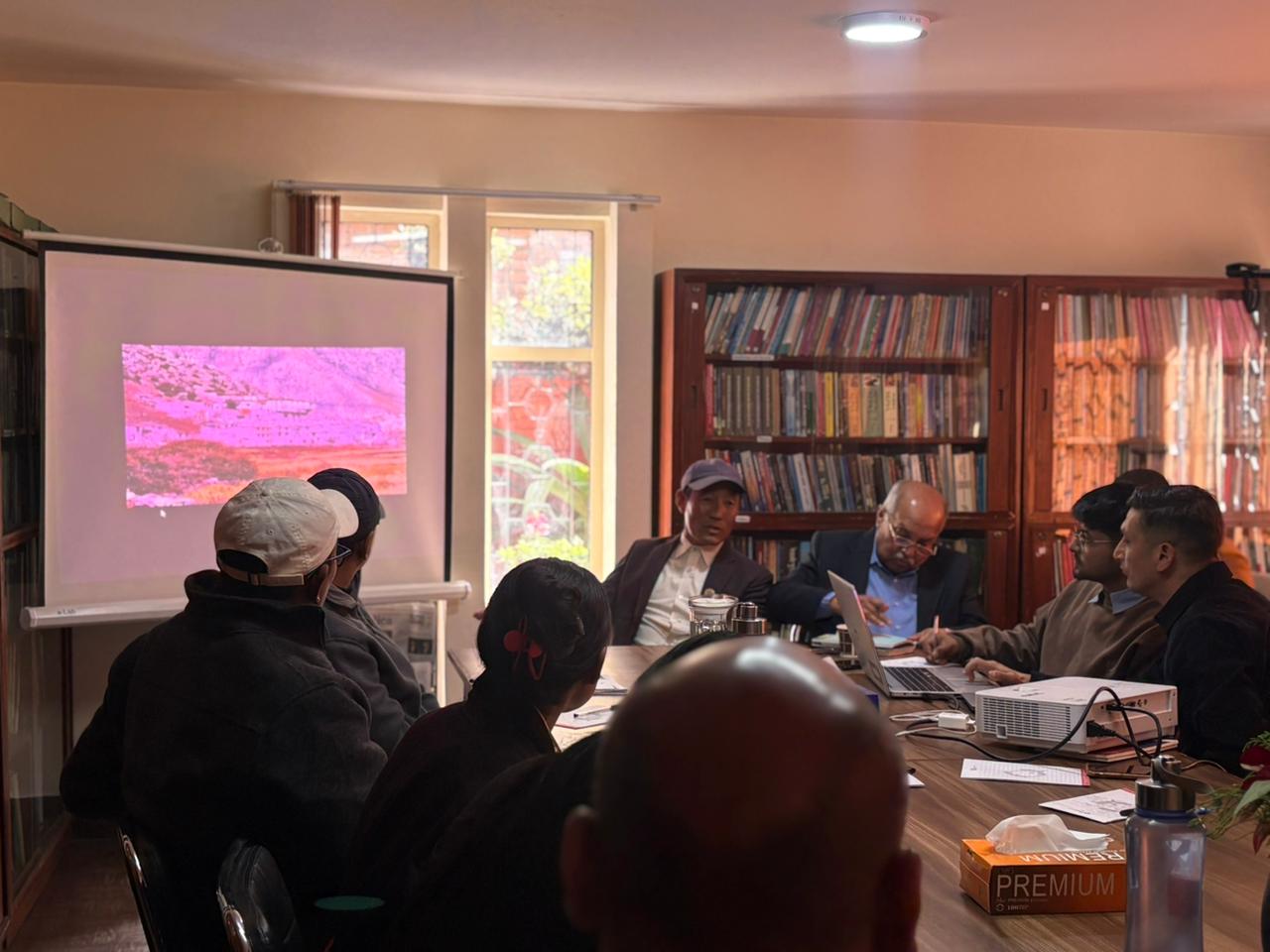
Kathmandu: The Centre for Social Innovation and Foreign Policy (CESIF), Nepal, convened a briefing on the unfolding crisis in the Limi Valley of Humla District, focusing on the accelerating impacts of climate change, livelihood breakdown, and the increasing outmigration of communities living in Nepal’s high Himalayan borderlands on January 23. The discussion brought together local representatives from Limi Valley and policy experts to document the growing risks confronting long-established settlements in the region and to elaborate on their collective decision to resettle due to these risks.
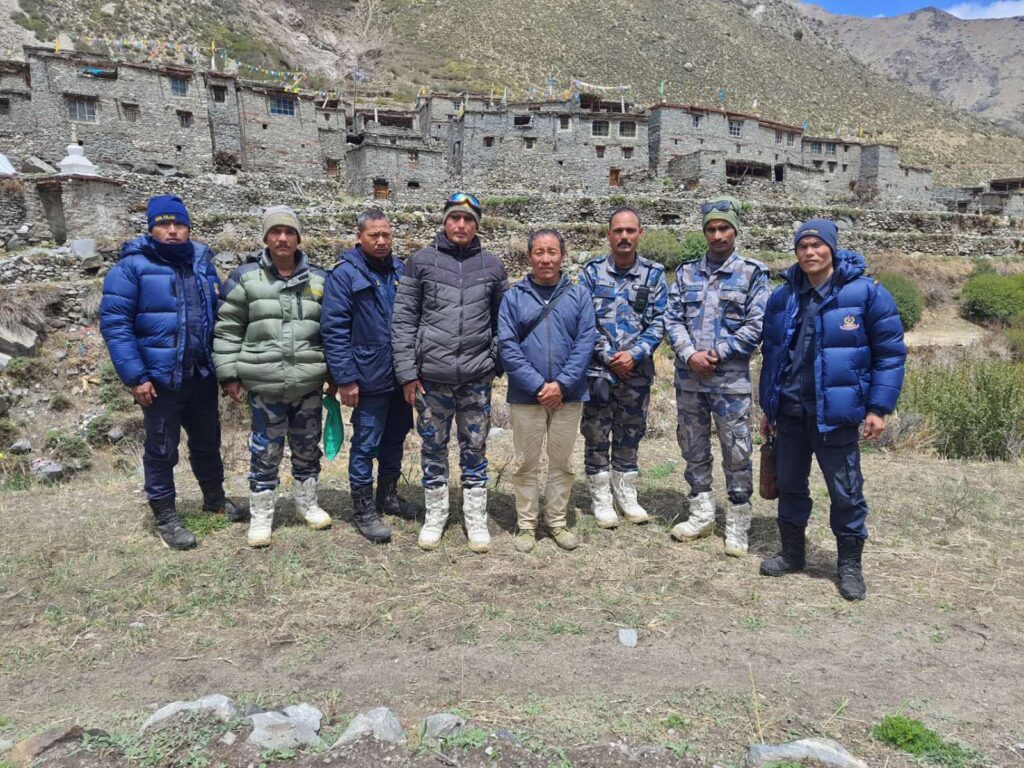
The Limi Valley consists of three villages, Halji, Til, and Jang (Zhang), situated at elevations ranging from approximately 3,700 to 4,100 meters along Nepal’s northern frontier with the Tibet Autonomous Region (TAR) of China. The valley is home to an estimated 1,200 people, whose traditional livelihoods have historically depended on high-altitude farming, yak-based animal husbandry, and trans-Himalayan pastoral practices. In more recent times, due to an agreement between Nepal and the PRC in 2002, Limi’s residents have sought employment and economic opportunities in Taklakot, TAR.
The region is recognized as a high-altitude biodiverse landscape and is home to the only surviving population of wild yaks in the Nepali Himalaya. The valley also carries deep civilizational and religious significance. The Halji Rinchen Ling Monastery, founded in the 11th century, remains one of the oldest intact monasteries in Nepal. Additionally, Lapcha La Pass in Limi holds exceptional cultural and spiritual value, as it is the only site within Nepal from where Mount Kailash and Mansarovar Lake in the TAR can be viewed.
Local representatives Ward Chair Paljor Tamang and Mangal Lama emphasized that climate change is now the primary driver of the valley’s crisis. They noted that rising temperatures in the High Himalayas are intensifying climate variability, disrupting seasonal cycles, and increasing the frequency of destructive flood events. In Til, recurring floods and river-driven erosion have repeatedly damaged homes, agricultural land, and basic infrastructure, accelerating displacement pressures. The delegation stressed that these impacts are already forcing communities to consider relocation, not as a choice, but as a survival necessity.
Til village was highlighted as the most severely affected settlement. Repeated flooding, culminating in a major event in 2025, has destroyed homes and productive land, pushing residents toward permanent displacement. Jang village has experienced near-total depopulation, with the delegation stating that the settlement has declined from more than 60 households to only two households remaining today.
Speakers further stressed that climate vulnerability has been intensified by long-term livelihood disruption. A bilateral agreement with China regulating cross-border movement and grazing access has significantly reduced seasonal pasture availability for yak herding, weakening the valley’s traditional animal husbandry economy. With agricultural and livestock systems collapsing, many residents increasingly depended on cross-border wage labor. This coping mechanism abruptly failed during the COVID-19 period, as border closures eliminated income opportunities and further worsened food insecurity.
The delegation emphasised on their collective decision in late 2025 to relocate the three villages of the valley to Takchi, the ancestral settlement area of the Limi people. Speakers argued that this approach should be seen as an organized “shift” rather than a chaotic abandonment of the region. They said that the shift to Takchi was agreed upon to mitigate the rapid pace of outmigration, the impact on livelihood and security from climate change-linked natural disasters, including a GLOF event that swept away several fields and homes in Halji village in 2011, and to benefit from the economic opportunities provided by tourism to the valley.
Reflecting upon the urgency of the situation, Ward Chair Paljor Tamang questioned the limited attention given by the state to the multiple crises and asked the government to mitigate the conditions the people of Limi find themselves in. Mangal Lama contrasted development across the border in TAR with the lack of basic infrastructure and services on the Nepali side, asking why communities are denied both the option of state support at home and sustainable opportunities across the border. Yanchen Tamang, a local resident of Limi Valley, shared that the depopulation of villages has created deep uncertainty among those who remain, particularly as families witness the breakdown of community life and local institutions.
The discussion concluded by emphasizing that while climate change is the immediate trigger of the crisis, the obstacles to adaptation and relocation have become governance challenges. The delegation noted that administrative restrictions, especially, Restricted Area regulations, complicate mobility, disaster response, and planned relocation efforts, including to Takchi. Participants stressed that without urgent state engagement and policy flexibility, climate-induced vulnerability in Limi may turn into irreversible displacement.
CESIF reaffirmed its commitment to facilitating evidence-based dialogue on climate justice, high-mountain resilience, and adaptive governance in Nepal’s border regions.