Coalition for Disaster Resilient Infrastructure (CDRI) is a multi-stakeholder global partnership of national governments, UN agencies, multilateral development banks and private sector committed to strengthening infrastructure resilience against climate and disaster risks.
CDRI’s overall mission is to help countries develop infrastructure that can withstand, adapt to, and recover from disasters and climate change, thereby protecting lives, livelihoods, economies, and sustainable development gains.
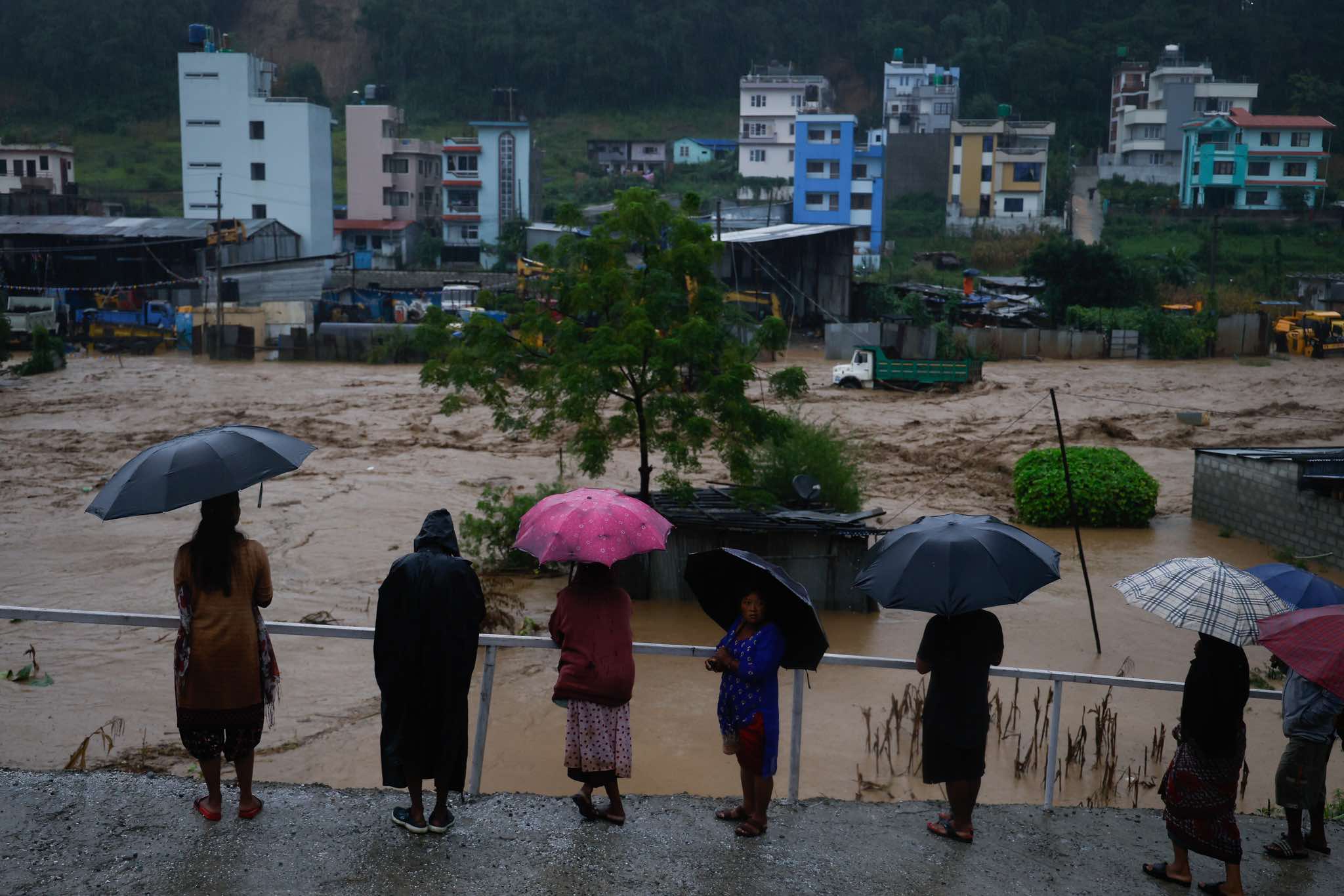
CDRI can provide significant support to nations such as Nepal which are highly vulnerable to earthquakes, floods, landslides, and the impact of climate change. It can assist Nepal by providing technical expertise, supporting development standards for resilient infrastructure, building institutions and professional capacity, facilitating access to global best practices, and strengthening risk governance and planning. CDRI’s recently released report entitled “Towards Resilient Public Finance: National Assessment of Fiscal Risks in Critical Infrastructure Sectors in Nepal” analyzes the fiscal risks Nepal faces from disasters due to its fragile Himalayan geography and climate vulnerability. The report analyzes the annual average loss that Nepal suffers from natural disasters such as earthquakes and floods and also examines the gap in disaster management and financing, in addition to providing recommendations on what Nepal needs to prioritize to minimize such gaps.
The Diplomat Nepal team reached out to Mr Ramraj Narasimhan, Senior Director of Programme Management and Technical Support at CDRI, to discuss the findings of the report and what Nepal should do to improve its disaster financing system.
What are the key takeaways of the report “Towards Resilient Public Finance: National Assessment of Fiscal Risks in Critical Infrastructure Sectors in Nepal”?
A key takeaway is that disasters are a major fiscal threat to Nepal as the nation experiences recurring earthquakes, floods, and landslides that impose large economic fiscal costs. Average annual losses are estimated at $325 million from earthquakes and $220 million from floods.
Another key takeaway is that energy and transport infrastructure are highly vulnerable, floods are the biggest risk to the energy sector, causing average annual losses of about $32.4 million and rain-induced landslides are the biggest risk to roads and bridges, causing average annual losses of about $101 million.
The final takeaway is that Nepal needs a proactive disaster-risk financing strategy. Key recommendations include expanding disaster reserves, using insurance and risk-transfer instruments, improving disaster data and hazard mapping, integrating disaster risks into fiscal planning, and investing in more resilient infrastructure. These findings show that Nepal must move from reactive post-disaster financing to proactive fiscal risk management to protect public finances and sustain development.
What framework was used for the research of this particular topic?
The study used a Fiscal Risk Assessment Framework that traces how disasters affect infrastructure, disrupt economic activity, create contingent liabilities, and ultimately impact government revenues, expenditures, investments, and overall fiscal health. The framework was supported by econometric modelling, catastrophe risk modelling, and funding gap analysis to quantify Nepal’s disaster-related fiscal risks.
The framework follows a cause-and-effect chain where it follows from disasters to disaster impact to economic activity disruption to fiscal impact to fiscal health.
While assessing disaster control in Nepal, what did you find as the nation’s biggest strengths and weaknesses?
Nepal’s biggest strength is its well-developed institutional framework, including the Disaster Risk Reduction and Management Act, National Disaster Risk Reduction and Management Authority (NDRRMA) and national disaster financing strategies supported by multiple disaster funds and contingent financing mechanisms. Rather than weaknesses, some areas that Nepal can improve is the large mismatch between available disaster funds and potential disaster losses. Critical infrastructure remains highly vulnerable to floods and landslides, and disaster financing is still largely reactive, creating substantial funding gaps after major events.
In Nepal, disaster financing mechanisms already exist as the country has the National Disaster Management Fund, Prime Minister’s Disaster Relief Fund, provincial and district disaster funds, insurance initiatives, and a $150 million World Bank Catastrophe Deferred Drawdown Option (Cat DDO) that provides contingent financing after disasters. Furthermore, there is a growing commitment to risk reduction as Nepal’s strategic plans promote allocating resources for disaster risk reduction, adopting risk transfer instruments, and integrating disaster resilience into infrastructure planning and public finance.
But there are weaknesses as well. They include high vulnerability of critical infrastructure, disaster financing still relying on post-disaster budget reallocations, donor assistance, emergency funding, and weak data and risk information.
Can you speak about some of the challenges your team faced while researching on this topic?
There were challenges related to limited and incomplete data, including missing disaster records, insufficient sub-national fiscal impact data, lack of official infrastructure datasets, incomplete information on exposed assets, and inadequate historical damage-and-loss data.
These constraints resulted in the use of data imputation, proxy datasets, and modelling assumptions to complete the assessment. For example, due to lack of detailed infrastructure asset registry open-source datasets from OpenStreetmap and World Resources Institute were utilized to come up with the required exposure dataset for the assessment.
The lack of consistent long-term infrastructure damage records was a challenge. For instance, at least 100 years of earthquake damage data, 20-30 years flood data, open-source datasets such as EM-DAT were used to develop a proxy dataset.
The research paper says ‘existing disaster financing mechanisms are insufficient for major catastrophic events’ in Nepal. Could you further elaborate?
The challenge of financing major catastrophic events is not unique to Nepal. In most countries, existing reserves and contingency funds are often insufficient to cover the scale of potential losses from severe disasters. What is encouraging is Nepal’s commitment to strengthening its disaster risk financing framework. The report highlights opportunities to build on this progress through a more layered approach, combining contingency funds, insurance and risk-transfer instruments, and other financing mechanisms to ensure that resources are available quickly when major disasters occur.
Currently, a 10-year flood and landslide event could generate losses of about $280 million, while Nepal’s disaster fund only provides around $35 million. Even with the World Bank’s $150 million Cat DDO, a significant funding gap remains. The problem becomes much more severe for larger disasters, especially earthquakes.
The catastrophe modelling showed that if a 10-year return period flood impacts the energy sector, and a 10-year return period rain-included landslide impacts roads and bridges, then the estimated losses would be $69.5 million for the energy sector and $210.5 million for the roads and bridges. This would be a combined loss of about $280 million.
In this context, Nepal’s disaster fund of roughly $35 million would leave a funding gap of about $245 million. Even after using the World Bank’s $150 million Cat DDO, the gap would still be about $95 million.
The CDRI report mentions that Nepal is dependent on foreign aid. How do you think Nepal can balance receiving foreign aid while also being self-sufficient?
Nepal balancing receiving foreign aid while also being self-sufficient depends also on the economy upscale. As long as there is a stable connectivity, physically and digitally, Nepal is able to receive foreign aid during disaster control. Like I said, one of Nepal’s weaknesses is its reactive rather than proactive financing. Nepal needs a more pre-arranged, risk-layered financing system.
Fiscally, and also in terms of infrastructure, which region of Nepal suffers the most during the disaster?
According to the 2021 census, Nepal’s hilly region alone accounts for roughly 62% of the country’s land area and is home to 40.31% of its population. Nepal’s mountainous and hilly regions suffer the most infrastructure damage because rain-induced landslides repeatedly affect roads and bridges, which are identified as the country’s most vulnerable infrastructure assets. Rain-induced landslides are the largest source of losses, causing average annual losses of over $101 million. From a fiscal perspective, floods and landslides create the largest recurring burden on government finances, while major earthquakes such as the 2015 Gorkha earthquake (which caused losses of about $7 billion) generate the largest catastrophic losses. Therefore, the hill and mountain regions are the most affected regularly, especially in the transport sector.
The CDRI report also lists recommendations. Which recommendations do you think are particularly suitable for Nepal to prioritize?
The most important recommendations are improving the resilience of roads, bridges, and energy infrastructure, adopting a layered disaster-risk financing strategy, increasing investment in disaster-risk reduction and strengthening disaster data systems. The report shows that landslides and floods create recurring losses in transport and energy sectors, while financing gaps remain significant. Therefore, combining resilient infrastructure with better risk financing and planning would provide Nepal with the greatest long-term fiscal and disaster resilience.
Finally, the report suggests adopting a strategy that combines multiple financial instruments, including insurance, reserves, and contingent credit. Has this message been delivered to the Nepal government?
Yes, the core message to the Nepal government is that although it has taken several proactive measures in recent years and it is slowly emerging as a frontrunner among South Asian countries in evolving mechanisms for fiscal resilience, much work remains to be done. The report highlights the message that a single instrument cannot cover the full range of disaster risks that the country faces. So a layered financing strategy is needed.
Such financing strategy includes contingency reserves that need scaling up to cover frequent lower-severity events. Nepal’s current disaster funds (Appx $35M nationally) are far below the estimated average annual losses of $325M (earthquakes) and $220M (floods). Contingent credit lines (like the World Bank’s $150M Cat DDO) should be maintained/expanded for medium-severity events, since a single 10-year flood-and-landslide event could leave a funding gap of $95M–$245M even after tapping into reserves and the Cat DDO. Insurance and risk-transfer instruments are needed for rare, high-severity events like major earthquakes, where losses can run into the billions.
These instruments should be paired with better exposure/fiscal data and mainstreamed into Nepal’s debt management framework, thus further assisting the country’s shift from a reactive to proactive fiscal risk management approach. The Report was shared with the Ministry of Finance which has appreciated and taken cognisance of the findings.