Nepal–United Kingdom military relations are often traced to the events following the end of the Anglo-Nepal War and the signing of the Treaty of Sugauli in 1816. However, the origins of military engagement between the two countries date back several decades earlier.
One of the earliest instances of Nepal–UK military cooperation occurred around 1780–81. During a conflict in Kashi (present-day Varanasi, India), King Chet Singh arrested the then British Governor-General, Warren Hastings, along with his troops and imprisoned them in the Ramnagar (Kashi) Fort. Several British officers were reportedly killed during the incident.
In response, the British sought military assistance from Nepal’s King Rana Bahadur Shah. Following the request, Nepal dispatched five companies—approximately 750 soldiers—under the command of Kaji Dhaukal Singh Basnyat. However, while the force had reached Someshwar Gadhi in Chitwan, news arrived that the British officers had already been freed. Consequently, the Nepali troops returned to Kathmandu without engaging in combat. Although no battle was fought, this episode marked the beginning of military cooperation between Nepal and the UK.
Nepal again came to the UK’s aid during the Indian Rebellion of 1857, commonly known as the Sepoy Mutiny. Under the leadership of Prime Minister Jung Bahadur Kunwar Rana, Nepal deployed approximately 15,000 troops to assist British forces in suppressing the uprising, particularly in Lucknow.
The campaign was costly for Nepal. Nepali forces suffered significant casualties, with more than 5,400 soldiers reportedly killed. Britain’s successful suppression of the rebellion owed much to Nepal’s military support, strengthening mutual trust and laying the foundation for a close relationship between the British and the Rana rulers that lasted for more than a century.
Nepal during world wars
Nepal’s military cooperation with the UK expanded further during the First World War (1914–1918). Nepal deployed 24 battalions in support of the Allied war effort and also sent substantial forces during the Waziristan campaign.
Nepali soldiers earned widespread recognition for their courage. Among them, Subedar Chandra Bahadur Karki of the First Rifle Battalion became the first Nepali recipient of the prestigious Military Cross.
In 1919, Nepal again provided military assistance during the Third Anglo-Afghan War.
These years witnessed increasing diplomatic exchanges. Members of the British royal family visited Nepal, while Nepali prime ministers travelled to Britain. Although Nepal was never colonized, Britain formally recognized Nepal as an independent and sovereign state through the 1923 Nepal–Britain Treaty of Peace and Friendship. This diplomatic recognition later strengthened Nepal’s international standing and supported its eventual admission to the United Nations.
Between 1939 and 1945, Nepal once again extended military support to Britain during the Second World War. The regiments deployed included Shreenath, Kalibax, Suryadal, Naya Gorakh, Bard Bahadur, Kalibahadur, Mahindradal, Second Rifle, Bhairung, Jabarjang, Shamsherdal, Sher, Debidatt, Bhairavnath, Jangnath, and Purano Gorakh.
Under the command of General Bahadur Shamsher Rana, these forces departed for India to join the Allied campaign. Sardar Gunjan and Subba Nirraj Rajbhandari were assigned to document battlefield operations and maintain official war diaries. These valuable records are now preserved in the Central Library of the Nepal Army Headquarters.
On March 5, 1940, Prime Minister Juddha Shamsher Rana formally bid farewell to the first contingent at Tundikhel in Kathmandu.
Following the war, several Nepali officers received promotions and decorations for gallantry. Among the recipients of the British Military Cross were Brigadier General Daya Bahadur Khand, Brigadier General Chutra Bahadur Thapa, Colonel Sailendra Bahadur Mahat, Lieutenant Colonel Gupta Bahadur Gurung, Lieutenant Colonel Bala Bahadur Silwal Khatri, Lieutenant Colonel Jagat Bahadur Khatri, and Subedar Hom Bahadur Gurung. With the exception of Brigadier General Daya Bahadur Khand, these officers had served as Hawaldars, Jamadars, or Junior Commissioned Officers/Non-Commissioned Officers during the war.
Nepal took pride in contributing to the Allied victory alongside Britain, the United States, China, the Soviet Union, France, and other Allied nations.
Victory and recognition
Following the end of the war, all Nepali troops had returned home by October 28, 1945. The day was celebrated as Victory Day in Kathmandu.
The Commander-in-Chief of British India, General Claude Auchinleck, was invited to Nepal for the celebrations, during which a ceremonial military parade was held. In recognition of their distinguished service, the commanding officers of the Kalibahadur, Mahindradal, and Sher regiments each received a reward of Rs. 12,000—a substantial amount at the time. The UK also announced financial assistance amounting to Rs. 33.3 million to Nepal, reflecting its appreciation of Nepal’s wartime contribution.
Within this story of valor and victory also lies the incidents of pains, losses and mourning to the Nepali side. Many Nepali soldiers had sacrificed their lives during the battles at different frontiers. For example, a number of Nepali soldiers sacrificed their lives during the Burma campaign. Among those from the Kalibahadur Regiment were: Havildar Krishna Bahadur Gurung, Havildar Man Bahadur Gurung, Havildar Ratna Bahadur Gurung, Lance Naik Man Bahadur Gurung, and Sepoys Indra Bahadur Gurung, Lal Bahadur Gurung, and Mukt Bahadur Gurung (in the Kohima sector) and Jamadar Tej Bahadur Thapa Kshetri, Sepoys Bamba Bahadur Gurung, Biradhoj Gurung, Dhanu Gurung, Tej Bahadur Gurung, Kul Bahadur Gurung, Padma Bahadur Gurung, Sher Bahadur Gurung, Krishna Bahadur Gurung, and settlement worker Sepoy Bambanath (from the Imphal sector).
Many others remain unnamed, including 14 soldiers from Mahindradal, six from Sher Company, and 17 from Pioneer Company.
The legal agreement signed at Malaun Fort on May 15, 1815, provided the basis for the enlistment of Nepali soldiers into the British Army. This recruitment was conducted under formal agreements between the two governments and was therefore distinct from mercenary service.
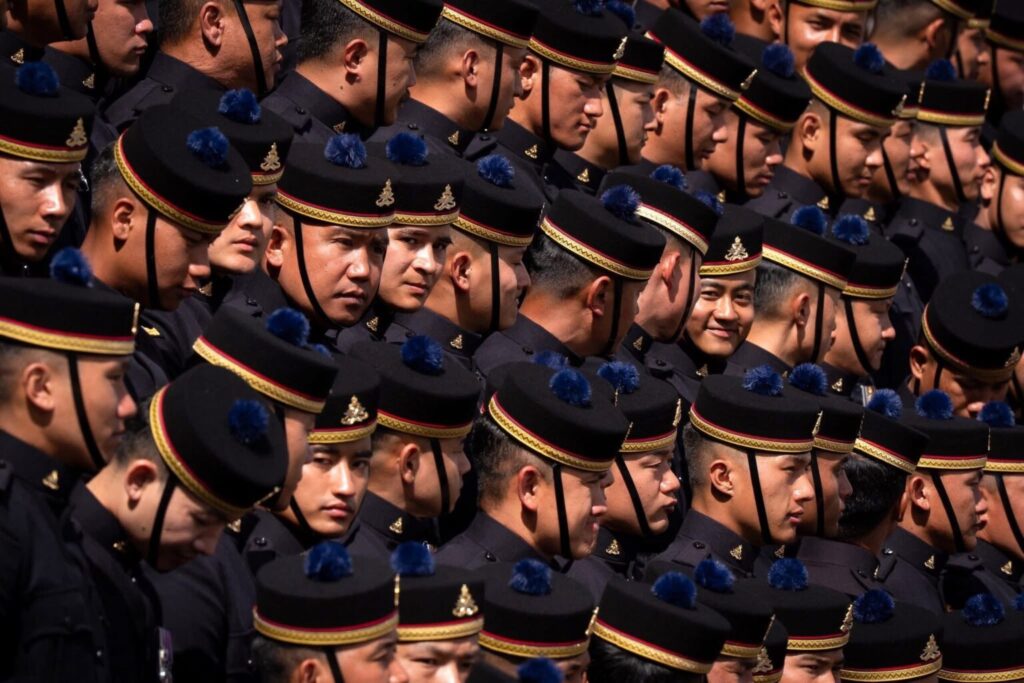
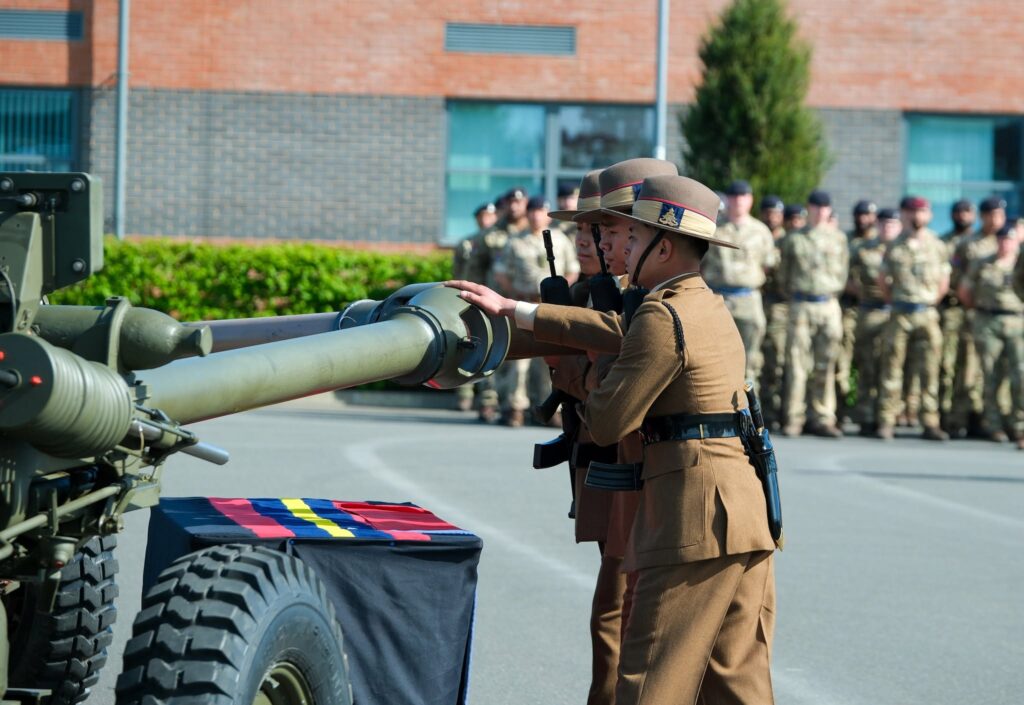
Following the Second World War, Gurkha regiments were stationed across the world, expanding interaction between British and Nepalese soldiers and their families. British officers frequently travelled to Nepal for recruitment and welfare activities, while cultural and linguistic exchanges flourished. Many British officers learned Nepali language and an increasing number of Nepalis acquired English language skills. These interactions significantly strengthened people-to-people ties between Nepal and the UK.
The Second World War greatly enhanced Nepal’s international profile. Although Nepal had maintained relations with the British since 1767—sometimes through conflict and at other times through strategic cooperation—it received virtually no British military assistance before 1950. Instead, Nepal consistently provided military support to Britain whenever requested, with the Second World War being its final major wartime contribution.
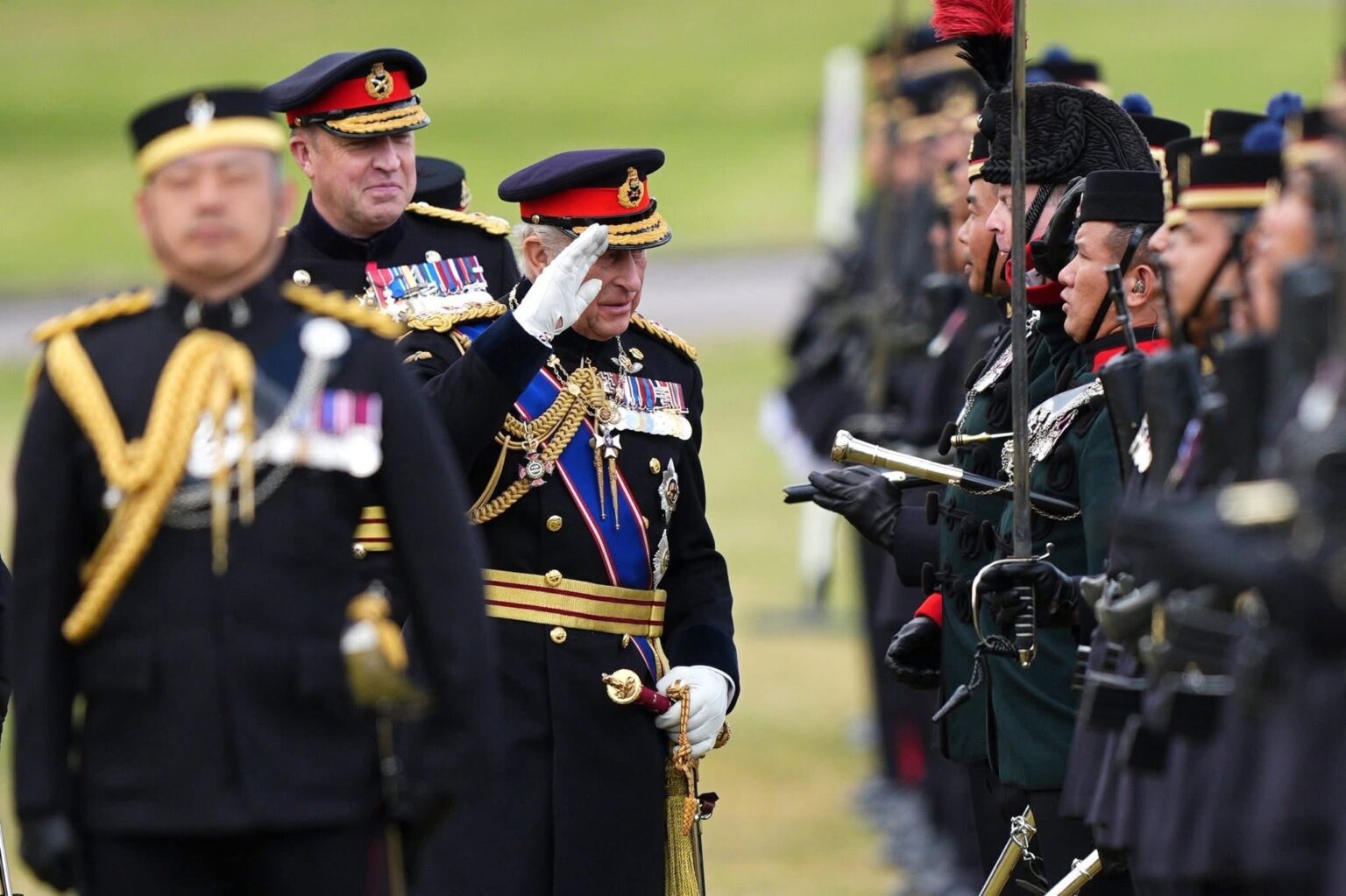
Nepal participated in the Allied victory parade in London and continues to be represented in commemorative events. The courage of both the Nepal Army and the Gurkha regiments earned worldwide admiration.
Following the war, Nepali citizens found increasing employment opportunities abroad, including in the British Gurkhas, Indian Gorkha regiments, the Singapore Police Force, and, in some cases, the armed forces of other countries. According to historical accounts, Nepali military professionalism also attracted interest from countries such as China, Italy, and Germany.
Cherishing the ties
The history of Nepal–UK military diplomacy extends well beyond military cooperation. It helped secure international recognition for Nepal, reinforced Nepal’s status as an independent and sovereign nation, strengthened relations with Britain and other Allied countries, contributed to Nepal’s growing international standing, and fostered enduring ties between the Nepali and British royal families.
Military cooperation also opened educational opportunities. Through the British Chevening Scholarship program, several Nepalis—including military officers—were able to pursue higher education in the UK. This scribe was the first Nepal Army officer to receive the British Chevening Scholarship.
Over more than two centuries, military diplomacy has remained one of the strongest pillars of Nepal–UK relations, demonstrating how defence cooperation can contribute not only to security but also to diplomacy, education, and enduring friendship between nations. The two countries should cherish this relationship and work to make it even stronger and longer lasting in the years to come.