India and Nepal both have both given pride to their age-old and civilisational relationship. Most of the factors brought into the spotlight in their relationship are pointing towards history, but what about the future?
Nearly 40% of Nepal’s and 65% of India’s population is considered to be youth. India and Nepal relations cannot move forward by disregarding this population. When it comes to Nepal, India has always sat in its comfort zone and focused on engaging with the old elites, but very little with the youth. India needs to change this behaviour, as the old guards have been deemed irrelevant amidst the youth. Most of the Nepali youth today are fed up with the old elites.
India is failing to check the pulse of Nepal, which is why it could not predict the Gen Z movement. For the first time in Nepal’s history, in a political change, there was no foreign intervention involved. All of the political changes before ended with some sort of ‘Delhi agreement’, but this movement was homegrown, and despite the resistance from the traditional parties, the March Elections ratified the Gen Z movement, pushing out the old and celebrating the new.
When compared to other countries’ engagement with youth, India is lagging far behind. While India was still entertaining the needs of the older generation, other countries were listening to what the youths had to say, and they aligned themselves with what Gen Z stand for.
The younger generation is far more practical and solution-oriented than the previous generations. A number of elites from the previous generations love to bash India. They are still looking at India as the post-colonial India. But Nepali youths understand that today’s India is different, it’s a rising India and is looking to make its own stand with its strategies of multi-alignment and strategic autonomy. Rather than looking at India as a threat, Nepal must look at it as an opportunity. And in return, India should also equally respect Nepal’s right to non-alignment, neutrality and its own strategic autonomy.
What Gen Z expect from India is no longer a post-colonial mindset of a big brother but a partner.
Moving Forward:
If India wishes to engage more with the youth of Nepal, particularly the Gen Z, then it can take the following measures moving forward.
When it comes to water, India’s engagement with Nepal has mostly focused on shared water resources, often framed around security and scarcity. But this misses a big opportunity to connect with a generation that cares deeply about climate change. Instead, India could look into India–Nepal Youth Climate Fellowships and work together on things like “Green Border” initiatives and reducing disaster risks from the Himalayas to the plains and the Indian Ocean. Their mindset must be changed from a transactional mindset toward a shared responsibility one to make this relationship more youth-driven.
After this, there is a massive degradation of soft power in the India-Nepal relationship when it comes to youth. A very bold statement to make, right? But it often seems like India and Nepal have stopped working on the soft power aspect because of the overemphasis on their ‘special relationships’. Meanwhile, other countries have started to appease the youth and help develop into a source of soft power. While India is busy with classical dance, traditional music, and even Bollywood, typically aimed at an older generation, countries like Korea and Japan, knowingly or unknowingly, have developed a significant source of soft power among the youth with K-pop, anime and manga. A generation which might have difficulty understanding Hindi seems like they can speak, sing and read Korean and Japanese with ease. India should explore more avenues like these instead of relying just on traditional sources to make it once again appealing to the Nepali youths.
With the rise of social media, both India and Nepal should increase their presence on social media. Social media posts should be made more appealing to youth, like reels and skits. They can both start to increasingly look at social media influencers to act as ambassadors for public diplomacy. These influencers have a heavy impact on how the viewers from around the world view your country.
Another is education. There used to be a time when it was a great prestige for Nepali students to be studying in India. Indian universities have been able to produce a generation of top leaders and scholars from Nepal. But today, for a Nepali Gen Z, India has lost its charm. Ask them where they would go to study if they could choose any country, and their answers will be more inclined towards Australia or the West. Despite India being one of the fastest-growing economies in the world and the most feasible study destination in terms of distance and visa, India seems to be losing its charm. It’s true that there are a lot of Nepali students studying in India, but most of them are paying their own money to do so. While scholarships from India are good, they are limited compared to scholarship opportunities given by other countries currently. At the same time, just studying there is not enough, students also look to secure their future by being prepared for the job market. Hence, creating structured internship programs could be equally important.
At the same time, India should also develop its youth councils. Other countries are already doing it, like the US Youth Council, which is already very famous and has a lot of charm amoidst to youth to be a part of it. At the same time, China has also started its own ‘Chinese Embassy Youth Pioneer Program (CNYP) ’in 2024. These programs are a great way to penetrate the youth population and engage with them. India does not have to copy and paste the same thing, but can have its own version of councils embracing shared values between the Indian and Nepali youths.
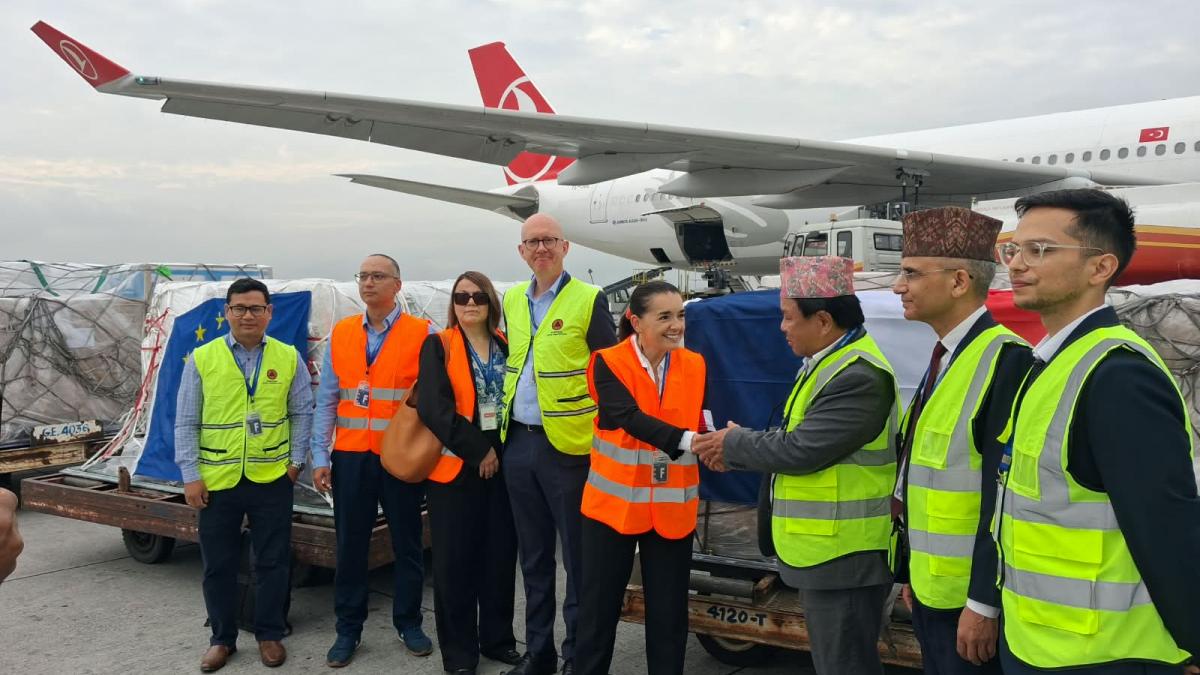
India is also in dire need to rebrand its aid. The US Embassy is very active on social media, and it has one of the finest social media presences when compared to its counterparts in Kathmandu. Their catchy content on social media notifies the youth about their initiatives here. China Aid, on its part, covers the project it’s working on from head to toe with its banner. India is one of the biggest aid donors to Nepal, but a common Gen Z who doesn’t study international aid will have no idea of what India is doing.
Cricket is another common factor that joins India. There has been an increasing fascination with cricket among the Nepali youth over the years. Nepal has played the ICC Men’s T20 World Cup three times in 2014, 2024 and 2026. This time it took place right next door in India. Nepali youth are willing to work hard, save up and travel to watch their country play in India. But it’s really heartbreaking to see that no initiatives were started from the Indian or Nepali side to get them to see the cricket World Cup happening there.
India has started to lag behind in terms of youth engagement, but it’s still not too late. Rather than sticking just to the traditional notion of their relationship, India needs to revamp its engagement by appealing to the Nepali Gen Z and youth.