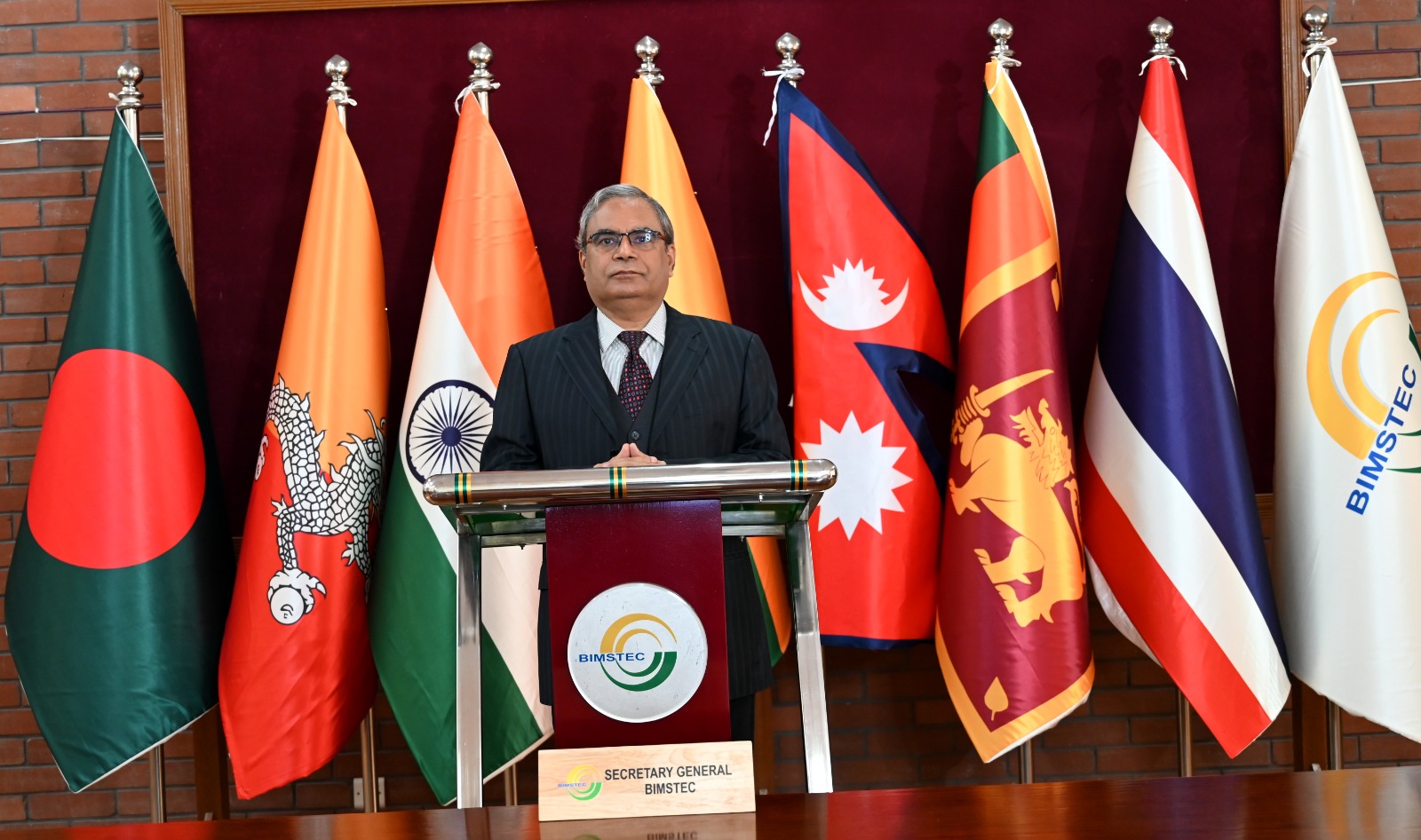
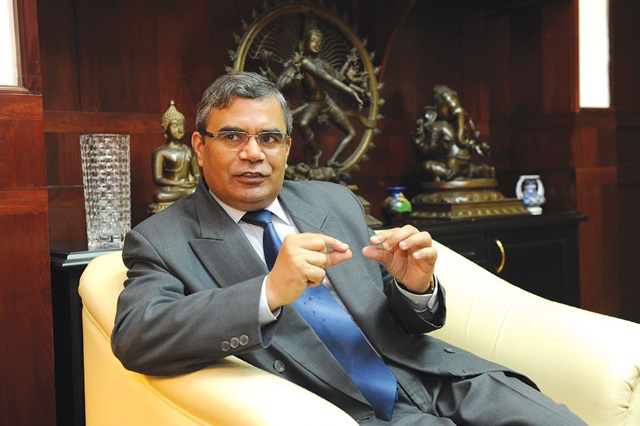
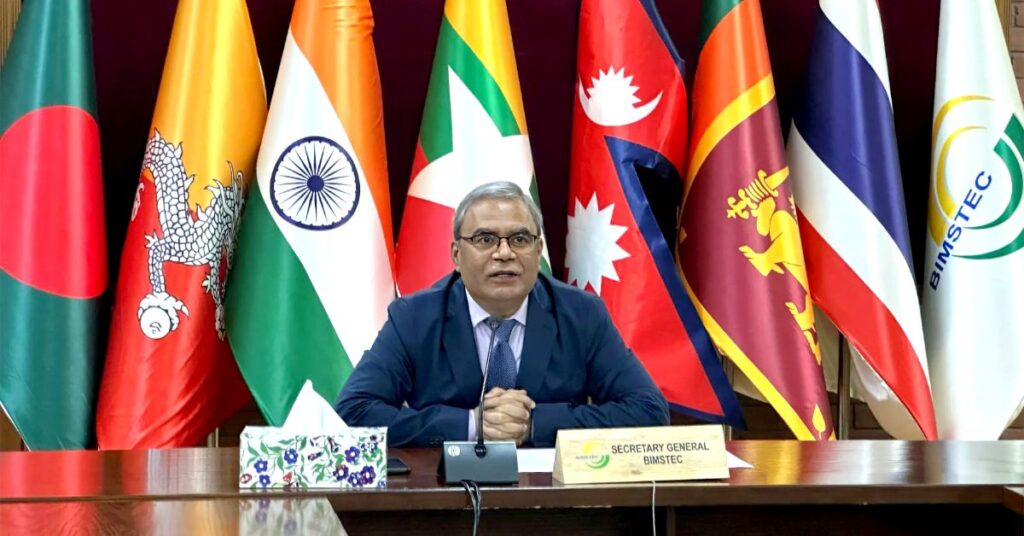
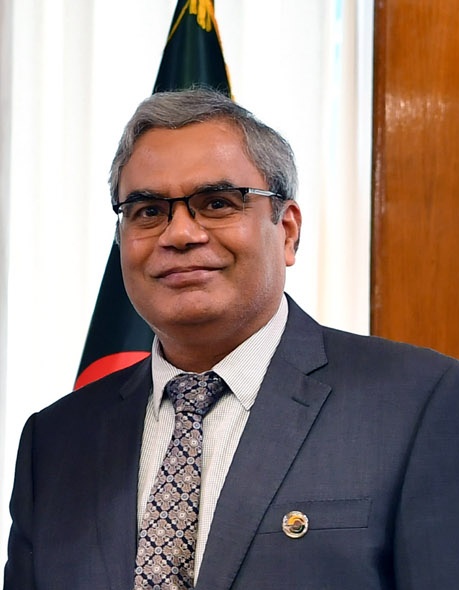
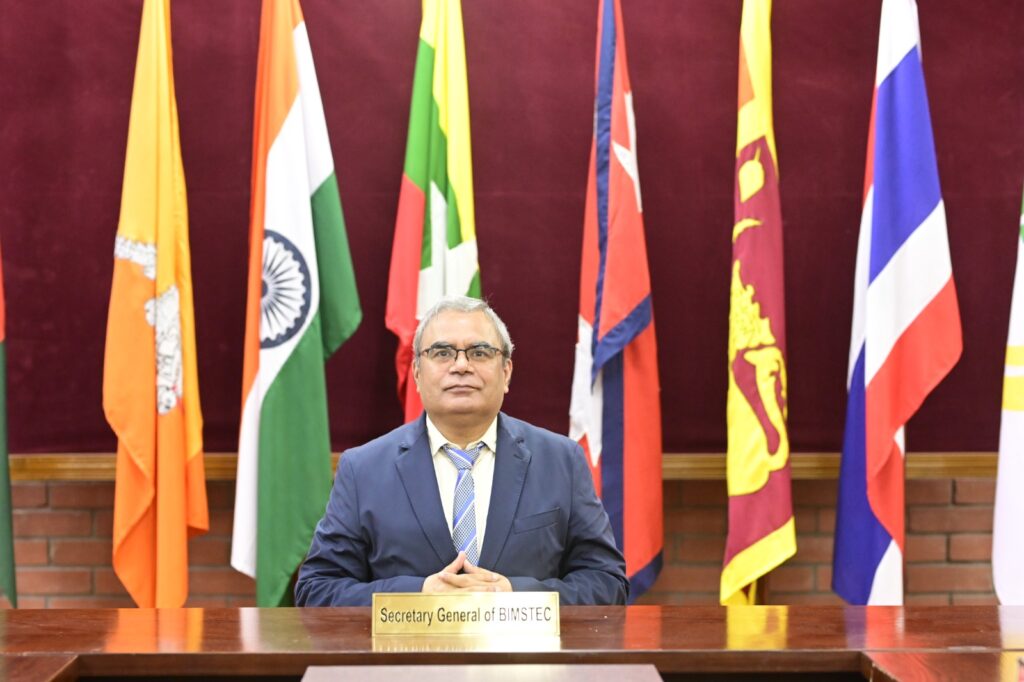
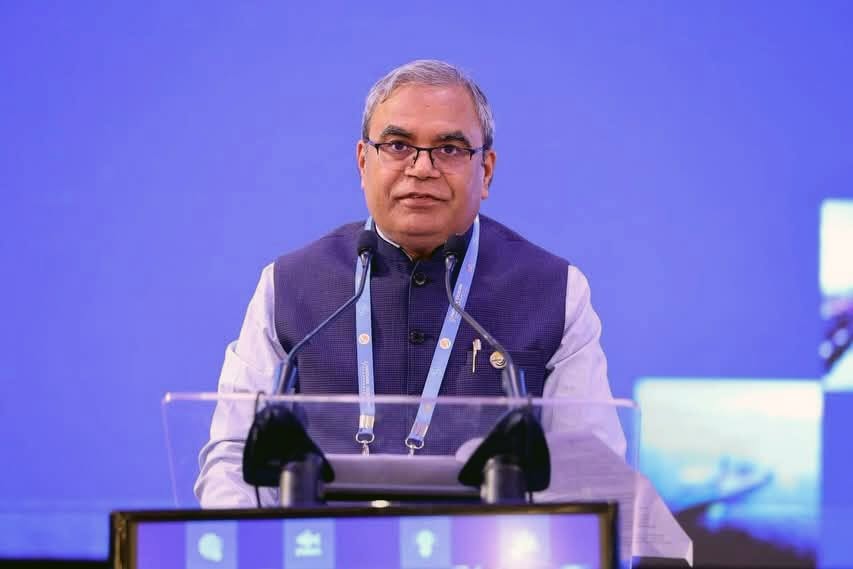
His Excellency Indra Mani Pandey, Secretary General of the Bay of Bengal Initiative for Multi-Sectoral Technical and Economic Cooperation (BIMSTEC), brings to the role decades of distinguished diplomatic experience. Before assuming his current position, he served as India’s Permanent Representative to the United Nations and other international organizations in Geneva. His extensive diplomatic career also includes appointments as Ambassador of India to the Sultanate of Oman, Deputy Ambassador to France, and Consul General in Guangzhou, China. In addition, he has served in various diplomatic capacities at Indian missions in Cairo (Egypt), Damascus (Syria), Islamabad (Pakistan), and Kabul (Afghanistan).
As the fourth Secretary General of BIMSTEC, Ambassador Pandey has been working to strengthen and expand cooperation among the organization’s member states across the seven priority sectors identified by BIMSTEC leaders. In an exclusive interview with The Diplomat Nepal, Ambassador Pandey discusses BIMSTEC’s achievements and future priorities, prospects for free trade and regional economic integration, Nepal’s role and opportunities within the grouping, the growing importance of the digital economy, technology and innovation, as well as the challenges and opportunities shaping the region’s future. Excerpts:
As the Secretary-General of BIMSTEC, what achievements during your tenure so far give you the greatest sense of satisfaction, and why?
Within the limits of the role played by the Secretariat, I, as Secretary General, feel happy that the Secretariat has been assisting the Member States in expeditious implementation of their decisions and initiatives. Enabling BIMSTEC to steadily evolve into a dynamic, efficient, purposeful and effective regional organization gives me a high level of satisfaction.
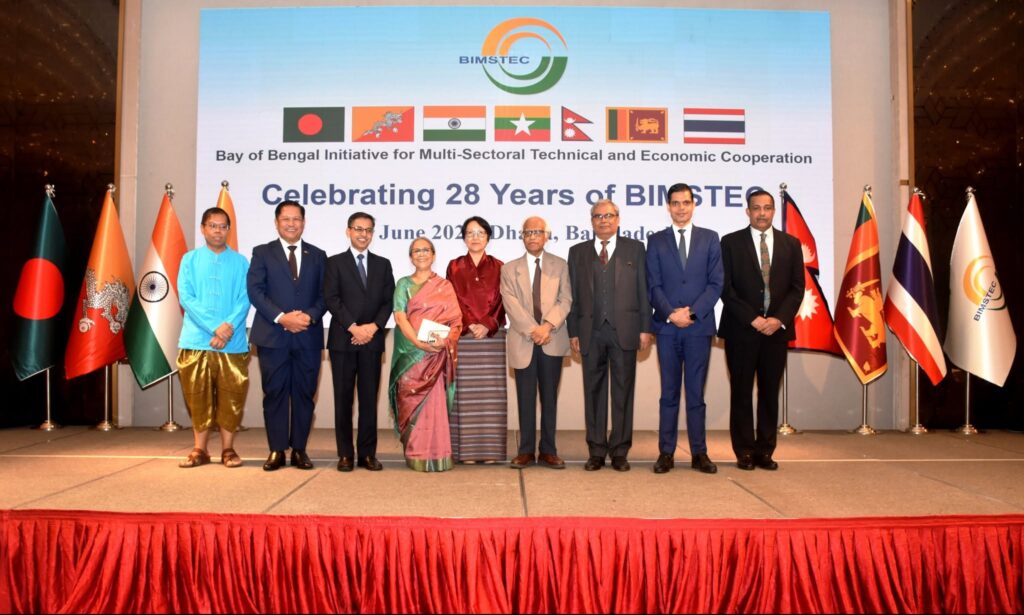
BIMSTEC was established in June 1997 as a non-political platform to promote practical cooperation between the countries of South Asia and Southeast Asia, which share not only geography but also historical experiences, cultural linkages and civilizational legacies.
Over the years, BIMSTEC has developed strong institutional foundations. Adoption of BIMSTEC Charter has given it a formal legal identity and BIMSTEC Bangkok Vision 2030 has provided it a long-term roadmap to transform the Bay of Bengal region into a prosperous, resilient and open region. The Rules of Procedure of BIMSTEC have made it a structured and effective organization.
The Sixth BIMSTEC Summit witnessed participation by the Heads of Government of all the Member States. They reiterated political support for BIMSTEC and adopted BIMSTEC Bangkok Vision 2030. They also tasked the Secretariat to take steps towards implementation of the recommendations of the Eminent Persons Group aimed at the reform and revitalization of BIMSTEC.
It gives me satisfaction that the BIMSTEC Member States believe that it can serve as a practical and trusted platform for regional cooperation. BIMSTEC is well placed to translate the shared vision of the BIMSTEC member States into tangible outcomes.
BIMSTEC is frequently viewed as a critical bridge between South and Southeast Asia. How do you assess its evolution as a global platform while maintaining its cooperation-oriented character?
As a regional organization, BIMSTEC occupies a unique place in the Indo-Pacific. It connects South Asia and Southeast Asia through the Bay of Bengal, the largest bay of the world and a vital space for global trade and energy flows.
Historically, the Bay of Bengal has connected civilizations, cultures, commerce, faith, knowledge and people. BIMSTEC seeks to renew that historical connection in the contemporary context by promoting cooperation among its Member States in areas of their shared priority.
As a non-political, consensus-based and cooperation-oriented regional organization, BIMSTEC has emerged as a shining example of South-South cooperation. The seven BIMSTEC Member States are home to 1.8 billion people, almost a quarter of humanity. Therefore, BIMSTEC also contributes to global security and sustainable development.
The BIMSTEC Bangkok Vision 2030 has set an ambitious course. What are the key priorities that will shape BIMSTEC’s journey in the years ahead?
Adoption of the BIMSTEC Bangkok Vision 2030 at the 6th BIMSTEC Summit held in Bangkok in April 2025 was a major milestone in our journey. It provides a concrete roadmap to transform the Bay of Bengal region into a prosperous, resilient and open region.
BIMSTEC has an ambitious agenda for regional cooperation, which reflects the key priorities of the Member States. The BIMSTEC Member States are committed to strengthening connectivity in all its dimensions–physical, human, energy and digital, expanding trade and investment, deepening cooperation in energy, food security, climate change, disaster risk reduction, public health, technology, tourism and people-to-people contact and enhancing maritime cooperation, including development of blue economy.
Another important priority is to make BIMSTEC more people-centred and ensure participation of all segments of our societies in the BIMSTEC events and activities, including youth, women, MSMEs, farmers, students, researchers, artists, media, civil society and local communities.
Our highest priority is to ensure the implementation of BIMSTEC’s vast agenda, consisting of 18 sectors of cooperation under a unique arrangement, in which each Member State has been given the responsibility of leading specific sectors, which has ensured that all the Member States are equal stakeholders, bear equal responsibilities and contribute equally to the success of BIMSTEC.
The Secretariat has focused on expediting implementation of action plans, establishment of centres of excellence, cooperation with external partners, public outreach and representation of BIMSTEC at global and regional platforms.
Connectivity remains at the heart of regional integration. Which initiatives do you believe will have the most transformative impact on the people and economies of the Bay of Bengal region?
Connectivity is, without question, an essential prerequisite for regional cooperation and integration. For BIMSTEC, the concept of connectivity extends well beyond physical connectivity such as roads, railways, ports and air links. It also encompasses seamless connections among the people, markets, institutions, energy systems and digital platforms.
The BIMSTEC Master Plan for Transport Connectivity offers a comprehensive roadmap. It charts a course for enhancing physical connectivity through roads, railways, ports, inland waterways, civil aviation and multimodal transport. Full and timely implementation of this Master Plan will substantially accelerate movement of goods, services and people across our region. It’s noteworthy that significant progress has already been made in its implementation. It is also being updated to reflect developments since its adoption.
The signing of the BIMSTEC Maritime Transport Cooperation Agreement represents a major stride towards maritime cooperation. This Agreement holds the promise of deepening port cooperation, reducing logistical costs and enhancing maritime connectivity. It has already been ratified by four Member States, and it has entered into force for them. We hope Nepal will soon ratify the Agreement, which would enable it to benefit from enhanced maritime cooperation.
The proposed Motor Vehicles Agreement will be a critical instrument for facilitating smoother and faster land connectivity across the BIMSTEC Member States. Complementing these physical linkages, the planned interconnection of power grids and digital connectivity hold transformative potential for inclusive regional growth. We are hopeful of finalizing the draft text of the Motor Vehicles Agreement soon.
BIMSTEC Free Trade Area has been under discussion for nearly two decades. What are the main challenges and how can BIMSTEC unlock its economic potential?
The Framework Agreement for the BIMSTEC Free Trade Area (FTA) was signed in 2004. Since then, the Member States have been engaged in negotiating six constituent agreements covering Trade in Goods, Trade in Services, Investment, Dispute Settlement, Trade Facilitation and Customs Cooperation. At the Sixth BIMSTEC Summit, the leaders reaffirmed their commitment to early conclusion of BIMSTEC FTA and directed that the constituent agreements should be finalized without further delay. This demonstrated the strong political will of the Member States to advance regional economic integration. BIMSTEC is a consensus-based organization and it faces the challenge of finding convergence in the diverse interests of its Member States.
At the same time, it is important to recognize that signing an FTA, while significant, is only one of the ways to enhance intra-BIMSTEC trade and investment. To fully unlock the economic potential of the Bay of Bengal region, we must create an ecosystem that offers an enabling environment for enhancing intra-BIMSTEC trade and investment.
While FTA negotiations are ongoing, BIMSTEC has been taking steps to promote intra-BIMSTEC trade and investment. BIMSTEC has convened technical workshops and capacity-building programmes on trade facilitation and related issues. With the support of the Asian Development Bank, BIMSTEC has developed the BIMSTEC Trade Facilitation Strategic Framework 2030, which provides a roadmap for enhancing trade efficiency and supporting Member States in meeting international trade facilitation commitments.
Equally important has been our engagement with the business community. Several business-focused initiatives, such as BIMSTEC Business Conclave and Expo in 2023 and BIMSTEC Business Summit in 2024, have been taken. There is a proposal to establish a BIMSTEC Chamber of Commerce and Industry (BIMSTEC CCI). Once operational, it would serve as an important bridge between policymakers and business communities, helping unlock new opportunities for trade, investment and economic cooperation across the region.
BIMSTEC Member States are also exploring the possibility of establishing a cross-border digital payment system and settling trade in local currencies to fast-track trade and remittance transactions within BIMSTEC countries. There is also a proposal to establish a platform for investment promotion authorities of the Member States. The Member States are also keen on conclusion of a regional Mutual Recognition Arrangement (MRA).
Considering the recent focus on MSMEs, how can BIMSTEC better integrate local businesses into broader regional supply chains?
MSMEs are the backbone of the economies of the BIMSTEC Member States. They account for more than 90 percent of businesses and they are major contributors to employment, innovation and local economic development.
Recognizing the critical role of MSMEs, BIMSTEC leaders have placed MSME competitiveness and inclusive economic growth at the heart of Bangkok Vision 2030, which commits BIMSTEC to promoting trade, investment, trade facilitation, job creation, MSME competitiveness and sustainable development as key drivers.
I believe establishment of BIMSTEC Chamber of Commerce and Industry will give MSMEs a voice, allowing them to network, find cross-border connections and navigate regulations. I am also happy to share that the BIMSTEC Centre for Technology Transfer Facility is likely to become operational soon and it will assist the Member States in accessing technologies.
Besides, expeditious progress in enhancing connectivity will reduce logistical hurdles, making cross-border supply chains reliable for regional enterprises. Enhanced financial and digital inclusion will provide smaller firms with digital payment infrastructure and access to cross-border credit, enabling them to confidently fulfil larger international contracts.
BIMSTEC has been actively promoting knowledge-sharing and capacity-building initiatives. In collaboration with the Asian Development Bank, we recently organized a regional workshop on MSME facilitation, enabling exchange of experiences and identification of practical measures to strengthen MSME ecosystems.
Nepal has consistently supported regional cooperation. What unique contributions can Nepal make to BIMSTEC, and how can Nepal’s hydropower potential contribute to shared prosperity?
Nepal is a valued Member State of BIMSTEC and has consistently supported regional cooperation and engagement. Nepal’s contribution to BIMSTEC is unique because of its geography, culture, natural resources, youthful population and experience in mountain ecology, climate resilience and sustainable development.
Nepal leads regional cooperation in sectors such as Poverty Alleviation and people-to-people contacts, which covers tourism, culture, visa facilitation and people-to-people contact forums.
Nepal can contribute significantly in forging cooperation through tourism, cultural exchanges, engagements with think-tanks and youth among others. Its immense tourism potential, rich cultural heritage and spiritual traditions also make it an important partner in strengthening cultural and tourism cooperation within the region.
Nepal’s hydropower potential is of particular importance to the BIMSTEC Member States. Clean and renewable energy is considered a necessity for sustainable development in the BIMSTEC Member States. Through cross-border trade in electricity and interconnected power grids, Nepal can contribute not only to its own development but also to regional energy security and transition to clean energy. Nepal’s role in BIMSTEC will continue to be vital in building a prosperous, resilient and open Bay of Bengal region.
As the world embraces digital innovation, what opportunities do you see for BIMSTEC Member States to collaborate in digital economy, technology and innovation?
Digital transformation presents tremendous opportunities for the BIMSTEC Member States. With their young population, vibrant start-up ecosystems and expanding digital transformation, BIMSTEC Member States are well placed to strengthen cooperation in areas such as digital trade, e-commerce, fintech, artificial intelligence, cybersecurity, digital public infrastructure and emerging technologies.
BIMSTEC has already taken concrete steps in this direction. BIMSTEC Digital Conclave, organized in Colombo in 2025, provided a valuable platform for dialogue among the policymakers, industry leaders and innovators. The Expert Group on Science, Technology and Innovation has agreed to institutionalize annual BIMSTEC Start-up Conclaves and Boot Camps to promote entrepreneurship, innovation and capacity-building among young innovators and start-ups. The BIMSTEC Technology Transfer Facility is expected to serve as a gateway for technology transfer, promote innovation partnerships and support commercialization of research outcomes across the region.
With a large youth population and climate change as a common challenge, how can BIMSTEC engage the next generation and strengthen collective climate action?
The BIMSTEC region is home to a large, dynamic and creative young population. Our youths are not only our future leaders, they are partners and stakeholders in shaping the future of the region.
BIMSTEC has taken several steps to engage youth. In 2025, a BIMSTEC Youth Summit was held in India under the theme “Youth as a Bridge for Intra-BIMSTEC Exchange.” A BIMSTEC Youth-Led Conference on Climate Change was also organized, bringing together young leaders from the Member States. The BIMSTEC Young Leaders’ Summit and training programmes under BODHI further contributed to youth engagement and human resource development.
Climate change is one of the most serious shared challenges faced by the BIMSTEC Member States, which they cannot address alone. In 2025, BIMSTEC adopted its Plan of Action on Environment and Climate Change and its Action Matrix. This provides a structured basis for regional cooperation in areas such as climate finance, waste management, circular economy, nature-based solutions, climate data, capacity-building and resilience.
The BIMSTEC Centre for Weather and Climate, located in India, contributes to regional cooperation in weather and climate forecasting and early warning. Cooperation with partners such as ADB, UNDRR, ICIMOD, CDRI, ADPC etc has contributed to strengthening climate resilience.
By involving youth in climate action, BIMSTEC will be able to contribute to building a more resilient, inclusive and sustainable region.
Beyond government cooperation, how important are cultural exchanges, tourism, education and people-to-people ties in fostering a stronger BIMSTEC community?
While the government-to-government cooperation is essential for forging tangible technical and economic cooperation, people-to-people connections and exchanges give BIMSTEC its spirit, energy and vitality.
Cultural exchanges build trust, mutual understanding and emotional connectivity among our peoples. In 2025, India organized the first BIMSTEC Traditional Music Festival, “SaptaSur: Seven Nations, One Melody,” bringing together artists from all the seven Member States. Such initiatives remind us that while our countries are diverse, we share deep cultural connections that can help nurture a strong sense of BIMSTEC identity.
Tourism serves as a bridge among our peoples, cultures and communities. From spiritual and heritage tourism to eco-tourism and cruise tourism, our region has immense potential to connect citizens, create livelihoods and promote understanding. By making travel easier, promoting regional circuits and encouraging cooperation among tourism stakeholders, BIMSTEC wants to help transform tourism into a powerful instrument for regional integration. Since the BIMSTEC Member States are home to 22 percent of the global population, intra-regional tourism alone can immensely contribute to economic prosperity and sustainable development of our Member States.
Education, youth engagement and knowledge exchanges are equally important for the future of BIMSTEC. Universities, research institutions, think tanks, civil society organizations and youth networks can play a vital role in generating ideas, building capacity and inspiring the next generation of regional leaders. The BIMSTEC Network of Policy Think Tanks already provides an important platform for intellectual engagement, and this can be further strengthened through academic partnerships, student exchanges, research collaboration and youth forums.
BIMSTEC will thrive and prosper when it becomes inclusive and participatory, involving students, artists, entrepreneurs, researchers, media professionals, civil society and the wider public.
India leads the security sector within BIMSTEC. How are Member States improving real-time intelligence-sharing regarding non-traditional security threats such as cybercrime, human trafficking and maritime drug smuggling?
Security cooperation has been an important area of cooperation, because the contemporary security threats faced by our Member States are transnational in nature. Cybercrime, human trafficking, terrorism, illicit drug trafficking, money laundering, maritime crimes and other organized crime do not respect national borders.
Under the security sector, there is a Joint Working Group on Counter-Terrorism and Transnational Crime which has been meeting regularly. It has five subgroups dealing with intelligence-sharing, legal and law enforcement issues, illicit drug trafficking, anti-money laundering and human trafficking. The National Security Advisors/Chiefs of the BIMSTEC Member States meet regularly to review cooperation in the security sector in order to deal with new and emerging threats to security. There’s a plan to convene the first Meeting of the BIMSTEC Home Ministers soon.
The BIMSTEC Convention on Cooperation in Combating International Terrorism, Transnational Organized Crime and Illicit Drug Trafficking, which entered into force in March 2021, provides the institutional framework for cooperation. Pursuant to Article 7 of the Convention, Member States have designated and notified their respective Nodal Agencies, along with focal points and contact details, to facilitate timely communication and enable mutual assistance in prevention, detection, investigation, prosecution and suppression of international terrorism, transnational organized crime, illicit trafficking in narcotic drugs and psychotropic substances, money laundering, human trafficking, cybercrime and other emerging security threats.
BIMSTEC has also concluded Convention on Mutual Legal Assistance in Criminal Matters, which has not yet entered into force. Conventions related to human trafficking, extradition and transfer of sentenced persons are being negotiated. These frameworks would help strengthen cooperation among law enforcement and judicial authorities.
In 2025, the 5-year Action Plan for Cyber Security Cooperation as well as the Plan of Action on Drug Control were finalized. BIMSTEC has secured Observer Status at the Asia/Pacific Group on Money Laundering, strengthening cooperation against money laundering and terrorist financing.
The Sub-Group on Human Trafficking has focused on implementation of the Plan of Action to Combat Human Trafficking, including the development of a secure digital platform and standard operating procedures for the rescue and repatriation of victims.
The Expert Group on Maritime Security Cooperation has advanced cooperation on maritime law enforcement and coordinated marine oil-spill response.
The Memorandum of Understanding signed between BIMSTEC and UNODC in 2025 is also an important step in strengthening cooperation against transnational organized crime, illicit drug trafficking and terrorism.
Building on these initiatives, Member States are exploring establishment of a BIMSTEC Security Information Database and have proposed the creation of a BIMSTEC Information Sharing Centre to facilitate secure, timely and, where appropriate, real-time exchange of information and intelligence.
BIMSTEC’s security cooperation remains guided by the objective of enabling the Member States to address collectively the transnational security threats faced by our Member States.
How does BIMSTEC navigate the changing realities of globalization and digitization?
BIMSTEC has continued to pursue regional cooperation amidst the changing global political and strategic landscape. The recent changes in the global political landscape call for deeper regional cooperation.
The Bay of Bengal has connected civilizations for centuries. The dawn of the digital age has opened up new possibilities for building connections within and amongst societies. In the digital age, BIMSTEC has the opportunity to revive connectivity across the Bay of Bengal by connecting people, economies, institutions and ideas in a more inclusive and secure manner.
As BIMSTEC continues to evolve, what message would you like to convey to the leaders and citizens of Member States regarding the organization’s future?
Bay of Bengal is a region of immense promise. The 7 BIMSTEC Member States are home to around 1.8 billion people. Together, they had a combined GDP of over USD 5 trillion in 2024 and their combined external trade amounted to almost USD 3 trillion. A significant part of global trade and energy flows through the waters of the Bay of Bengal.
BIMSTEC embodies the shared history, cultural linkages and development aspirations of our Member States, while addressing their shared security and sustainable development challenges.
I am grateful to BIMSTEC leaders for their continued political support and sustained commitment. I would like to urge them to continue to attach a high priority to regional cooperation under BIMSTEC. As regards people of our Member States, I would like to assure them that BIMSTEC is committed to improving lives, creating opportunities, strengthening resilience and bringing our peoples closer together.
With ongoing measures to reform and revitalize BIMSTEC, including the implementation of recommendations of the Eminent Persons’ Group, BIMSTEC is poised to emerge as a dynamic and successful platform for regional cooperation.
Finally, having engaged closely with Nepal throughout your diplomatic career, what has been your experience working with Nepal and the Nepali people?
My experience with Nepal and the wonderful people of Nepal has always been pleasant, enriching and inspiring. Nepal is a country of extraordinary natural beauty, vast and diverse cultural heritage and unique historical experiences. I have been highly impressed by the warmth, simplicity, sincerity and hospitable nature of the people of Nepal.
As the lead Member State for people-to-people contact, Nepal plays an important role in strengthening cultural exchanges, tourism, engagements amongst various segments of societies including youth, think tanks, academia, media etc. Nepal has demonstrated an abiding commitment to deepening and expanding regional cooperation under BIMSTEC.
Nepal has always been seen as a country that acts as a bridge between mountains and plains, traditions and modernity, and national aspirations and regional cooperation.