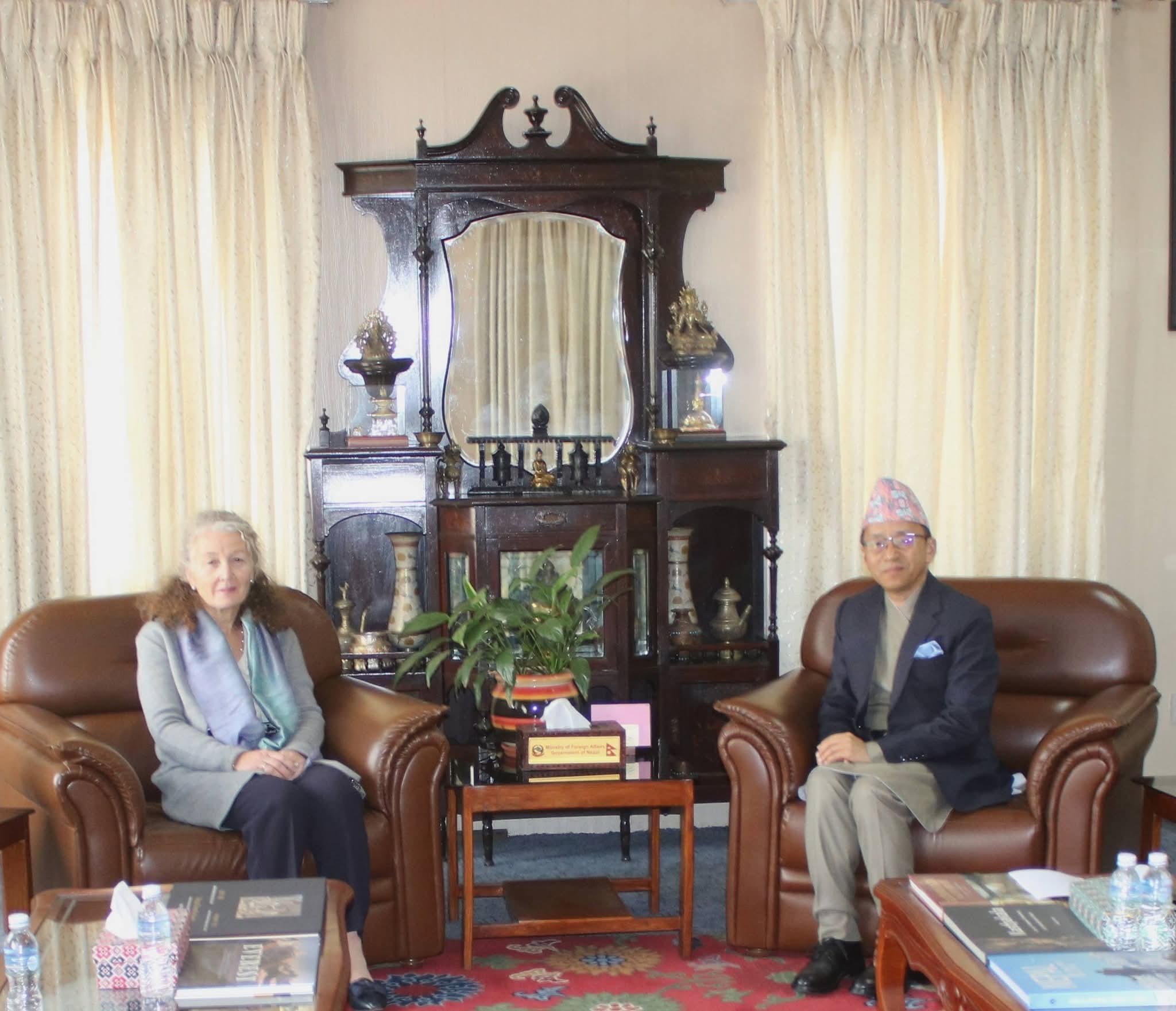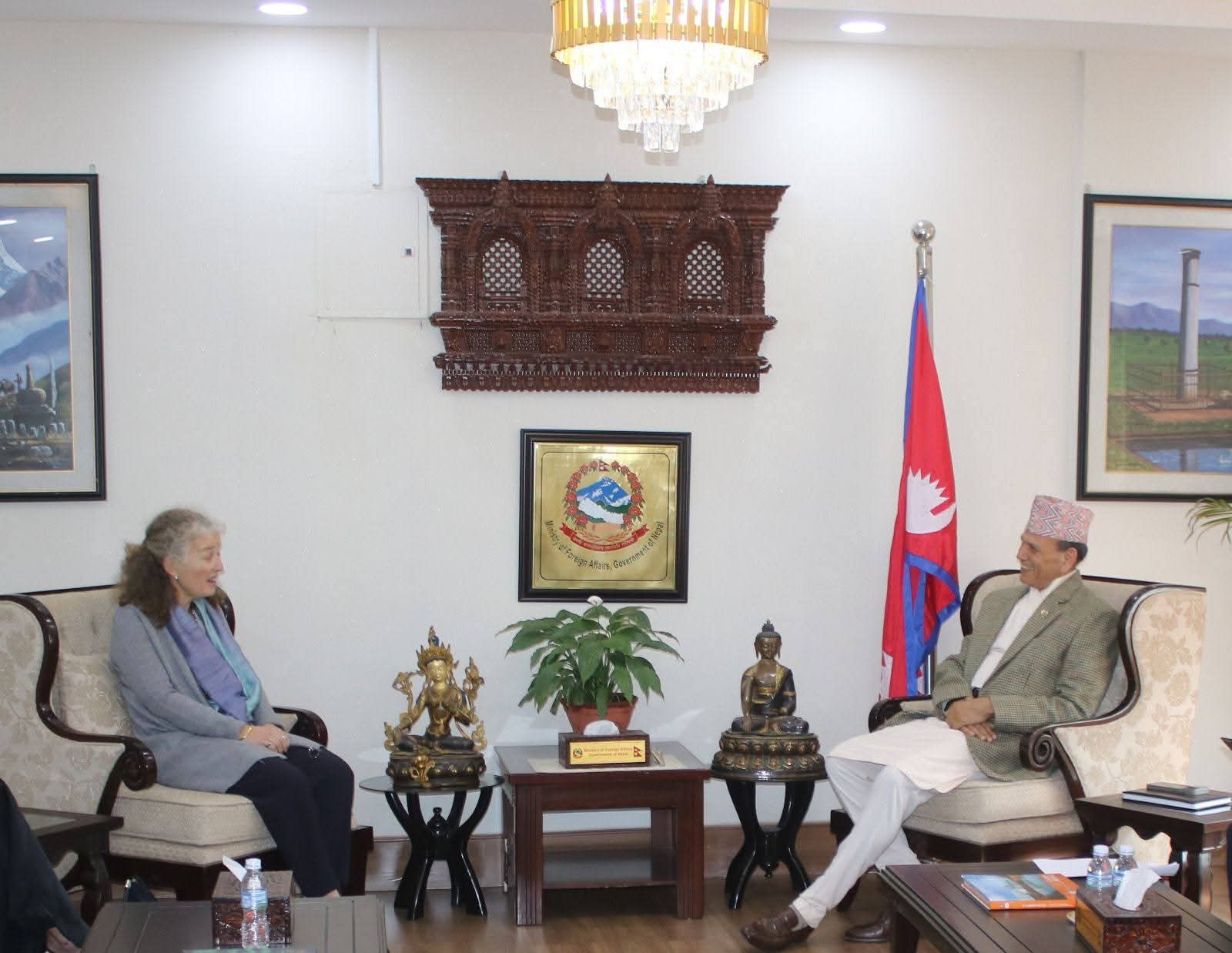
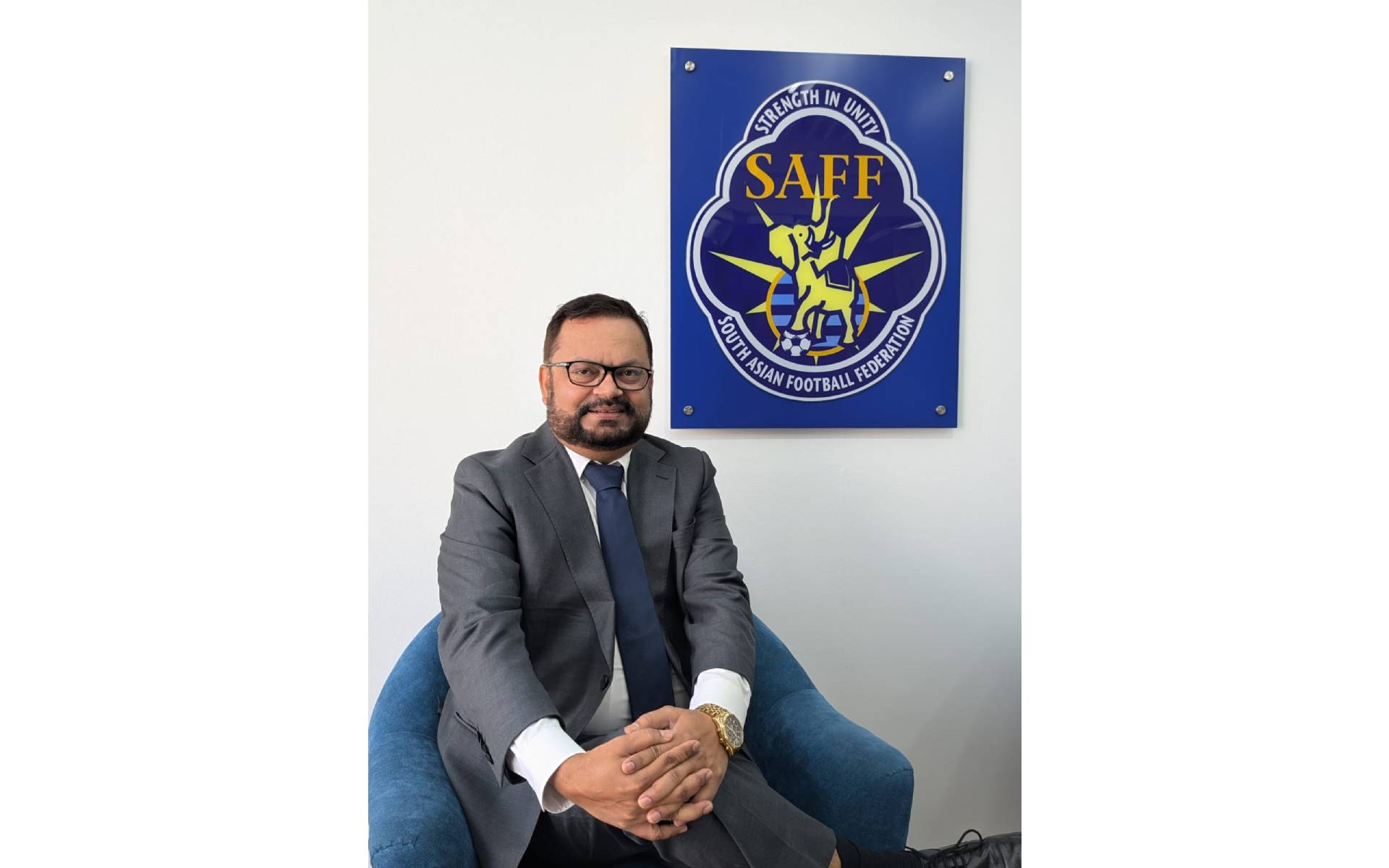
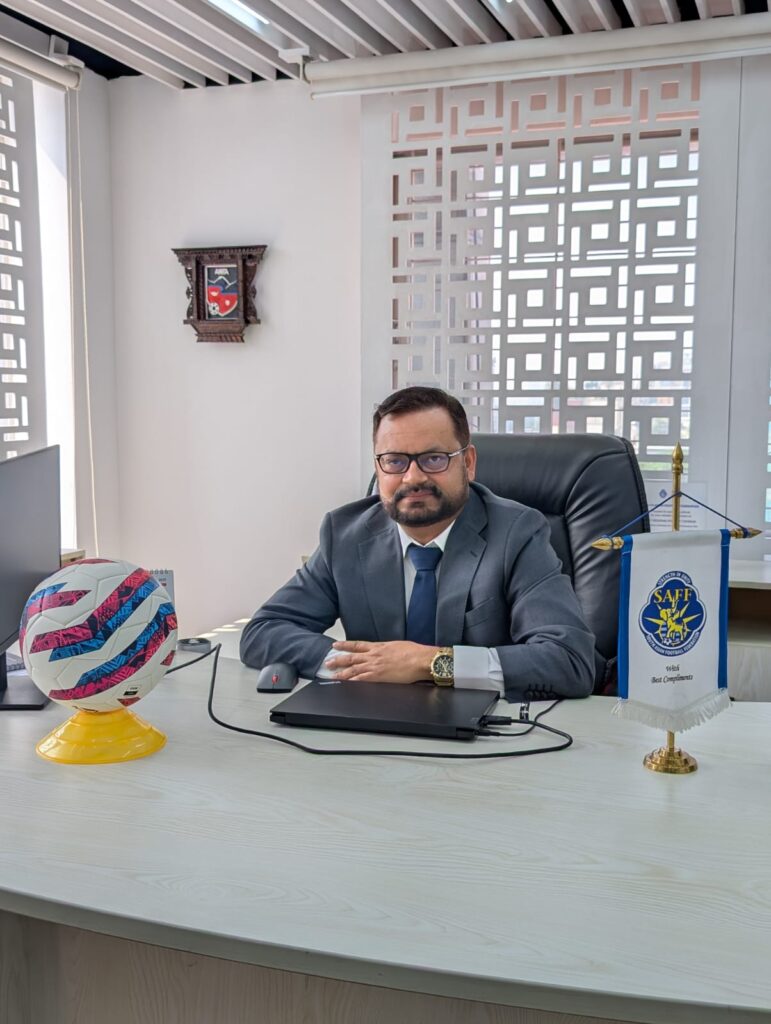
The South Asian Football Federation’s executive committee appointed Mr. Purushottam Kattel as the General Secretary of the federation on April 1, 2025. Kattel,a Nepali citizen, has extensive experience in Asian football. Previously he was the Head of Unit of South Asia at the Asian Football Confederation, where he served for 17 long years. Kattel has experience ranging from handling governance issues as an International Relations Manager to handling various football competitions around Asia. The Diplomat Nepal interviewed Kattel.
1. As the General Secretary of SAFF, what are your goals?
When I joined SAFF back in April 2025, I said that opportunities as well as challenges attracted me but that was a perspective from an outsider. After being here for more than seven months, I see more opportunities than challenges. The South Asian region has more than two billion people, that’s 25 percent of the world. This population needs to be given the foundation to play this most popular game. The goal is very simple, to enhance the capacity on and off the field. Capacity building on the field means organising more competitive international tournaments, and off the field means organising courses and seminars to enhance the capacity of the officials.
For 2026, we have increased the number of competitions from five per year to 11. We are also introducing different kinds of courses such as futsal coaching, video analyst, AFC Pro License, Referee Assessor.
In a nutshell, our goal is to be on par with other regional associations of Asia in terms of organisation, good governance and activities.
2. SAFF has been promoting football in South Asia for decades. How do you see the growth and progress of men’s and women’s football in the region?
SAFF was established in 1997. Until 2017, the organization was limited to organizing Men’s SAFF Championships. Thanks to FIFA, the organisation started getting FIFA’s development fund, FIFA Forward, in 2017. With the support from FIFA and additional support for the administration and capacity building from the Asian Football Confederation (AFC), the number of competitions increased with huge concentration on youth football of both genders. Now you can see players of both genders getting a chance to play competitive international matches. While we may not see the immediate impact of these age-group competition in men’s football, it is evidently clear that these youth competitions are giving a big lift to the women’s game. Bangladesh and India are in AFC Women’s Asian Cup finals and also in the Women’s U-20 Asian Cup finals while there is significant progress for Bhutan, Nepal and Pakistan in the women’s game.
3. How has SAFF collaborated with its member states? How important is the role of member states in achieving SAFF’s goals?
As I said earlier, SAFF’s main objective is capacity building of our member associations who are our direct stakeholders. We cannot function without their support, we need their involvement in our competitions or any other courses and seminars. We complement each other. Strong, stable and active member associations make SAFF stronger. Similarly our activities are directly reflected on the progress made by our member associations.
4. The results have shown that South Asian football teams are still behind other teams around the world. Do you see any chances of a South Asian team playing in the FIFA World Cup in the near future?
Yes, all of us agree that performance on the pitch of the South Asian countries is not up to the standard of many of the countries in Asia as well as in the world. There are many factors behind it. One of the major factors is that in our most of the populous member associations, football is not a top sport unlike the rest of Asia or at the world stage. I am not saying that football is unpopular but young kids taking football as their favorite sport to play are fewer in the populous South Asian country.
In collaboration with member associates, we need to come out with programmes which target young kids at the grassroots level. There are countries who have, with the limited resources and population, made it to the World Cup at least at the age-group or women’s competition so I am a firm believer that we will see South Asian nations playing in the World Cup very soon. Also, the increase of quota allocation for Asia would definitely help the South Asian countries in future.
5. As the General Secretary of SAFF, what is your message to South Asian countries and their football governing bodies?
We should believe in ourselves and continue doing good things. Too much politics, internal and external, is detrimental to our football therefore good governance is the base for all of us. Good governance comes with fair and democratic statutes and regulations, adherence to compliance and transparency. Once our member associations lay a solid foundation then the concentration should be on education and activities. We have a strong population base, and in today’s commercial world, a vibrant market like ours holds immense potential. If harnessed effectively, this population can serve as a valuable financial resource to support and accelerate the growth of football. Therefore, the message is clear: continue investing in making your foundation solid and focus on education and activities, these will yield visible results.