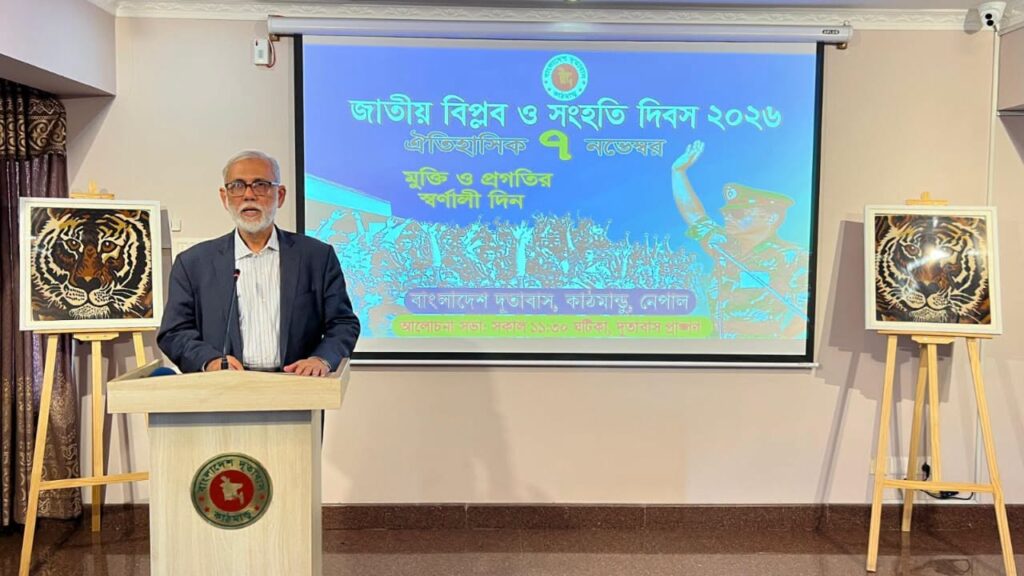
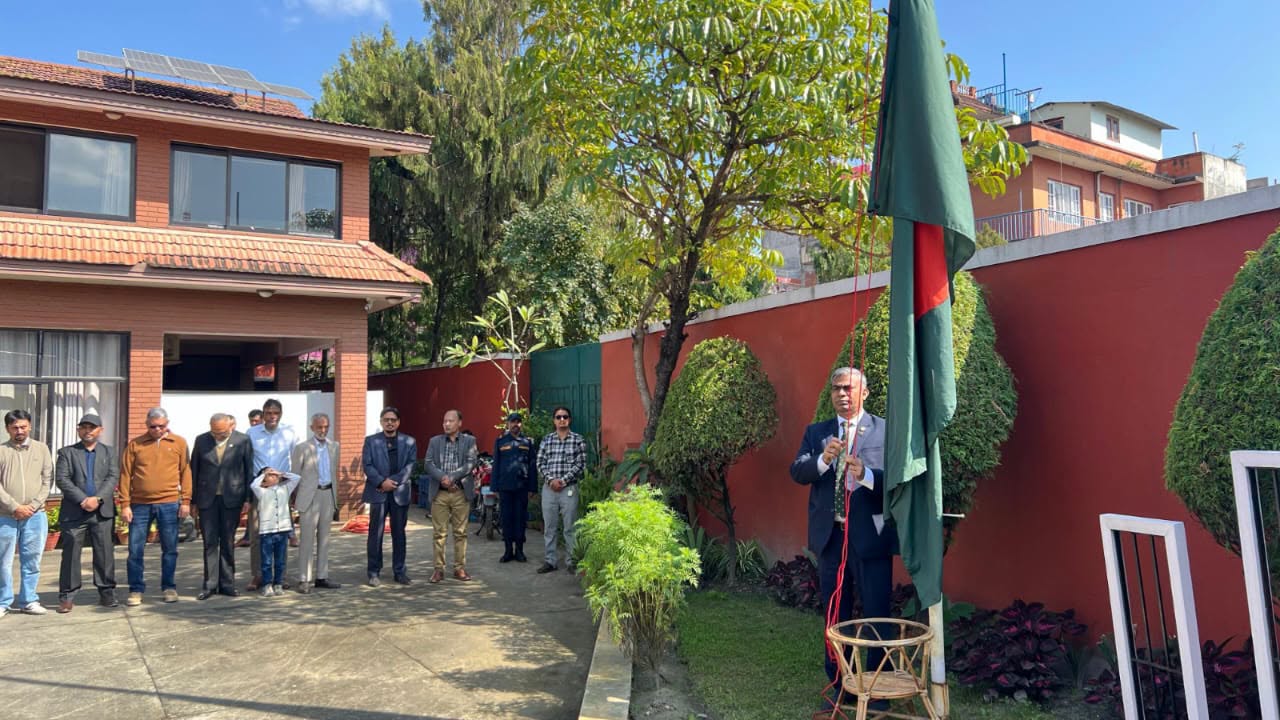
Kathmandu: The Bangladesh Embassy in Kathmandu marked National Revolution and Solidarity Day on Saturday, commemorating the events of November 7, 1975, which it described as a significant turning point in the country’s political history.
The embassy organised a programme attended by around 100 people, including former Nepali ambassadors to Bangladesh, University of Dhaka faculty members, representatives of SAARC, ICIMOD and other organisations, members of the Nepali business community and Bangladeshi nationals residing in Nepal.
The programme began with the hoisting of Bangladesh’s national flag at the embassy premises, followed by the national anthems of Bangladesh and Nepal, speeches, prayers for the martyrs and the country’s peace and prosperity, and the screening of two documentaries on the historical background and significance of the day, the Embassy said in a statement. Messages from the Honorable Bangladeshi president and prime minister were also read out.
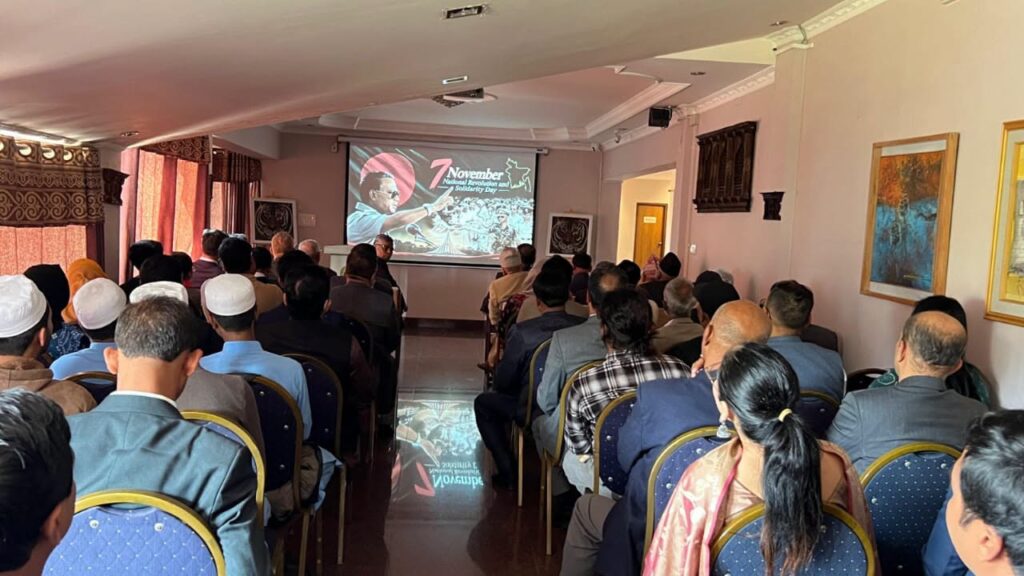
Speakers highlighted the role of Shaheed President Ziaur Rahman in Bangladesh’s nation-building process, particularly in restoring multiparty democracy, freedom of expression and press freedom, and safeguarding national unity and sovereignty.
Addressing the programme, Bangladesh Ambassador H.E. Shafiqur Rahman described November 7, 1975, as a turning point in the country’s political history. He recalled that Ziaur Rahman, the proclaimer of Bangladesh’s independence, was freed from captivity by fellow soldiers and the public on that day and was subsequently entrusted with leading the country through a profound crisis.
The ambassador said Ziaur Rahman’s emergence as a national leader helped restore and protect Bangladesh’s independence and sovereignty and establish the rule of law.
He also highlighted Ziaur Rahman’s legacy of production-oriented politics and the “Bangladesh First Policy,” saying his approach shifted the country’s political focus from rhetoric towards development and introduced Bangladeshi nationalism into policy formulation.
“Emphasising national unity, solidarity and patriotism, Rahman called on the Bangladeshi expatriate community to support the government’s efforts to strengthen national institutions, develop infrastructure, improve connectivity and contribute to national development.”