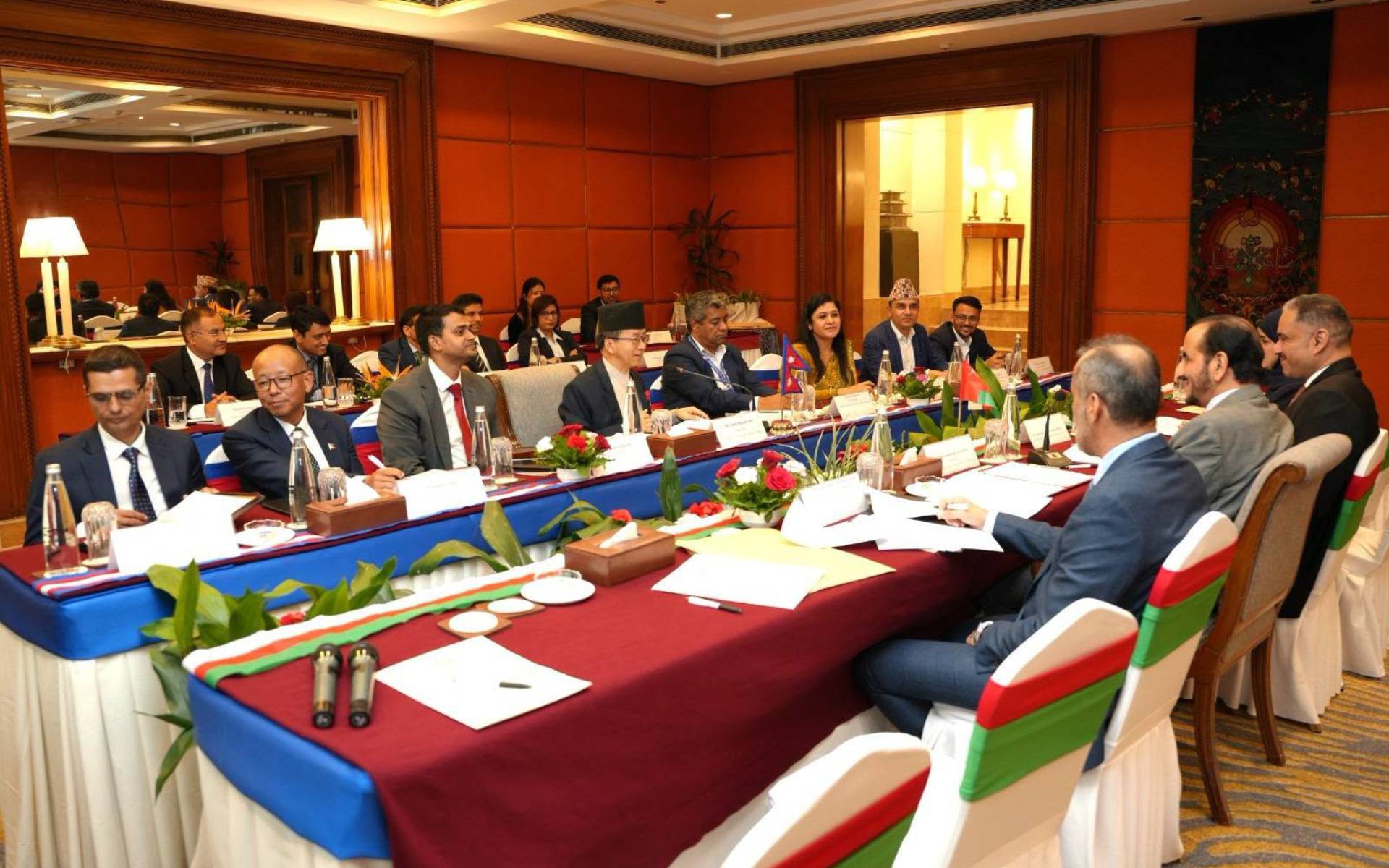

Kathmandu: The American Chamber of Commerce in Nepal (AmCham Nepal), in partnership with Cross River Bank, convened a high-level roundtable on June 27. This round table brought together Chief Executive Officers of Nepal’s leading commercial banks, private equity and venture capital investors, hydropower developers, fintech entrepreneurs, non-resident Nepali (NRN) investors, and former ambassadors to explore how Nepal can strengthen its financial infrastructure, expand access to international capital, and enhance its position as an investment destination.
Held under the Chatham House Rule, the invitation-only dialogue created a confidential forum for senior leaders to exchange perspectives on Nepal’s evolving investment landscape and identify practical priorities for strengthening the country’s financial ecosystem.
AmCham Nepal stated that the roundtable marked an important milestone, representing the first time the Chamber has convened senior leaders from Nepal’s banking, investment, and private sectors for a dedicated discussion focused on expanding Nepal’s connectivity with global capital markets.
The discussion was led by Pravesh Rijal, Executive Vice President of Cross River Bank, and Henry Pinnell, Head of Investment Banking at Cross River Bank, who travelled from New York to participate in the dialogue.

A Shared Vision for Nepal’s Next Phase of Financial Development
Throughout the discussion, participants examined the financial infrastructure required to support Nepal’s long-term economic growth and improve access to international investment.
The dialogue centred on a fundamental question:
How can Nepal strengthen its financial ecosystem so that global institutional investors view the country as an increasingly competitive destination for long-term investment?
Participants agreed that Nepal possesses significant economic strengths, including approximately USD 23 billion in foreign exchange reserves, trillions of Nepalese rupees in banking system deposits, and more than USD 13 billion managed by provident funds, pension funds, and insurance companies.
Despite these substantial domestic financial resources, participants noted that Nepal continues to attract foreign direct investment below its long-term potential. Data presented during the discussion indicated that only around 39 percent of committed foreign investment has been implemented, underscoring the need to improve investment execution and strengthen the country’s financial architecture.
Rather than focusing on capital availability alone, the discussion emphasized the importance of developing the financial systems that enable capital to be deployed efficiently, investment risks to be appropriately priced, and long-term institutional investment to participate with greater confidence.
Key Priorities Identified During the Roundtable
AmCham Nepal and Cross River Bank stated that participants identified several strategic priorities that could strengthen Nepal’s investment ecosystem and improve its competitiveness within regional and international capital markets, including:
They further stated that these priorities were widely recognised as important building blocks for increasing both domestic capital mobilisation and international investor participation.
Energy as a Strategic Investment Opportunity
Nepal’s hydropower sector featured prominently throughout the discussion.
Participants observed that accelerating global demand for electricity—driven by artificial intelligence, digital infrastructure, advanced manufacturing, and electrification—is reshaping investment priorities around the world.
While many regions in North America, Europe, and Australia face extended waiting periods for new electricity connections, Nepal is steadily moving toward surplus electricity generation, creating opportunities to support future industrial development and attract international investment.
The discussion also addressed structural challenges affecting investment in the sector, including project return frameworks, foreign exchange considerations, and the importance of improving risk-adjusted returns for international institutional investors.
Participants explored opportunities to create greater long-term value by integrating renewable energy with complementary industries such as hyperscale data centres, artificial intelligence infrastructure, green hydrogen, green ammonia, and cross-border electricity trade.
Artificial Intelligence and Nepal’s Digital Economy
Artificial intelligence was identified as another significant opportunity for Nepal’s future growth.
Participants discussed how AI is reducing barriers to entrepreneurship, accelerating innovation, and enabling companies to compete globally with significantly lower capital requirements than in previous decades.
Nepal’s young workforce, expanding technology sector, growing IT exports, and increasing participation in international digital services were recognised as strong foundations for future economic growth.
The discussion highlighted the importance of continued investment in digital skills, innovation, and technology infrastructure to support Nepal’s long-term competitiveness.
Expanding the Role of the Global Nepali Diaspora
Participants also explored opportunities to strengthen investment participation from the global Nepali diaspora.
While remittance inflows remain an important contributor to Nepal’s economy, the discussion focused on creating structured investment channels capable of directing diaspora capital into productive sectors, supporting entrepreneurship, infrastructure development, and long-term economic growth.
Participants noted that investment vehicles designed around international standards of governance, transparency, and risk management could strengthen confidence among both diaspora and institutional investors.
Continuing the Dialogue
Drawing on its experience in technology-enabled banking and financial infrastructure, Cross River Bank shared perspectives on the systems that support efficient capital formation, investment access, payments, and risk management within modern financial markets.
The roundtable concluded with a shared commitment to continue engagement among Nepal’s financial institutions, investors, policymakers, development partners, and international financial organisations to identify practical initiatives that strengthen Nepal’s financial ecosystem and improve its connectivity with global capital markets.
The organizations stated that the event marks the beginning of an ongoing dialogue focused on supporting Nepal’s next phase of financial market development through stronger collaboration, modern financial infrastructure, and expanded international investment partnerships.