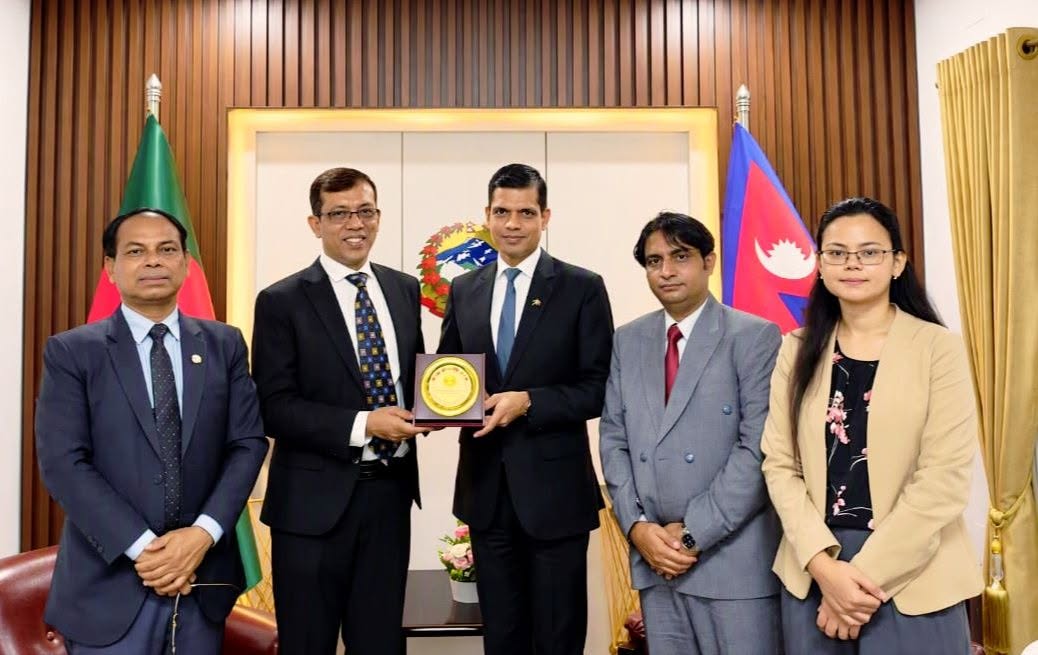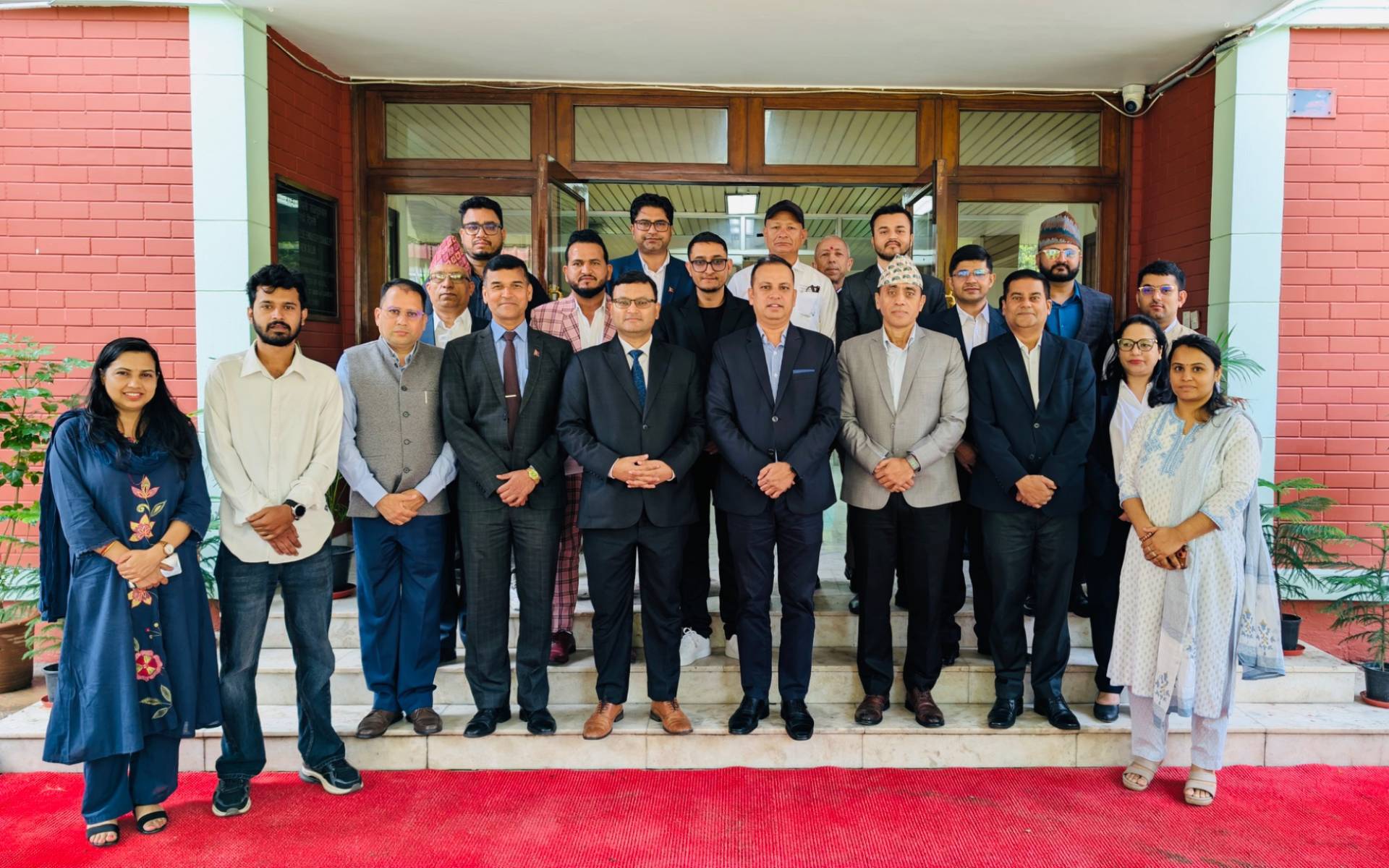
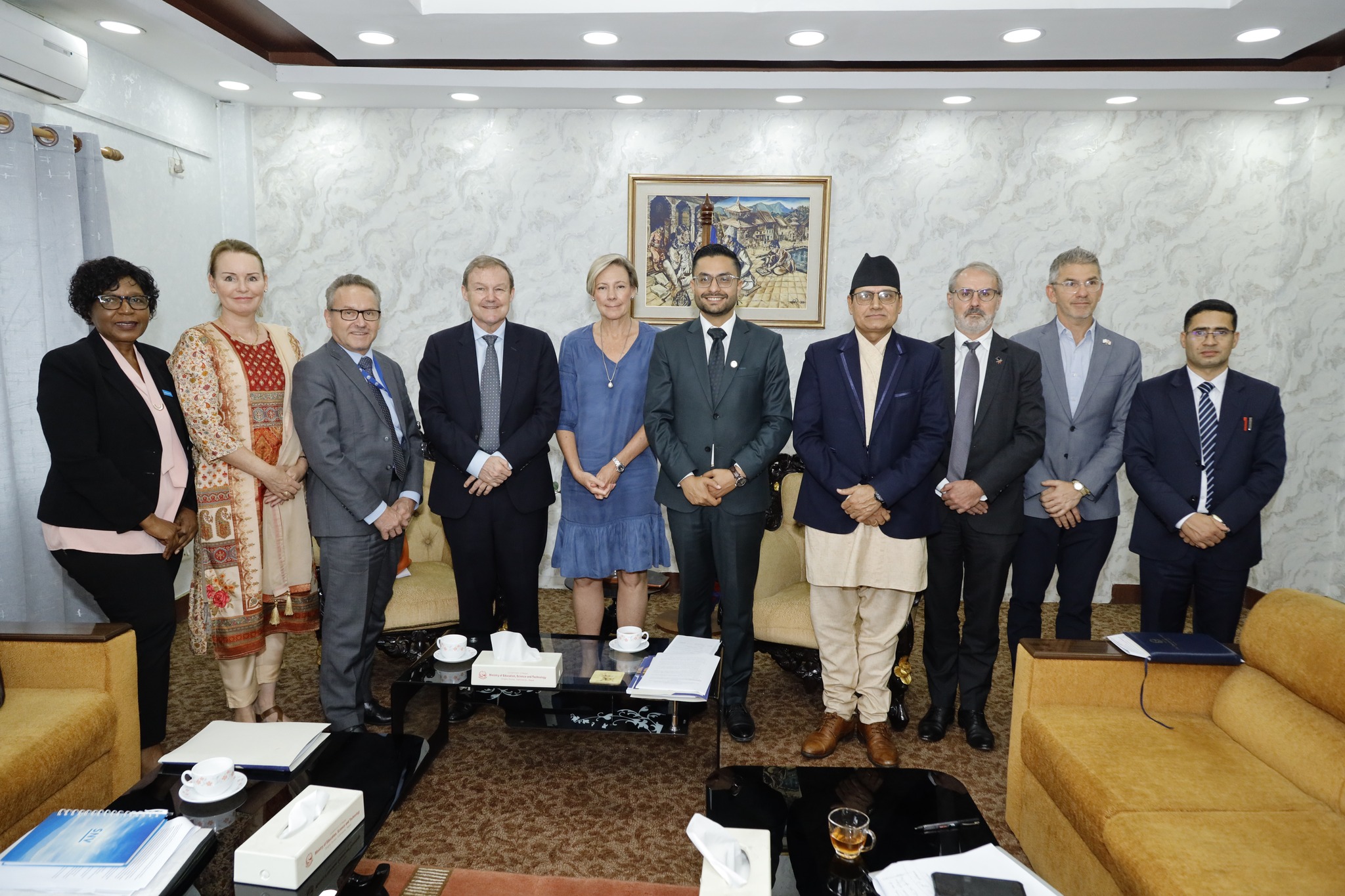
Kathmandu: The Joint Financing Partners (JFPs) supporting Nepal’s School Education Sector Plan (SESP) reaffirmed their shared commitment to the Government of Nepal’s education reform agenda and welcomed the continued leadership of the Ministry of Education and Sports (MoES) in advancing the Education Sector Wide Approach (SWAp) during the opening session of the SESP Budget Review Meeting (BRM) and a subsequent high-level meeting with Minister for Education and Sports, Mr. Sasmit Pokharel.
The School Education Sector Plan (SESP) is the Government of Nepal’s flagship education sector programme implemented through a Sector Wide Approach (SWAp), bringing together government institutions, development partners and other stakeholders under a shared framework for strengthening equitable access, quality learning outcomes, inclusion and system resilience across Nepal’s school education sector.
The SESP Joint Financing Partners – comprising the European Union (EU), the Foreign, Commonwealth and Development Office (FCDO), Embassy of Finland (EoF), Royal Norwegian Embassy (RNE), UNICEF, Asian Development Bank (ADB), and the World Bank – expressed appreciation for the Government’s continued commitment to strengthening partnership, transparency, and evidence-based sector planning through the SWAp framework. The partners commended Nepal’s education sector for sustaining progress despite a changing global financing landscape and institutional transitions over the last year.
The discussions during the Budget Review Meeting emphasized the need for continued collective action to address one of the sector’s most pressing challenges: improving foundational learning outcomes for all children. The partners highlighted that while important progress has been made in expanding access and institutionalizing equity and inclusion measures, stronger efforts are now needed to ensure that all children acquire foundational literacy, numeracy, and broader skills required to thrive in an increasingly complex and rapidly changing world.
The Joint Financing Partners welcomed the Government’s announcement that the national allocation to education has increased slightly to 11.11 per cent of the national budget, recognizing that further increased investment remains crucial for continued national commitment to investing in human capital and the future of Nepal’s children.
The Joint Financing Partners also welcomed the commitment made by the Secretary of the Ministry of Education and Sports to support all 753 local governments in having developed and approved local education plans, recognizing this as a major milestone toward more decentralized, evidence-based and equitable education planning and implementation across the country.
In addition, the partners appreciated the Government’s commitment to re-submit the Education Bill to Parliament within the current fiscal year, recognizing the importance of the legislation in providing a stronger legal and policy framework for school education reform, and effective federal implementation.
During the discussions, the Joint Financing Partners reiterated the importance of maintaining focus on accelerating learning achievement through strengthened classroom pedagogy, teacher support, formative assessment, remedial learning approaches, and improved use of data and evidence for decision-making. The partners also emphasized the need to continue building institutional capacity across federal, provincial and local levels to ensure that reforms translate into improved learning outcomes for children in every municipality.
The partners recognized Nepal’s School Education Sector Plan and SWAp as one of the regions strongest examples of government-led sector coordination and partnership. They reaffirmed their shared commitment to continue supporting the Government of Nepal in implementing evidence-based reforms that improve learning outcomes, promote equity and inclusion, strengthen system resilience, and ensure that every child has access to quality education.
The Joint Financing Partners also underscored the importance of preparing children and young people for the future, including through investments in foundational learning, critical thinking, adaptability and digital skills, in response to rapid technological advancements and evolving labor market demands.
The Joint Financing Partners expressed their appreciation to the Ministry of Education and Sports, the Centre for Education and Human Resource Development (CEHRD), provincial and local governments, teachers, development partners and all stakeholders for their continued collaboration and commitment to advancing quality education for all children in Nepal.