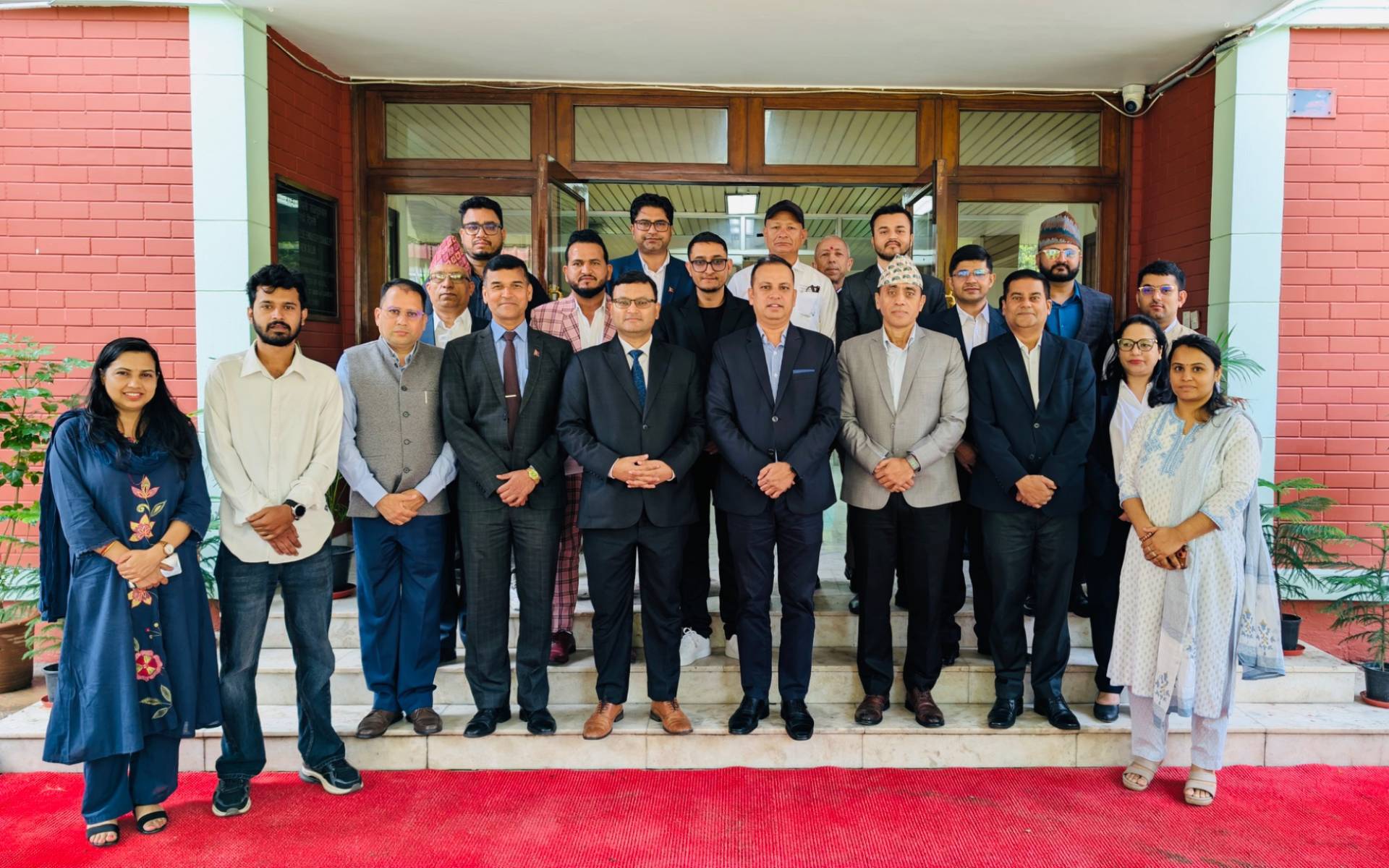
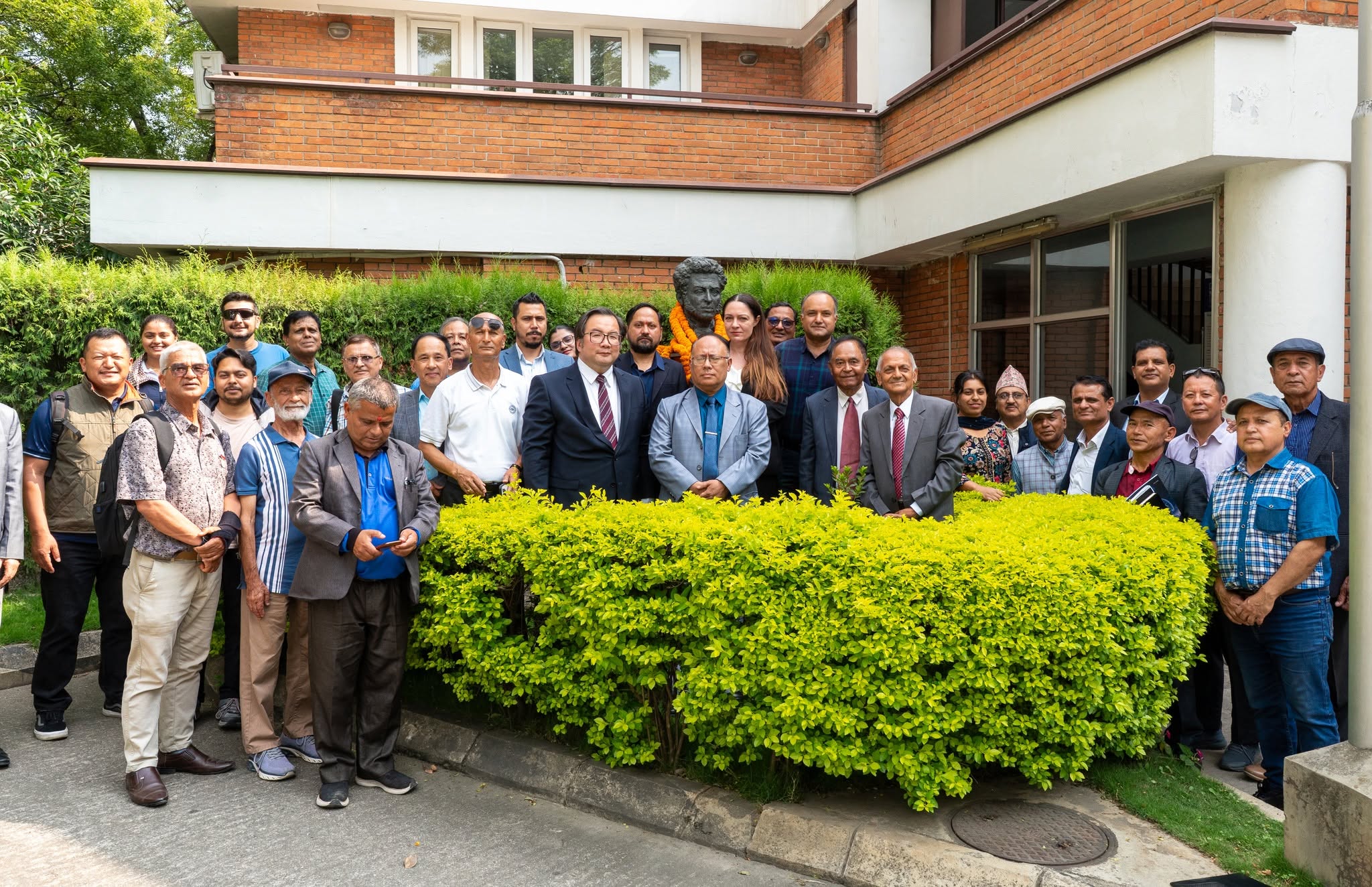
Kathmandu: The Russian House held a literary evening to mark the 227th anniversary of Alexander Sergeyevinch Pushkin’s birth and Russian Language Day on June 5. The evening was attended by 70 literary figures, authors, translators, and representatives of the diplomatic corps. The programme also included the official presentation of the book “Happy Moments” (.खुशीका पलहरु) by Nepali author Chandra Kant Acharya.
The evening began with the traditional laying of floral garlands at Pushkin’s bust, followed by the opening of the photo exhibition “Pushkin and His Tales” on the Russian House’s first floor.
The official part opened with greetings from Moscow, followed by a short biography of Alexander Sergeyevich Pushkin and a talk about the role of the Russian language in the modern world, prepared by Russian scholar Sushil Sigdel of the Russian House. The Russian House stated that one of the highlights of the evening was the poetry readings. More than 15 literary works were presented in Russian, Nepali and English.
Saira Shah, a Russian-language teacher at the Russian House, read Mikhail Lermontov’s poem “The Death of the Poet”. In addition, the poem “From Pindemonte” and many others were performed.
The second major programme item was the official presentation of “Happy Moments” by Chandra Kant Acharya, Vice-President of the Nepal–Russian Literary Society (NRLA). The book is a memoir recounting the author’s life path, the challenges of studying in Nepal and Russia, and the social, economic, cultural and family circumstances of that time.
The main guest, Professor Sushil Bahadur Bajracharya, Vice-Chancellor of Tribhuvan University, emphasized the enduring role of literature in preserving human values and cultural identity. Drawing on his years of study in Russia, he described how Russian culture and literature shaped his intellectual development, and noted that Pushkin’s works continue to inspire readers regardless of generation or borders.
Special guest Rinchen Rakshaev, Counsellor-Minister at the Embassy of Russia in Nepal, singled out Pushkin’s literary legacy as a symbol of the Russian language and culture, embodying universal values of freedom, dignity and human aspiration. “Pushkin is the basis of Russian culture, of the Russian language. There were poets and writers before him and after him, but with his name began the phenomenon and the world’s understanding of Russian literature, Russian poetry. For Russians this is 100%: Pushkin is the foundation of Russian culture”.
He also shared a personal anecdote: when he entered university he had to write essays and memorize hundreds of poems. One of his teachers gave him a “lifehack”: “Study Pushkin and Lermontov – 90% of exam questions will include them”. It proved absolutely true: he learned about 50–60 Pushkin poems, which was enough to pass the literature exam.
The evening closed with remarks from Vishnu Bahadur Singh, president of the Nepal–Russian Literary Society (NRLA), who reaffirmed the enduring literary and cultural ties between Nepal and Russia while celebrating Alexander Sergeyevich Pushkin’s immortal legacy and Russian Language Day.
The literary evening at the Russian House showcased Pushkin as a living symbol of the Russian language, culture, and human values. It also reaffirmed that the cultural dialogue between Nepal and Russia continues to grow, strengthen, and inspire a new generation.
The Russian House gave their special thanks to Nepali poet and writer Ram Bindu Shrestha, Vice-President of Mitra Kunj and General Secretary of the Nepal-Russia Literary Society, for the organization of the evening.