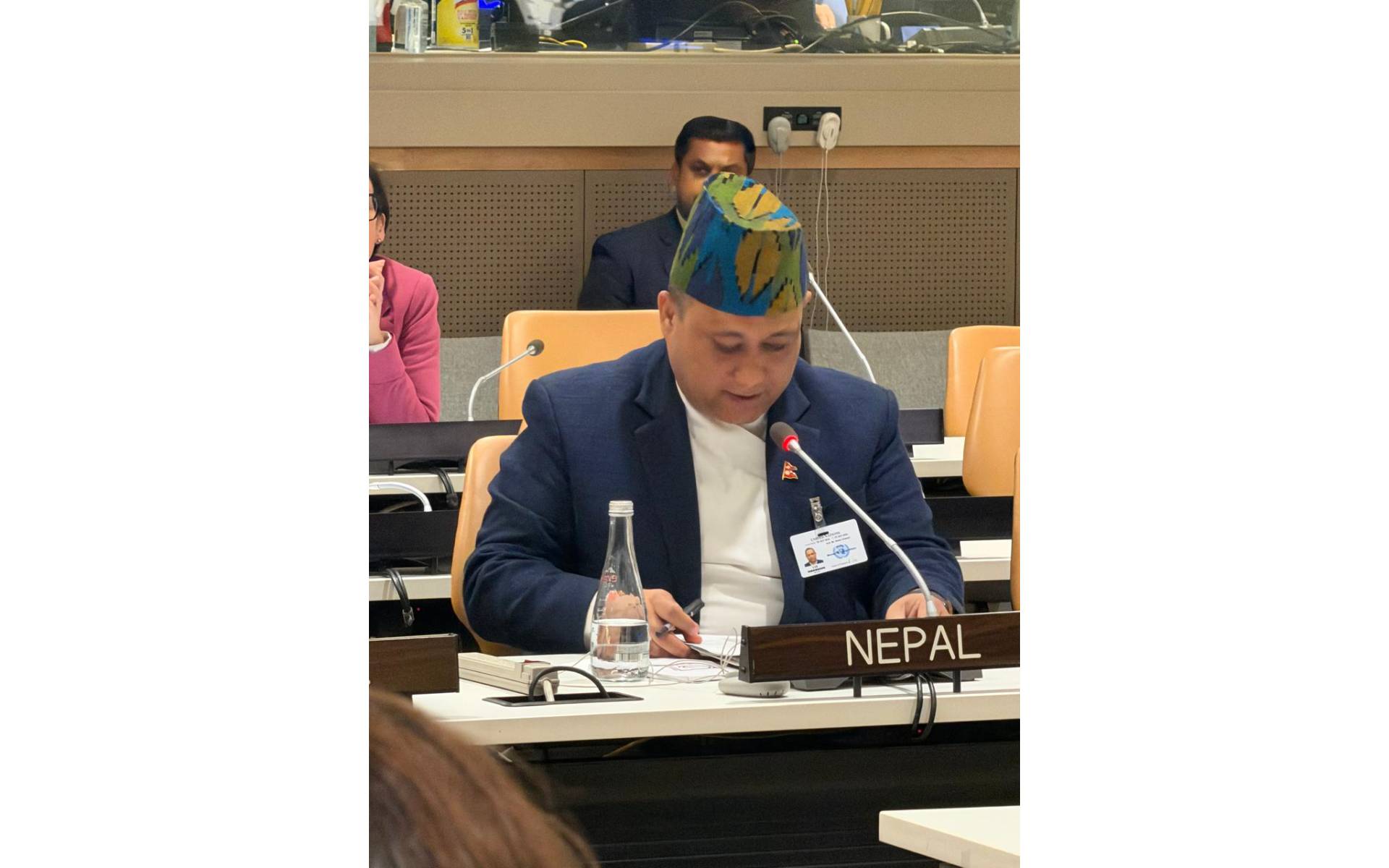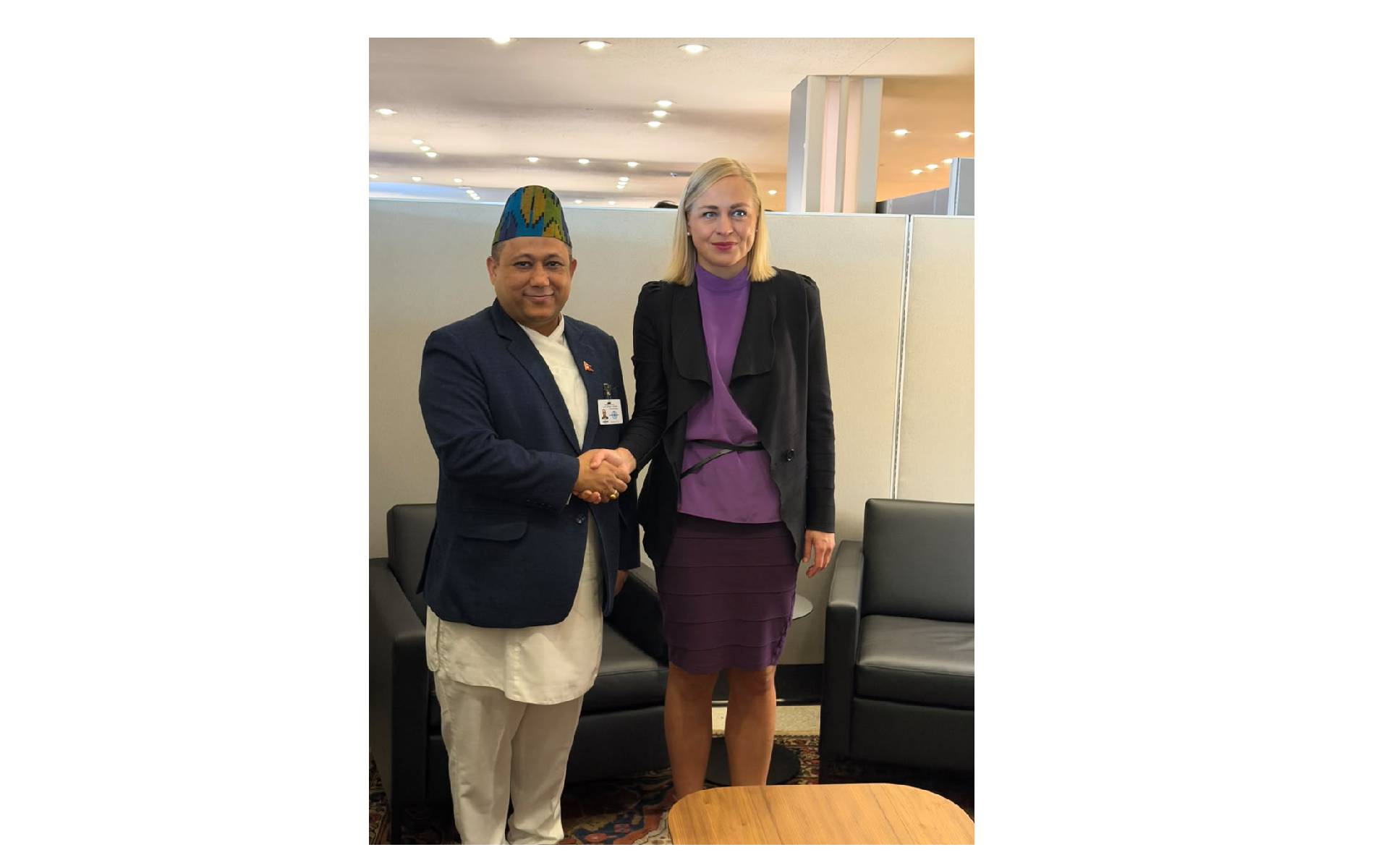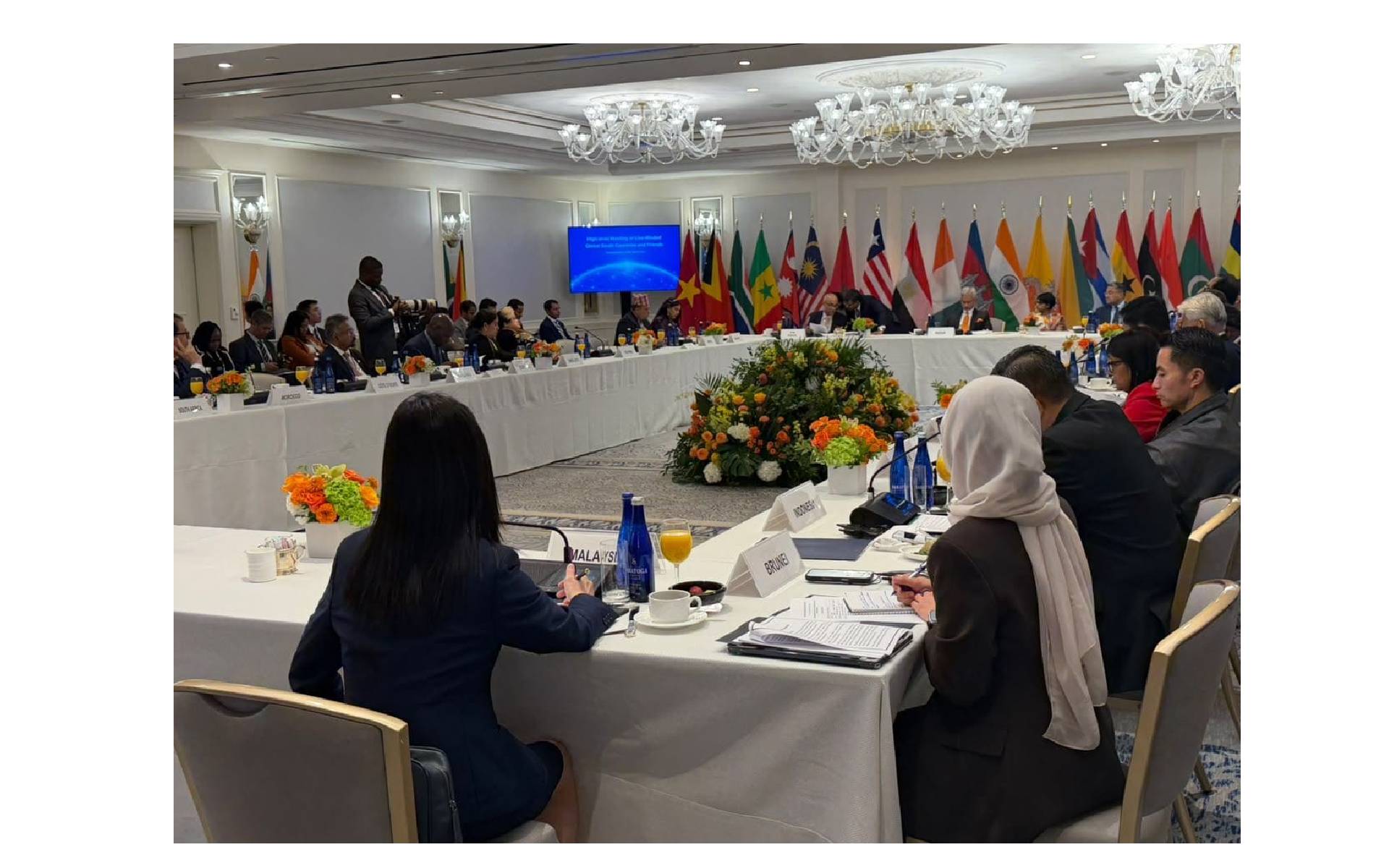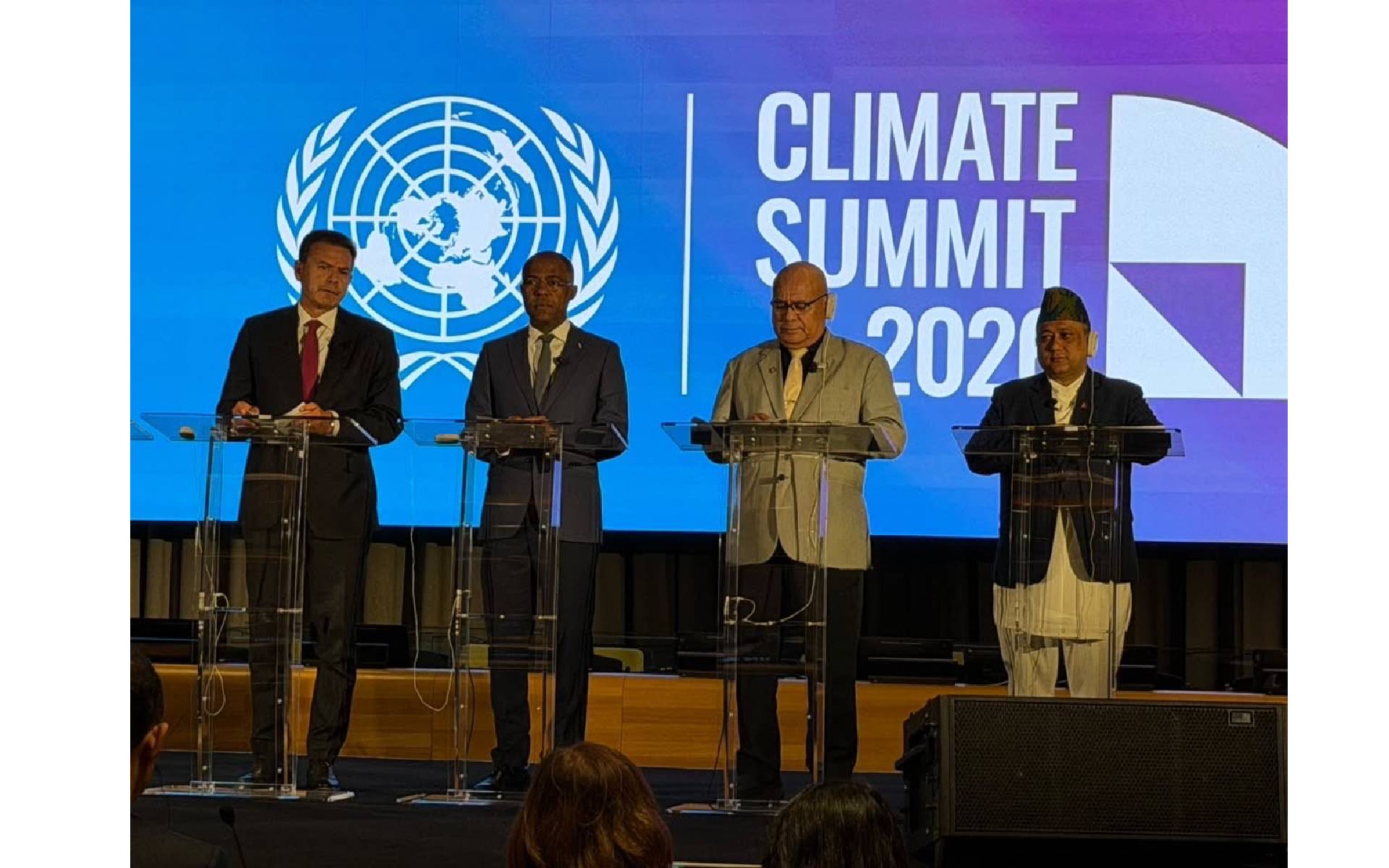
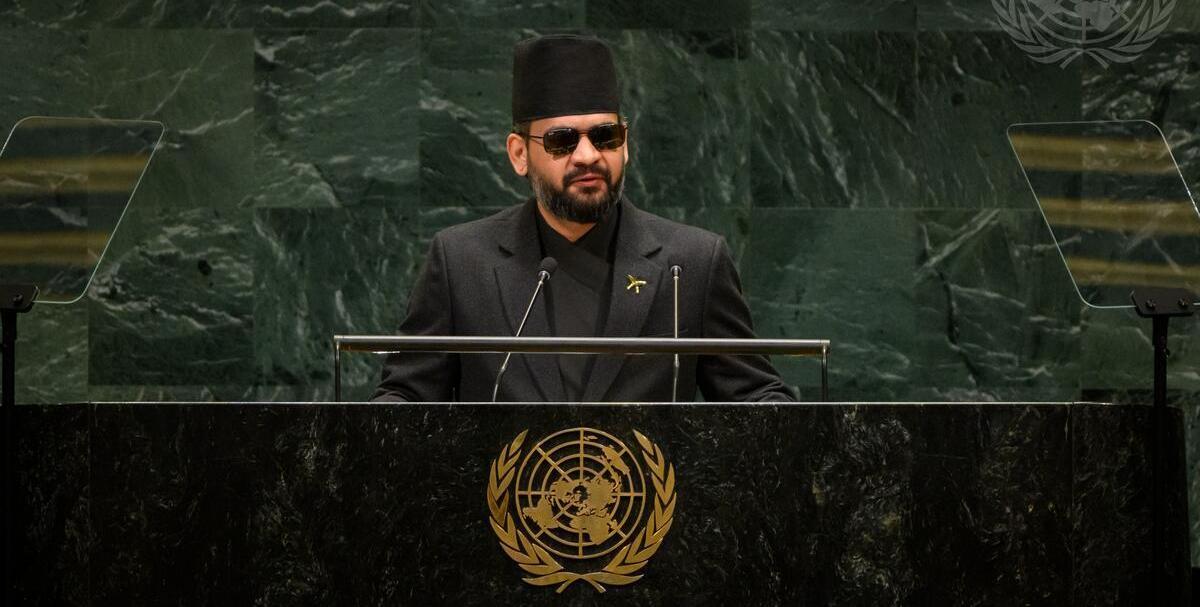
Kathmandu: Rt. Hon. Prime Minister Balendra Shah has called for the establishment of a Himalayan Climate Resilience Mechanism led by Nepal, India and China, warning the international community that the devastating August 26 floods in Nepal should be treated as a warning of the accelerating global climate crisis.
Addressing the 81st session of the United Nations General Assembly on September 25, PM Shah described the Bhotekoshi-Trishuli disaster as a “Himalayan Tsunami” and said the catastrophe was not merely a local tragedy but “a warning to the world.”
“I come before you from Nepal—a distant country in the Himalayas—carrying a close warning for humanity,” he said, opening his address. He said he had expected to speak about development, democracy, peace and the aspirations of a young nation, but instead had to speak about “death and destruction of epic proportions.”
The disaster, he said, had left families waiting for loved ones who would never return and communities searching through mud, rocks and water for people whose bodies might never be recovered. Roads, bridges, schools, homes and livelihoods were swept away within minutes, interrupting Nepal’s progress towards the Sustainable Development Goals.
PM Shah linked the disaster to the growing vulnerability of the Himalayan ecosystem, arguing that a warming climate is contributing to risks from melting permafrost, unstable mountain slopes, ice-rock avalanches, floods and landslides.
The disaster affected areas on both sides of the Nepal-China border, with floodwaters continuing downstream towards India, he said.
“Climate change does not recognize borders,” Shah said. “Glaciers and floods do not travel with a visa stamped on passports.”
He recalled the warning issued by UN Secretary-General António Guterres nearly three years ago from the vicinity of Mount Everest about the dangers posed by climate change. Shah said the warning had not been translated into action “at the speed and scale that vulnerable people require.”
Shah said Nepal contributes less than 0.1 percent of global greenhouse-gas emissions but is facing severe consequences, including retreating glaciers, increasingly unstable mountain slopes and less predictable rivers.
PM Shah called for greater international support for climate-vulnerable countries, arguing that existing climate-financing mechanisms remain inadequate.
He said Nepal needs substantial grant-based support for recovery, rehabilitation, reconstruction and resilience, rather than relying primarily on loans.
He cited the Loss and Damage Fund, the Global Environment Facility and other climate-financing mechanisms, saying vulnerable countries should not have to navigate lengthy bureaucratic procedures to receive assistance after climate-related disasters.
“When the house is burning, we do not ask the family to complete fifty forms. We act,” he said.
He invoked the principle of common but differentiated responsibilities and respective capabilities under the UN climate framework, arguing that countries that have historically contributed more to climate change and those with greater capacity to respond should do more.
“Climate justice cannot just remain a beautiful phrase in a United Nations document,” he said.
Shah proposed a six-word framework for the international response: “Relief. Rehabilitation. Reconstruction.” followed by “Responsibility. Reparation. Resilience.”
The Prime Minister also highlighted Nepal’s efforts to address climate change, including forest restoration, hydropower development, electric mobility and local-level climate adaptation.
He said Nepal was already playing a global role disproportionate to its contribution to greenhouse-gas emissions, but warned that the country could not build resilience alone against a crisis compounded by weaknesses in global governance.
Shah broadened his address to questions of international economic and political order, arguing that military and economic power too often determines whose voice is heard.
He contrasted the efficiency of global systems supporting military supplies with the difficulties faced by poor countries in obtaining basic agricultural inputs and fuel.
“We have built a world with flawless logistics for war and broken logistics for food,” he said.
He argued that countries across South Asia face interconnected challenges from climate change, economic vulnerability and conflicts beyond their borders.
Concluding his address, PM Shah called for stronger multilateral cooperation and said Nepal wanted a United Nations in which the voices of small and poorer countries could be heard more effectively.
“When the next warning comes from the rooftop of the world,” he said, “let us be ready to hear it, and ready to act.”