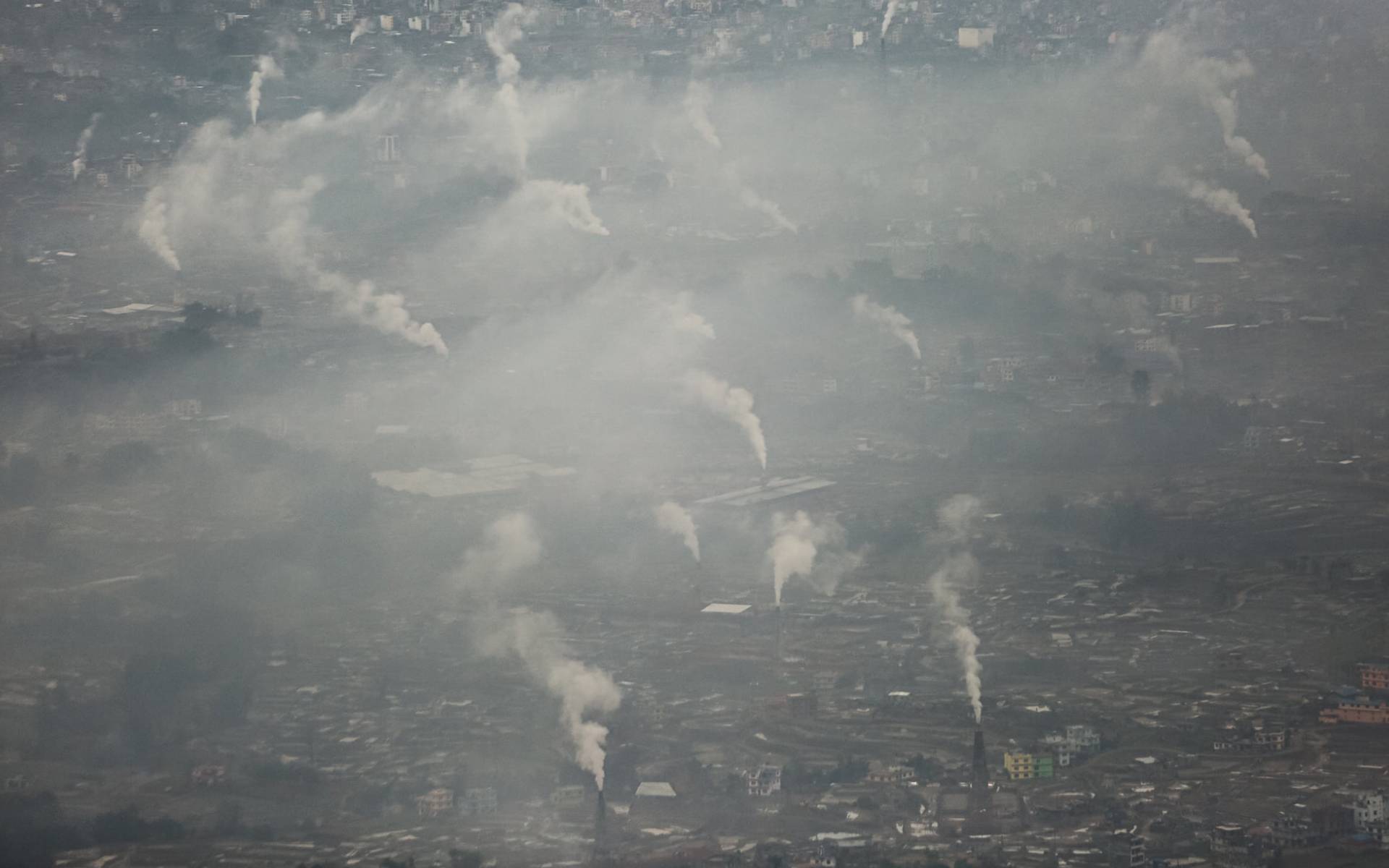
Kathmandu: Air pollution across the Indo-Gangetic Plains and Himalayan Foothills (IGP-HF) is causing severe health and economic damage in South Asia, affecting nearly one billion people, according to a new World Bank report.
The report, A Breath of Change: Solutions for Cleaner Air in the Indo-Gangetic Plains and Himalayan Foothills, states that around one million people in the region die prematurely each year due to air pollution, while economic losses are estimated at nearly 10 percent of regional GDP annually.
The IGP-HF region includes parts of Bangladesh, Bhutan, India, Nepal and Pakistan. The report identifies five main sources of air pollution: household use of solid fuels for cooking and heating, industrial burning of fossil fuels and biomass, emissions from inefficient vehicles, agricultural practices such as crop residue burning and poor fertilizer management, and the burning of waste.
The World Bank highlights several solutions that can be adopted at scale, including electric cooking, modernization of industrial boilers and kilns, expansion of electric and non-motorized transport, improved management of agricultural waste, and better waste segregation and recycling systems.
The report groups clean-air solutions into three key areas: reducing emissions at the source, protecting public health through stronger health and education systems, and strengthening institutions through effective regulations, market-based instruments and regional cooperation.
Senior Environmental Economist at the World Bank, Martin Heger, said the report offers a practical roadmap for governments, businesses and households to adopt cleaner technologies and practices. He added that there are strong economic and financial incentives to shift toward cleaner solutions.
World Bank Practice Manager for Environment in South Asia, Ann Jeannette Glauber, stressed the need for sustained collaboration, financing and strong implementation at local, national and regional levels to achieve cleaner air and save millions of lives.