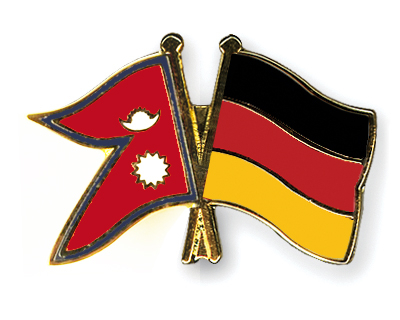
Nepal-Germany relations go back to the late 1950s. Since the diplomatic relations were established in April, 1958, Nepal and Germany have cultivated a close and multifaceted partnership with excellent government-to-government collaboration, people-to-people exchanges, immense goodwill and warm feelings for each other. Germany was one of the countries open for business for Nepalis during the time when Nepal had business ties with limited countries in Europe. Nepal’s carpets were famous in Germany and Nepal used to be a key carpet exporter to Germany. Nepali handicrafts were exported via Germany to the European market.
Germany has been a key contributor to Nepal’s technology transformation, cleanliness and city development projects. Bhaktapur is famously portrayed as ‘Asia’s Rome’ for its ancient crafts and cultures. Germany inspired the locals and helped to restore the cultural heritage in Bhaktapur. While Nepal exports handmade woolen carpets, garments, wooden and bamboo goods, silver jewelry, tea, coffee, and organic spices among others to Germany, Nepal receives from Germany machinery, medical and surgical equipment, chemicals, and pharmaceutical products. Nepal, however, suffers a trade deficit with Germany, the issue for two countries to sort out by working together.
As a trusted friend of Nepal, Germany has remained steadfast in its support to the country since the days of Panchayat to multiparty-democratic period to the post-federal republic set up. Nepal has maintained close relations with all friendly countries and neighbours. Relations with Germany stand out in that Nepalis share warm and welcoming feelings with Germany and German people.
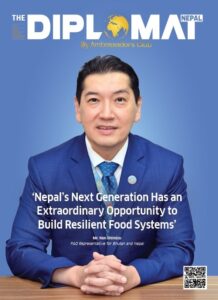
To reinforce this relationship that spans nearly seven decades, we have chosen Nepal-Germany relations as the theme for this edition of The Diplomat Nepal magazine. As our cover story highlights, there are immense potentials in further enhancing multifaceted ties with the economic powerhouse of Europe. While German support to Nepal in its development efforts has been enduring, the high-level visits that kept the relationship between the two countries strong and thriving at one time have become much less frequent in recent times. Revitalizing the high-level exchanges between the two countries could be instrumental in establishing political dialogue and official exchanges at higher levels. H.E. Udo Eugen Volz, the German ambassador to Nepal, has outlined a number of areas of cooperation in the exclusive interview with us. As he rightly points out, Germany can become a major destination for Nepalis for jobs with the number of Nepalis aspiring to go to Germany for studies and jobs steadily increasing in recent years. Besides, producing clean energy from hydro power, in which Germany has lent support, can help Nepal transform its energy landscape.
The legacy of around seven decades of cooperation, goodwill, development assistance, government-to-government relations and people-to-people contacts have laid a solid foundation for the two countries to add bricks to further strengthen the relationship. Nepal can gain a lot by engaging with Germany for technological advancements, preservation of cultural heritage and fulfilment of national aspirations for economic and infrastructural development. As our cover story brings out, for many Germans, Nepal is their favorite tourism destination and one time is not just enough for them. As such, it is important for both countries, more so for Nepal, to nurture decades-old excellent ties built on pure goodwill and cooperation for the benefits of both peoples.