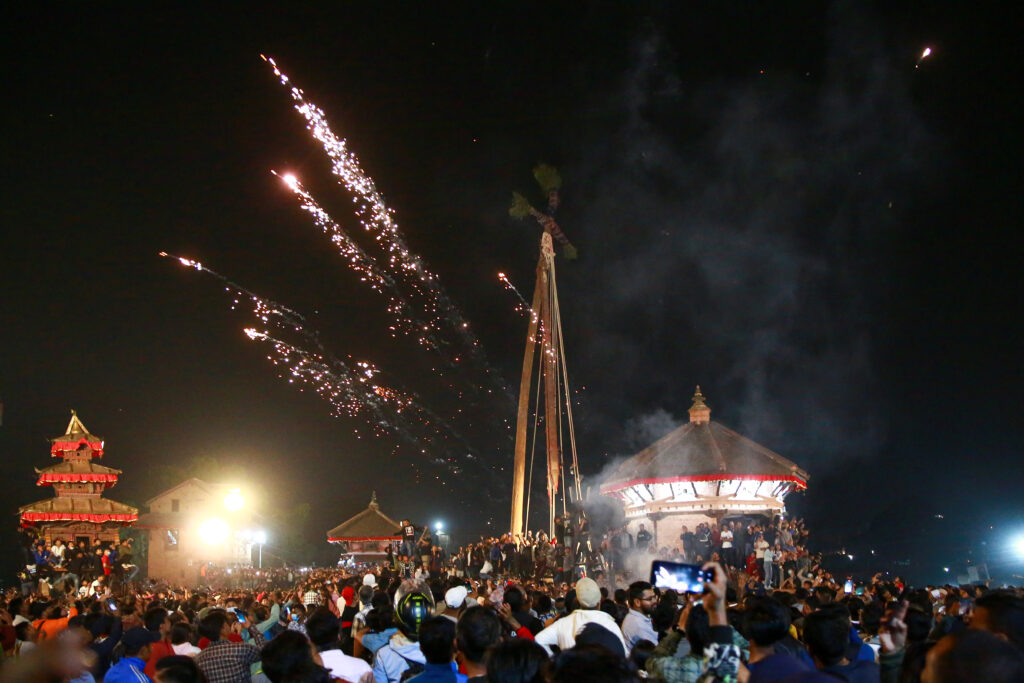
Kathmandu- The historic and culturally significant Bisket Jatra officially commenced in Bhaktapur on April 10, marking the arrival of the Nepali New Year with vibrant rituals and community participation. Locally known as “Biska,” the festival has evolved over time to be widely recognized as Bisket Jatra.
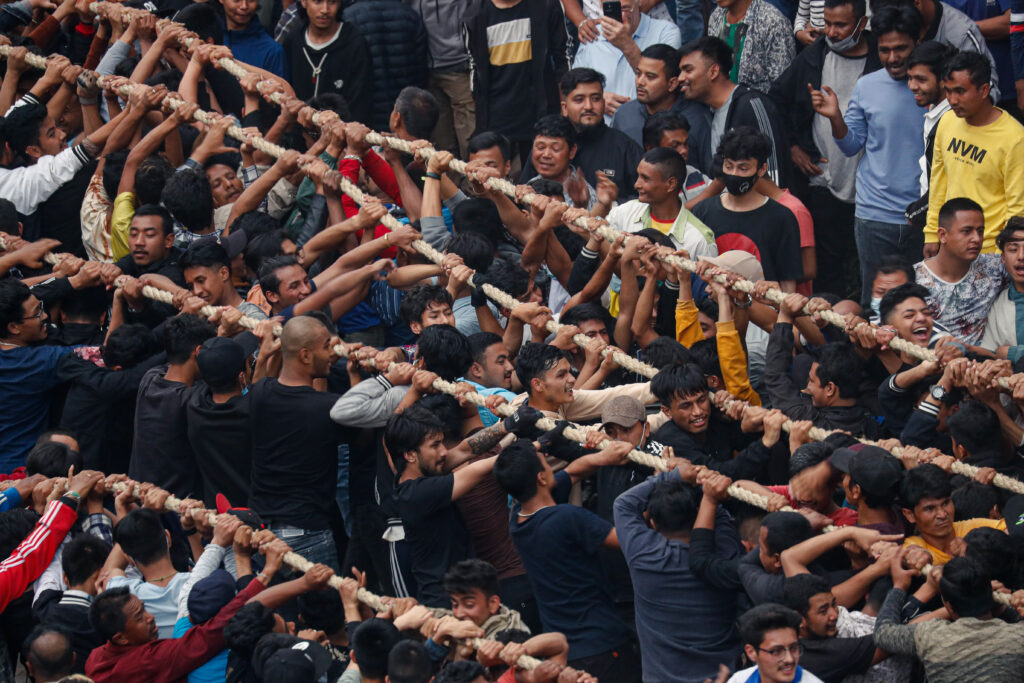
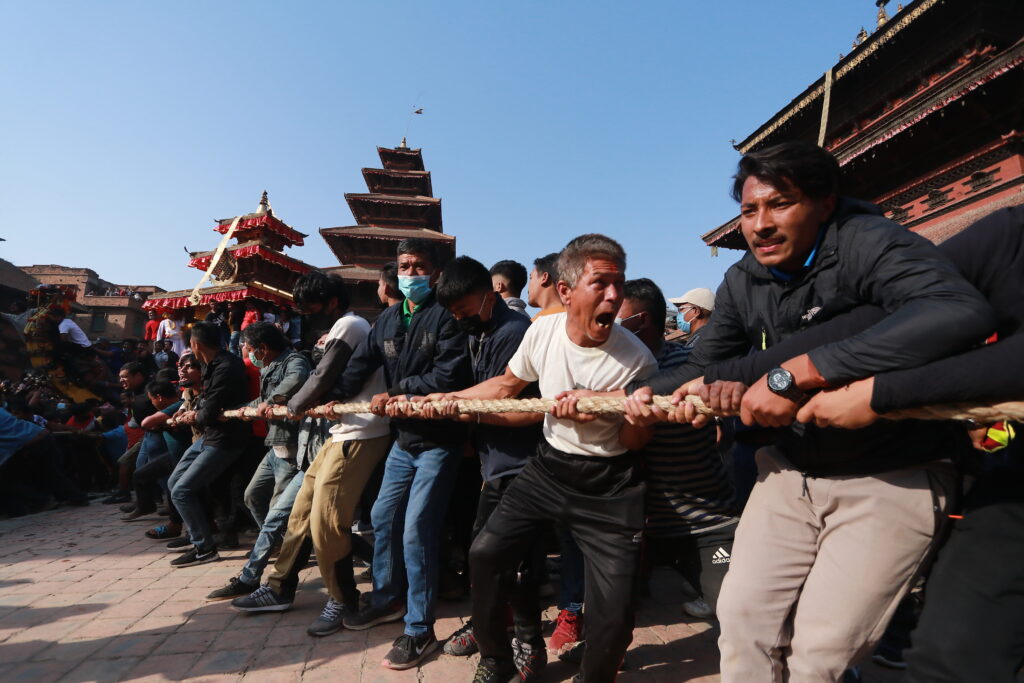
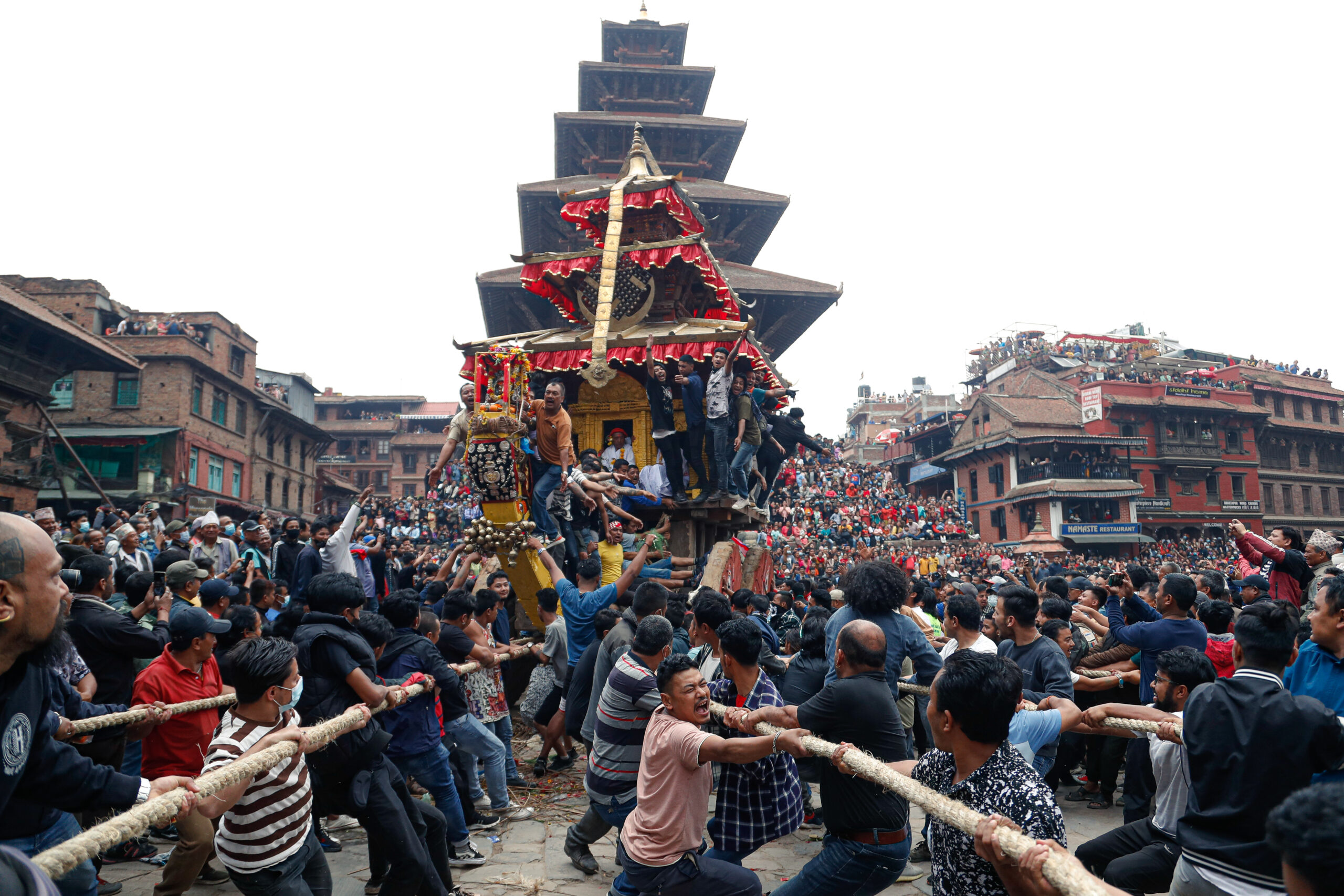
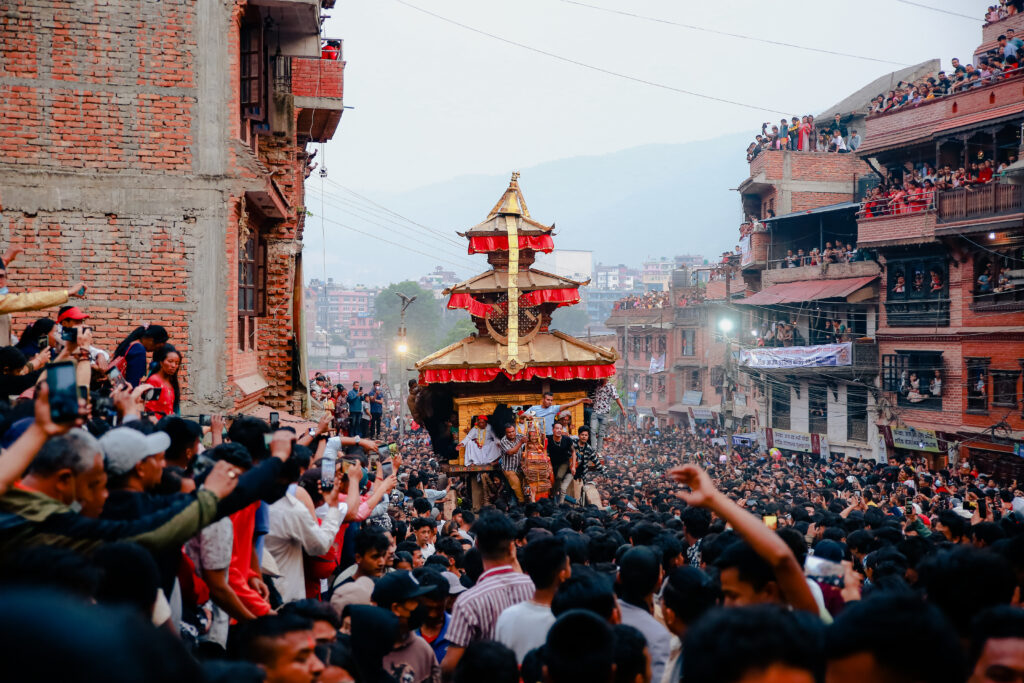
The celebrations began with the ceremonial pulling of the chariot of Bhairavnath, a towering five-tiered pagoda structure stationed in the courtyard of the Bhairavnath Temple in the heart of the city. This inaugural day is traditionally referred to as “Dya Khwaan Bijayaigu,” meaning “the day the deity descends.”
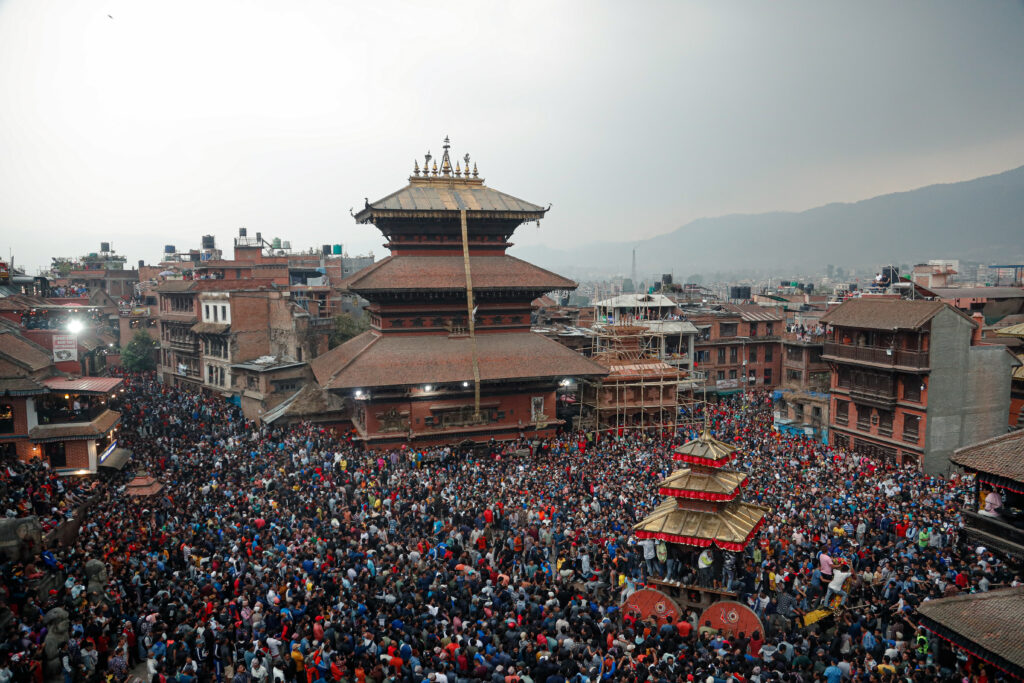
Observed with great enthusiasm, the festival spans eight nights and nine days in Bhaktapur, while nearby Thimi celebrates it over three days. The first day’s rituals include the pulling of the chariots of both Bhairavnath and Bhadrakali, symbolizing divine power and protection.
Rooted in the solar calendar of the Vikram Samvat, Bisket Jatra is believed to date back to the Lichchhavi period. The festival is associated with the mythological belief surrounding the death of a serpent known as “Bisket.”
Cultural historian Purushottam Lochan Shrestha notes that early references to the festival can be traced to historical documents. The term “Bishik,” considered a synonym for “Vishwa Ketu,” appears in a Tamsuk letter from Nepal Sambat 500 discovered in Thimi. Later inscriptions from the reign of Yaksha Malla and subsequent Malla kings such as Jitamitra Malla and Bhupatindra Malla also mention variations of the term, including “Bishikayatra” and “Bishikayat.”
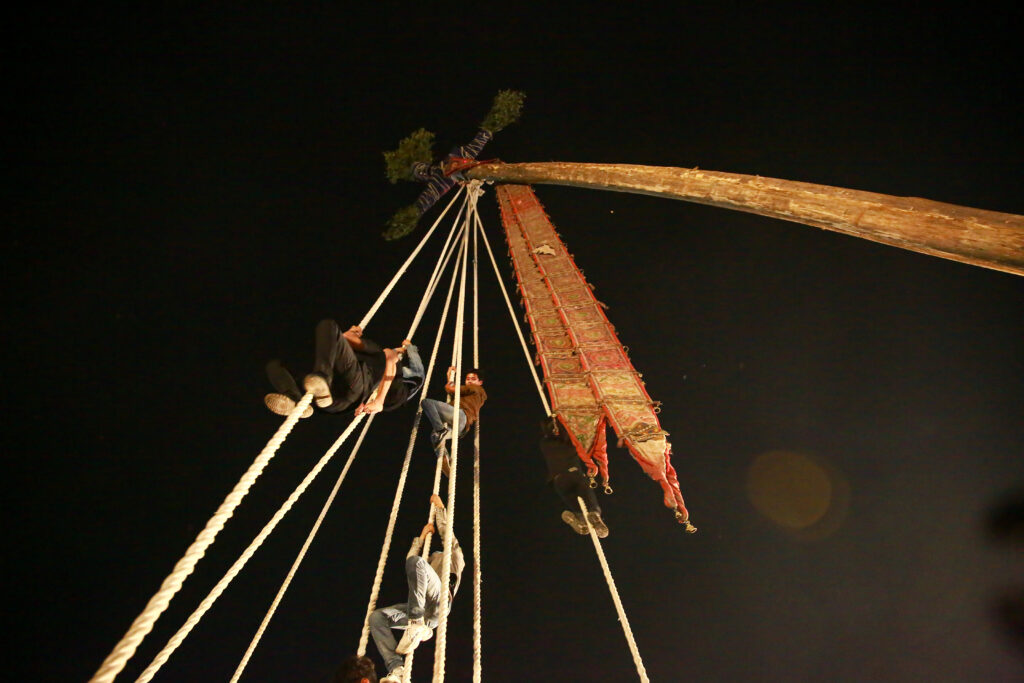
According to Shrestha, the term has linguistic roots in Sanskrit and evolved over time through forms such as Bisika, Biska, and Bisket. He further emphasizes that the festival honors not only Bhairavnath but also his consort Bhadrakali, whose symbolic presence is represented through paired flags raised during the celebrations.
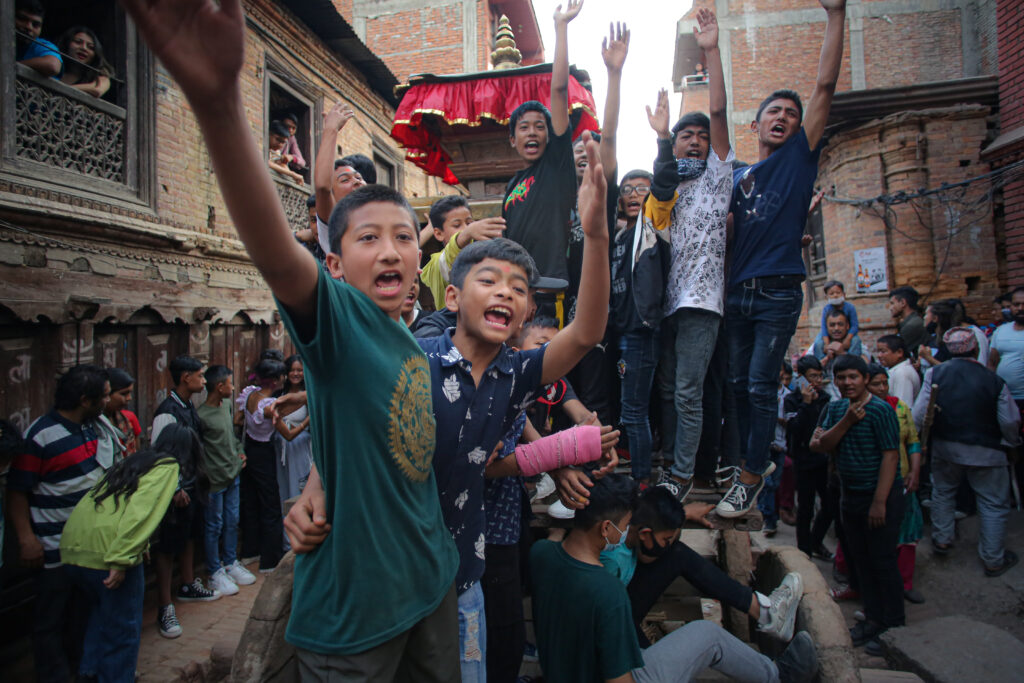
The festival’s central attraction remains the dramatic chariot pulling, held in the Taumadhi area. Locals from the Kwane (lower) and Thane (upper) sections of Bhaktapur compete to pull the chariot toward their respective sides. The community that successfully draws the chariot into its area is traditionally considered victorious.
The opening day concludes once the chariot reaches a designated locality, marking the beginning of several days of ritual, celebration, and communal festivity that define one of Nepal’s most iconic cultural events.