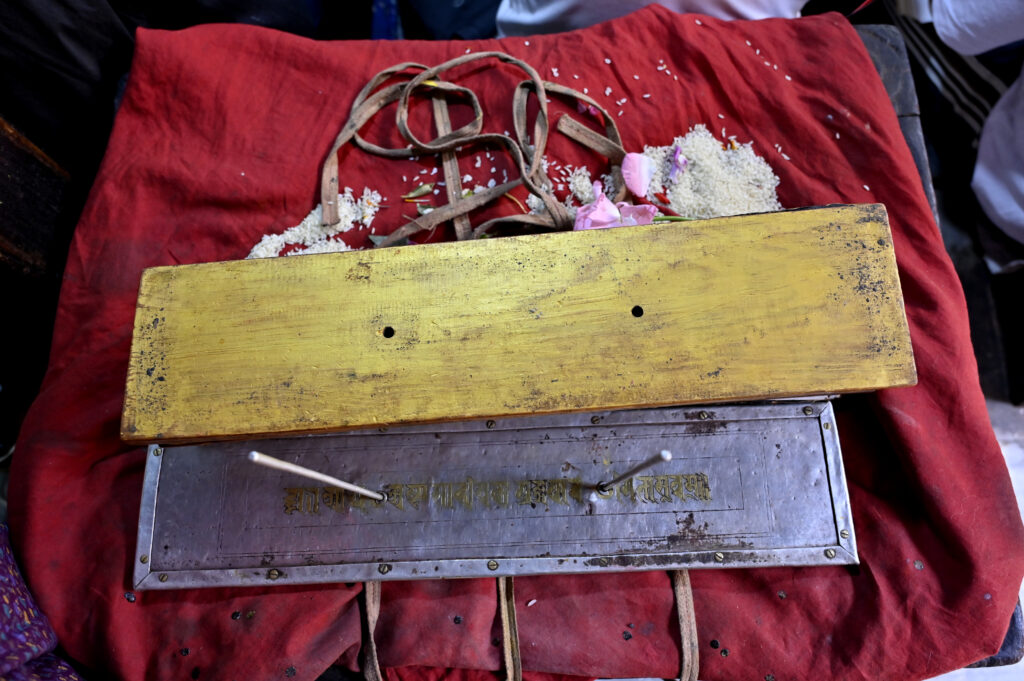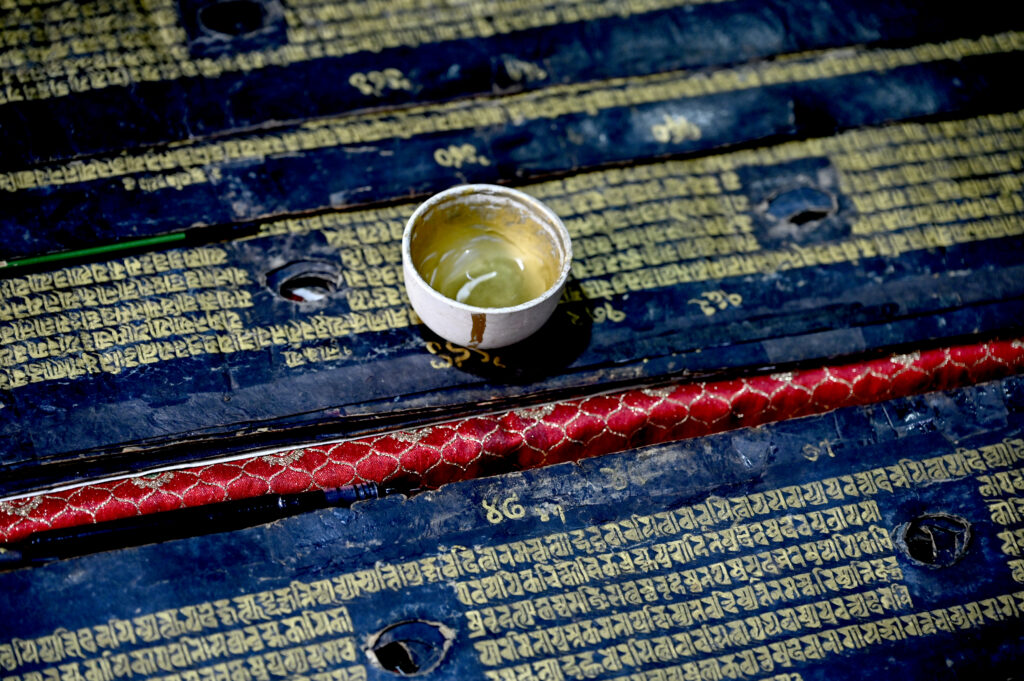
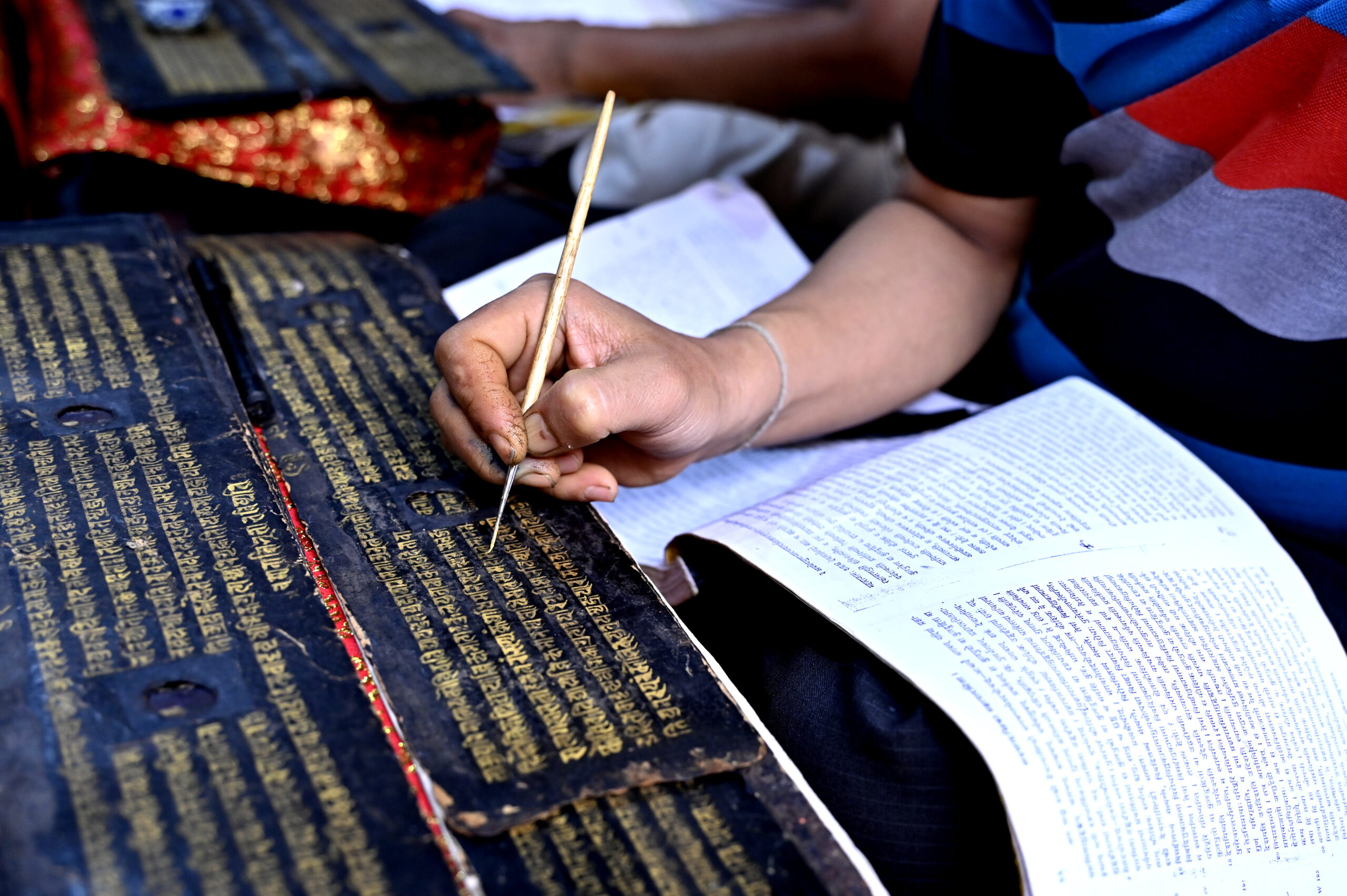
In the historic courtyards of Hiranya Varna Mahavihar (Golden Temple) at Patan Durbar Square, artists are carefully restoring the 800-year-old Buddhist manuscript Pragya Paramita, written entirely in gold.
The sacred text, inscribed in the ancient “Ranjana” script, is believed to date back to the reign of King Abhaya Malla before the unification of modern Nepal. Prepared by the monk Ananda Bhichhu, the manuscript is regarded as one of Nepal’s most treasured Buddhist scriptures.
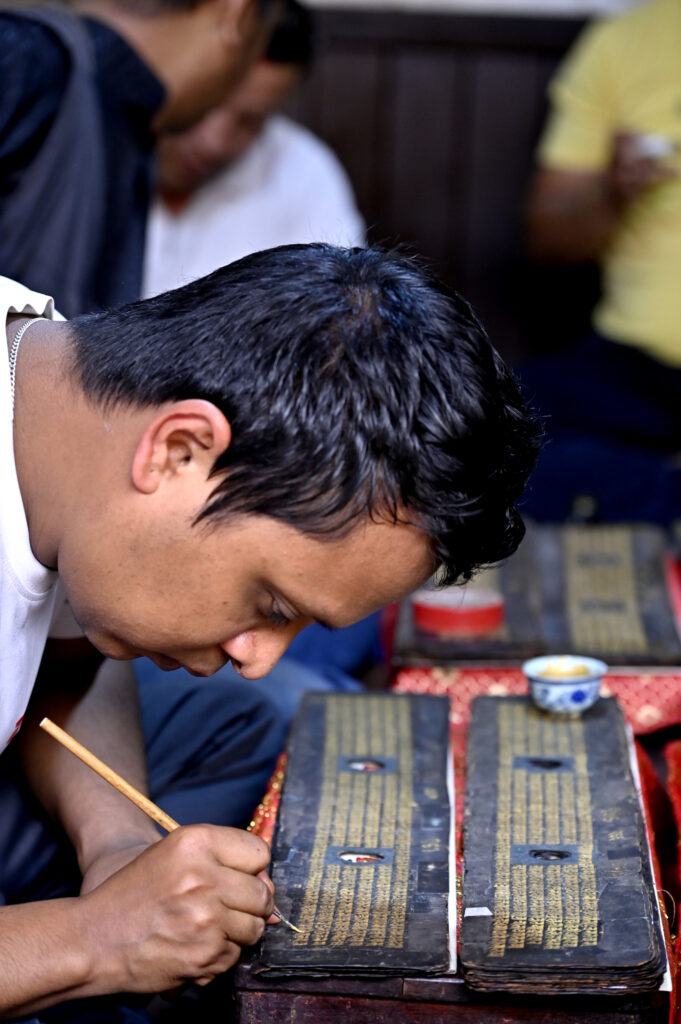
Daily recitation over centuries has caused parts of the golden lettering to fade and deteriorate. During ‘Purusottam Maas,’ also known as ‘Mala Maas’ artists gather to restore the manuscript following a centuries-old tradition.
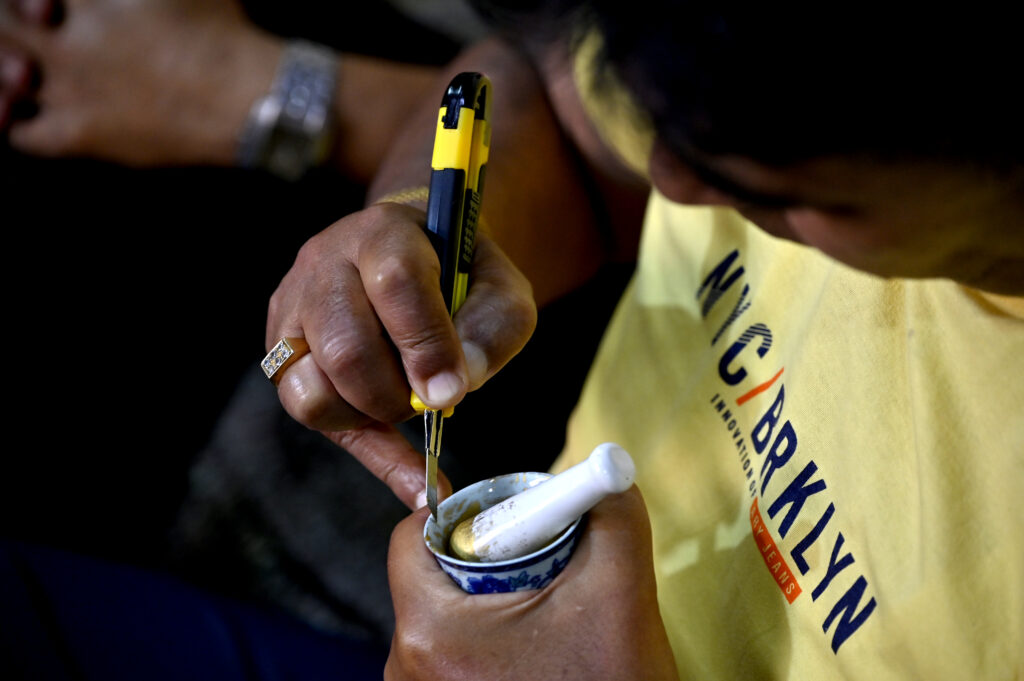
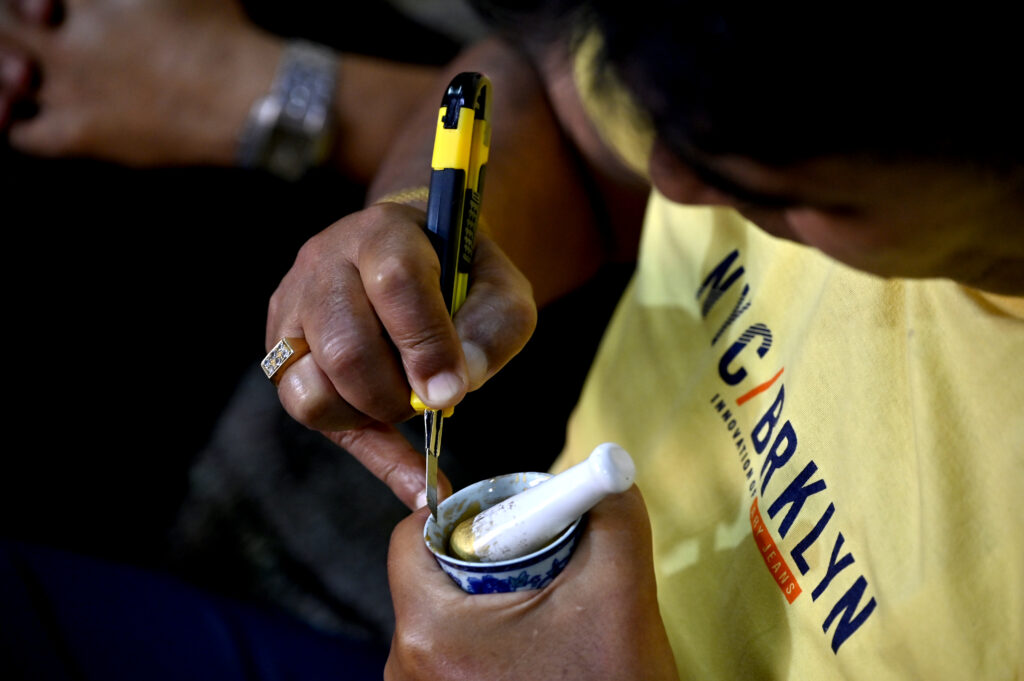
Hem Ratna Bajracharya, one of the artists involved in the restoration, said this is his tenth time participating in the sacred process. “Previously, our fathers and forefathers carried out this work, and we are continuing the tradition,” he said.
The manuscript contains 8,000 verses believed to have been delivered by Gautama Buddha to 1,350 disciples more than 2,500 years ago. The words “Pragya” and “Paramita” together signify the attainment of supreme wisdom in Mahayana Buddhism.
If damaged beyond repair, the manuscript is rewritten on traditional Lokta paper, locally known as “Nepali Kagaj,” made from the fibers of the Daphne Papyracea plant found in Nepal.
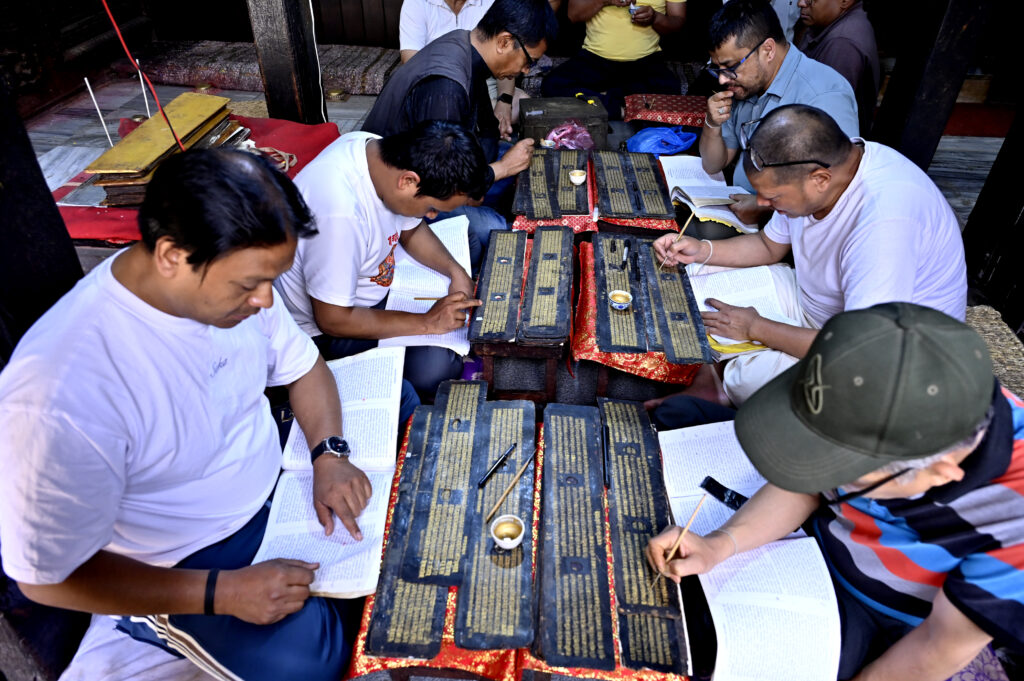
Artists spend nearly three and a half hours every morning restoring the scripture using a special ink made from finely powdered gold mixed with boiled flaxseed glue, a delicate process that requires years of training and precision.
The restoration of Pragya Paramita continues to preserve not only an ancient manuscript but also Nepal’s rich Buddhist and cultural heritage passed down through generations.