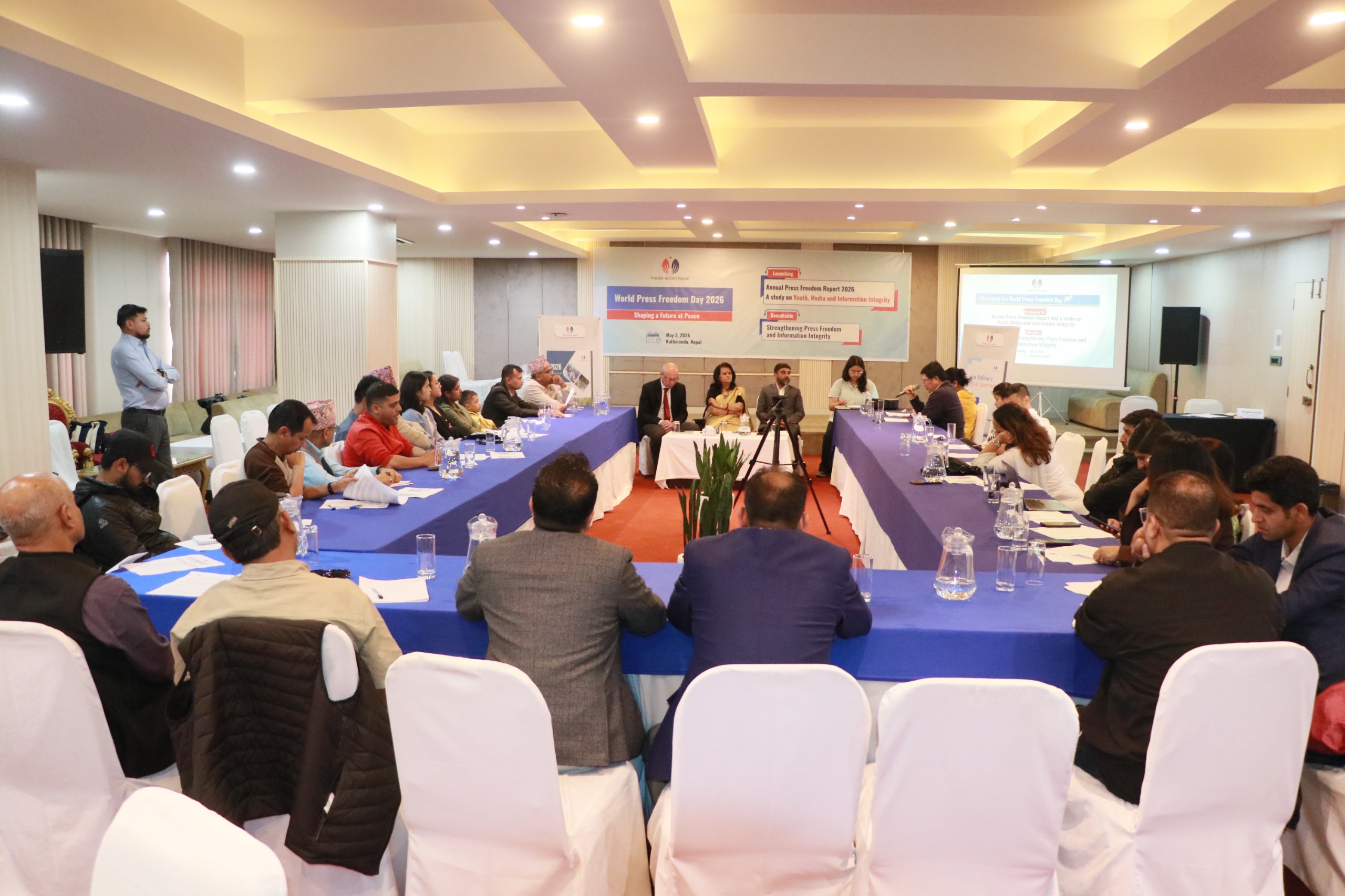
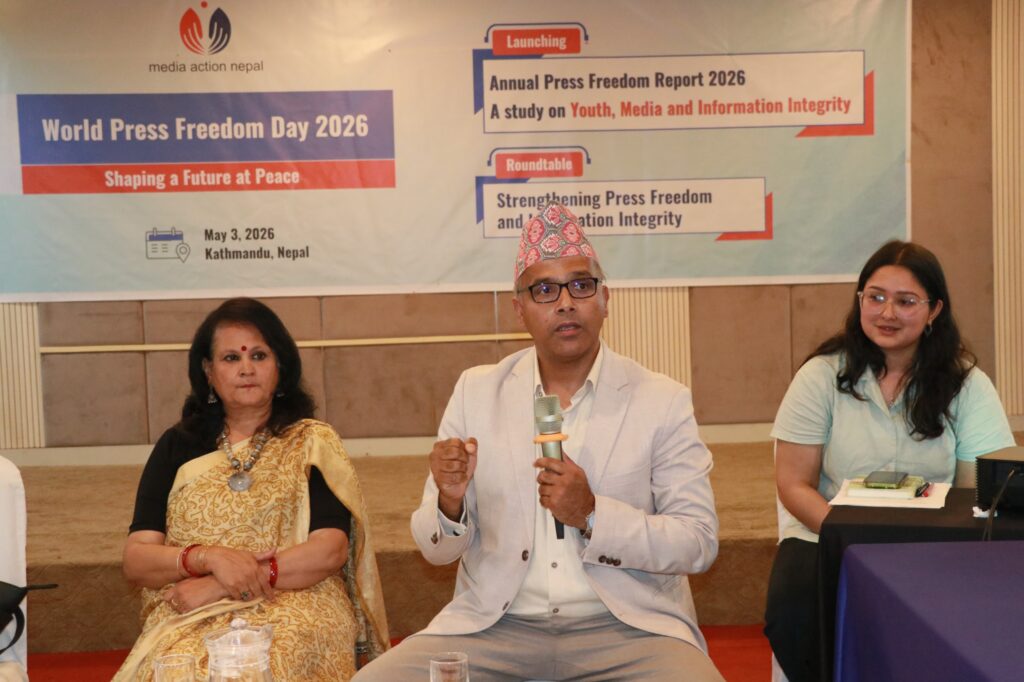
Kathmandu: Media Action Nepal observed the World Press Freedom Day 2026 by releasing its annual press freedom report on May 3 in Kathmandu.
Based on violations documented by Media Action Nepal between May 4, 2025 and May 2, 2026, Nepal’s press freedom is strongly opposed to independent journalism and free speech.
According to the report, Media Action Nepal documented 71 incidents of press freedom violations that impacted 78 journalists. The vast majority of incidents occurred in Kathmandu (Bagmati Province) and Madhesh Province, indicating that these are high-risk zones for journalists.
“Overall, the period saw a decline in Nepal’s press freedom situation. There were no journalist killings in Nepal during this time period, which is an improvement from previous years,” reads the report. “Threats persisted, however, with a number of journalists receiving death threats in the midst of other issues that directly affected press freedom. There were two arrests, one equipment seizure, eight information blockages, 50 threats, six harassment cases, and ten instances of legal violations, affecting 78 journalists and ten media outlets or news platforms.”
On the occasion, a separate study titled ‘Youth, Media, and Information Integrity’ which assesses Nepali youths’ awareness, attitudes, and practices towards digital and media literacy, was released. The study with a survey of 332 young people (aged 18–30) from diverse backgrounds across all seven provinces of Nepal revealed that social media is the most widely used source of information, followed by news portals, though television is considered the most trustworthy. While youths show strong interest in educational and skill-based content, 88% face technical difficulties accessing online materials, the study summarizes. The study also highlights awareness of privacy and intellectual property rights, alongside significant experiences of online abuse especially among vulnerable groups.
Joining the launch of these reports alongside a roundtable on upholding press freedom and information integrity, stakeholders called for an enabling environment for free and accountable media in Nepal.
Dr. Laxman Datt Pant, founding chair of Media Action Nepal, stated that the National Human Rights Commission (NHRC) and other constitutional bodies appear to have excluded attacks on the media from their primary focus.
Jaco du Toit, UNESCO’s Representative in Nepal, emphasized the critical shift in how we interact with information in the digital age. “The new digital environment requires us to consume and use information differently,” he stated. Adding that the people should be extensively careful in checking and cross-checking information, He also stressed the importance of involving everyone in decision-making processes based on the information they receive.
Namrata Sharma, a senior journalist, connected modern digital challenges to historical struggles while sharing personal anecdotes. She noted that, while technology has advanced, the atmosphere of fear has remained consistent. She compared contemporary lurking (digital stalking/trolling) to the physical evasion of political activists during the Panchayat era. “Journalists, especially women, face increased risks of digital harassment and character assassination online,” she stated.
Media Action Nepal’s executive committee member and a co-author of the study, Yam Bahadur Dura, sharing the survey report, said that a large number of youth trust news from television. Youth have an elevated sense of verifying information, he added.
Kabindra Burlakoti, Chief Whip and General Secretary of the Rastriya Swatantra Party (RSP), said, “We are committed to the principles of press freedom and democracy, with no compromises on these standards.” He added that they seek support from organizations such as Media Action Nepal to foster constructive dialogue on media-related laws and policies, ensuring an enabling environment for both independent and credible media.