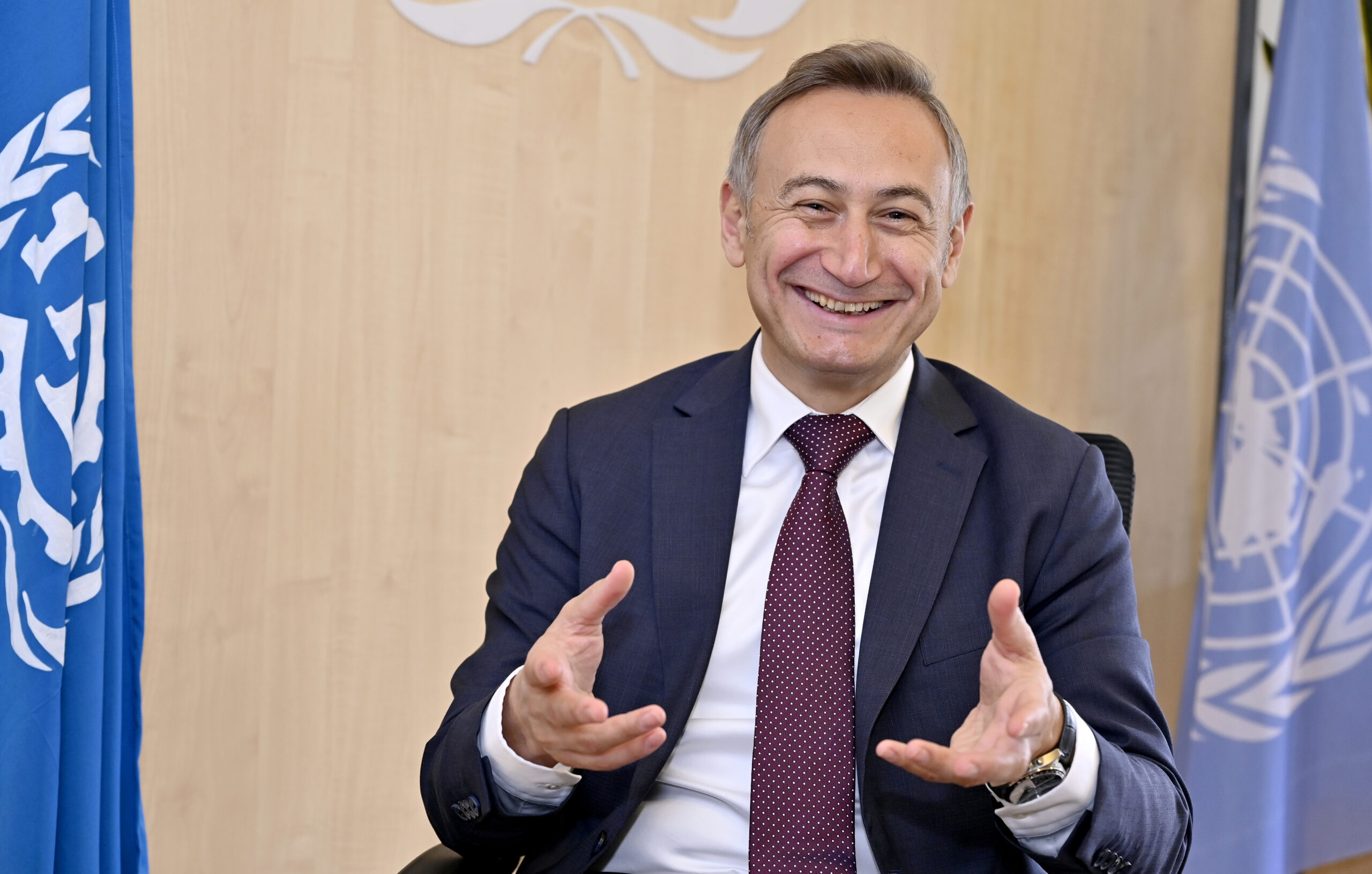
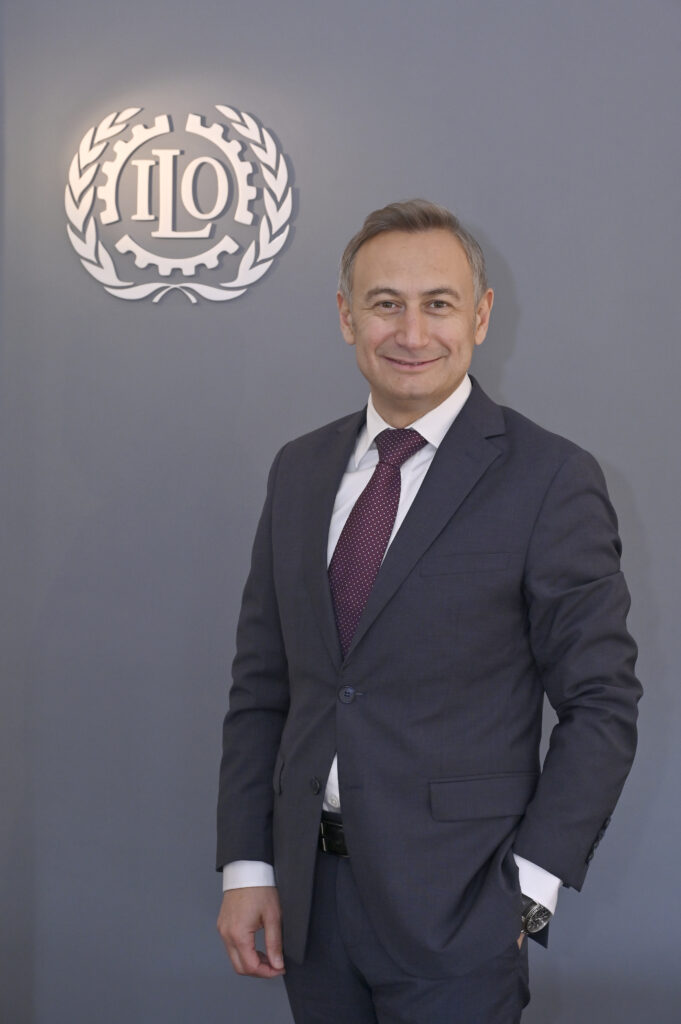
Since arriving in Nepal in April 2023, Numan Özcan has immersed himself in the country’s social, economic, and cultural landscape with a deep sense of purpose. As the Country Director of the International Labour Organization (ILO) in Nepal, he stands at the forefront of efforts to advance decent work, social justice, and inclusive growth in a nation rich in diversity and potential.
Under his leadership, the ILO Nepal office has continued to play a vital role as an active UN agency in the country, working closely with government institutions, employers, workers, and development partners. From addressing child labour and workplace safety to strengthening social dialogue and labour migration governance, Özcan’s work reflects a grounded understanding that labour issues are not abstract policy concerns—they are deeply human realities that shape lives and livelihoods every day.
In this conversation with The Diplomat Nepal magazine, he shares his reflections on Nepal through the eyes of a foreigner, outlines the ILO’s priorities and partnerships, and offers insights into the country’s immense promise. He also speaks personally about the warmth of Nepali society and why Nepal leaves a lasting impression on those who experience it.
1. You have been in Nepal since April 2023. As a foreigner, how do you view the country?
When I think of Nepal, the first word that comes to mind is warmth. Not only the warmth of the people, although that is probably the first thing you feel here, but the warmth of the whole social atmosphere. Since I arrived on 1 April 2023, which also happens to be my birthday, I have often felt that Nepal welcomed me in a very personal way. In many places, it takes time to feel included. In Nepal, sometimes a sincere Namaste and a smile is enough to open a conversation, a shop, or even a home.
What continues to amaze me is how much this country offers within one national space. Within a relatively short distance, the country changes its face completely. For a foreigner, that is fascinating. You feel that Nepal is never just one thing. It keeps revealing itself, almost layer by layer.
The same is true of its culture. Nepal is incredibly rich in languages, communities, food, music, festivals, and traditions. What I find especially beautiful is that the culture here is not something you only see on special occasions. It is alive every day. You feel it in the streets, in people’s homes, in temples, in celebrations, and in ordinary human interactions. That gives the country a very special depth.
I also see Nepal as a country with tremendous potential. Tourism is one obvious example, because very few countries can offer this combination of natural beauty, adventure, spirituality, and cultural richness in such an authentic way. It speaks not only to the eyes, but also to the mind and the soul.
So as a foreigner, I would say Nepal is a country that welcomes you quickly, surprises you constantly, and stays with you deeply. It is beautiful, diverse, and full of promise. But above all, it is deeply human. And for me that is the real beauty of Nepal.
2. As the Country Director of the ILO Office in Nepal, what are your key responsibilities?
I would say my role sits at the intersection of principle, partnership, and practical delivery.
At the most fundamental level, the mission of the ILO in Nepal is to advance social justice through decent work. That means helping ensure that economic progress is not only about growth in numbers, but also about dignity, rights, protection, opportunity, and fairness for working people.
So my role is to make that mission real in the context of Nepal.
I represent the ILO in Nepal and work to ensure that our office is a trusted, visible, and relevant partner. I have a responsibility to promote international labour standards and to support their practical application. It is one thing to have good laws and policies on paper, and another thing to make them meaningful in people’s daily lives.
What keeps this work very real for me is that labour issues are never abstract. When I see a worker on scaffolding at a construction site in Kathmandu without proper protective equipment, or a child working in a brick kiln on the road to Bhaktapur, or a woman in Madhesh working in the fields late into pregnancy because she has no real choice, I do not see statistics or policy categories. I see human lives, vulnerability, and dignity at stake.
And when I meet someone who lost a limb or an organ in a workplace accident, then fell into poverty because he had been working informally and without protection, it reminds me that the absence of decent work has very personal and lasting consequences. In those moments, I feel a very personal sense of responsibility, because this is exactly why our work matters.
My other role is to make sure the ILO brings high quality technical support to Nepal. It is also about building strong partnerships beyond the office, with national institutions, development partners, and the wider United Nations system.
So ultimately, my role is to ensure that the work we do contributes to a Nepal where growth is more inclusive, institutions are stronger, and more people can enjoy decent work and a life of dignity.
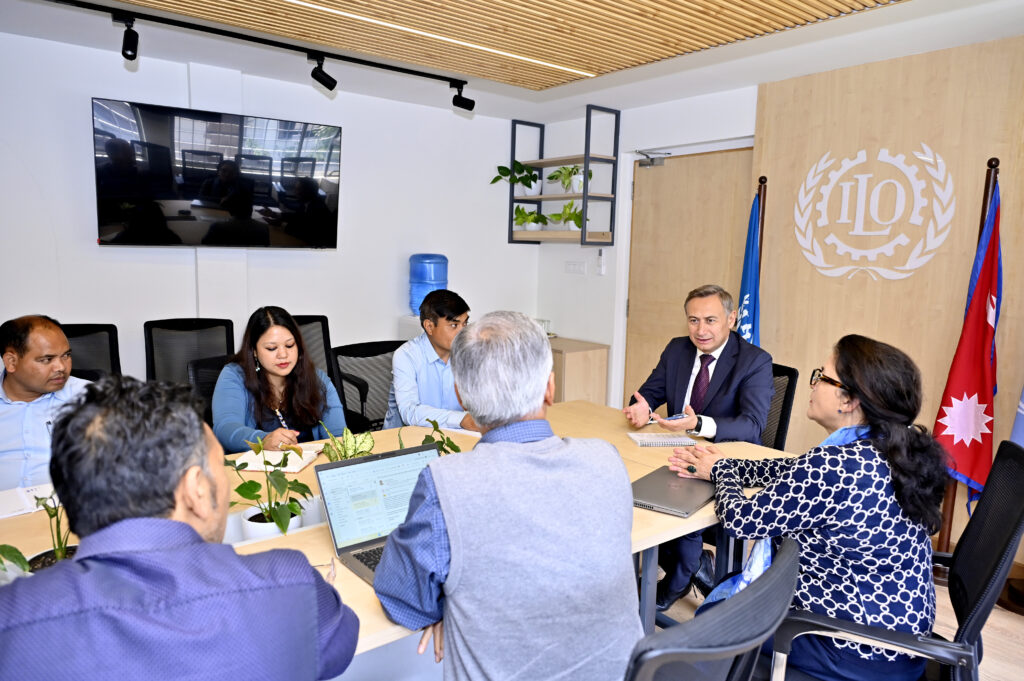
3. What are the major priorities of the ILO in Nepal?
I would summarize our priorities in three words, jobs, rights and dialogue. That is really the simplest and most accurate way to describe what the ILO is trying to advance in Nepal.
The first priority is jobs, but not just jobs in a narrow sense. We are working on productive employment, stronger enterprises, better skills, and broader social protection. In other words, how do we help Nepal create more opportunities at home, while also making work more secure and more dignified.
Our second priority is rights. For the ILO, this is at the heart of decent work. In Nepal, this means supporting the application of international labour standards in a practical way. We are working on issues such as child labour, forced labour, occupational safety and health, violence and harassment in the world of work, and labour migration governance.
The third priority is dialogue. This may sound less visible than jobs or rights, but in many ways it is what makes sustainable progress possible. If the actors are not talking to each other in a serious and structured way, reforms rarely last. So one of our biggest priorities is to strengthen the institutions and habits of social dialogue in Nepal.
And what gives me confidence is that we are increasingly seeing progress at the level of systems, not only activities. That is where real and lasting change begins.
4. How does the ILO collaborate with different stakeholders in Nepal?
At the centre of everything is our tripartite identity. The ILO is unique within the UN system because we do not work only with the government. We work with the government, employers, and workers together. So collaboration for us is not an added feature but our way of working.
Our first and closest circle of collaboration is with the Government of Nepal, especially the Ministry of Labour, Employment and Social Security, but also with other ministries, institutions, and public bodies that shape the world of work. In Nepal’s federal context, this also includes all tiers of the government.
Our second circle is with employers’ and workers’ organizations. This is extremely important because decent work reforms are only sustainable when they reflect both economic realities and workers’ rights. When these voices are part of the process from the beginning, the result is usually more balanced, more realistic, and more durable.
Then there is a third circle of collaboration with institutions that are essential for making labour market systems work in practice.
We also work with the broader UN system and development partners with a clear purpose. When we work jointly, whether on the care economy, livelihoods, migration, child labour, or future skills, the idea is to combine strengths and help national institutions move further and faster. The real objective is always national ownership not parallel structures.
We are grateful to our development partners for extending their support to the cause of decent work.
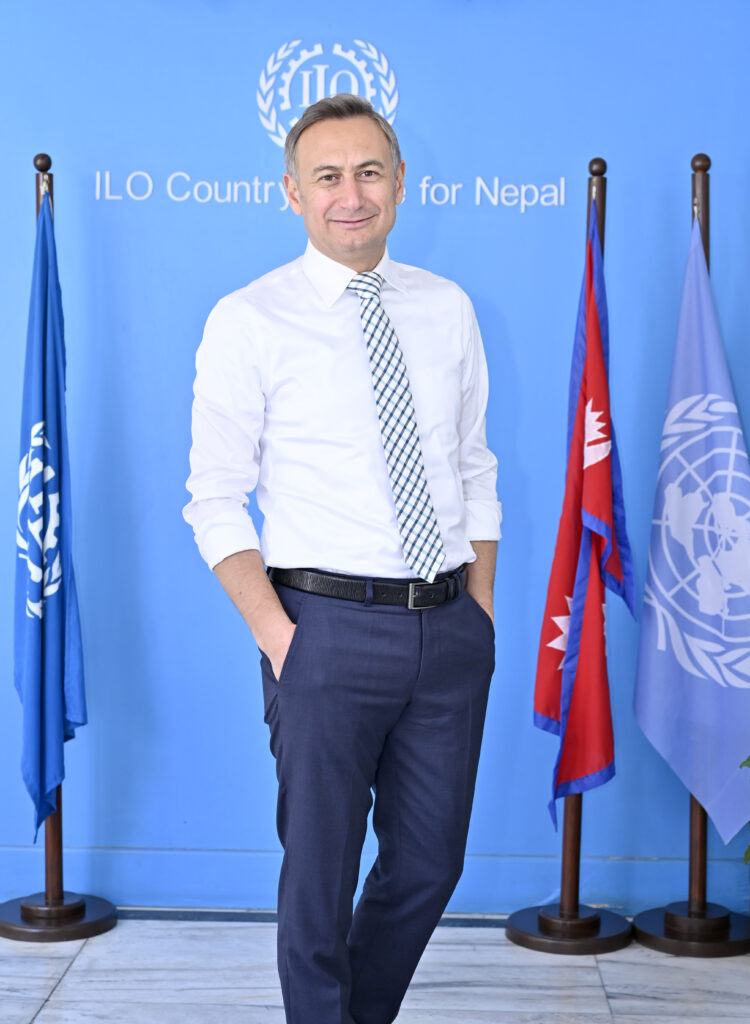
5. What suggestions would you give to people who want to visit Nepal?
My first suggestion would be, do not come to Nepal with a checklist. Come with curiosity.
Nepal is not a country you should try to consume quickly. It is a country you should allow to unfold. Of course, people know Nepal for the Himalayas, and rightly so. But Nepal is much more than a postcard of Everest. It is a country of remarkable contrasts. In a relatively small space, you can experience so many worlds.
I would also say, give yourself time to meet the people. One of Nepal’s greatest treasures is not only its natural beauty, but its human warmth. Very often, what stays with you after a visit is not just a landscape, but a conversation, a shared meal, a cup of tea, or the kindness of someone who simply welcomes you with a smile and a Namaste.
Also, try to experience Nepal with all your senses. Walk through old city streets. Listen to the temple bells. Taste the food, from a simple dal bhat to local specialities from different communities.
And I would encourage visitors to do both, explore and reflect. Nepal is one of those rare places where adventure and inner calm exist side by side. Nepal offers both energy and serenity, and that is part of its magic.
Finally, I would say, come with respect. Respect for the people, for the environment, for the culture, and for the traditions that make Nepal so unique. The more respectfully you engage, the more Nepal gives back.
So my suggestion is very simple: come to Nepal with an open heart, stay a little longer than planned, and do not be surprised if you leave already thinking about your next visit.