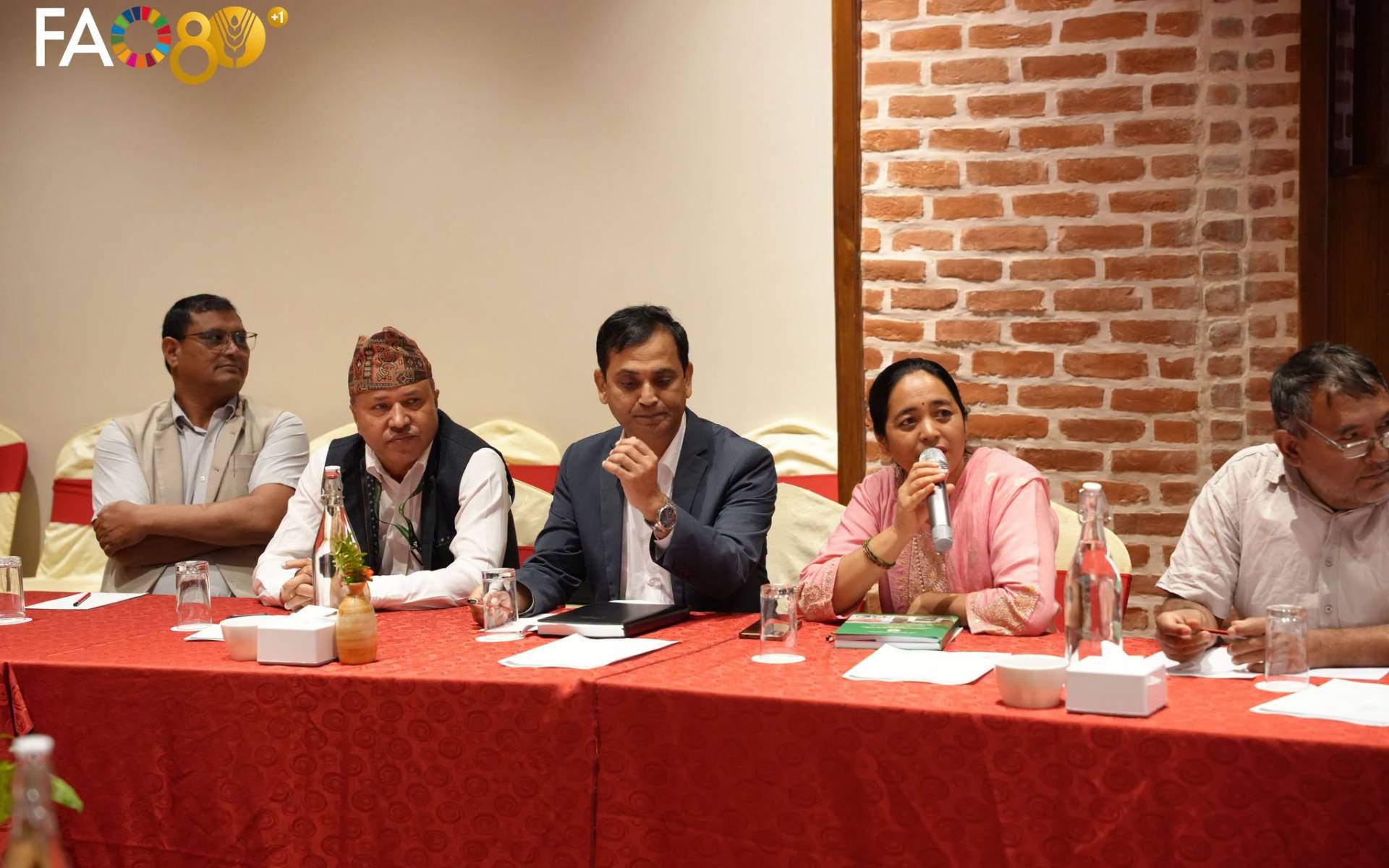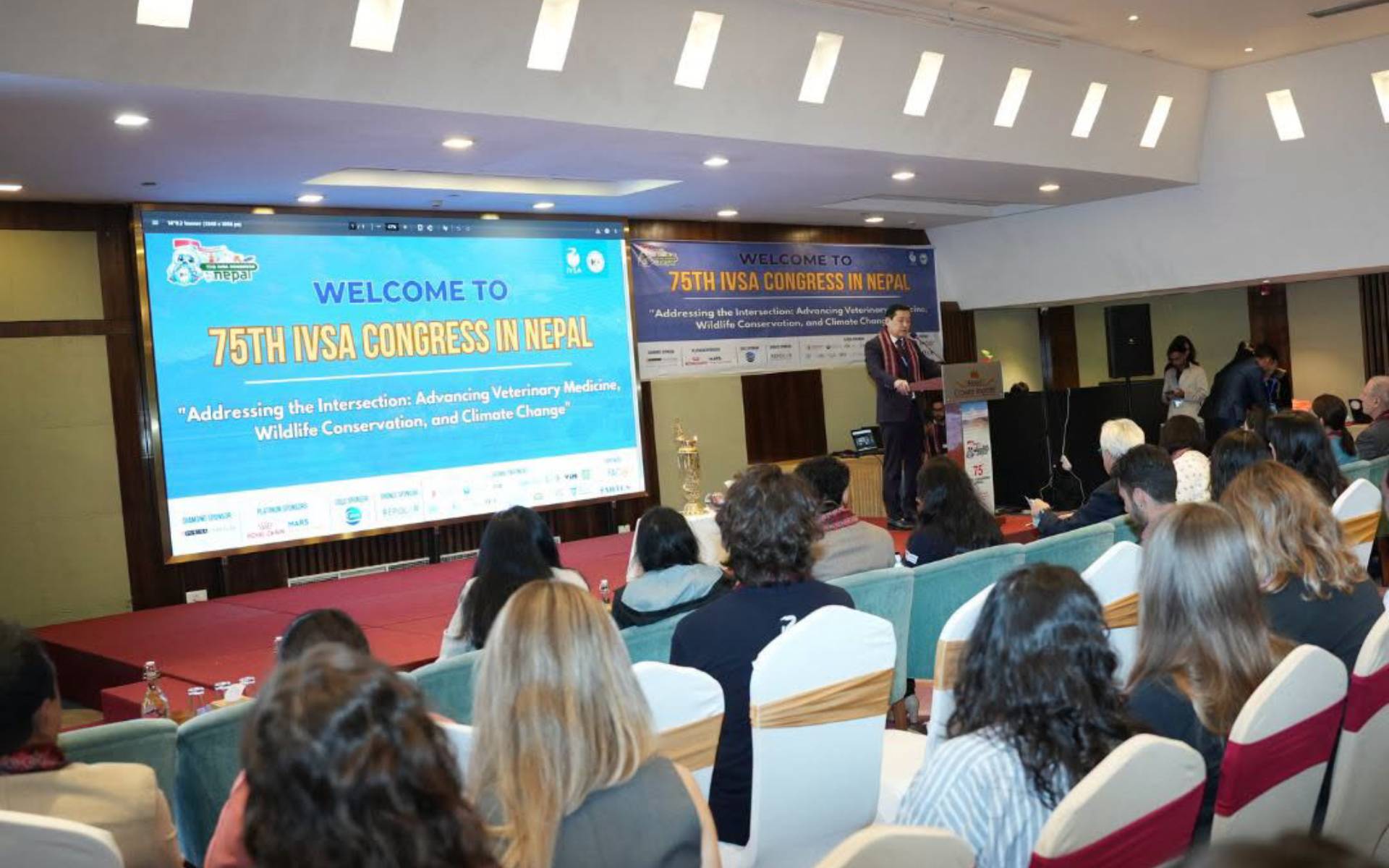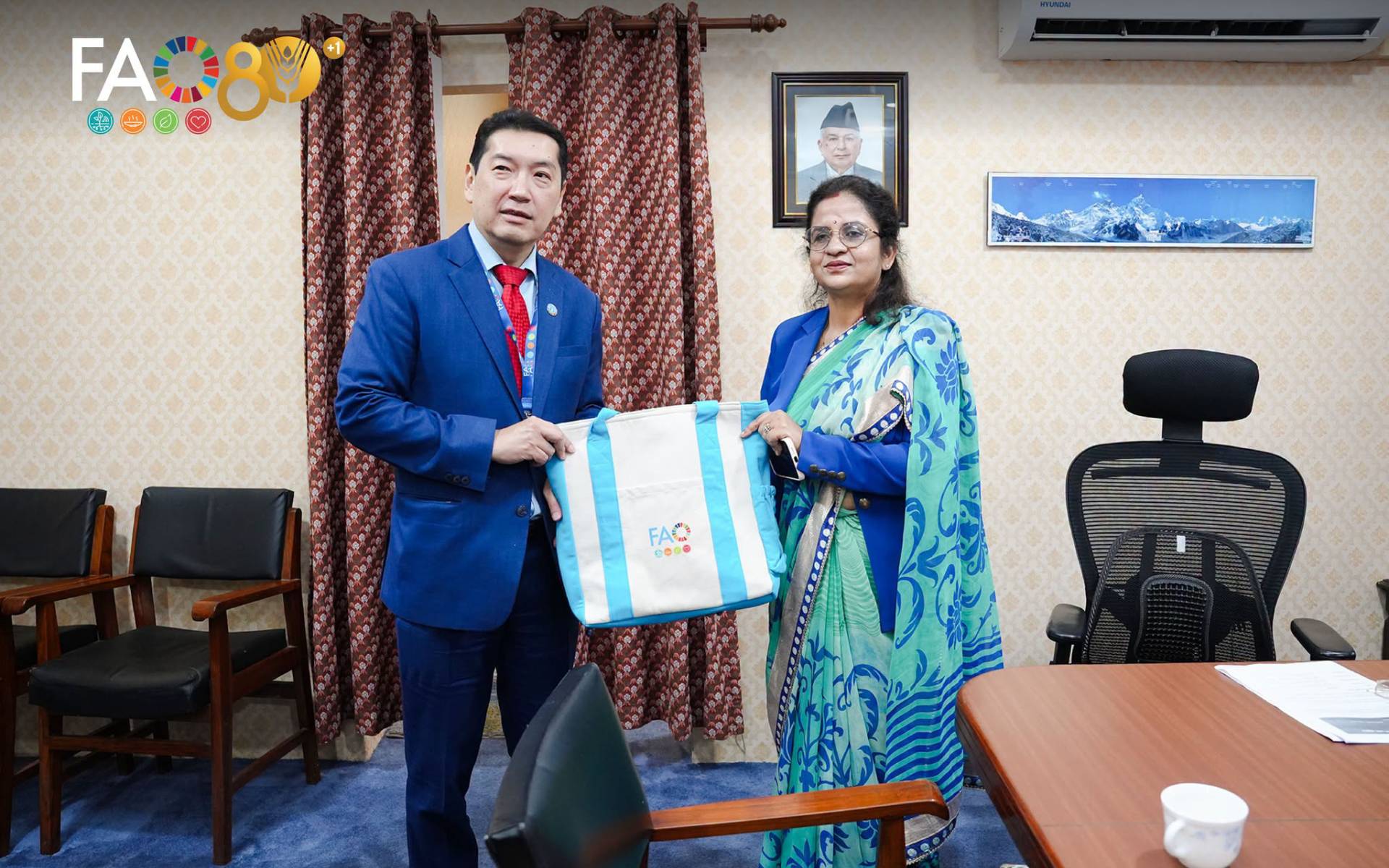
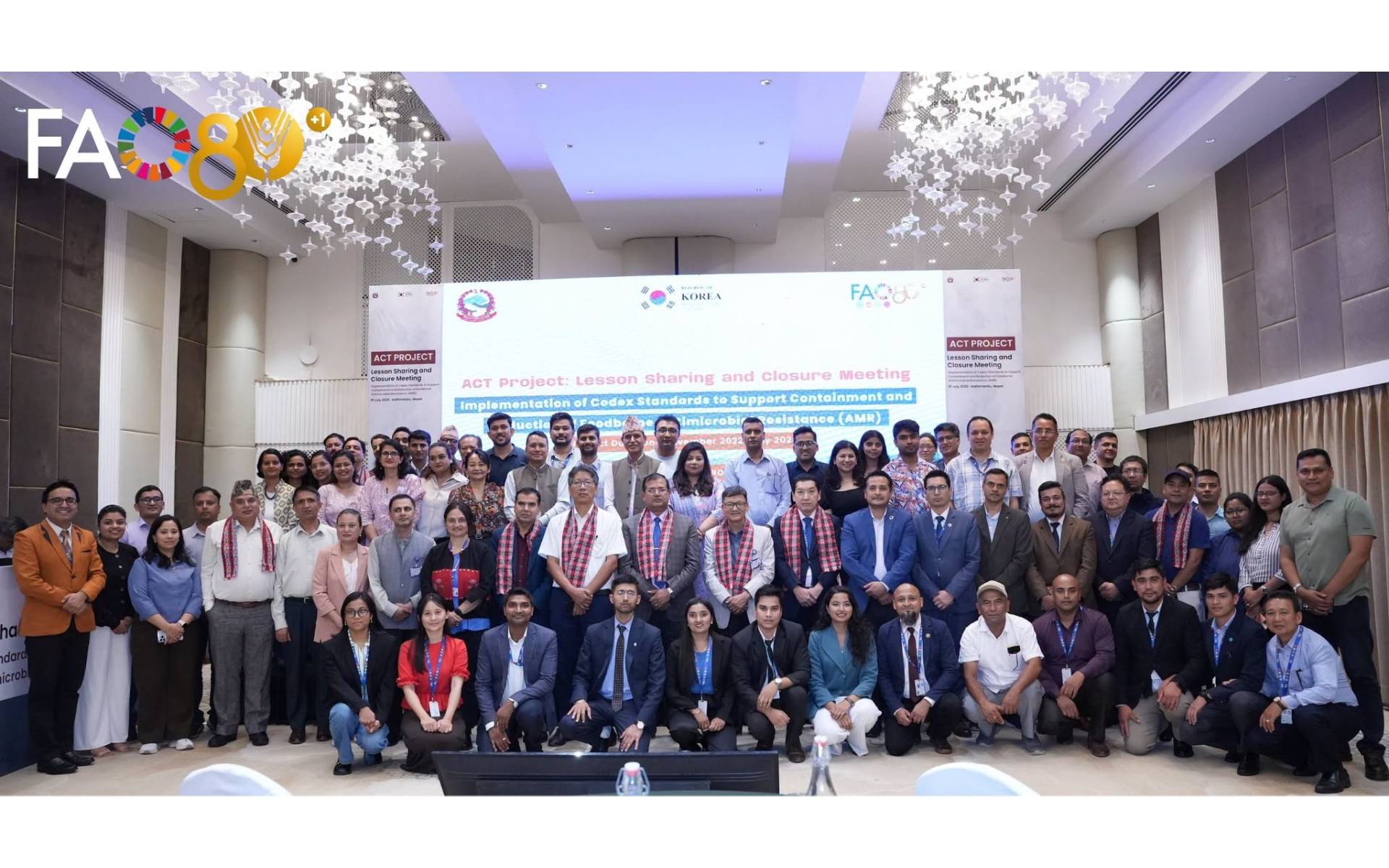
Kathmandu: With technical support from FAO Nepal, and in close collaboration with DFTQC and DLS, the ACT Project has been implemented since November 2022, with generous funding from the Ministry of Food and Drug Safety, Republic of Korea.
Through this partnership, FAO Nepal has played a central role in strengthening Nepal’s fight against foodborne antimicrobial resistance, from raising awareness on food safety, foodborne AMR and adoption of Codex standards, strengthening integrated AMR surveillance, enhancing institutional and human resource capacity, and advocating policies with evidence-based data across the food value chain in one health approach.
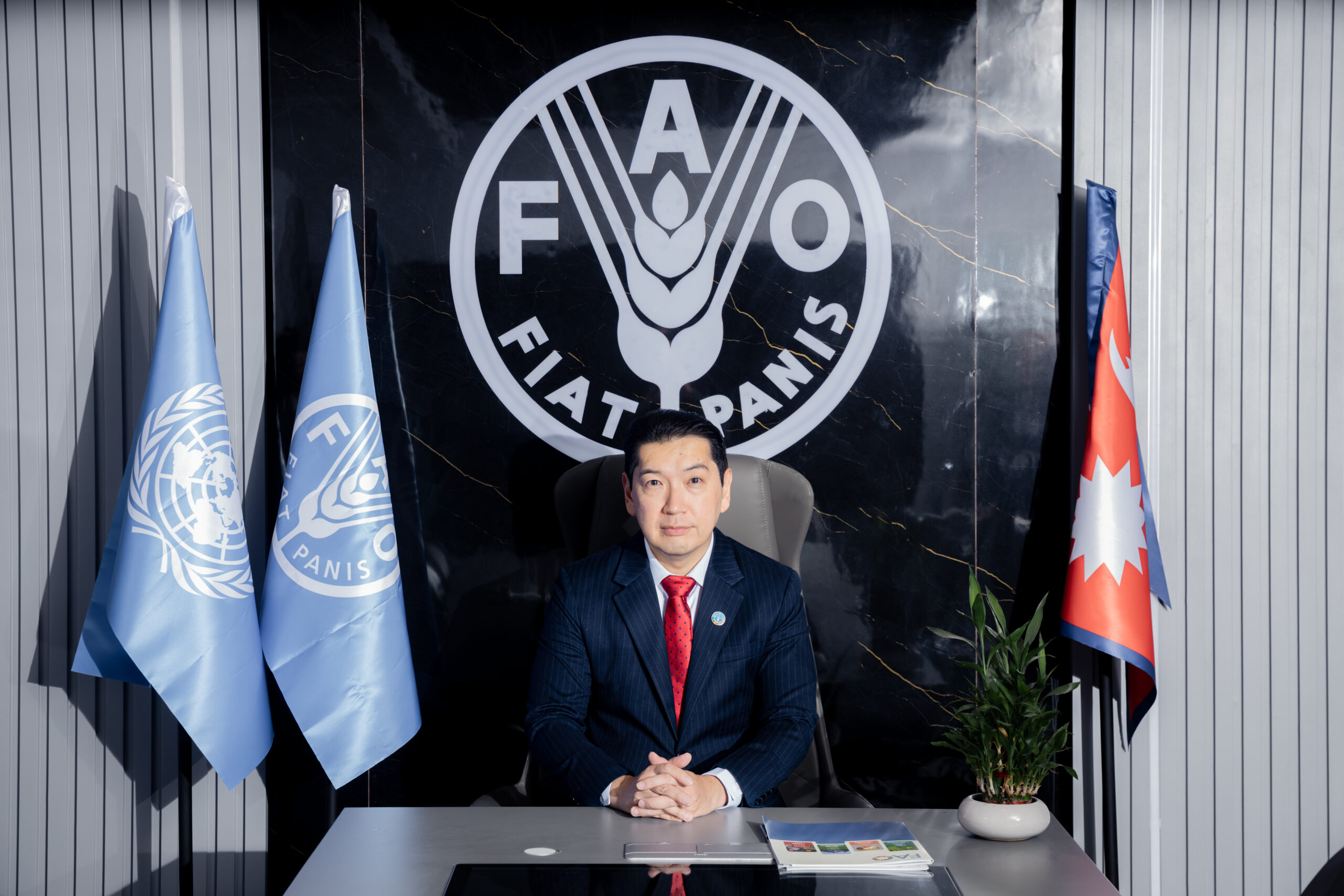
Reflecting on nearly four years of collaboration, FAO Representative for Bhutan and Nepal, Ken Shimizu, said: “FAO remains a committed partner and stands ready to continue providing technical assistance, supporting evidence generation, fostering partnerships, and working closely with the Government of Nepal and all stakeholders to ensure food safety and build more sustainable, resilient, and inclusive agrifood systems.”
With over 700 samples analyzed through AMR surveillance from the poultry value chain, completing two pilot studies on AMR in collaboration with public academic institutes, reaching out to 12+ academic institutions sensitizing more than 600 students, sensitizing 600+ youth in food safety and AMR advocacy, and strengthening laboratory capacity through specialized trainings and LC-MS/MS operationalization to generate baseline data for maximal residue limit of veterinary drugs in food and food products, ACT leaves behind a lasting foundation for food safety and One Health action in Nepal.