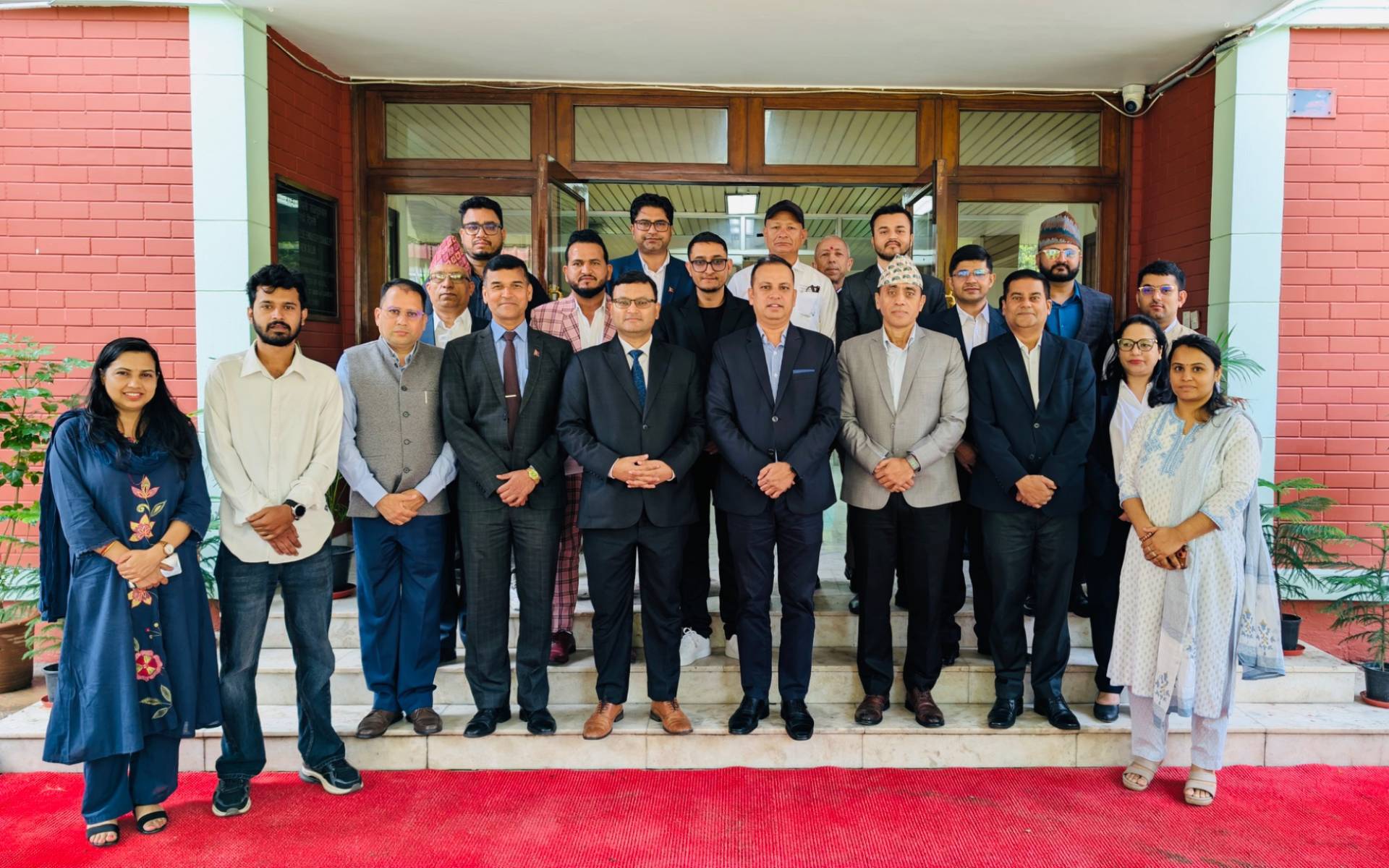
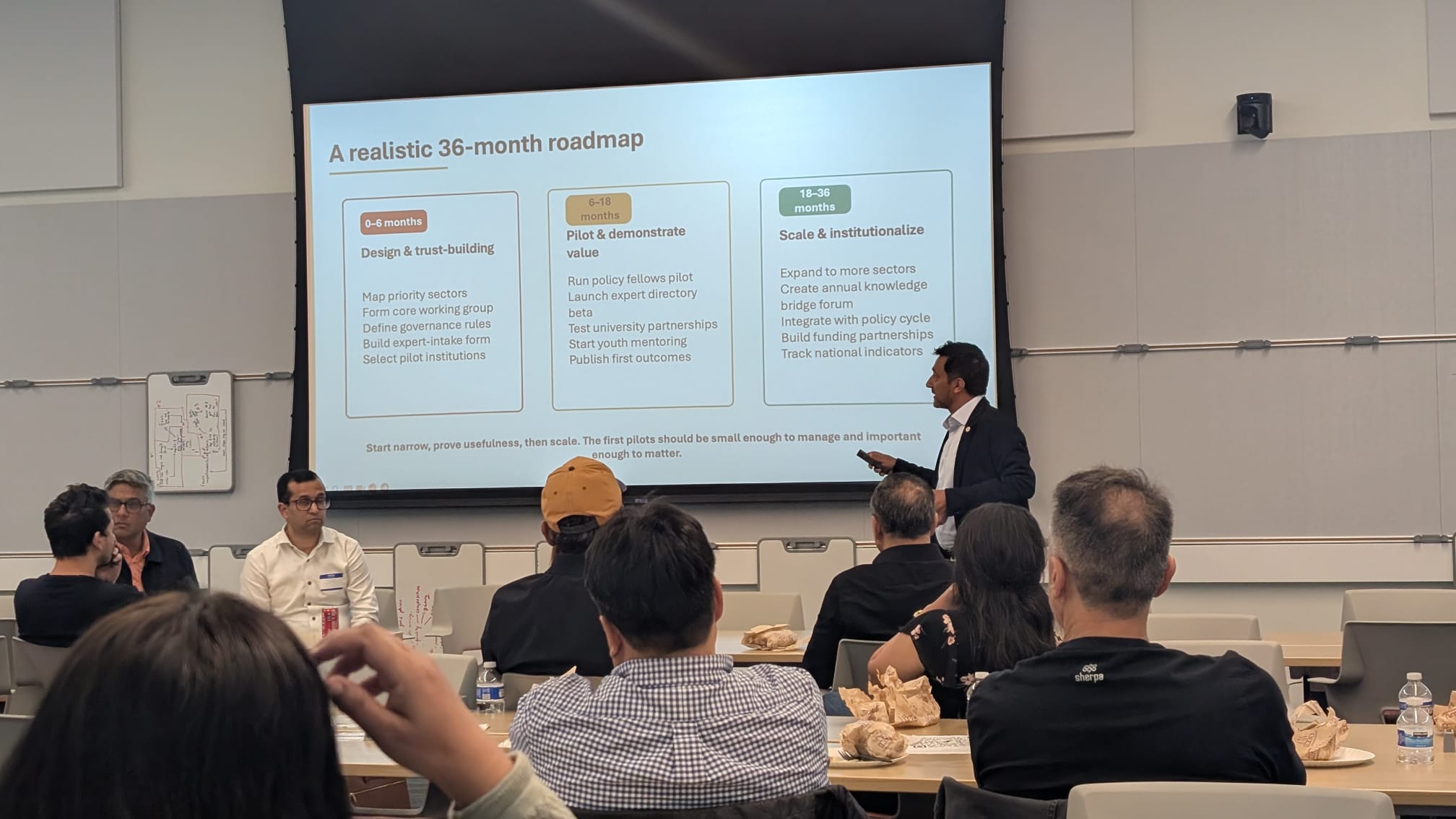
Kathmandu: The Global Nepal Professional Network (GNPN) convened a high-level policy dialogue and workshop at Stanford University featuring Nepal Policy Institute (NPI) Founder and Chair Khagendra Raj Dhakal, who delivered a visionary presentation on the theme: “A Roadmap for Strategic Diaspora Engagement: Building Knowledge Bridges for Nepal.”
The three-hour program brought together Nepali-origin professionals, academics, researchers, entrepreneurs, technologists, students, journalists, and policy-oriented participants from across the San Francisco Bay Area and beyond to explore how Nepal can move beyond a primarily remittance-centered approach toward more structured diaspora knowledge and capability Engagement.
The program opened with remarks from Niley Shrestha, GNPN President, who reflected on GNPN’s contributions since its establishment in 2006. He also recalled the distinguished leaders, professionals, and public intellectuals hosted in the Bay Area through GNPN’s signature dialogue series, “GNPN Kurakani,” over the past two decades, and expressed his pleasure in welcoming Dr. Khagendra Raj Dhakal from Nepal Policy Institute (NPI) as the featured speaker in the same series.
The session was led by NPI Founder Dhakal, who is also a Specialist Lecturer at King Mongkut’s University of Technology in North Bangkok, Thailand. Dr. Dhakal delivered his vision for diaspora knowledge engagement during the opening presentation session, followed by an interactive workshop in which participants were divided into five thematic groups to discuss practical mechanisms and policy ideas related to diaspora knowledge engagement for Nepal. The entire program was moderated by Nisha Thapa from GNPN.
The discussion focused particularly on the emerging idea of “Diaspora Knowledge Bridges” — a framework aimed at creating practical pathways through which globally connected Nepali expertise, research, innovation, and professional networks can contribute more systematically to Nepal’s long-term national development.
Participants were engaged in forming policy ideas for Nepal through a practical thematic workshop for collaboration between diaspora and Nepal-based institutions in five major areas: policy and governance, research and universities, innovation and entrepreneurship, youth leadership and mentorship, and digital and civic engagement.
Speaking during the program, Dr. Dhakal stated, ““Nepal already has a deeply connected global community. The challenge now is not whether the diaspora cares about Nepal, but whether Nepal can build trusted and structured systems capable of converting global connection into long-term national capability,” he emphasized, “The future of Nepal will not be shaped only within its borders. It will also be shaped by how effectively Nepal connects the intelligence, creativity, and commitment of Nepali diaspora across the world.”
Dr. Dhakal also highlighted findings from a recent preliminary diaspora engagement study conducted by NPI Fellow Liza Maharjan. Referring to observations from Nepali diaspora communities in the US, UK, and Australia, he noted that while there is strong willingness among globally connected Nepalis to contribute to Nepal, only around 20% reported being meaningfully engaged, whereas nearly 70% expressed interest in contributing but lacked clear pathways or mechanisms to do so.
“This shows us that there is a huge opportunity,” Dr. Dhakal remarked. “The issue is not whether the diaspora cares about Nepal. The real challenge is whether there are proper channels, trusted platforms, and institutional mechanisms that can translate goodwill into meaningful collaboration and long-term national capability.
Dr. Dhakal also shared that the Foreign Minister, Shisir Khanal, has expressed strong interest in meaningfully engaging diaspora knowledge networks and is particularly interested in hearing recommendations directly from diaspora communities regarding how they genuinely wish to contribute and be engaged.
He emphasized that future diaspora engagement mechanisms should be designed as mutually beneficial collaborations in which both Nepal and globally connected Nepalis gain value. He further noted that it is ultimately the responsibility of the state and relevant institutions to create trusted systems and practical pathways capable of facilitating such long-term engagement.
Participants strongly agreed on the need for a more structured diaspora engagement policy framework, noting that the current Government has increasingly recognized the diaspora as an important strategic partner in achieving Nepal’s broader national development ambitions.
Concluding the workshop, Dr. Dhakal invited GNPN representatives to join a joint NPI–GNPN Policy Task Force that would work toward developing a preliminary Diaspora Knowledge Recapitalization Framework and operational roadmap. The framework envisions a collaborative and mutually beneficial ecosystem connecting diaspora professionals and networks, Nepal-based institutions and counterparts, and relevant government stakeholders through structured engagement mechanisms.