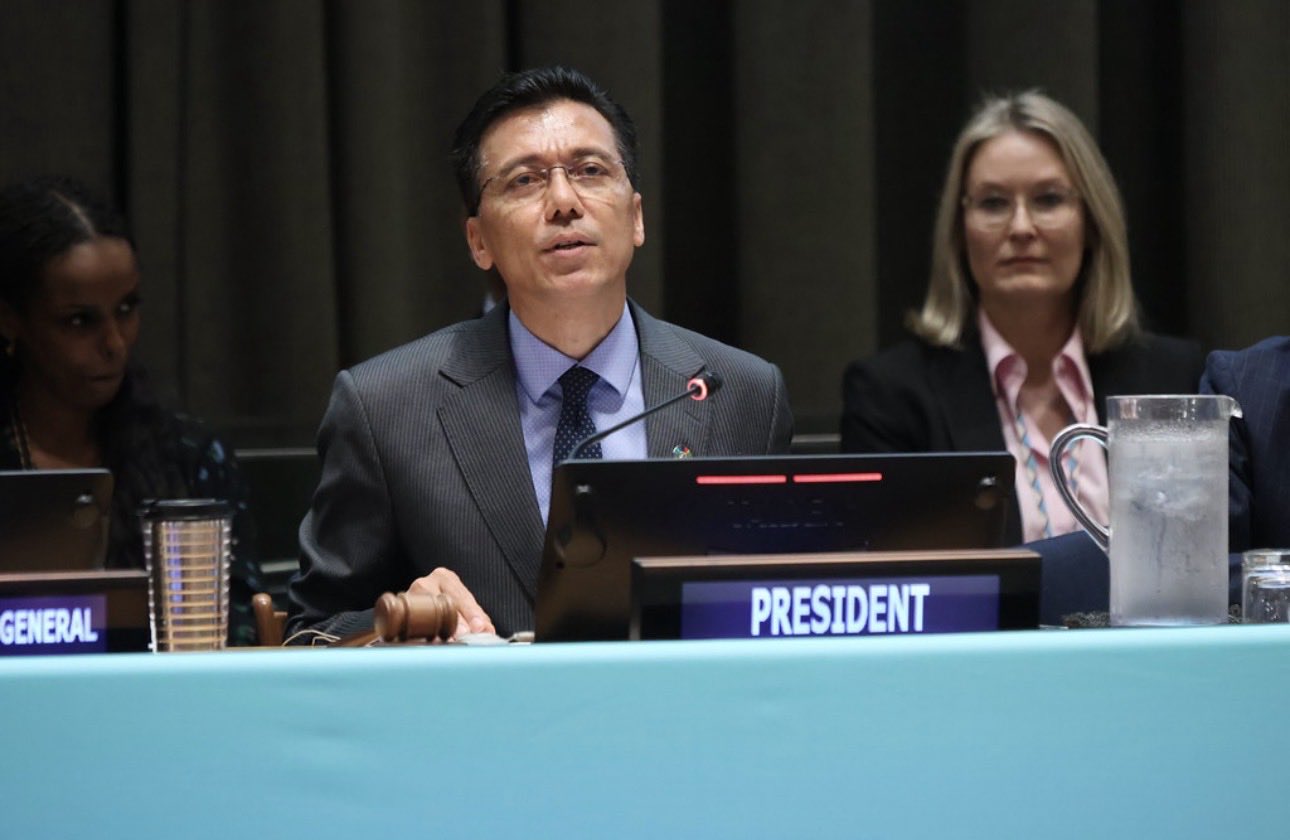
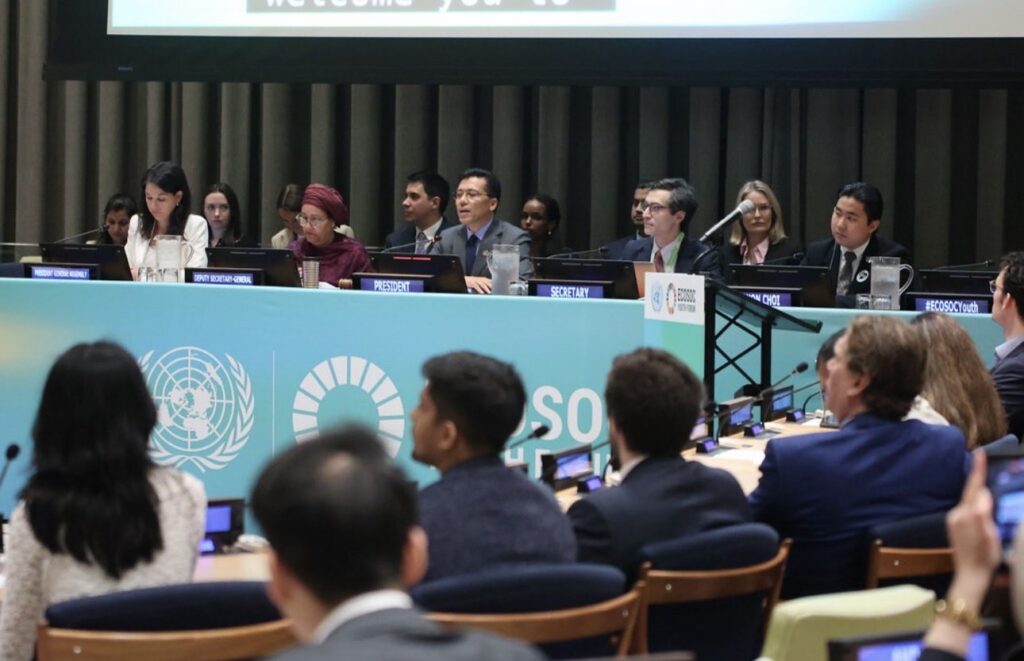
It is my honour to welcome you to the 2026 Economic and Social Council Youth Forum, convened under the theme “Innovate, Unite and Transform: Youth Shaping the Road to 2030.”
We gather at a moment of profound global challenges. Geopolitical tensions, climate change, economic uncertainty, widening inequalities, technological disruption, and digital divides, among others, are reshaping societies and testing our collective resolve and capacity to deliver on the 2030 Agenda and its SDGs.
These challenges demand renewed resolve, strengthened cooperation, and a sharper focus on implementation. Amid these challenges, young people stand not only as those most affected, but also as indispensable agents of change. Across communities and sectors, young people are not only advancing solutions but actively shaping a more inclusive, sustainable, and resilient future for all. Their leadership is a reminder that innovation, solidarity, and hope are already alive in every region of the world. At the same time, we stand in unwavering solidarity with families and communities confronting hardship — from poverty and food insecurity to the profound social and economic consequences of conflict and instability.
These burdens fall most heavily on those with the least means to bear them. And it is young people and future generations who carry the weight of these crises most acutely, even though they have contributed the least to their causes. Their aspirations, their dignity, and their right to a fairer future compel us to act with greater urgency, unity, and purpose.
The 2030 Agenda for Sustainable Development remains our shared blueprint for progress. Yet with only a few years remaining, advancement across many of the Sustainable Development Goals is alarmingly off track.
Accelerating implementation will require bold and coordinated action, grounded in strong partnerships and energized by the creativity, leadership, and determination of young people.
Youth are not merely beneficiaries of development; they are essential partners in shaping and delivering it. Around the world, young people are driving innovation in clean energy, digital solutions, sustainable cities, and climate action. They are entrepreneurs, advocates, and organizers, transforming ideas into action and changing lives in their communities.
At the same time, persistent barriers are impeding the full potential of some young people who continue to face limited access to quality education, digital connectivity, decent employment and meaningful participation in decision-making.
These challenges are especially acute for young people in vulnerable situations, including those in least developed countries, landlocked developing countries, small island developing States, and marginalized communities. If we are truly committed to leaving no one behind, we must ensure that all young people, regardless of geography, gender, ability, or socioeconomic background, have equitable access to opportunity, voice, and influence. Young people are harnessing innovation and emerging technologies, advancing community-driven solutions, and reimagining pathways to sustainable development. But innovation does not thrive in isolation.
It requires enabling environments, sustained investment in education and skills, inclusive digital ecosystems, and institutions that are open to new ideas and perspectives. History reminds us of the powerful contributions young people have made to science, culture, peacebuilding, and social progress. Today’s youth continue this legacy, whether through technological innovation, humanitarian action, climate advocacy, or efforts to promote dialogue and education in crisis-affected contexts. These examples reaffirm the importance of investing in youth potential and creating the conditions for youth to flourish. Youth participation must allow for meaningful engagement and influence in policymaking and governance at all levels.
Inclusive institutions that genuinely listen to—and act upon—youth perspectives are essential for building trust and achieving sustainable outcomes.
Partnerships will be critical to this effort. Governments, the United Nations system, civil society, academia, and the private sector must work together to scale up youth-led initiatives and mobilize the resources required for lasting impact. Strengthening financing for development, expanding decent work opportunities, and supporting youth entrepreneurship are central to this endeavor. As a priority of my Presidency, I am committed to engaging young people throughout the work of the Council.
It is precisely because no agenda for sustainable development can succeed without their full inclusion, empowerment, and leadership. The 2030 Agenda itself calls for intergenerational solidarity, and the UN Youth Strategy provides a clear framework for meaningful engagement. But frameworks alone are not enough. We must deliver. I was particularly inspired by the youth innovators who recently demonstrated how technology can support agrifood systems during my special meeting in February, an example of the practical, solution-oriented leadership young people bring to global challenges.
I have also been impressed by talented young people who have made exceptional contributions to society and history. Some examples include Ranvir Sachdeva from India, an ITU 160 Ambassador and author, who at the age of eight demonstrated impressive expertise coding and in artificial intelligence. Bana Alabed of Syria who at the age of 15 became a peace activist in the Arab region through her campaign “Stand with Aleppo”, while also running educational programs for refugee children.
And Yero Sarr of Senegal, a climate justice activist and founder of the global movement “Fridays for Future” who has addressed critical environmental issues, notably the impacts of harmful industrial fishing on West African communities. As we look ahead to key milestones, including the 2026 High-level Political Forum and preparations for the 2027 SDG Summit, the Youth Forum serves as a critical platform to amplify youth voices and translate ideas into concrete action. The road to reach 2030 will not be easy. But with hope, determination, and solidarity—and by placing young people at the center of our efforts—we can accelerate progress toward a more sustainable, peaceful, and just world.
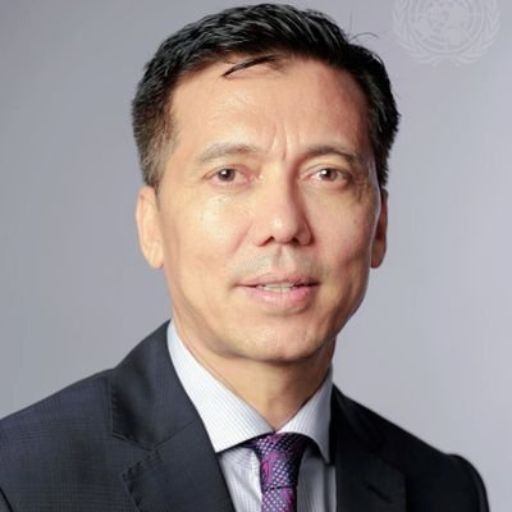
(The article is an edited version of a statement delivered by the President of ECOSOC, Ambassador Lok Bahadur Thapa, during the 2026 Economic and Social Council Youth Forum on April 14, 2026, in New York.)