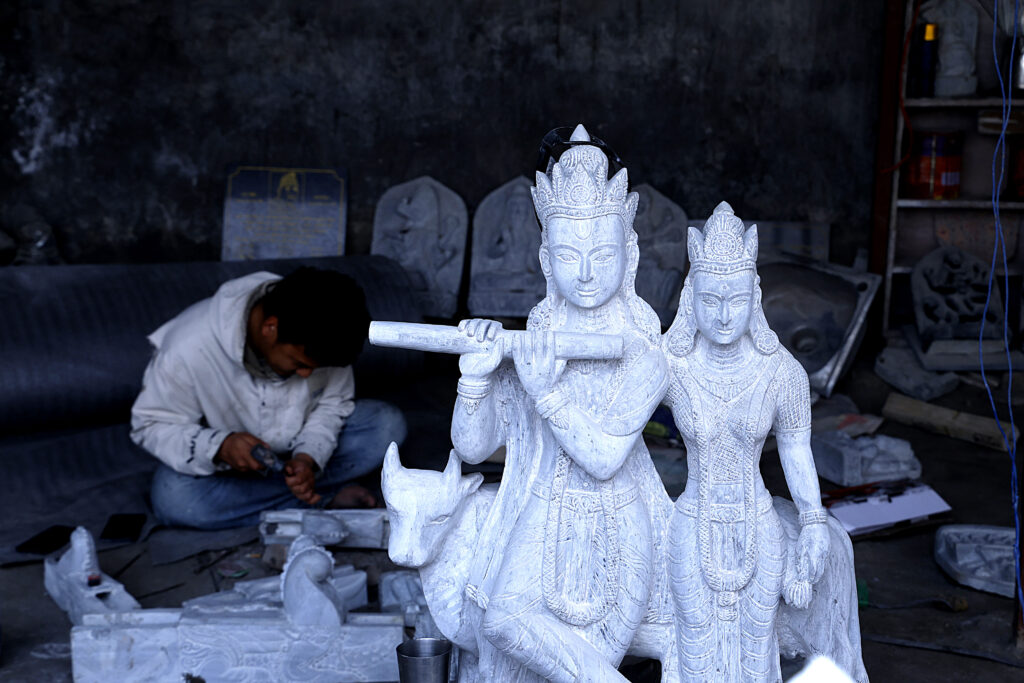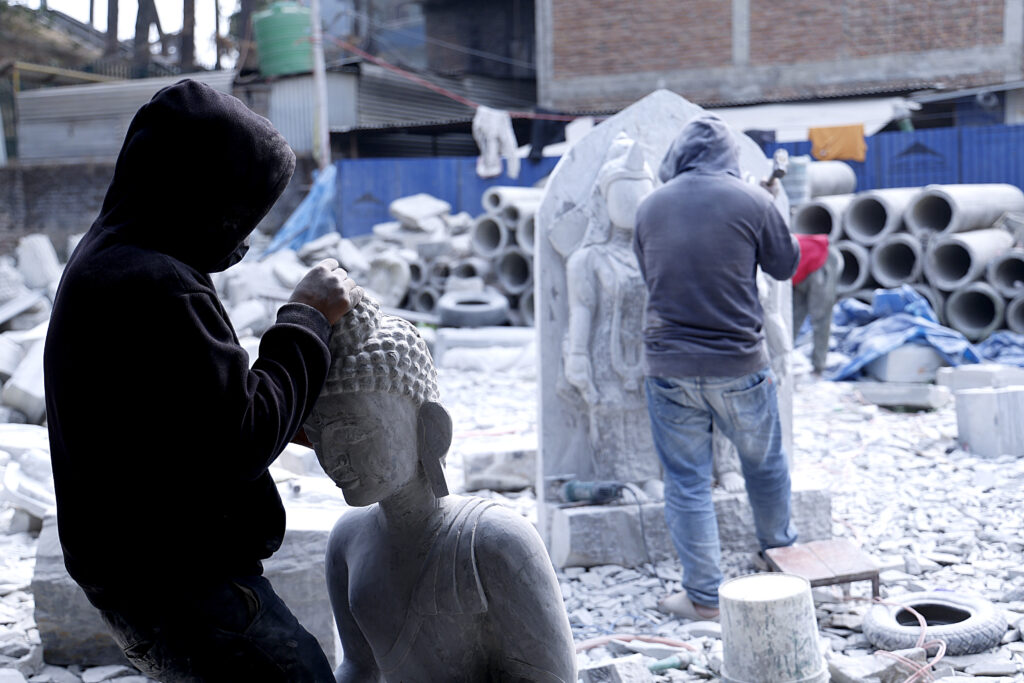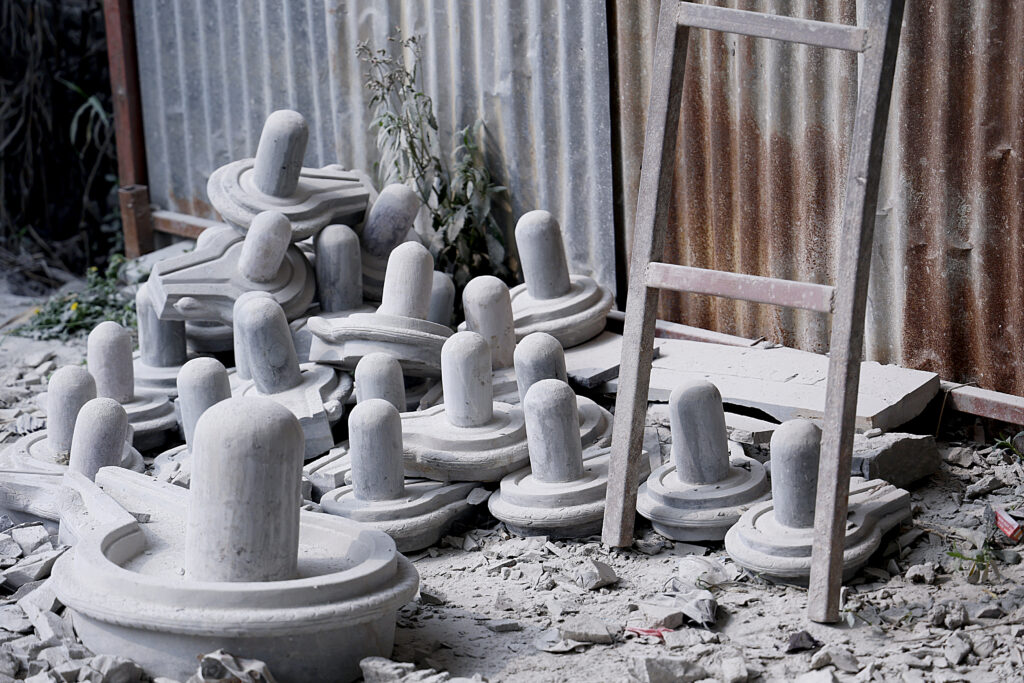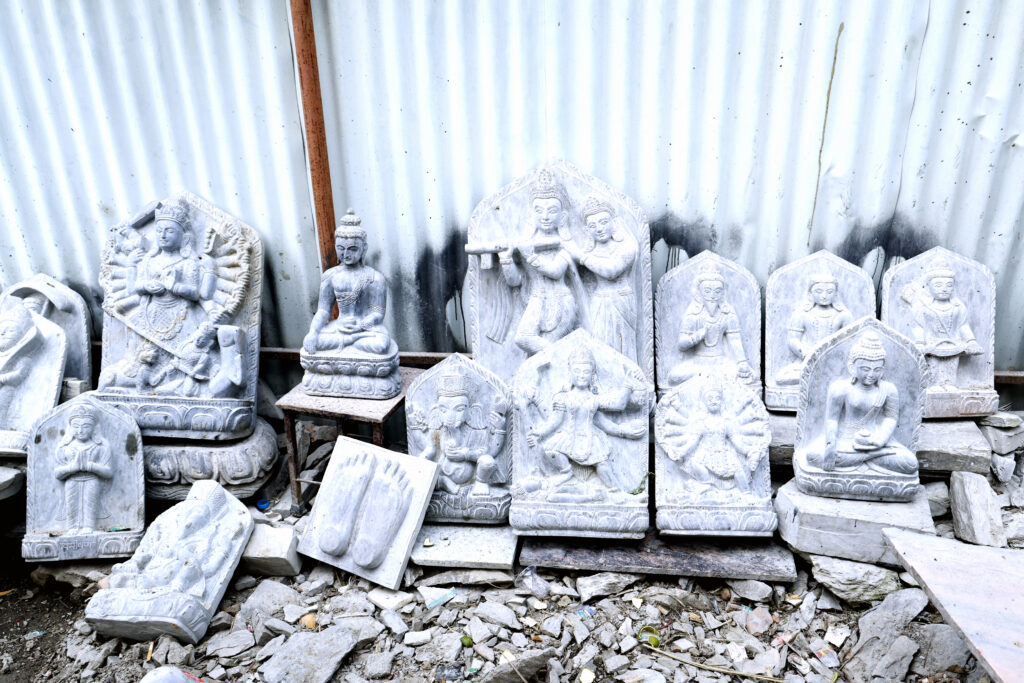
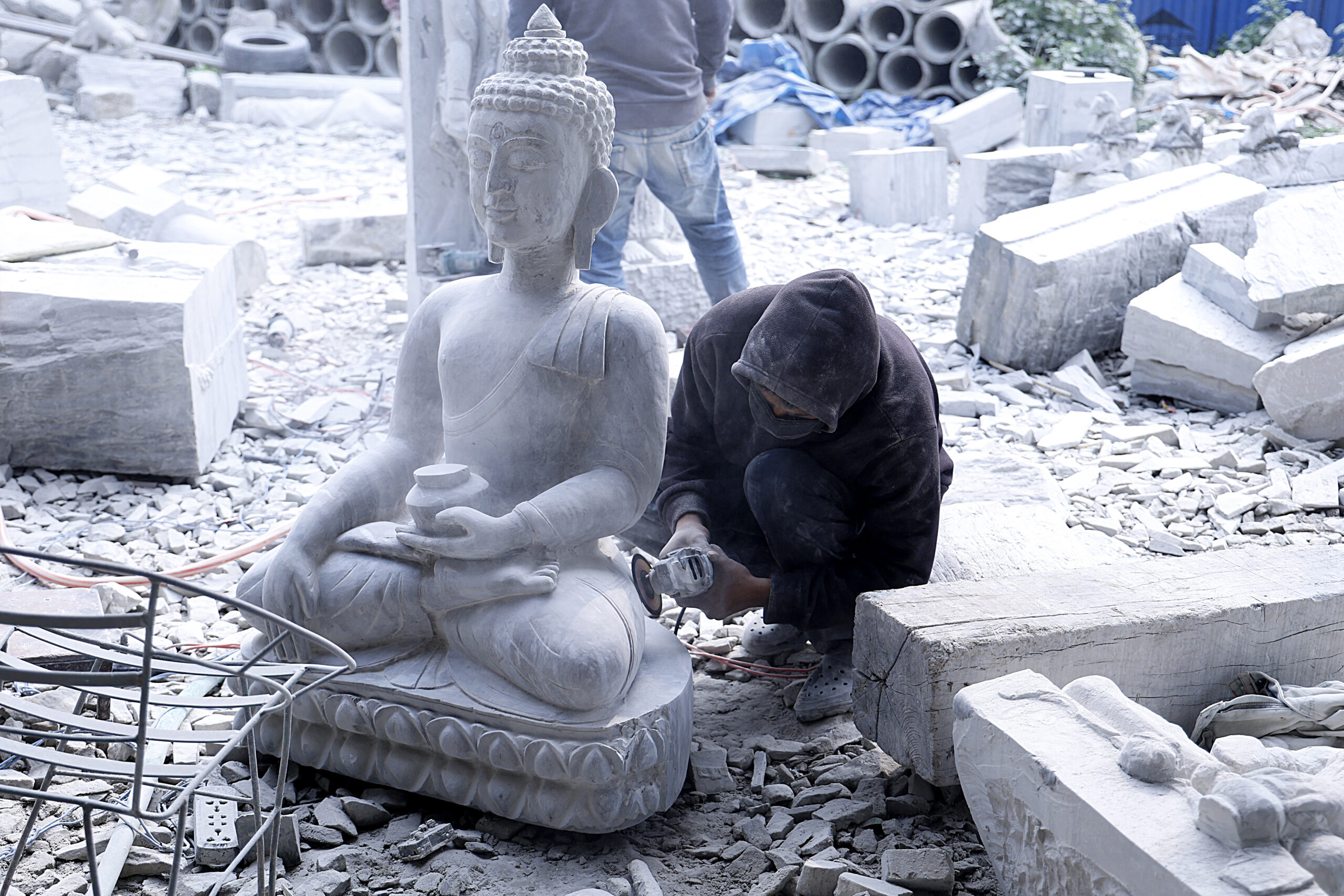
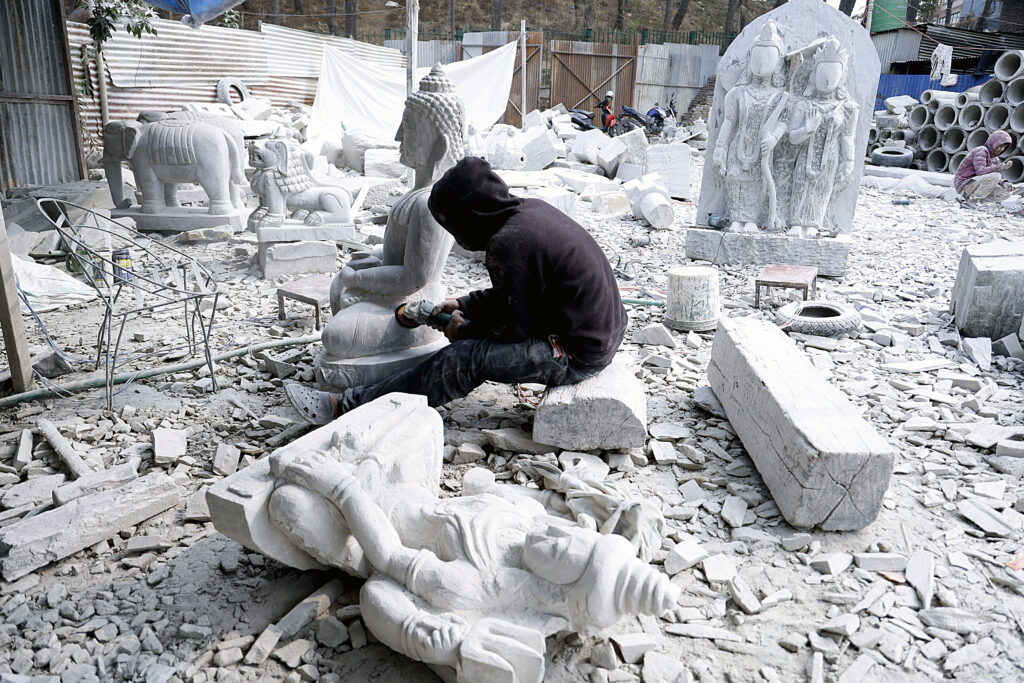
In the heart of Lalitpur, where tradition breathes through every narrow alley and ancient courtyard, the art of stone sculpture has been passed down through generations. Areas like Mangal Bazaar, Bhimsen Bahal, Nagbahal, Sundhara, and Khajebahal in Patan have long been known as ancestral hubs of master sculptors. Yet today, many artisans continue this legacy not only out of passion, but also as a means of survival.
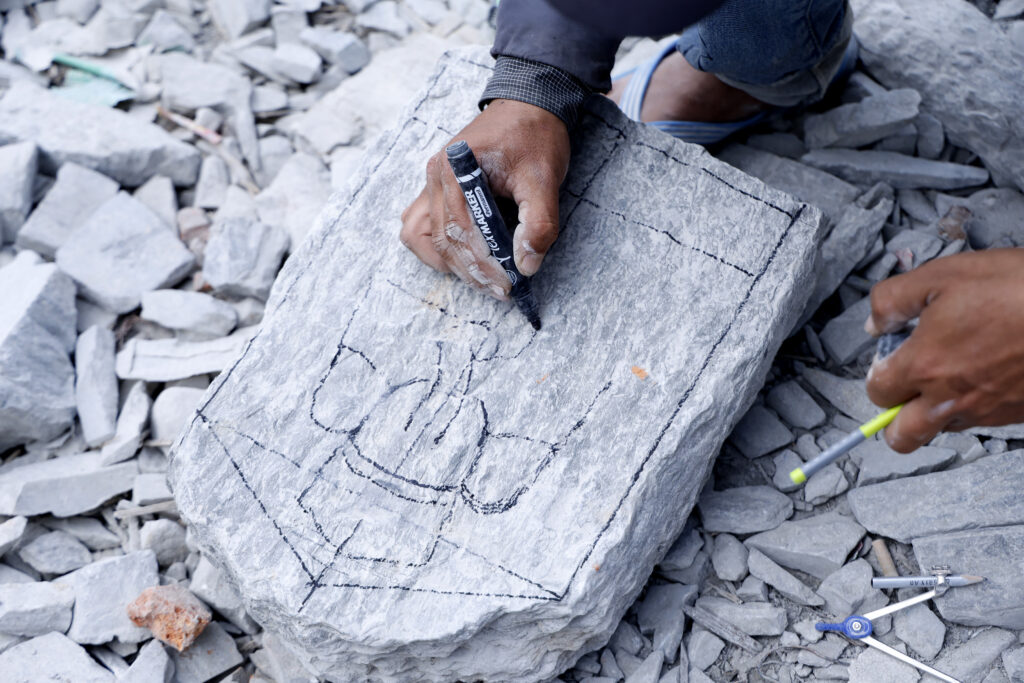
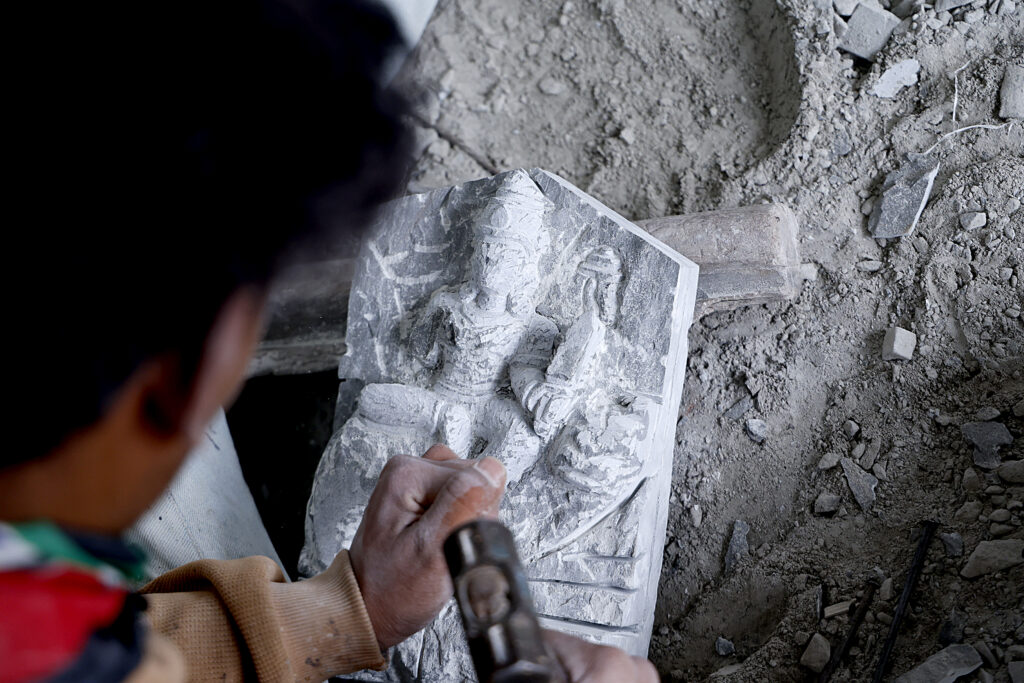
Among them is Sampurna Bajracharya from Kirtipur, a self-taught sculptor who has dedicated over two decades of his life to shaping divine forms from lifeless stone. His journey began in childhood, driven by a deep fascination with art and craftsmanship. Without any formal training, he learned the delicate art of sculpture simply by observing his uncles, who were skilled metal sculptors.
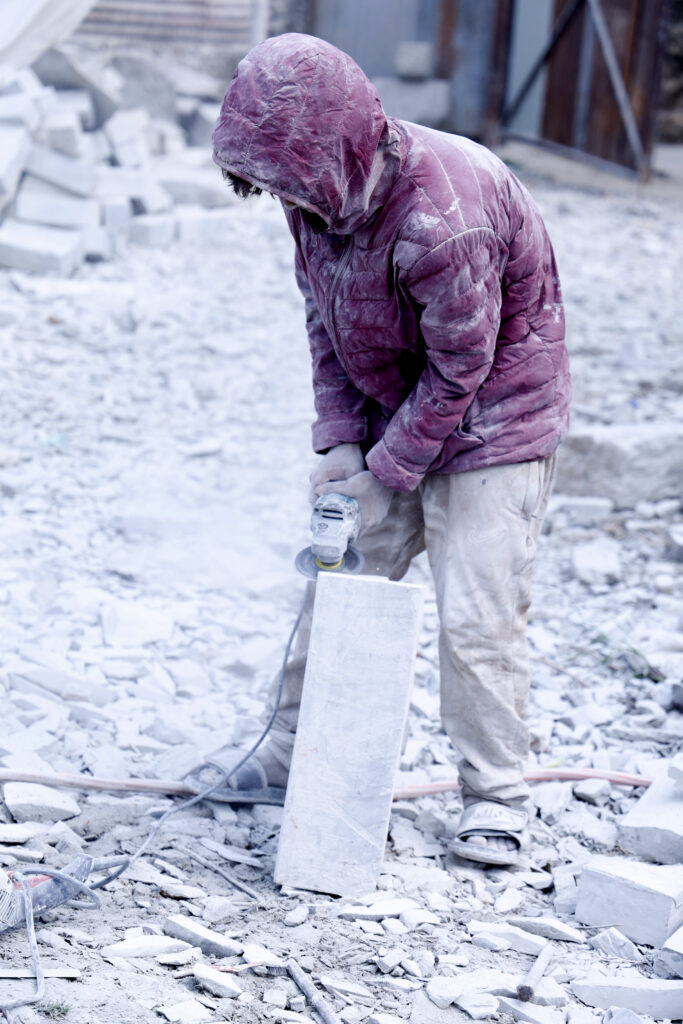
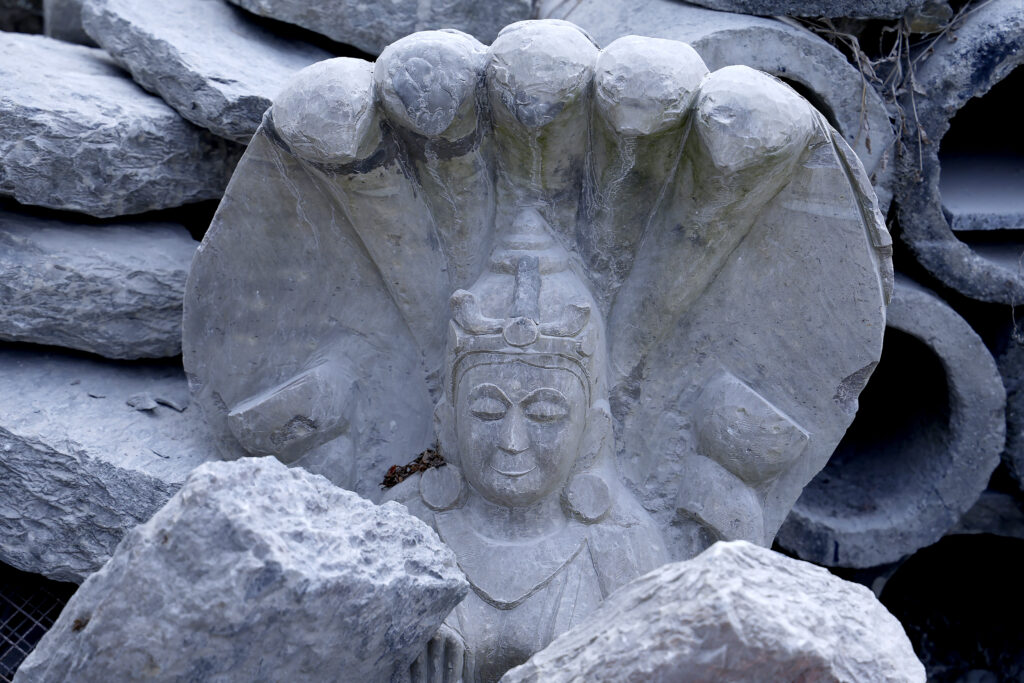
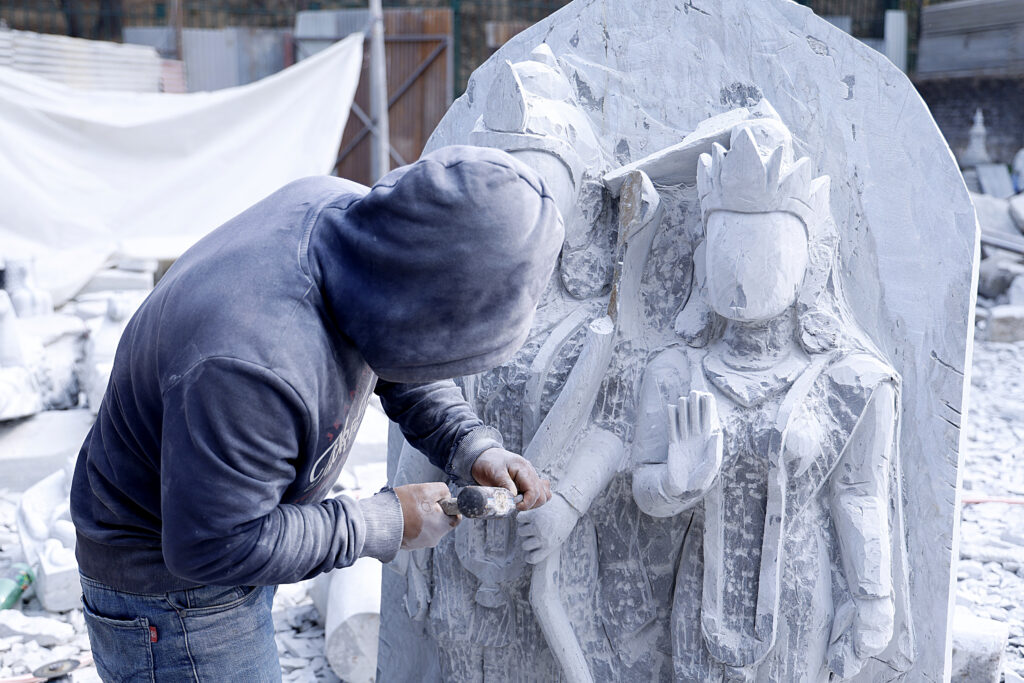
What started as curiosity slowly transformed into mastery. Today, Bajracharya breathes life into stone and metal, creating intricate statues of both Hindu and Buddhist deities. His work adorns temples and monasteries across Nepal, earning admiration for its precision and spiritual depth. With just a photograph as reference, he can craft remarkably detailed and lifelike idols.“I feel that I am not only earning a living through this work, but also serving religion,” he says with quiet pride.
One of his notable creations, a three-foot-tall statue of Budhanilkantha, stands in a temple in Banepa. Despite his growing reputation, Bajracharya remains humble, even offering his work free of cost to certain religious sites. His sculptures range in price from eight hundred to one and a half lakh rupees, depending on size and detail.
Yet, he expresses a quiet disappointment: while the cost of living has risen, the value of art has not kept pace. “The price of everything has increased, but not the price of art. That is painful,” he admits.
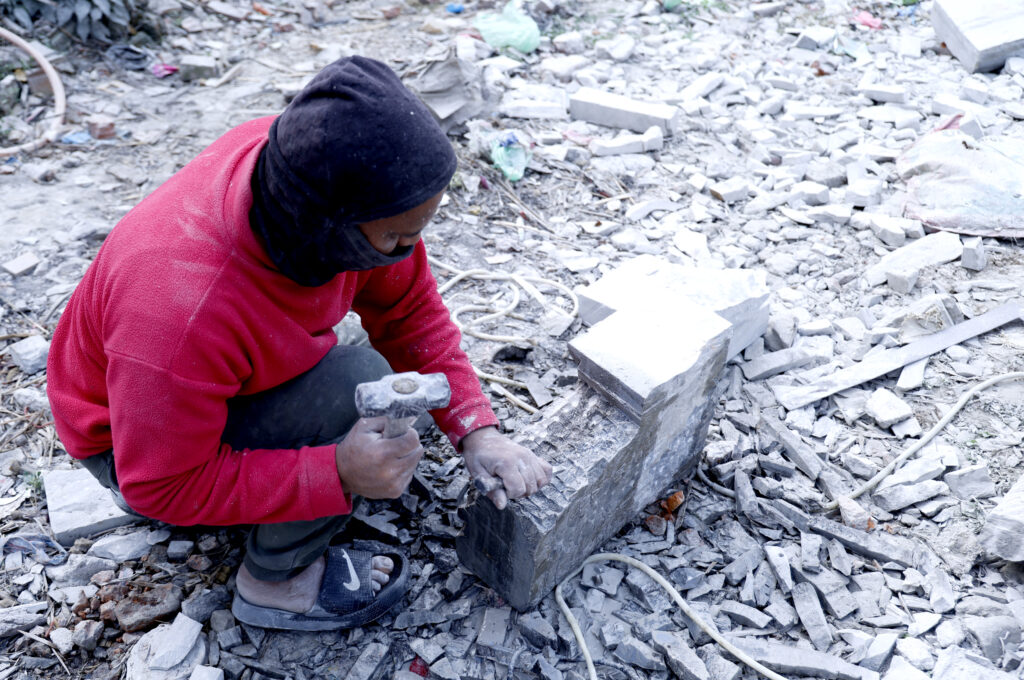
Life has not been easy. Despite his dedication and international recognition his idols have reached countries like India, China, Thailand, Europe, America, Australia, and Korea he still struggles to meet household expenses. The past two years, in particular, have been financially challenging. Yet, he continues, finding solace and satisfaction in his craft.
For Bajracharya, sculpture is more than a profession, it is a spiritual practice. “It is not easy to make a god,” he reflects. “But if you do it with patience and devotion, it is not impossible.”
Unlike many modern artisans who rely on machines, Bajracharya remains committed to traditional handcrafting techniques. Every curve, every detail, every expression is shaped by his hands alone. He believes that the true value of a sculpture cannot be measured merely in money, but in its beauty, devotion, and the emotion it carries.
“If the idol is made beautifully, its value will come on its own,” he says.
In a world that is rapidly modernizing, Bajracharya stands as a quiet guardian of tradition proving that faith, art, and perseverance can still shape something truly divine.